Skip to content
Focal & Frame

Cameras · Mirrorless Cameras

The Best Mirrorless Cameras for Low Light

Dim rooms, concerts, blue hour, candlelit receptions. Five APS-C bodies ranked on the four things that actually decide a low-light photograph - and an honest warning that for most people the cheapest fix is a lens, not a camera.

By Stephen V.Updated How we research
#ad

We earn a commission when you buy through our Amazon links, at no extra cost to you. It never decides our rankings — we say so when the cheaper pick is the better buy. How this works.

Sony Sony a6700

Our #1 pick

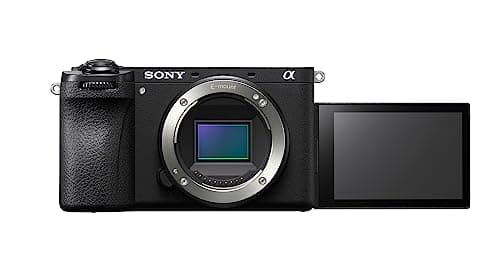
Sony a6700

Sony's flagship APS-C body finally adds in-body stabilization and AI-driven autofocus to the crop line — the a6400 grown up, at a step-up price.

Don't buy it if you are a first-time buyer on a tight budget, or you shoot mostly stills in good light. Much of what you pay for — IBIS, 4K60, AI tracking — goes untouched at that level, and the a6400 covers the basics for far less.

#ad · Live Amazon price as of October 17, 2026. No verified price → we show none.

The best low-light mirrorless camera for most buyers is the Sony a6700. It is the only body here with a back-illuminated 26MP sensor, the only one with 5-axis in-body stabilization, and Sony rates its standard sensitivity at ISO 100-32,000 for stills and for video — which matters, because two cameras on this page quietly cap their movie ISO far lower than their stills ISO. But read the next paragraph before you spend anything. If you own a kit zoom, a fast prime will do more for your night photographs than any body on this list, and it costs a fraction of a camera. The ranking below is for people who have already made that upgrade, or who are buying a body and a lens together and want the body half right.

How this page was made: we have not shot all five of these cameras in a dark room. The specifications come from Sony's, Nikon's, Fujifilm's and Canon's own published documents, and the behavioral findings come from reviewers who tested the bodies and published measurements — every one named and linked in Sources. Where a reviewer criticized a camera we rank, we say so and say who. Scores follow our rubric and are informed judgments, not lab results. Prices are pulled live and stamped with the time we read them; we never print a number from memory.

The four things that decide a low-light photograph

Low light is the one situation where camera marketing is least useful, because the thing most buyers are sold — a bigger ISO number — is the least important of the four levers, and the most important one is not on the camera at all.

1. Lens aperture, which is the cheapest light you will ever buy

A lens's maximum aperture sets how much light reaches the sensor before the camera has to compensate at all. The arithmetic is unforgiving in a useful way: light scales with the square of the aperture ratio, so an f/1.4 prime passes roughly six times as much light as the f/3.5 wide end of a typical kit zoom, and about sixteen times as much as the f/5.6 long end that same kit zoom gives you at 50mm. Sixteen times is the difference between ISO 6400 and ISO 400. No sensor generation in the last decade has delivered a jump that large.

This is why our honest first recommendation to anyone unhappy with their night photographs is a fast lens for the body you already own, and why every pick below is annotated with which fast prime fits it. The exposure mechanics are laid out in the exposure triangle if the stop arithmetic is new to you, and prime vs zoom covers what you give up to get that aperture.

2. Sensor area — and the honest limit of every camera on this page

Bigger sensors collect more light for the same exposure settings, which is the entire reason full-frame cameras have a low-light reputation. A 36 x 24mm full-frame sensor has about 2.4 times the area of the 23.5 x 15.6mm APS-C sensors in these five bodies — call it a stop and a quarter of advantage, all else equal. Every camera here is APS-C, so none of them wins that comparison, and we would rather say it plainly than pretend otherwise. What APS-C buys you back is the lens: a fast APS-C prime is smaller, lighter and dramatically cheaper than its full-frame equivalent, and spending the difference on aperture closes most of the gap. APS-C vs full frame and do I need full frame? work through that trade in detail.

Sensor designmatters too, not just size. Two of these five use back-illuminated (BSI) sensors, which move the wiring behind the photodiodes so more of each pixel's surface is collecting light. It is not a magic stop, but it is a real design advantage at high ISO, and it is one reason the a6700 sits at the top of this list.

3. Stabilization, and the thing it cannot do

In-body image stabilization lets you hold a slower shutter speed without your own shake smearing the frame. Sony rates the a6700's 5-axis system at 5.0 stops by the CIPA standard — in practice, the difference between a sharp 1/8-second handheld frame and a blurred one. For a dim interior, a still subject or a cityscape at blue hour, that is an enormous amount of extra light.

Here is the catch almost every spec sheet lets you miss: stabilization does nothing about a subject that is moving.If you are photographing a band, a toddler or a dance floor, the shutter speed is set by the subject, not by your hands, and no stabilization system will freeze them. That is why a fast lens outranks IBIS on this page, and why the a6700's stabilization matters far more to a travel photographer than to a concert photographer. The mechanics are in image stabilization explained.

4. Autofocus sensitivity — and why the EV numbers do not compare

Cameras publish a low-light autofocus limit in EV, and the numbers look dramatic. Nikon states the Z50 II focuses from -9 to +19 EV; Sony's published detection range for the a6400 reaches down to -2 EV. Taken at face value you would conclude the Nikon focuses in conditions 128 times darker, which is not the right conclusion. The conditions behind the numbers differ: Nikon's -9 EV figure is quoted with an f/1.2 lens fitted in single-servo AF at ISO 100, while Sony's figure is quoted at f/2.0. Each maker picks its own reference, so these ratings tell you a camera has been engineered for dark-scene focus, not how it stacks up against a rival to the decimal.

What is fair to say is that a modern mirrorless body with phase-detect autofocus and subject recognition will acquire a face in light where you yourself would struggle to read a menu, and all five of these will. If you shoot in genuine darkness, the practical answers are an autofocus-assist light, a brighter lens, or manual focus with focus peaking — which autofocus modes explained walks through.

How we ranked these five

In order: sensor design and published sensitivity range (including the movie range, which is where cameras hide their limits), stabilization, how cheaply the mount lets you buy a fast prime, and documented reviewer findings on high-ISO output. We also weighted what you lose when the light is bad for a reason — a concert has motion in it; a dim cathedral does not — and we checked every pick against a live price before ranking it.

Two things we deliberately did not weight: megapixels, which do not help in the dark and in a few cases hurt, and extended ISO settings, which are a processing trick applied above the sensor's native range rather than a new capability.

What we did not rank, and why

The Canon EOS R10 is a camera we like a lot — it is our pick for action in best cameras for wildlife— and it is the wrong tool here. Canon's own specification lists stills at ISO 100-32,000 but movies at ISO 100-12,800, it has no in-body stabilization (Canon lists sensor-shift IS as "No"), and at the price we read today it costs more than the a6400 that outranks it on this page. If you already own RF glass, buy it and buy the RF 50mm f/1.8; if you are choosing a system for dark rooms, start elsewhere.

The Fujifilm X-S20 is the only other body in our registry with in-body stabilization and would otherwise place high. We have not ranked it because its only live listing is a lens kit priced poorly against everything else here — the same call we made on best cameras for street photography. Check the live price yourself; if it has come down, it is a strong low-light body.

The Canon EOS R50 and R100 had no buyable offer at the price check behind this page, so neither is ranked. The Nikon Z30shares the Z50 II's sensor size but runs the older processor and has no viewfinder, which makes composing a dark scene harder than it needs to be — the Z50 II is the Nikon to buy for this.

The short answer

Quick picks

#ProductBest forScorePrice
01
Sony Sony a6700
Sony a6700

Sony's flagship APS-C body finally adds in-body stabilization and AI-driven autofocus to the crop line — the a6400 grown up, at a step-up price.

The step-up APS-C Sony
8.6
$1,498.00Amazon
02
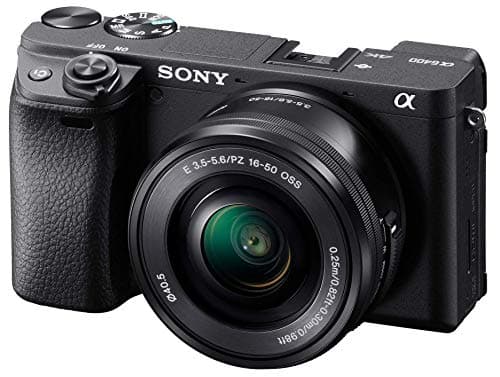
Sony Sony a6400
Sony a6400

Still one of the best autofocus systems you can buy at this price, in a compact body with a proper viewfinder.

Stills shooters who want a viewfinder
7.8
$811.48Amazon
03
Nikon Nikon Z50 II
Nikon Z50 II

Flagship-grade autofocus in a beginner body — the Z50 II borrows the EXPEED 7 brain from Nikon's flagship cameras.

The best autofocus for the money
8.6
$1,396.95Amazon
04
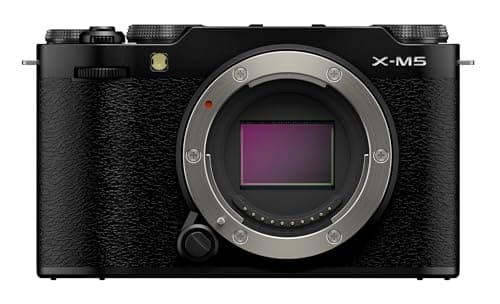
Fujifilm Fujifilm X-M5
Fujifilm X-M5

A tiny, cheap creator camera with Fujifilm's colors and surprisingly serious video for the money.

Style-conscious budget creators
7.8
$899.00Amazon
05
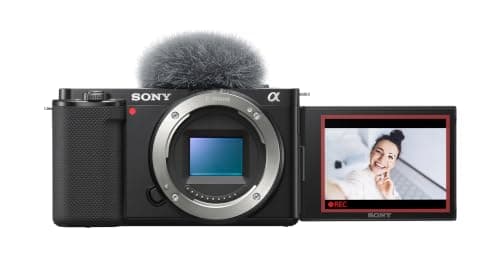
Sony Sony ZV-E10
Sony ZV-E10

The safe first camera if you shoot mostly video — flip-out screen, clean autofocus, and the cheapest lens system to grow into.

Video-first beginners
8.0
$798.00Amazon

#ad · Live prices from the Amazon Product API, as of October 17, 2026. Where we have no verified live price, we show none — we would rather leave a gap than print a number that has rotted.

In detail

The picks, in full

01
Sony Sony a6700

The step-up APS-C Sony

Sony a6700

26MP APS-C sensorIn-body 5-axis stabilization4K60 oversampled videoAI-based subject autofocusSony E mount (APS-C)
8.6/10

Sony's flagship APS-C body finally adds in-body stabilization and AI-driven autofocus to the crop line — the a6400 grown up, at a step-up price.

Image quality
9
Autofocus
10
Video
9
Handling
8
Value
7

Pros

  • AI-based subject recognition tracks people, animals and birds with a tenacity that outclasses every cheaper body in this class
  • In-body 5-axis stabilization steadies handheld stills and smooths walking video — the piece the a6400 never had
  • A fully articulating screen and a modernized menu fix the two things owners complained about most on older Sony APS-C bodies

Cons

  • Costs meaningfully more than the a6400 and the entry-level bodies — this is the premium APS-C option, not a budget pick
  • The deep, enthusiast-grade feature set is more camera than an absolute first-timer needs on day one

Don't buy this if…

…you are a first-time buyer on a tight budget, or you shoot mostly stills in good light. Much of what you pay for — IBIS, 4K60, AI tracking — goes untouched at that level, and the a6400 covers the basics for far less.

$1,498.00View on Amazon

Price as of October 17, 2026. Prices change — Amazon's is the one that counts.

#ad · we may earn a commission from this link to Sony a6700

02
Sony Sony a6400

Stills shooters who want a viewfinder

Sony a6400

24MP APS-C4K30Real-time tracking AFEVF, tilting screen
7.8/10

Still one of the best autofocus systems you can buy at this price, in a compact body with a proper viewfinder.

Image quality
8
Autofocus
9
Video
7
Handling
7
Value
8

Pros

  • Class-leading real-time tracking and eye AF that still holds up years after release
  • Compact, pocketable-with-a-prime body with a built-in electronic viewfinder
  • Access to the entire, enormous Sony E-mount lens catalog, first- and third-party

Cons

  • No in-body stabilization, and the screen tilts rather than fully articulating (it flips up, not out to the side)
  • The menu system is dated and dense compared with Canon's and Nikon's

Don't buy this if…

…you're vlogging yourself. The screen tilts up and is blocked by a tripod or top-mounted mic — the ZV-E10's fully articulating screen is the better tool for that job.

$811.48View on Amazon

$999.9919% off

Price as of October 17, 2026. Prices change — Amazon's is the one that counts.

#ad · we may earn a commission from this link to Sony a6400

03
Nikon Nikon Z50 II

The best autofocus for the money

Nikon Z50 II

21MP APS-CEXPEED 7 processorUncropped 4K30Deep grip + EVF
8.6/10

Flagship-grade autofocus in a beginner body — the Z50 II borrows the EXPEED 7 brain from Nikon's flagship cameras.

Image quality
8
Autofocus
10
Video
8
Handling
9
Value
8

Pros

  • The EXPEED 7 processor brings subject-detection autofocus straight from the Z8/Z9 — genuinely a class above at this price
  • The chunkiest, most confident grip of any camera here; it feels like a bigger camera than it is
  • Bright, large viewfinder and a dedicated Picture Control button for quick color looks

Cons

  • 21MP is the lowest resolution in this group — fine for almost everyone, but less cropping room than the 24–26MP rivals
  • Nikon's Z DX native lens lineup is small, though FTZ-adapted F-mount glass fills the gap cheaply

Don't buy this if…

…you want the deepest choice of tiny, cheap native lenses. Nikon's Z DX range is the thinnest of the big four; you'll lean on adapters sooner.

$1,396.95View on Amazon

Price as of October 17, 2026. Prices change — Amazon's is the one that counts.

#ad · we may earn a commission from this link to Nikon Z50 II

04
Fujifilm Fujifilm X-M5

Style-conscious budget creators

Fujifilm X-M5

26MP APS-C6K open-gate / 4KFilm simulations dialNo IBIS / no EVF
7.8/10

A tiny, cheap creator camera with Fujifilm's colors and surprisingly serious video for the money.

Image quality
8
Autofocus
8
Video
8
Handling
7
Value
8

Pros

  • Fujifilm's film simulations plus a dedicated dial make lovely color effortless — no editing required
  • Punches above its price on video, including 6K open-gate capture and a proper vlogging flip screen
  • Genuinely pocketable and one of the best-value routes into the Fujifilm X system

Cons

  • No in-body stabilization and no viewfinder
  • Small grip and battery — it's a camera you accessorize for a long shoot

Don't buy this if…

…you need stabilized handheld video or a viewfinder. The X-M5 trims both to hit its size and price; the X-S20 adds IBIS and an EVF if you want them.

$899.00View on Amazon

Price as of October 17, 2026. Prices change — Amazon's is the one that counts.

#ad · we may earn a commission from this link to Fujifilm X-M5

05
Sony Sony ZV-E10

Video-first beginners

Sony ZV-E10

24MP APS-C4K30 (with crop)Fully articulating screenSony E-mount
8.0/10

The safe first camera if you shoot mostly video — flip-out screen, clean autofocus, and the cheapest lens system to grow into.

Image quality
8
Autofocus
9
Video
7
Handling
7
Value
9

Pros

  • Fully articulating screen and a dedicated background-defocus button make it genuinely built for talking to the lens
  • Sony's real-time eye autofocus is the best in this price class and holds your face while you move
  • The E-mount has more affordable third-party lenses (Sigma, Viltrox, Tamron) than any rival system

Cons

  • No electronic viewfinder, so bright-daylight stills are a squint
  • 4K is taken from a cropped, downsampled region and rolling shutter (jello on fast pans) is noticeable

Don't buy this if…

…you shoot a lot of stills outdoors or want to learn with a viewfinder. The missing EVF is the one thing you can't add later — the Canon R50 gives you one for similar money.

$798.00View on Amazon

Price as of October 17, 2026. Prices change — Amazon's is the one that counts.

#ad · we may earn a commission from this link to Sony ZV-E10

Published sensitivity ranges, side by side

Straight from each manufacturer's specification sheet. Note the movie column: it is where two of these cameras are quietly less capable than their headline number suggests.

BodyStills ISO (standard)Movie ISO (standard)In-body stabilization
Sony a6700100-32,000100-32,000Yes — 5-axis, rated 5.0 stops
Sony a6400100-32,000 (expandable to 102,400)100-32,000No
Nikon Z50 II100-51,200 (expandable ~204,800)100-51,200No (lens VR, plus electronic VR for video)
Fujifilm X-M5160-12,800 (extended 80-51,200)160-12,800 (25,600 extended)No (digital IS, movie only)
Sony ZV-E10100-32,000100-32,000No (optical from OSS lenses, or digital with a crop)
Canon EOS R10 (not ranked)100-32,000 (H: 51,200)100-12,800No

A warning about reading that table the wrong way. A higher ISO ceiling is not a measure of image quality.It is the highest number the maker will let you select, and every camera here produces noisy, low-contrast files near its own ceiling. Nikon's 51,200 does not mean the Z50 II is clean at 51,200; it means Nikon permits it. The useful comparison is how a body looks at the ISO you actually need, which is usually 3,200 to 12,800 indoors, and that is a question for reviewers' sample files rather than a spec sheet.

The fast prime for each of these systems

This is the section we would hand to a friend. Each of these mounts has an affordable f/1.4-class prime, which is the upgrade that changes night photographs:

  • Sony E (a6700, a6400, ZV-E10): the Sigma 30mm F1.4 DC DN is the default answer — a normal field of view, genuinely cheap for its aperture, and sharp wide open. Go wider with the Sigma 16mm F1.4, or longer for portraits with the Sigma 56mm F1.4. Full ranking: best budget Sony E lenses.
  • Nikon Z (Z50 II): Sigma now sells the 16mm and 30mm F1.4 DC DN in Z-mount, which is the cheapest route to a fast Nikon prime; the Nikon Z 35mm f/1.8 S is the premium one. See best Nikon Z lenses.
  • Fujifilm X (X-M5):the Sigma 16mm F1.4 DC DN comes in X-mount, and Viltrox's 33mm F1.4 is the bargain normal prime. Best Fujifilm X lenses ranks them.
  • Canon RF (if you go R10 anyway): the RF 50mm f/1.8 STM is inexpensive but behaves like an 80mm on APS-C; the Sigma 30mm F1.4 DC DN now exists in RF-mount for a normal view. Best Canon RF lenses.

If you are deciding between spending on the body or the lens, spend on the lens. A cheaper body with an f/1.4 prime beats a dearer body with an f/3.5-5.6 kit zoom in bad light, every time, and the lens outlives the body — see kit lens vs prime.

Shutter speed: the number to stop below at your peril

In low light the temptation is to drag the shutter until the exposure looks right. Two rules keep that honest. For a still subject handheld, start at one over your equivalent focal length — 1/50 second for a 30mm lens on APS-C, which is a 45mm equivalent — and treat stabilization as permission to go slower only if nothing in the frame moves. For a moving subject, the shutter speed is set by the subject: roughly 1/125 for a person walking or talking, 1/250 and up for anything athletic, regardless of how dark it is. If that forces an ISO you dislike, the answer is a faster lens, more light, or a different photograph — not a slower shutter.

For video the rule is different and stricter: hold shutter speed at about double your frame rate for natural motion blur, which means roughly 1/50 at 24 or 25fps. That takes shutter speed off the table as an exposure control entirely, which is why video shooters in dim rooms end up buying aperture and adding light. Best camera settings for video covers the rest.

When a tripod beats every camera on this page

If the subject holds still — architecture, interiors, a city at night, a product on a table — a tripod is worth more stops than any body or lens on this page, because it removes the shutter-speed limit altogether. Thirty seconds at ISO 100 and f/8 is a different photograph from 1/15 at ISO 12,800, and the cheap tripod gets you there sooner than the expensive camera. Our tripod guide explains which specifications actually matter — load rating, folded size and head type — and ranks the ones we would buy, and our Peak Design review covers the travel pick in detail.

The same logic applies to adding light rather than chasing sensitivity. A single continuous LED panel turns an unshootable dim room into a controlled one, and it costs less than a sensor upgrade — see best lighting for video and LED video light specs explained.

Noise reduction is the last step, not the plan

Modern raw processors clean up high-ISO files far better than in-camera JPEG engines do, and that is a real part of the answer — but it works on an exposure that was approximately right, not on a rescue. Expose to keep the subject out of the shadows, shoot raw so the file has latitude, and do the cleanup afterwards. Our JPEG vs raw guide explains why that order matters, and best photo editing software covers the tools. One honest note: the Fujifilm pick below is the one body here whose in-camera output most often needs no editing at all, which in practice is worth more than a stop to people who do not want to sit at a computer.
How we picked

We do not run a testing lab

We compiled the manufacturers' published specifications and manuals, did the cost math, and scored each product against a published rubric. The scores are judgments from that documented research — they are notmeasurements we took, because we do not have a lab and we are not going to pretend we do. Where a number came from someone else's testing, we name and link them in Sources.

Questions

Frequently asked

What is the best mirrorless camera for low light?
Of the bodies we rank, the Sony a6700: it pairs a back-illuminated 26MP APS-C sensor with ISO 100-32,000 for both stills and video and the only 5-axis in-body stabilization in this group, rated at 5.0 stops. The cheaper answer for most people is the Sony a6400 plus a fast prime, because the lens is worth more stops than the body upgrade. See best low-light lenses.
Do I need full frame for low light?
No, but you do give something up. A full-frame sensor has roughly 2.4 times the area of the APS-C sensors here, which is about a stop and a quarter of advantage at the same settings. An f/1.4 APS-C prime recovers more than that compared with a full-frame body on an f/4 zoom, and costs far less. Our do I need full frame? guide works through when the jump is actually worth it.
Does a higher maximum ISO mean a camera is better in the dark?
No. The maximum ISO is the highest setting the manufacturer permits, not a quality measure - every camera looks poor near its own ceiling. The Nikon Z50 II allows ISO 51,200 and the Fujifilm X-M5 stops at 12,800 in its standard range, but that gap says more about how each maker labels its range than about which file you would rather print.
Is in-body stabilization worth it for low-light photography?
For still subjects, yes - it buys you several stops of handheld shutter speed, and only the a6700 has it here. For moving subjects it does nothing at all, because the subject sets the shutter speed, not your hands. If you shoot concerts, events or children in dim rooms, put the money into aperture instead. See image stabilization explained.
Which of these is best for low-light video?
The a6700, and the movie ISO column is the reason. Sony rates it to ISO 32,000 in video as well as stills, it oversamples 4K from a 6K capture, and DPReview measured its full-width 4K readout at 15.8ms, which keeps rolling shutter in check. The Canon R10, by contrast, caps movie ISO at 12,800, and the ZV-E10's 4K/30p comes with a 1.23x crop and a jello effect that DPReview called distracting.
What ISO can I actually use indoors?
With a fast prime you can usually stay between ISO 1,600 and ISO 6,400 in a normally lit room, which all five of these bodies handle well. With a kit zoom at f/3.5-5.6 the same room pushes you to ISO 6,400-25,600, which is where files start to look soft and flat. That difference is the lens, not the camera - it is the single clearest argument on this page.
Is the Sony a6400 still a good low-light camera?
Yes, and it is the value pick here. It uses the same ISO 100-32,000 standard range as the far pricier a6700 and focuses down to a published -2 EV; what it lacks is in-body stabilization and the newer back-illuminated sensor. Buy it with a Sigma 30mm F1.4 rather than the kit zoom and it will out-shoot a more expensive body on a slow lens. Full write-up: Sony a6400 review.
Why is the Fujifilm X-M5 ranked if its ISO range is the narrowest?
Because the standard range is not the whole story. Fujifilm publishes ISO 160-12,800 with extensions to 51,200, and the X-M5 pairs that 26.1MP X-Trans sensor with film simulations that produce a usable, pleasing file straight out of the camera - at 355g with the battery in. If you shoot handheld in dim streets and do not want to edit, that combination is worth more than a bigger number on a menu. It has no in-body stabilization, which is the honest cost. See our X-M5 review.
What about using flash instead?
Flash solves the exposure problem outright and is the right answer at events and receptions, but it changes the look of the photograph and is banned or unwelcome in plenty of the places people ask this question about. We do not rank flashes yet. For video, continuous LED light is the equivalent answer and we do rank those - see our lighting guides.

Keep reading

Receipts

Sources

We do not run a testing lab, and we do not pretend to. Specs come from manufacturer sheets and manuals; where a figure came from someone else's measurement, we name and link them. Where we could not verify something, we say so on the page rather than quietly leaving it out. Read our full method.