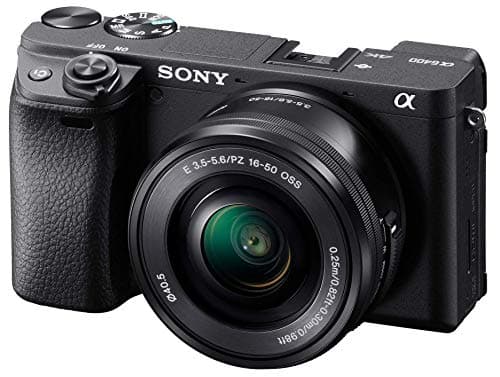
The Sony a6400 is the camera we still point stills-first beginners toward: a benchmark autofocus system, a built-in electronic viewfinder, and a compact body that holds its own years after launch. Its honest weak spots are a tilt-up screen that fights you when you vlog, dated menus, and no in-body stabilization.
Before anything else, here is how we work. We have not lab-tested the a6400, and we do not pretend to. What follows is compiled from Sony's published specifications and the shared experience of long-term owners, then scored against our rubric. Treat the judgments as informed opinion built from documented research, not measurements from a bench we do not own.
Who it's for
The a6400 is built for the person who mostly takes photos and wants to learn with a camera to their eye. Street, travel, hiking, everyday family snapshots, the occasional portrait — this is a stills-first tool, and it is unusually good at all of them for the money. The viewfinder is the tell: Sony put it there because they expected you to compose the traditional way, in bright sun, with the camera braced against your face where it stays steadier.
It also suits the beginner who wants to buy once and grow slowly. The autofocus is good enough that you will not outgrow it, and the E-mount gives you the deepest, cheapest catalog of lenses of any system on the market. You can start with the kit zoom, add a cheap fast prime, and keep the body for years without feeling held back by it. Few beginner cameras age this gracefully.
If you plan to spend most of your time filming yourself, though, this is not the obvious pick — and we say so plainly further down. The a6400 is a stills camera that shoots competent video, not a video camera that also takes photos. For a video-first beginner, a flip-screen body from our beginner ranking is the better tool for the job.
There is a value angle worth stating plainly, too. Because the a6400 has been on sale for years, it is frequently discounted below newer rivals, and the money you save can go straight into a lens — which improves your photos far more than a newer body would. For the beginner who wants the most capability per dollar and does not need the latest video modes, that discount is a large part of the appeal, and it is why we keep the a6400 on our shortlist even as fresher cameras arrive.
Where it shines
Autofocus that still sets the bar
The single biggest reason to buy an a6400 is the autofocus. Sony's real-time tracking and eye AF were a generational leap when this camera arrived, and they remain the benchmark rivals are measured against at this price. Point it at a person and the focus box latches onto their eye and holds it while they move, turn, or walk toward you. For a beginner, that removes the most common cause of a ruined shot: a photo that looked sharp on the tiny screen and turned out soft once you got it home.
It is not only faces. The tracking will follow a pet across a garden or keep a child in focus on a swing, and it does so without you fiddling through menus mid-moment. This is the kind of capability that used to live in cameras costing several times as much, and it is the reason a camera this old is still worth recommending.
A real viewfinder in a pocketable body
The a6400 pairs that autofocus with a genuine electronic viewfinder in a body small enough to live in a jacket pocket with a pancake prime attached. The viewfinder matters more than beginners expect: in bright sun a rear screen washes out to a mirror, and a viewfinder lets you see the shot and hold the camera steadier against your face. This is the everyday advantage the vlog-focused Sony bodies give up to save size.
The deepest, cheapest lens catalog
Buying an a6400 buys you into Sony E-mount, which has the largest and most affordable selection of lenses of any system here. Sigma, Tamron and Viltrox all make sharp, cheap primes for it, so your upgrade path is both wide and kind to your wallet. Over the years you keep a camera, the lens catalog costs you far more than the body did — and this is the system where that math works in your favor.
Start with the kit zoom to learn what focal lengths you reach for, then add a fast prime for low light and blurred backgrounds. Our 50mm guide covers the first lens most people add, and the APS-C vs full frame guide explains why the crop sensor here is plenty for almost everyone.
Stills quality that still satisfies
The 24MP APS-C sensor is the same class of chip Sony puts across its crop-sensor line, and it takes photos you would happily print large. In good light the files are crisp and detailed, with pleasant color once you settle on a look, and there is plenty of resolution to crop in on a distant subject. In dim rooms it holds up well for its class, keeping grain under control at the sensitivities most beginners actually reach for. Stills are not the reason the a6400 stands out — the autofocus is — but it is a quietly capable photo camera in its own right, and paired with a fast prime it punches far above the kit-lens results most first-timers start with.
Small enough that you actually carry it
The best camera is the one you have with you, and the a6400 is small and light enough to earn a place in a daypack or a large coat pocket with a pancake prime attached. That portability is a real, underrated feature: a capable camera left at home because it is bulky takes no photos at all. It is also discreet, which matters for street and candid shots where a big camera makes people freeze up. For travel, everyday life and learning, the a6400 hits a sweet spot of capability and size that larger bodies give up.
The honest catch
The screen tilts, and vlogging fights it
The a6400's screen tilts up rather than swinging out to the side. Sony marketed that upward tilt as a selfie feature, but it has a real flaw: mount a microphone in the hot shoe above it and the screen is blocked by the very accessory a vlogger needs. It also cannot face forward for high or low tripod angles the way a fully articulating screen can. If you film yourself often, this is the deciding drawback, and it is exactly why a flip-out body suits creators better. Our Sony ZV-E10 vs a6400 comparison shows what Sony's own flip-out body changes.
No in-body stabilization
There is no in-body image stabilization, so handheld video leans entirely on a stabilized lens or a gimbal, and walking footage shows every step. For stills this rarely matters — your shutter speed handles it — but for run-and-gun video it is a real gap compared with a body like the Fujifilm X-S20 that builds stabilization in.
The menus and the years
The a6400 wears its age in its software. The menu system is the old, dense, deeply nested Sony layout that predates the cleaner touch menus on newer models, and first-timers can get lost in it. The single UHS-I card slot and the older processor also mean you miss a few modern video niceties. None of this stops it taking excellent photos — but it is a camera you tolerate the interface of rather than enjoy.
Video is competent, not the headline
The a6400 shoots decent 4K30, but video is not where it stars. There is no 4K60 for slow motion, rolling shutter shows on fast pans, and the tilt-up screen problem returns the moment you mount a microphone above it. The single UHS-I card slot also caps the fastest high-bitrate options. For casual clips and B-roll it is perfectly usable, and the autofocus keeps your face sharp while you talk — but a creator who puts video first will be happier with a body built around it, such as the stabilized Fujifilm X-S20 or a fully articulating vlog camera.
If those trade-offs give you pause, weigh it directly against a modern hybrid in our X-S20 vs a6400 comparison, and see where it lands in the best under $1,000 ranking. For most stills-first beginners, though, the autofocus and the viewfinder still make it a very easy camera to recommend.
Weighed against the newer bodies, the a6400 is the value-conscious, stills-first choice: you trade modern conveniences — a fully articulating screen, in-body stabilization, a cleaner menu — for a lower price and a lens catalog nobody else can match. For the beginner who mostly shoots photos and wants a viewfinder to compose with, that remains a compelling trade in 2026, and it is why the a6400 simply refuses to fade away.
Cheaper, and the lenses to put on it
The a6100 shares this camera's sensor and autofocus for less money, and gives up three specific things: weather sealing, viewfinder resolution and the Picture Profiles that make gradeable video possible. That comparison is at a6100 vs a6400. Once the body is decided, the lens buying order is at best lenses for the Sony a6400.