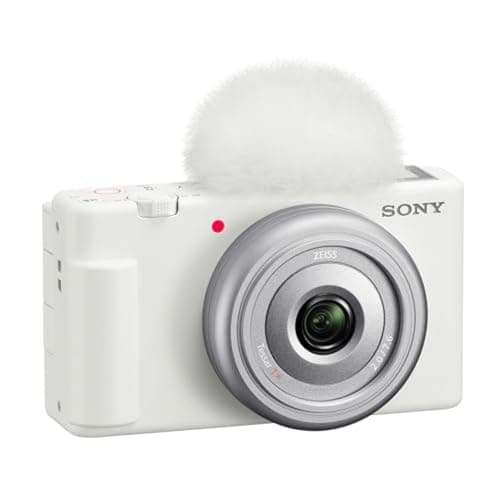
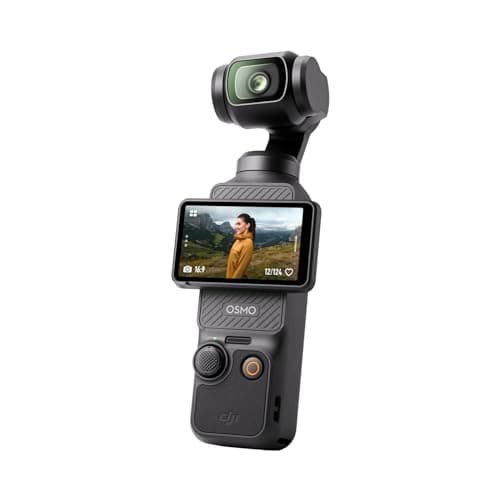
For anyone who wants a camera that genuinely lives in a pocket, the DJI Osmo Pocket 3 is the one to buy: it has a real 3-axis gimbal built in, so walking footage comes out glass-smooth in a way no interchangeable-lens body can match at this size. If you want the cheapest, simplest route into a proper vlog camera, the Sony ZV-1F is the easy answer. The rest of this list matches a pocketable, all-in-one camera to how you actually shoot — travel, everyday clips, or talking to the lens on the move.
A compact camera earns its place by being the one you always have on you. Every pick here has a fixed lens, a screen you can see while you film yourself, and a body small enough to carry all day — which is the entire point. You give up interchangeable lenses and the shallow background blur of a big sensor, and in return you get something you will reach for instead of leaving a heavier camera at home. That trade is the whole story of this category, so we ranked on how steady the footage is, how the image holds up in normal light, how flexible the framing is, and how little each camera asks of you before you can hit record.
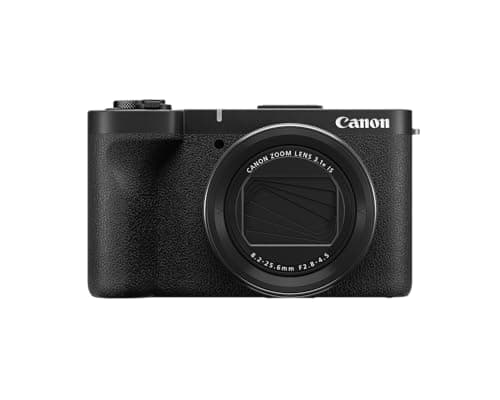
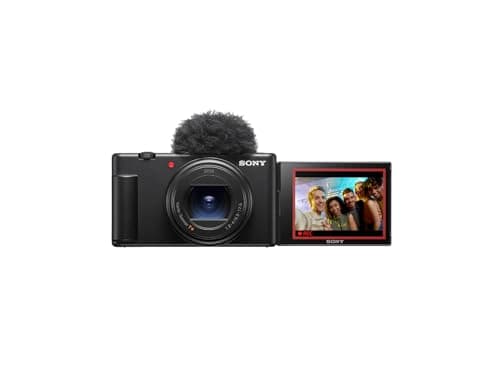
Here is how the four line up. The Osmo Pocket 3 wins outright for anyone who walks and films, because the built-in gimbal solves the one problem small cameras struggle with most. The ZV-1F is the value entry point for someone who only films at arm's length and wants the least to think about. The Canon PowerShot V1 is the pick if you want a bigger sensor and a real zoom and can accept a little more bulk. The Sony ZV-1 II sits between them — a pocket all-in-one with a flexible zoom — and it stays a lower-ranked option here rather than a top pick, largely because the Pocket 3 and V1 give you more for the money in the ways that decide it.
A quick word on what "compact" is not: none of these replaces an interchangeable-lens camera for outright image quality, low-light latitude or the shallow, cinematic background blur of a fast prime on a big sensor. If those are your priorities, buy a proper body and accept the size. What a compact does — and does better than anything larger — is simply be there. It is the camera you bring on a hike, keep in a jacket pocket, or hand to a friend, and the footage you actually capture with it beats the footage you never shot because the big camera stayed home.
How to choose a compact vlogging camera
The compact category is defined by one honest question: what are you willing to give up in order to carry less? A pocket camera trades interchangeable lenses, the largest sensors and the deepest background blur for size, simplicity and the near-certainty that it will actually be in your bag. That is a genuinely good trade for a lot of people, because the best camera is the one you have with you, not the one that stayed home because it was too much to lug around. Once you accept the trade, these cameras separate on four things — how steady the footage is, how the sensor copes with real light, how flexible the framing is, and how much the camera asks of you before you shoot. We weighted stabilization and simplicity most heavily, because those are the two areas where a compact can genuinely beat a bigger, more capable camera.
When a gimbal-in-a-camera beats an interchangeable-lens body
This is the whole argument for the DJI Osmo Pocket 3, and it is worth taking seriously. A larger mirrorless or compact body with a fixed lens leans on digital or lens-based stabilization for walking shots, and both either crop in or leave a faint float in the footage that betrays the handheld origin. The Osmo Pocket 3 instead mounts its sensor on a physical, motorized 3-axis gimbal, so the camera is mechanically held level while your hand bobs and your feet hit the ground. For run-and-gun walking, travel b-roll and following a moving subject, that mechanical steadiness beats what a bigger, more expensive body manages without a separate stabilizer clamped to it. If most of your footage is you moving through a place, the Pocket 3 is not a step down from a "real" camera — it is the right tool, and it saves you both the cost and the bulk of a separate gimbal. If you shoot mostly seated or on a tripod, though, that advantage fades and a larger sensor matters more. To steady a full interchangeable-lens body instead, see our best gimbals for mirrorless.
Sensor size versus pocketability
Compacts use smaller sensors than interchangeable-lens cameras, and that is the price of the size. A 1-inch sensor — the type in the ZV-1F, the ZV-1 II and the Osmo Pocket 3 — shoots clean, sharp video outdoors and in a well-lit room, but it gathers less light than an APS-C chip and shows more grain once the room goes dim. Canon's PowerShot V1 splits the difference with a larger 1.4-inch sensor that holds together better in low light and blurs the background a touch more, at the cost of a slightly bigger body. The practical takeaway is simple: in good light, any of these looks great and the differences are small; the moment you film after dark or in a dim room, the bigger sensor starts to matter. If low light is a regular part of your day, the V1 is the safest pick in this group, and an APS-C body from our beginner vlogging guide is better still if you can carry it.
Fixed lens: wide-only or a short zoom
Every compact here has a fixed lens, but they are not the same lens, and this decides more about your footage than the spec sheet lets on. The ZV-1F is wide-only — great for arm's-length selfie framing with room to spare, but with no way to reframe tighter for a more flattering headshot or to pull in a distant subject. The ZV-1 II adds a genuine wide-to-normal zoom, so you can go wide for a group shot or push in for a closer talking-head without moving your feet. The Canon V1's zoom reaches wide enough for handheld selfie framing and adds a built-in ND filter that tames bright sun so you can keep a natural-looking shutter speed. The Osmo Pocket 3 is fixed and moderately wide, tuned to work with the gimbal rather than to give you framing options. If you only ever film yourself at arm's length, wide-only is completely fine; if you want to vary your shots or record other people and places, a zoom is worth paying for.
Low light, and reading between the specs
Every one of these cameras claims clean 4K, and every one delivers it in daylight. The honest difference shows up indoors after sunset, where the smaller sensors pull in less light and the image picks up grain and loses fine detail. There is no cheat here: a bigger sensor and a faster lens gather more light, full stop. Within this group the V1's 1.4-inch sensor is the most forgiving, the 1-inch cameras are a step behind, and all of them lag a proper APS-C body with a fast prime. If you shoot mostly in good light this will rarely bother you; if you do a lot of evening or indoor filming, weight this heavily, because it is the one shortfall no amount of settings-tweaking fully fixes.
How much the camera asks of you
The best compact is the one you will actually pick up, so simplicity is a real feature rather than a weakness. The ZV-1F is close to point-and-talk: flip the screen, hit record, and Sony's face tracking does the rest — there is almost nothing to set. The Osmo Pocket 3 is nearly as simple and throws in the gimbal for free, though its small touchscreen menus take a few minutes to learn. The ZV-1 II and the V1 give you more control and more framing options, which is a benefit when you want it and a small tax in fiddliness when you do not. Match the camera to how much you want to think while filming, not to whichever spec sheet is longest.
Which of these four is right for you
- You walk and film: the Osmo Pocket 3. The built-in gimbal is the whole reason to buy it, and nothing else this small comes close for smooth movement.
- You want the cheapest simple pocket cam: the ZV-1F. A fixed wide lens, a flip screen and reliable face tracking, with almost nothing to learn.
- You want a bigger sensor and a real zoom: the Canon PowerShot V1. The larger 1.4-inch sensor and built-in ND filter make it the most capable image here, if you can accept a little more size and cost — our Canon PowerShot V1 review weighs that trade in full.
- You want a pocket zoom without the extra bulk: the Sony ZV-1 II. A flexible wide-to-normal zoom in a truly pocketable body, sitting a rung below the top picks on value.
Screen, framing and filming yourself
A compact is almost always used at arm's length or propped on a small tripod, so the screen you frame yourself on matters as much as the sensor behind it. The Osmo Pocket 3 uses a small rotating touchscreen that flips to face you and turns for vertical shooting, which is ideal for short-form, and it is why the Pocket 3 tops our best cameras for TikTok. The ZV-1F, ZV-1 II and PowerShot V1 all have flip-out screens that face forward for selfie framing. Because you are usually close to the lens, watch your distance and angle: holding a wide compact too near your face stretches your features and drags in a busy background, so a slightly extended arm or a short selfie grip flatters you far more than jamming the camera up close. It is a small habit that does more for your shots than any menu setting.
Battery, storage and everyday carry
The trade for a truly pocketable body is a small battery, and every camera here will want a spare or a top-up on a long day — the Osmo Pocket 3 in particular sips through its cell during heavy 4K use, so a compact power bank belongs in the bag. Storage is the quiet companion cost: 4K files fill cards quickly, so budget for a fast, roomy card rather than the cheapest one on the shelf, and check whether your pick takes a full-size or a micro card. None of this is a reason to spend more on the body; it is a reason to put a little toward the unglamorous accessories that keep a small camera shooting all day instead of dying at lunch.
Audio and the rest of the kit
Most compacts have a decent built-in directional mic and a microphone input, but none here has a headphone jack to monitor sound live, so it pays to test your setup before an important shoot. As with any camera, the fastest upgrade to how professional you sound is an external mic — the Osmo Pocket 3 in particular pairs cleanly with wireless lav mics. Start with our best microphones for vlogging. And if you also stream or film at a desk, our best cameras for live streaming covers the webcam and clean-output angle these pocket cameras are not built for.
The two head-to-heads behind this ranking
Two comparisons do most of the work in sorting this list. Across brands, the Canon PowerShot V1 and the Sony ZV-1 II are the natural rivals — see Canon PowerShot V1 vs Sony ZV-1 II. Within Sony's own line, the question is whether the zoom is worth the premium over the fixed-lens model, which is Sony ZV-1 II vs ZV-1F.