The Canon RF 50mm f/1.8 STM is the nifty fifty to beat: it's tiny, sharp, one of the cheapest lenses you can buy, and it gives your photos the soft-background look a kit lens never will. If you shoot an APS-C (crop-sensor) camera and want that same "normal" framing, the Sigma 30mm f/1.4 is the smarter pick. The right 50mm depends entirely on your camera mount and sensor size — here's how to match one to yours.
A quick, jargon-free primer. Focal length(the "mm" number) sets how zoomed-in the view is — 50mm is roughly what your eye sees, neither wide nor telephoto, which is why it's called a "normal" lens. The f-number (f/1.8, f/1.4) is how wide the lens opens: a smaller number lets in more light and blurs the background more, so f/1.4 gathers more light and blurs more than f/1.8. A cheap, fast 50mm prime is the classic nifty fifty— the single upgrade that most improves a beginner's photos, for the least money.
The catch is crop factor. On an APS-C camera, the sensor is smaller than full-frame, so it captures a tighter slice of the scene — a 50mm lens frames like an 80mm would on full-frame, which is too tight for the everyday "nifty fifty" look. To get the ~50mm feel on APS-C you want roughly a 30-35mm lens. That's why the Sigma 30mm (≈45mm equivalent) and Fujifilm 35mm (≈53mm equivalent) sit on this list next to the true 50mm full-frame primes.
The short answer
Quick picks
| # | Product | Best for | Score | Price |
|---|
| 01 | Canon RF 50mm F1.8 STMThe default first upgrade for any Canon mirrorless owner: tiny, sharp, genuinely cheap, and it gives your photos the soft-background 'real camera' look a kit lens can't. | The best nifty fifty for Canon | | $219.00·Amazon |
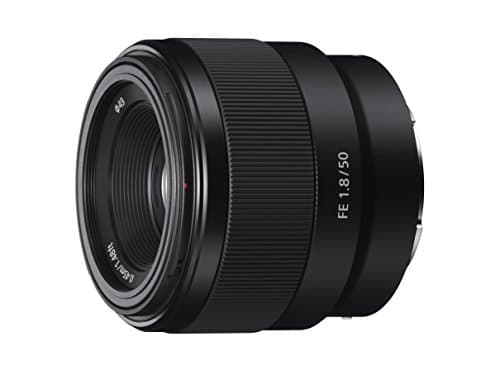
| 02 | Sony FE 50mm F1.8The cheapest way onto Sony full-frame with a fast prime — it takes lovely photos, as long as you can live with slow, audible autofocus. | Cheapest fast prime for Sony full-frame | | $248.00·Amazon |
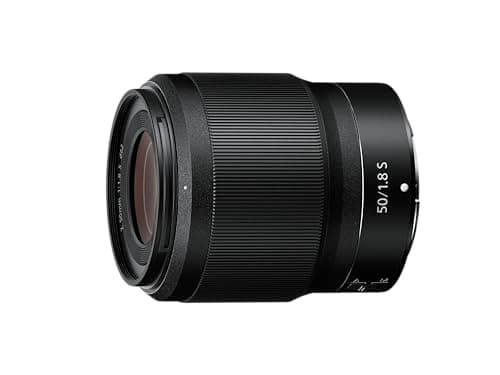
| 03 | Nikon Z 50mm f/1.8 SThe sharpest 'nifty fifty' here by a clear margin — Nikon's S-line optics and near-silent autofocus in a lens that costs more but earns it. | The sharpest 50mm, for Nikon Z | | $466.95·Amazon |
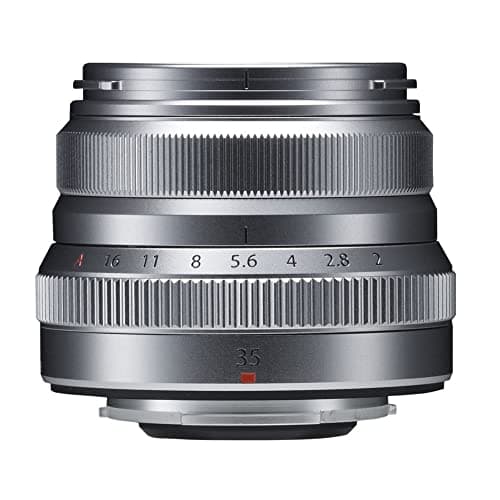
| 04 | Fujifilm XF 35mm F2 R WRFujifilm's nifty fifty: a 35mm that frames like a 53mm on the X-system, wrapped in a weather-resistant metal body that punches above its price. | The nifty fifty for Fujifilm X | | $399.00·Amazon |
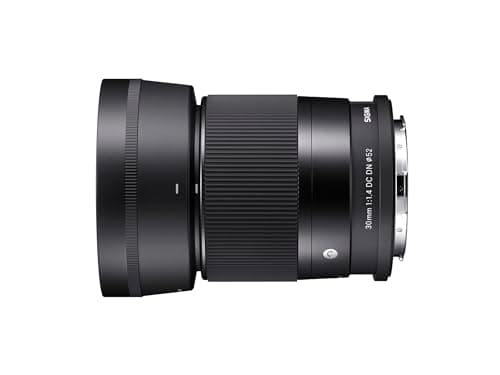
| 05 | Sigma 30mm F1.4 DC DNThe APS-C nifty fifty: a fast, sharp, affordable 30mm that frames like a ~45mm 'normal' lens and blurs backgrounds beautifully at f/1.4. | The best 50mm-equivalent for APS-C | | Check price → |
#ad · Live prices from the Amazon Product API, as of Jul 21, 2026. Where we have no verified live price, we show none — we would rather leave a gap than print a number that has rotted.
In detail
The picks, in full
The best nifty fifty for Canon
Canon RF 50mm F1.8 STM
50mm f/1.8Canon RF mount (full-frame)STM stepping-motor AFCompact and light (~160g)
The default first upgrade for any Canon mirrorless owner: tiny, sharp, genuinely cheap, and it gives your photos the soft-background 'real camera' look a kit lens can't.
- Sharpness
- 8
- Autofocus
- 7
- Aperture & bokeh
- 7
- Build & size
- 8
- Value
- 10
Pros
- +Renders a soft, blurred background at f/1.8 that instantly separates your subject from the clutter behind them
- +One of the smallest, lightest lenses you can buy for the system — it barely adds weight and disappears in a bag
- +A control ring lets you dial in aperture, ISO or exposure compensation without diving into menus
Cons
- −The STM focus motor can hunt and buzz in low light, and focus breathing is visible on video
- −Build is mostly plastic with a plastic mount — it feels as inexpensive as it is
Don't buy this if…
…you shoot an APS-C Canon body (an R50, R10 or R100) and want the classic 50mm 'normal' look. On those the 50mm frames like an 80mm short telephoto, so a wider lens gets you closer to a true nifty-fifty view.
Cheapest fast prime for Sony full-frame
Sony FE 50mm F1.8
50mm f/1.8Sony E mount (full-frame)DC-motor autofocusLightweight (~186g)
The cheapest way onto Sony full-frame with a fast prime — it takes lovely photos, as long as you can live with slow, audible autofocus.
- Sharpness
- 7
- Autofocus
- 5
- Aperture & bokeh
- 7
- Build & size
- 7
- Value
- 8
Pros
- +Delivers the fast-aperture, blurred-background look for less than almost any other full-frame prime
- +Small and light enough to leave on the camera as an everyday walk-around lens
- +Sharp in the center wide open and lovely by f/2.8 for portraits and street shots
Cons
- −The older DC focus motor is slow and audibly noisy — a real weak point for video and moving subjects
- −Some visible color fringing on high-contrast edges wide open that you'll want to correct in editing
Don't buy this if…
…you shoot much video or anything that moves quickly. The dated, noisy autofocus is this lens's one real flaw — a Sigma prime or Sony's own G-series 40mm/50mm focus far better if you can stretch.
The sharpest 50mm, for Nikon Z
Nikon Z 50mm f/1.8 S
50mm f/1.8Nikon Z mount (full-frame)S-line premium opticsWeather-sealed build
The sharpest 'nifty fifty' here by a clear margin — Nikon's S-line optics and near-silent autofocus in a lens that costs more but earns it.
- Sharpness
- 10
- Autofocus
- 9
- Aperture & bokeh
- 8
- Build & size
- 7
- Value
- 7
Pros
- +Exceptionally sharp corner to corner, even wide open — it out-resolves every other 50mm f/1.8 on this list
- +Fast, near-silent autofocus with minimal focus breathing, so it doubles as a strong video lens
- +Weather-sealed and solidly built, a genuine step up in feel from the budget nifty fifties
Cons
- −Bigger, heavier and much pricier than a typical f/1.8 nifty fifty — it's a premium lens, not a bargain
- −The performance only pays off on Nikon Z; there's no cheaper Nikon 50mm that matches it
Don't buy this if…
…you just want the cheap, fun 'first prime' experience. This is a near-professional lens at a near-professional price — if the budget is tight, Nikon's 40mm f/2 gets you a similar look for far less.
The nifty fifty for Fujifilm X
Fujifilm XF 35mm F2 R WR
35mm f/2 (≈53mm equivalent)Fujifilm X mount (APS-C)Weather-resistant (WR)Compact metal build
Fujifilm's nifty fifty: a 35mm that frames like a 53mm on the X-system, wrapped in a weather-resistant metal body that punches above its price.
- Sharpness
- 8
- Autofocus
- 8
- Aperture & bokeh
- 7
- Build & size
- 9
- Value
- 8
Pros
- +The ≈53mm-equivalent field of view is the classic 'normal' look — natural, versatile, great for everyday and portraits
- +Weather-resistant metal construction feels far more premium than the plastic budget primes on other mounts
- +Fast, quiet autofocus and a compact shape that balances beautifully on small Fujifilm bodies
Cons
- −The front element extends slightly as it focuses, and close-up focus can be a touch slower than newer designs
- −f/2 gathers a little less light and blurs backgrounds a little less than the f/1.4 APS-C options
Don't buy this if…
…you want the absolute maximum background blur. On APS-C a faster f/1.4 prime on your system throws the background further out of focus — the trade is Fuji's lovely build and weather sealing.
The best 50mm-equivalent for APS-C
Sigma 30mm F1.4 DC DN
30mm f/1.4 (≈45mm equivalent)Sony E mount (APS-C)Stepping-motor AFBrass bayonet mount
The APS-C nifty fifty: a fast, sharp, affordable 30mm that frames like a ~45mm 'normal' lens and blurs backgrounds beautifully at f/1.4.
- Sharpness
- 8
- Autofocus
- 8
- Aperture & bokeh
- 8
- Build & size
- 8
- Value
- 9
Pros
- +The ≈45mm-equivalent view is the true 'nifty fifty' framing on a crop-sensor camera — natural and flexible
- +f/1.4 gathers more light and blurs backgrounds more than the f/1.8 full-frame primes, for less money
- +Sharp wide open with fast, quiet autofocus that suits both stills and video
Cons
- −Covers APS-C only, so it won't work uncropped on a full-frame body
- −Some color fringing and slightly busy background blur in high-contrast scenes
Don't buy this if…
…you shoot full-frame. This lens is designed for crop-sensor cameras like the Sony ZV-E10 or a6400 — on a full-frame body it vignettes heavily or forces a crop.
How to choose a 50mm lens
Start with your mount — a lens only fits the system it's made for. Canon RF, Sony E, Nikon Z and Fujifilm X lenses are not interchangeable. Then decide whether you have a full-frame or APS-C body, because that changes which focal length gives you the classic look.
Full-frame or APS-C?
On a full-frame camera, buy an actual 50mm — the Canon RF 50mm f/1.8, Sony FE 50mm f/1.8 or Nikon Z 50mm f/1.8 S all frame the way a nifty fifty should. On an APS-C camera (a Sony ZV-E10 or a6400, a Canon R50, a Fujifilm X body), a 50mm becomes a short portrait lens; for the everyday "normal" view you want a ~30-35mm, which is where the Sigma 30mm f/1.4 and Fujifilm XF 35mm f/2 come in. See our APS-C vs full-frame guideif you're unsure which sensor your camera has.
f/1.8 or f/1.4 — is it worth paying up?
f/1.4 lets in about twice the light of f/1.8 and blurs the background a little more. For most people f/1.8 is plenty and keeps the lens small and cheap. Pay up for f/1.4 if you shoot a lot in low light or chase the maximum background blur — on APS-C the fast f/1.4 primes also help make up for the smaller sensor's naturally deeper focus.
Where the money and mounts fall
Honest note: the cheapest fast primes live on Sony E-mount, where third-party makers like Sigma and Viltrox compete hardest — that's why the APS-C value pick here is E-mount. Canon RF, Nikon Z and Fujifilm X each have a strong first-party 50mm-class prime (shown above), but their cheapest third-party options are thinner. If widest lens choice at the lowest price is your priority, that's a point for Sony; if you already own a system, buy the native pick for it and enjoy it. A nifty fifty is a joy on any mount.
How we picked
We do not run a testing lab
We compiled the manufacturers' published specifications and manuals, did the cost math, and scored each product against a published rubric. The scores are judgments from that documented research — they are notmeasurements we took, because we do not have a lab and we are not going to pretend we do. Where a number came from someone else's testing, we name and link them in Sources.
Questions
Frequently asked
What is a nifty fifty and why should I buy one?+
A 'nifty fifty' is a cheap, fast 50mm prime lens (or its crop-sensor equivalent, around 30-35mm). It's the single upgrade that most improves a beginner's photos: it gathers far more light than a kit zoom, blurs backgrounds for that 'real camera' look, and costs less than almost any other lens. It's the first lens most people should add.
What is the difference between f/1.8 and f/1.4?+
The f-number is how wide the lens opens. f/1.4 lets in roughly twice as much light as f/1.8 and blurs the background a little more, which helps in dim rooms and for maximum subject separation. f/1.8 is smaller, lighter and cheaper, and is more than enough for most people. Pay up for f/1.4 only if you often shoot in low light.
Do I need a 50mm on an APS-C camera, or a 35mm?+
On an APS-C (crop-sensor) camera, a 50mm lens frames like an 80mm — a short portrait length, not the everyday "normal" look. For the classic nifty-fifty view on APS-C you want around 30-35mm, like the Sigma 30mm f/1.4 or Fujifilm XF 35mm f/2. Our
APS-C vs full-frame guide explains crop factor in plain terms.
Canon RF 50mm f/1.8 or Sony FE 50mm f/1.8 — which is better?+
Both are inexpensive full-frame nifty fifties with similar image quality. The Canon RF 50mm has a control ring and a smaller, lighter body; the Sony FE 50mm's autofocus is notably slower and noisier, which matters for video and moving subjects. Buy whichever matches your camera's mount — they don't cross-fit.
Receipts
Sources
We do not run a testing lab, and we do not pretend to. Specs come from manufacturer sheets and manuals; where a figure came from someone else's measurement, we name and link them. Where we could not verify something, we say so on the page rather than quietly leaving it out. Read our full method.