Skip to content
Focal & Frame

Glass · Lenses

The Best Nikon Z Lenses for Beginners

Nikon's Z range is the shortest list of the big three systems — which makes choosing easy, once you know which lenses are actually worth owning.

By Stephen V.Updated How we research
#ad

We earn a commission when you buy through our Amazon links, at no extra cost to you. It never decides our rankings — we say so when the cheaper pick is the better buy. How this works.

For most Nikon Z owners the first lens to buy is the Z 40mm f/2: small, inexpensive, bright enough to blur a background, and it works on both DX crop bodies and full-frame Z cameras. If the budget is tighter, the Viltrox 35mm f/1.7 does a similar job on a DX body for less. Everything below assumes you already own a Nikon Z camera — if you are still choosing, our Sony vs Canon vs Nikon comparison covers the system decision first.

It is worth being honest about the state of the Nikon Z lens range, because it is the main criticism leveled at the system. Nikon's crop-sensor Z DX lineup is short — a handful of zooms and two primes — and considerably smaller than what a Sony E-mount shooter can browse. What exists, though, is good: the DX 16-50mm is one of the best kit zooms anybody makes, and Nikon's S-line primes are among the sharpest lenses in their class. The gap is in cheap, plentiful choice, not in quality.

Two things soften that gap. First, full-frame Z lenses work perfectly on DX bodies — the camera just uses the middle of the image circle — so the Z 40mm f/2 and Z 50mm f/1.8 S are both fair game whichever Nikon you own. Second, third-party makers have finally arrived: Viltrox now builds affordable autofocus primes for Z mount, which is exactly what the system was missing. And if you want to go cheaper still, Nikon's FTZ adapter takes decades of second-hand F-mount DSLR lenses.

The short answer

Quick picks

#ProductBest forScorePrice
01
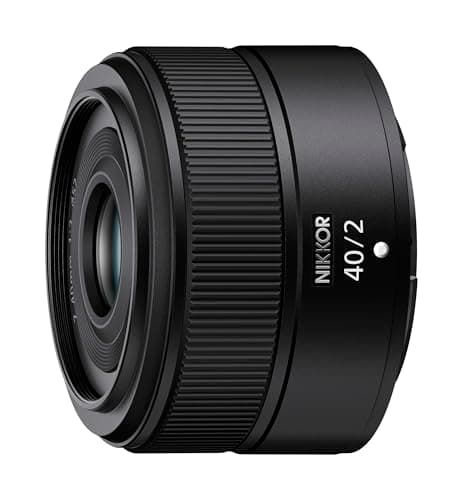
Nikon Nikon NIKKOR Z 40mm f/2
Nikon NIKKOR Z 40mm f/2

The first lens to buy for almost any Nikon Z camera — small, inexpensive, bright, and it fits both DX and full-frame bodies.

The best first prime for Nikon Z
8.2
$276.95Amazon
02
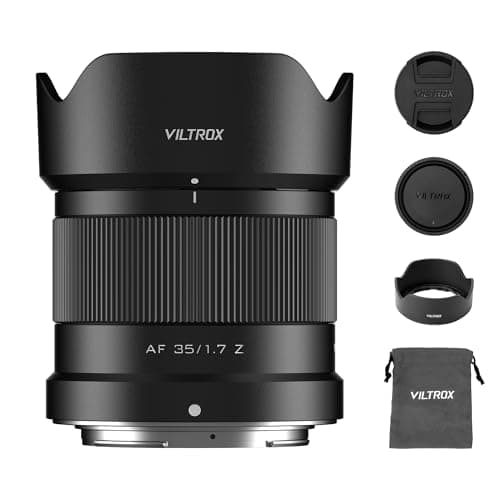
Viltrox Viltrox AF 35mm F1.7 Air (Z-mount)
Viltrox AF 35mm F1.7 Air (Z-mount)

The cheapest way to get a genuinely fast prime onto a Nikon Z DX body — and the lens that proves third-party Z-mount support has finally arrived.

The budget fast prime for Nikon Z DX
8.2
$179.00Amazon
03
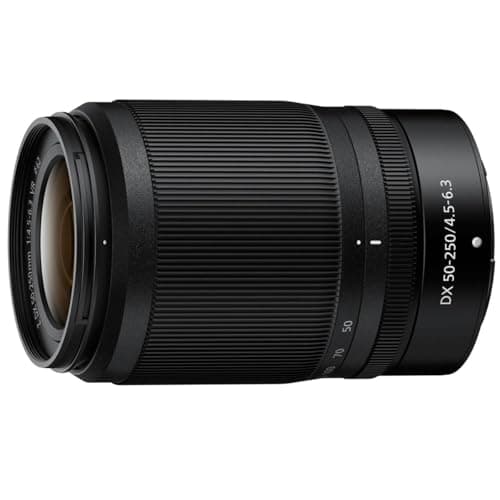
Nikon Nikon NIKKOR Z DX 50-250mm VR
Nikon NIKKOR Z DX 50-250mm VR

The best cheap telephoto here — 375mm of equivalent reach, stabilized, and light enough that you will actually bring it.

The best beginner telephoto
7.4
$406.95Amazon
04
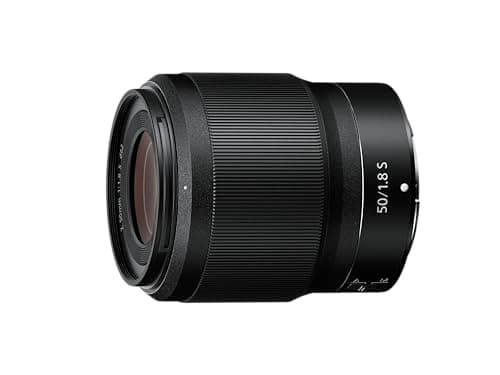
Nikon Nikon Z 50mm f/1.8 S
Nikon Z 50mm f/1.8 S

The sharpest 'nifty fifty' here by a clear margin — Nikon's S-line optics and near-silent autofocus in a lens that costs more but earns it.

The sharpest 50mm, for Nikon Z
8.2
$566.95Amazon
05
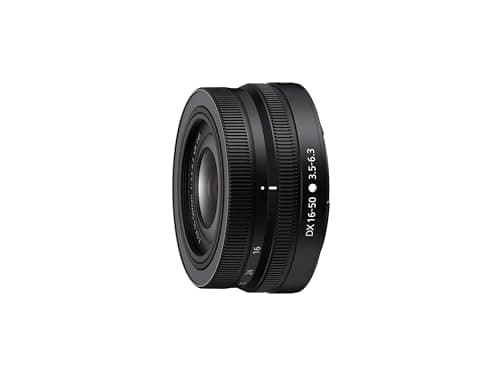
Nikon Nikon NIKKOR Z DX 16-50mm VR
Nikon NIKKOR Z DX 16-50mm VR

One of the best kit zooms anybody makes: tiny, stabilized, and sharper than a bundled lens has any business being.

The everyday walkaround zoom
7.2
$326.95Amazon

#ad · Live prices from the Amazon Product API, as of Sep 4, 2026. Where we have no verified live price, we show none — we would rather leave a gap than print a number that has rotted.

In detail

The picks, in full

01
Nikon Nikon NIKKOR Z 40mm f/2

The best first prime for Nikon Z

Nikon NIKKOR Z 40mm f/2

40mm f/2Nikon Z mount (full-frame)Stepping-motor AF52mm filter thread
8.2/10

The first lens to buy for almost any Nikon Z camera — small, inexpensive, bright, and it fits both DX and full-frame bodies.

Sharpness
8
Autofocus
8
Aperture & bokeh
8
Build & size
7
Value
10

Pros

  • f/2 is around three stops brighter than the long end of a kit zoom, which is the difference between a usable indoor photo and a blurred one
  • Genuinely pocketable and light — it makes a Z30 or Z50 II feel like a compact camera rather than a rig
  • Works on DX and full-frame Z bodies, so it survives an upgrade instead of being sold on with the camera

Cons

  • On a DX body the 1.5x crop frames it like a 60mm equivalent, which is a little tight for group shots and interiors
  • Plastic mount and a simple build — this is a value lens, and it feels like one next to Nikon's S-line

Don't buy this if…

you mostly shoot wide scenes or film yourself at arm's length on a DX body. The 60mm-equivalent framing is too tight for that — the DX 16-50mm or the DX 24mm f/1.7 suit those jobs better.

$276.95View on Amazon

Price as of Sep 4, 2026. Prices change — Amazon's is the one that counts.

#ad · we may earn a commission from this link to Nikon NIKKOR Z 40mm f/2

02
Viltrox Viltrox AF 35mm F1.7 Air (Z-mount)

The budget fast prime for Nikon Z DX

Viltrox AF 35mm F1.7 Air (Z-mount)

35mm f/1.7Nikon Z mount (APS-C)Autofocus, USB-C firmware updatesUnder 200g
8.2/10

The cheapest way to get a genuinely fast prime onto a Nikon Z DX body — and the lens that proves third-party Z-mount support has finally arrived.

Sharpness
8
Autofocus
7
Aperture & bokeh
9
Build & size
7
Value
10

Pros

  • f/1.7 for a fraction of first-party prime money — the single cheapest route to real background blur on a Z DX camera
  • Very light and small, so it suits the compact Z30 and Z50 II bodies without upsetting the balance
  • Firmware is user-updatable over USB-C, which matters for a third-party lens on a mount that is still evolving

Cons

  • Autofocus is a little slower and noisier than Nikon's own stepping-motor lenses, which shows on moving subjects
  • APS-C only — put it on a full-frame Z body and the camera crops, costing you resolution

Don't buy this if…

you shoot fast action or expect to move to a full-frame Nikon. The autofocus is not the quickest here, and the APS-C image circle does not cover a full-frame sensor — the Z 40mm f/2 is the safer long-term buy.

$179.00View on Amazon

Price as of Sep 4, 2026. Prices change — Amazon's is the one that counts.

#ad · we may earn a commission from this link to Viltrox AF 35mm F1.7 Air (Z-mount)

03
Nikon Nikon NIKKOR Z DX 50-250mm VR

The best beginner telephoto

Nikon NIKKOR Z DX 50-250mm VR

50-250mm f/4.5-6.3Nikon Z mount (APS-C)VR optical stabilization~405g, retracting
7.4/10

The best cheap telephoto here — 375mm of equivalent reach, stabilized, and light enough that you will actually bring it.

Sharpness
8
Autofocus
8
Aperture & bokeh
4
Build & size
8
Value
9

Pros

  • A 375mm equivalent field of view on a DX body brings distant sport and wildlife into genuinely usable framing
  • VR stabilization is essential at this focal length and Nikon's implementation here is among the better cheap ones
  • Retracts down and weighs about 405g, so it is a lens you carry rather than one you plan a day around

Cons

  • f/6.3 at full zoom means daylight only in practice — indoor sport pushes ISO into visible grain
  • APS-C only, so it crops heavily on a full-frame Z body

Don't buy this if…

you mainly shoot indoor sport or evening events. A slow telephoto cannot gather enough light for that, and no amount of stabilization freezes a moving subject — you need a fast telephoto or a different lens entirely.

$406.95View on Amazon

Price as of Sep 4, 2026. Prices change — Amazon's is the one that counts.

#ad · we may earn a commission from this link to Nikon NIKKOR Z DX 50-250mm VR

04
Nikon Nikon Z 50mm f/1.8 S

The sharpest 50mm, for Nikon Z

Nikon Z 50mm f/1.8 S

50mm f/1.8Nikon Z mount (full-frame)S-line premium opticsWeather-sealed build
8.2/10

The sharpest 'nifty fifty' here by a clear margin — Nikon's S-line optics and near-silent autofocus in a lens that costs more but earns it.

Sharpness
10
Autofocus
9
Aperture & bokeh
8
Build & size
7
Value
7

Pros

  • Exceptionally sharp corner to corner, even wide open — it out-resolves every other 50mm f/1.8 on this list
  • Fast, near-silent autofocus with minimal focus breathing, so it doubles as a strong video lens
  • Weather-sealed and solidly built, a genuine step up in feel from the budget nifty fifties

Cons

  • Bigger, heavier and much pricier than a typical f/1.8 nifty fifty — it's a premium lens, not a bargain
  • The performance only pays off on Nikon Z; there's no cheaper Nikon 50mm that matches it

Don't buy this if…

you just want the cheap, fun 'first prime' experience. This is a near-professional lens at a near-professional price — if the budget is tight, Nikon's 40mm f/2 gets you a similar look for far less.

$566.95View on Amazon

Price as of Sep 4, 2026. Prices change — Amazon's is the one that counts.

#ad · we may earn a commission from this link to Nikon Z 50mm f/1.8 S

05
Nikon Nikon NIKKOR Z DX 16-50mm VR

The everyday walkaround zoom

Nikon NIKKOR Z DX 16-50mm VR

16-50mm f/3.5-6.3Nikon Z mount (APS-C)VR optical stabilizationRetracting, ~135g
7.2/10

One of the best kit zooms anybody makes: tiny, stabilized, and sharper than a bundled lens has any business being.

Sharpness
7
Autofocus
8
Aperture & bokeh
4
Build & size
8
Value
9

Pros

  • Collapses to almost nothing when retracted, so a Z30 or Z50 II with this on genuinely fits in a coat pocket
  • VR stabilization matters more on Nikon DX than elsewhere, because no current DX body has in-body stabilization
  • Sharp across the range and wide enough at 16mm (24mm equivalent) to film yourself at arm's length

Cons

  • Slow: f/6.3 at the long end lets in far less light than a prime, so indoor and evening shooting is a struggle
  • Backgrounds stay largely in focus — you will not get much subject separation from a lens this slow

Don't buy this if…

you already have it in a kit and are shopping for an upgrade. Buying it separately only makes sense if your camera came body-only — otherwise put the money into a fast prime, which changes your photographs far more.

$326.95View on Amazon

Price as of Sep 4, 2026. Prices change — Amazon's is the one that counts.

#ad · we may earn a commission from this link to Nikon NIKKOR Z DX 16-50mm VR

How to buy lenses for a Nikon Z camera

Start by shooting the kit zoom for a month and paying attention to where the zoom ring ends up. That is not filler advice — it is the cheapest way to discover whether you are a wide shooter, a portrait shooter or a reach shooter, and it stops you buying the wrong lens twice.

DX and full-frame Z lenses: what fits what

Nikon uses one physical Z mount for both its crop-sensor (DX) and full-frame cameras. Full-frame Z lenses fit DX bodies and work perfectly — they are just bigger and pricier than they need to be, and their field of view is narrowed by the crop (a 40mm behaves like a 60mm equivalent on DX). DX lenses fit full-frame bodies too, but the camera crops to a smaller image to avoid dark corners, so you lose resolution. In practice: buy DX lenses if you have a DX body and want small and cheap; buy full-frame Z lenses if you might move up later.

Why f/1.7 or f/2 changes more than sharpness

The single biggest visible upgrade from a kit zoom is aperture. A kit zoom is around f/3.5 to f/6.3; a prime at f/1.7 or f/2 lets in several times more light. That buys you two things at once — usable photographs indoors and in the evening without pushing ISO into grain, and the blurred background that separates a subject from a cluttered room. Our exposure triangle explainer covers why, if the numbers are unfamiliar.

The third-party question

For years Z mount had almost no affordable third-party autofocus lenses, which was a fair reason to choose Sony instead. That has changed: Viltrox in particular now makes several well-regarded Z-mount autofocus primes at prices Nikon does not compete at. They are not identical to first-party glass — autofocus is generally a little slower and firmware support depends on the maker — but the price difference is large and the optics are good. We include one here for exactly that reason.

The FTZ adapter, and when it is worth it

Nikon's FTZ adapter lets Z bodies use F-mount DSLR lenses, usually keeping autofocus on the newer ones. Because Nikon made F-mount lenses for decades, the second-hand supply is enormous and cheap. The costs are size — an adapted lens is longer and heavier than a native one — and the adapter itself. It is an excellent route if you want a specialist lens (a fast telephoto, a macro) without paying native prices, and unnecessary if you just want one good prime. Our mirrorless vs DSLR guide has more on adapting older glass.

Do not forget the rest of the kit

If you are shooting video, a fast 4K-rated SD card and a decent microphone will improve your results more than a second lens. And because no current Nikon DX body has in-body stabilization, handheld video benefits from either a stabilized (VR) lens or a budget gimbal.
How we picked

We do not run a testing lab

We compiled the manufacturers' published specifications and manuals, did the cost math, and scored each product against a published rubric. The scores are judgments from that documented research — they are notmeasurements we took, because we do not have a lab and we are not going to pretend we do. Where a number came from someone else's testing, we name and link them in Sources.

Questions

Frequently asked

What is the best first lens for a Nikon Z camera?
The Nikon Z 40mm f/2 for most people — it is small, affordable, bright enough to blur backgrounds, and it works on both DX and full-frame Z bodies, so it survives an upgrade. On a tighter budget, the Viltrox AF 35mm f/1.7 covers similar ground on a DX camera for less. Both are big steps up from a kit zoom.
Can I use full-frame Nikon Z lenses on a Z30 or Z50 II?
Yes. Nikon uses one Z mount for both, so full-frame Z lenses fit crop-sensor DX bodies and work normally — the camera just uses the center of the image. The field of view is narrowed by the 1.5x crop, so a 40mm frames like a 60mm equivalent. The catch is size and price, not compatibility.
Does Nikon Z have enough lenses?
For beginners, yes — but the crop-sensor DX list is short and it is the fairest criticism of the system. What exists is high quality, full-frame Z lenses fit DX bodies, Viltrox and others now make affordable Z-mount autofocus primes, and the FTZ adapter opens decades of cheap second-hand F-mount glass. See our brand comparison for how it stacks up.
Is the Nikon Z DX 16-50mm kit lens worth keeping?
Yes — it is genuinely one of the best kit zooms any manufacturer makes: unusually small, stabilized, and sharper than kit lenses have any right to be. Keep it as your walkaround and add a fast prime for low light and background blur rather than replacing it with another zoom.
What lens should I buy for a Nikon Z for video?
A stabilized (VR) lens matters more on Nikon DX than on systems with in-body stabilization, because no current DX body has IBIS. The DX 16-50mm VR is a strong video walkaround for that reason. For low-light interviews, a fast prime plus a gimbal is the better setup. See best lenses for video.

Keep reading

Receipts

Sources

We do not run a testing lab, and we do not pretend to. Specs come from manufacturer sheets and manuals; where a figure came from someone else's measurement, we name and link them. Where we could not verify something, we say so on the page rather than quietly leaving it out. Read our full method.