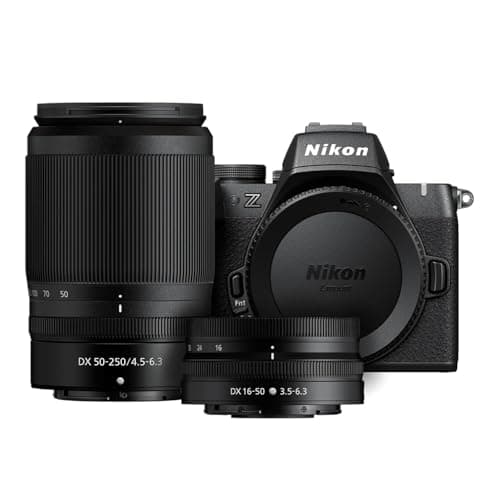
The Nikon Z50 II is the best autofocus you can buy for the money in a beginner body: it borrows the EXPEED 7 processor and subject detection straight from Nikon's flagship cameras. Add the best grip and viewfinder in its class, and the only real catch is a DX lens range that is still growing.
Our usual note first. We have not lab-tested the Z50 II. This review is compiled from Nikon's published specifications and the reported experience of owners, then scored against our rubric. The judgments are informed opinion from documented research, not measurements from a bench we do not run.
Who it's for
The Z50 II is for the beginner who wants one body that does a bit of everything and does the hard part — nailing focus — better than anything else at the price. Family life, travel, portraits, the odd bit of action, some video: it takes all of it in stride. The standout is how confident it feels in the hand, which makes it a natural pick for someone who wants a camera that feels like a proper camera, not a shrunken toy.
It suits stills-leaning and hybrid shooters especially well. The viewfinder is bright and large, the grip is deep, and the autofocus is reassuring enough that you can hand it to a less-technical partner and trust it to get the shot. If you are choosing your first system and value getting sharp photos of moving kids or pets above all, this is the body that makes that easiest.
Who might skip it? The shooter who wants the widest choice of tiny, cheap native lenses today, or the pure vlogger who wants the lightest possible flip-screen rig. Nikon covers those buyers with the Z30 — we compare the two directly in our Z30 vs Z50 II breakdown.
It is also a smart pick for the person stepping up from a phone who wants a camera that feels substantial and instills confidence. The controls are laid out sensibly, the automatic modes are genuinely good, and the deep grip means it does not feel fiddly in larger hands. You can shoot it on auto for a month, then start turning dials as you learn, and the camera keeps up with you the whole way. Few beginner bodies bridge that gap from casual to deliberate as comfortably.
Where it shines
Flagship autofocus at a beginner price
The Z50 II's headline is the EXPEED 7 processor, the same brain that powers Nikon's professional Z8 and Z9. It brings deep-learning subject detection down to this price for the first time, so the camera recognizes and tracks people, animals, birds, cars and more, latching onto an eye and holding it while the subject moves. For a beginner, that is a genuine class above — you spend your attention on the moment instead of on chasing focus.
This is the kind of upgrade that used to define much pricier cameras, and it is the single strongest reason to choose the Z50 II. It turns the most frustrating part of learning photography — getting sharp shots of things that move — into something the camera largely handles for you.
A grip and viewfinder that feel a class up
The Z50 II has the deepest, most confident grip of the beginner bodies we cover; it feels like a larger camera than it is, and it stays comfortable through a long day with a bigger lens attached. The viewfinder is bright and generously sized, which makes composing in harsh light a pleasure rather than a squint. Handling is the quiet thing beginners underrate, and this is where the Z50 II earns its keep every time you pick it up.
The Picture Control button for quick color
Nikon added a dedicated Picture Control button that lets you flip between color looks — including new richer, film-inspired profiles — without diving into a menu. It is a small touch that makes the camera more fun to shoot and gets you a finished look straight out of camera, closing some of the gap to Fujifilm's celebrated simulations. It shoots clean, uncropped 4K30 as well, so video is a real strength rather than an afterthought.
If you are weighing this body against the field, see where it lands in our best for beginners ranking and the best under $1,000 ranking, and read the APS-C vs full frame guide if you are still deciding on sensor size.
Clean 4K and a real hybrid toolkit
Video is a genuine strength rather than a checkbox. The Z50 II records uncropped, oversampled 4K30 that looks clean straight out of camera, and the newer processor adds a deeper feature set than the older Nikon bodies could manage. The fully articulating screen faces forward for filming yourself, there is a headphone and microphone path for better sound, and the same subject-detection autofocus that shines for stills keeps your face sharp while you talk. For a creator who shoots stills and video in equal measure, that balance is exactly what makes it such an easy one-camera recommendation.
Stills quality and the 21MP question
At 21MP the Z50 II resolves a touch less than its 24 to 26MP rivals, but in practice the files are detailed, punchy and more than enough for large prints or any screen. Lower resolution has a quiet upside as well: the pixels are a little larger, which helps in dim light where the sensor keeps grain tidy at the sensitivities beginners actually use. Paired with the richer color profiles and a fast prime, the Z50 II produces stills that look far more expensive than the camera is.
The honest catch
The DX lens range is still growing
The one real limitation is glass. Nikon's Z DX native lens lineup — the small, affordable lenses made for this crop-sensor body — is the thinnest of the big four systems. There are good options, and the range is expanding, but you have fewer cheap native primes to choose from than a Sony shooter does. In practice you will lean on the FTZ adapter to mount older, inexpensive F-mount lenses, which works well and keeps costs down but adds a little bulk.
Resolution and the small stuff
At 21MP the Z50 II has the lowest resolution of this group. For almost everyone that is a non-issue — it is plenty for prints and screens — but it leaves marginally less room to crop hard than the 24 to 26MP rivals. It is also worth knowing there is no in-body stabilization, so handheld video relies on a stabilized lens. None of this undoes the autofocus advantage; it is simply the honest ledger against it.
What the adapter route really costs you
Leaning on the FTZ adapter to mount cheap F-mount lenses works well, but be honest with yourself about the trade: the adapter adds length and a little weight, and some older lenses focus more slowly than modern native glass. For most beginners the savings are worth it, and the growing native Z DX range covers the everyday focal lengths. Still, if you want the smallest possible kit with the widest choice of tiny native primes today, a rival system will get you there with fewer asterisks — that is the clearest reason to look elsewhere.
The video small print
The 4K is clean and the autofocus follows you well, but the Z50 II is not a specialist video camera, and it is fair to say so. There is no in-body stabilization, so walking footage needs a stabilized lens or a gimbal, and the most demanding 4K modes can show rolling shutter on quick pans, as most cameras in this class do. For talking-head clips, family video and travel B-roll it is more than capable; for run-and-gun handheld work, a stabilized body such as the Fujifilm X-S20 will serve you better. Know which kind of video you shoot before you weigh this against it.
If native lens choice is your top priority, weigh the deeper systems in our beginner ranking, and pair whatever you choose with a fast prime from our 50mm guide. For the shooter who values getting the shot in focus above lens-catalog depth, though, the Z50 II is the standout of its class.
Add it all up and the Nikon Z50 II is the beginner camera to buy when getting the shot in focus matters most. You accept a smaller native lens range and lean on an adapter for the cheapest glass; in return you get autofocus that used to define cameras costing several times as much, a grip and viewfinder that punch above the price, and clean video to match. For a first camera you will not outgrow in a hurry, that is a very strong hand to be dealt.