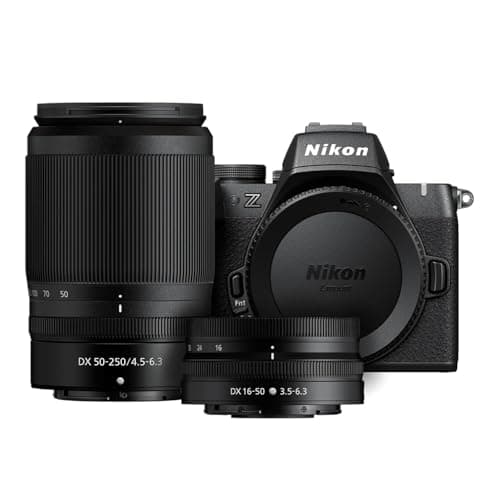
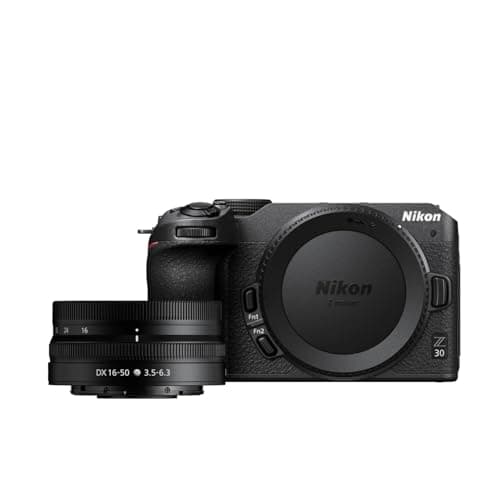
Buy the Nikon Z30 if you film yourself and want the lightest, cheapest body — it drops the viewfinder on purpose. Buy the Nikon Z50 II if you shoot stills or a mix, because it adds a viewfinder and much newer EXPEED 7 autofocus from Nikon's flagships. Both share the Z DX mount and the same excellent handling, so the decision is really about the viewfinder and the autofocus generation.
These two Nikons look similar and share a lens system, but they are aimed at different people. The Z30 is built vlog-first; the Z50 II is the newer, more capable all-rounder. Here is exactly where they part ways.
The good news is that neither is a bad camera — they share the same class of sensor, the same superb grip and the same lens mount, so you are choosing a shape and a feature set, not a winner and a loser. Work out how often you actually shoot stills in daylight versus how often you film yourself, and the answer tends to fall out on its own before you have read a single spec.
The differences that actually matter
1. Viewfinder: the Z50 II has one, the Z30 doesn't
This is the clearest split. The Z50 II has a built-in electronic viewfinder; the Z30 has none at all. If you shoot stills outdoors, that matters a lot — in bright sun a rear screen washes out and a viewfinder lets you see the shot and hold the camera steadier against your face. The Z30 leaves the viewfinder out deliberately to be smaller, lighter and cheaper, which is fine if you mostly film yourself on the flip screen but a real drawback for mixed daylight shooting.
It helps to picture the day-to-day. With the Z50 II you can lift the camera to your eye at the beach or on a bright trail and frame confidently while the rear screen would be a glary mirror. With the Z30 you hold the camera out and squint at the screen, shading it with your other hand, which is fine indoors or when you are the subject but frustrating for landscapes and street shots in sun. If most of your shooting happens outdoors and pointed away from you, the viewfinder is not a luxury — it is the feature you will miss most on the Z30.
2. Autofocus: the Z50 II is a generation ahead
The Z50 II carries the EXPEED 7 processor from Nikon's professional Z8 and Z9, bringing deep-learning subject detection that recognizes and tracks people, animals, birds and vehicles. The Z30 uses the older autofocus system, which is still perfectly good for talking-head video and everyday shots but lacks the newer camera's sticky, confident tracking of moving subjects. For stills of kids and pets, the Z50 II is meaningfully more reliable at getting the eye sharp.
3. Handling: both are great, the Z50 II is a touch bigger
Nikon gives both bodies one of the best grips in the beginner class — genuinely comfortable to hold, including at arm's length for vlogging. The Z30 is the lighter and more compact of the two, which makes it the easier one-handed vlogging rig. The Z50 II is slightly larger and heavier, partly to fit the viewfinder, and rewards that with a bigger, more substantial feel in the hand. Both have fully articulating screens for filming yourself.
4. Video: a near tie
For video these two are close. Both shoot uncropped 4K30 and both are built with creators in mind — a tally lamp, a large record button and a flip-out screen. Neither has in-body stabilization, so walking footage leans on a stabilized lens or a gimbal on both. The Z50 II adds the newer processor's benefits and richer color profiles, but for straightforward vlogging the video experience is broadly the same. Call this one even.
5. Price and lenses: the Z30 costs less, both share the mount
The Z30 is the cheaper body, and for a budget-focused creator that gap can go toward a lens or a microphone. Both cameras use the Nikon Z DX mount and share the same honest limitation: the native DX lens range is the smallest of the big four, so you will often mount inexpensive older F-mount lenses with the FTZ adapter. That path is identical for both, so lenses are not a reason to pick one over the other.
6. Stills quality: the same sensor story
Both cameras use a comparable APS-C sensor, so in good light the photos are close to identical in detail and color. The Z50 II's edge for stills is not the sensor but the autofocus — its newer subject detection simply nails focus more often on moving people and pets, which is the difference between a keeper and a soft frame. If you only ever shot static scenes in good light, you would struggle to tell their files apart; it is the focus, not the pixels, that separates them.
7. Battery, ports and the small stuff
The two are closely matched on the practical details. Both take the same battery and a single SD card, both offer a microphone input for better sound, and both charge over USB-C in the field. The Z50 II's newer processor brings a few quality-of-life extras and the handy Picture Control button for quick color looks, but there is no dramatic gap in endurance or connectivity. Plan on carrying a spare battery for either if you shoot a long day.
8. Which one you will still be happy with in two years
This is the question worth sitting with. The Z30 is a focused tool that does vlogging beautifully and will keep doing it, but if your interests broaden into stills, travel or wildlife, the missing viewfinder and older autofocus start to bite. The Z50 II costs more now but flexes to cover more of what a growing photographer wants, which makes it the safer long-term pick for anyone unsure where their shooting will go. Buy the Z30 if you know you are a vlogger; buy the Z50 II if you suspect you are becoming a photographer.
One more way to frame it: the Z30 is the specialist and the Z50 II is the generalist. A specialist is the right call when you know exactly what you want from a camera and it is vlogging; a generalist is the safer bet when your interests are still forming. Because both cost real money and share the same lenses, the question is less about saving a little today and more about which body you will still be reaching for once the novelty wears off and you know what you actually like to shoot.
The bottom line
The Z30 and Z50 II are the same idea aimed at two different shooters. The Z30 is the lighter, cheaper, vlog-first body that trims the viewfinder to hit its size and price; the Z50 II is the newer all-rounder that adds a viewfinder and a genuinely better autofocus system for stills and hybrid work. They share the grip and the lens mount, so the choice is about how you shoot, not about image quality.
Buy the Z30 if you film yourself most of the time, you want the lightest one-handed rig, and the lower price matters. Buy the Z50 II if you shoot stills outdoors, you want a viewfinder, or you value the flagship-grade autofocus for photographing kids, pets and anything that moves. For a pure vlogger the Z30 is plenty; for a mixed shooter the Z50 II is the more future-proof buy.
There is a budget angle too. The Z30 frees up money you could put toward a lens, a microphone or a small gimbal — accessories that improve a vlog more than a viewfinder you will not use. If your entire kit budget is fixed, the cheaper body plus a better lens can beat the pricier body with the kit zoom. Weigh the whole kit, not just the two price tags side by side.
Want more detail? Read our full Nikon Z50 II review, see where the Z30 lands in the best budget ranking, and pair either with a fast prime from our 50mm guide.
Whichever you land on, the first upgrade is the same for both: a fast prime that opens up low light and gives you the soft, blurred backgrounds a kit zoom cannot. Because they share the Nikon Z DX mount, any lens you buy now moves straight over if you ever switch between these two bodies — so you can commit to the glass with confidence.
More on the cheaper of the two
If the Z30 is the one you are leaning towards, it is worth understanding exactly what it gives up to reach its price — the missing viewfinder is the headline, but the thin native DX prime range matters more over a few years. Our Nikon Z30 review covers both, and best lenses for Nikon Z maps the path out of the kit zoom.