Skip to content
Focal & Frame

Kit · Accessories

The Best SD Cards for 4K Video

The one spec that matters for 4K is the V-rating, not the big read-speed number on the front. Six cards ranked on the write speed your camera actually needs.

By Stephen V.Updated How we research
#ad

We earn a commission when you buy through our Amazon links, at no extra cost to you. It never decides our rankings — we say so when the cheaper pick is the better buy. How this works.

For most 4K shooters the SanDisk Extreme PRO (V30) is the safe default — a V30 rating guarantees the sustained write speed 4K needs, and it works in essentially every camera. If you shoot high-bitrate 4K/60 or a lot of slow-motion, step up to a V60 card like the Lexar 1667x or ProGrade Digital for headroom. Here's the one thing you have to understand first.

The number that matters for 4K is the V-rating (sustained write speed) — not the big read speed printed on the front of the card. That headline "200MB/s" figure is a read speed: how fast the card hands footage to your computer when you offload. Video recording is a writejob, and it demands a steady, guaranteed floor the card can sustain for minutes on end. A card with an eye-catching read speed but a low or missing V-rating can still stutter and drop frames while recording. Get this one distinction right and you'll never buy the wrong card again.

The short answer

Quick picks

#ProductBest forScorePrice
01
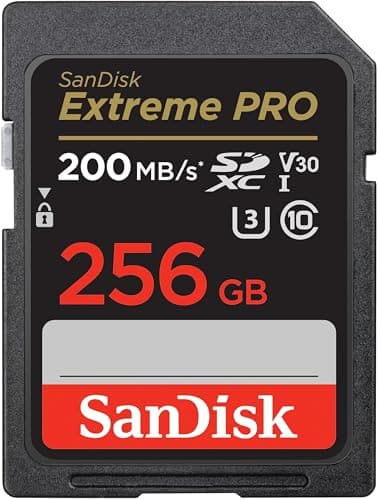
SanDisk SanDisk Extreme PRO SDXC (V30)
SanDisk Extreme PRO SDXC (V30)

The safe default for 4K. A V30 card that guarantees the sustained write speed 4K needs, from the brand most cameras are effectively tuned against.

The best all-round SD card for 4K
8.8
$40.70Amazon
02
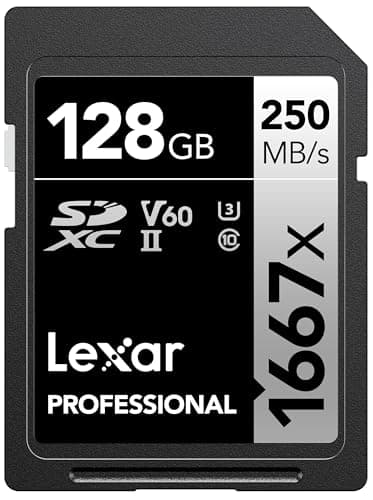
Lexar Lexar Professional 1667x SDXC (V60)
Lexar Professional 1667x SDXC (V60)

The sensible headroom upgrade. A UHS-II, V60 card that doubles the guaranteed write floor of a V30 and reads fast enough to offload footage quickly.

Headroom for high-bitrate and slow-motion 4K
8.2
$84.99Amazon
03
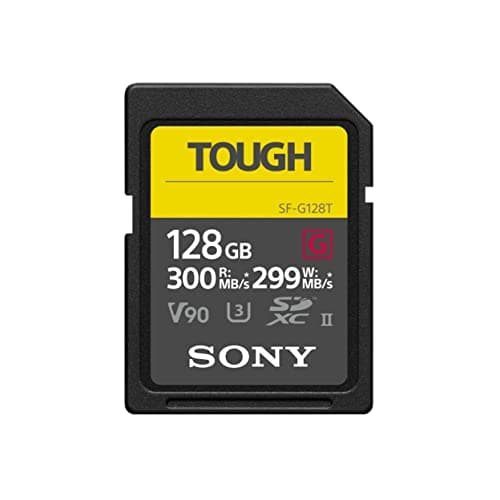
Sony Sony TOUGH-G SDXC (V90)
Sony TOUGH-G SDXC (V90)

The fastest and toughest card here — a UHS-II, V90 workhorse in a ribless, waterproof, bend-resistant body. Genuine overkill for most beginners.

Maximum speed and durability for demanding rigs
8.0
$243.00Amazon
04
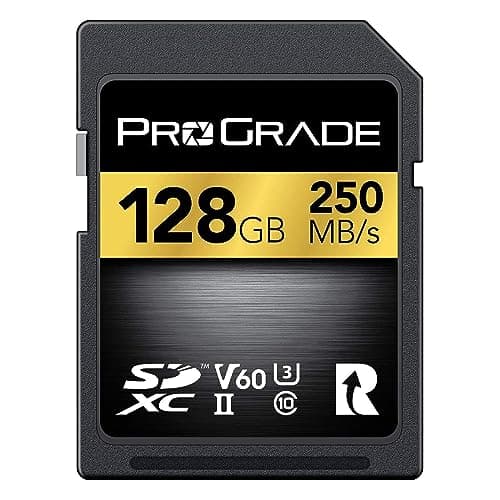
ProGrade Digital ProGrade Digital SDXC (V60)
ProGrade Digital SDXC (V60)

A pro-favorite V60 card that pairs the same 60MB/s sustained write floor as the Lexar with a reputation for careful, individually tested reliability.

Reliability-first V60 value
8.2
$186.99Amazon
05
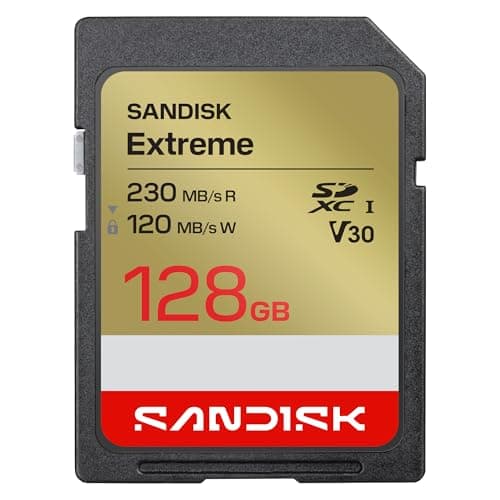
SanDisk SanDisk Extreme SDXC (V30)
SanDisk Extreme SDXC (V30)

The value 4K card. The Extreme PRO's cheaper sibling keeps the all-important V30 rating for 4K, trimming a little read speed to hit a friendlier price.

The best budget 4K card
8.6
$44.99Amazon
06
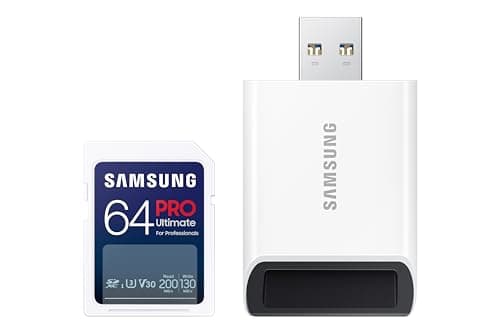
Samsung Samsung PRO Ultimate SDXC
Samsung PRO Ultimate SDXC

A durable, good-value V30 card that often ships with a USB reader — a tidy, low-fuss default for standard 4K on a beginner body.

Value V30 with a reader in the box
8.4
$99.99Amazon

#ad · Live prices from the Amazon Product API, as of Jul 21, 2026. Where we have no verified live price, we show none — we would rather leave a gap than print a number that has rotted.

In detail

The picks, in full

01
SanDisk SanDisk Extreme PRO SDXC (V30)

The best all-round SD card for 4K

SanDisk Extreme PRO SDXC (V30)

UHS-I bus, V30 (30MB/s sustained write)Up to ~200MB/s readClass 10 / U3Capacities to 1TB
8.8/10

The safe default for 4K. A V30 card that guarantees the sustained write speed 4K needs, from the brand most cameras are effectively tuned against.

Speed (V-rating)
8
Reliability
9
Capacity value
8
Compatibility
10
Value
9

Pros

  • The V30 rating guarantees a 30MB/s sustained write floor, which covers the bitrate of nearly all consumer 4K without dropped frames
  • UHS-I compatibility means it works in essentially every current mirrorless camera — no card-slot surprises
  • SanDisk's reliability record and near-universal camera testing make it the low-risk default choice

Cons

  • As a UHS-I card, its offload-to-computer read speed tops out well below UHS-II rivals
  • V30 has no headroom for very high-bitrate 4K/60 or heavy slow-motion — for that you want a V60 card

Don't buy this if…

you shoot high-bitrate 4K/60, 6K or a lot of slow-motion. Those modes can exceed a V30's guaranteed floor — step up to a V60 card like the Lexar 1667x or ProGrade for the headroom.

$40.70View on Amazon

Price as of Jul 21, 2026. Prices change — Amazon's is the one that counts.

#ad · we may earn a commission from this link to SanDisk Extreme PRO SDXC (V30)

02
Lexar Lexar Professional 1667x SDXC (V60)

Headroom for high-bitrate and slow-motion 4K

Lexar Professional 1667x SDXC (V60)

UHS-II bus, V60 (60MB/s sustained write)Up to ~250MB/s readClass 10 / U3Capacities to 512GB
8.2/10

The sensible headroom upgrade. A UHS-II, V60 card that doubles the guaranteed write floor of a V30 and reads fast enough to offload footage quickly.

Speed (V-rating)
9
Reliability
8
Capacity value
8
Compatibility
8
Value
8

Pros

  • The V60 rating guarantees a 60MB/s sustained write floor — real headroom for high-bitrate 4K/60 and slow-motion clips
  • UHS-II read speeds make copying a full card to your computer far quicker than any UHS-I card
  • A well-priced way into UHS-II, so you get the faster bus without paying V90 money

Cons

  • The UHS-II speed only kicks in on cameras and readers with UHS-II support — in a UHS-I camera it falls back to UHS-I rates
  • V60 is overkill for standard 4K/30, where a cheaper V30 already clears the requirement

Don't buy this if…

your camera only shoots standard 4K/30 and is UHS-I anyway. You'd pay for a faster bus and higher write floor you'll never reach — a SanDisk Extreme PRO V30 does that job for less.

$84.99View on Amazon

Price as of Jul 21, 2026. Prices change — Amazon's is the one that counts.

#ad · we may earn a commission from this link to Lexar Professional 1667x SDXC (V60)

03
Sony Sony TOUGH-G SDXC (V90)

Maximum speed and durability for demanding rigs

Sony TOUGH-G SDXC (V90)

UHS-II bus, V90 (90MB/s sustained write)Up to ~300MB/s readOne-piece ribless, waterproof + dustproofBend and drop resistant
8.0/10

The fastest and toughest card here — a UHS-II, V90 workhorse in a ribless, waterproof, bend-resistant body. Genuine overkill for most beginners.

Speed (V-rating)
10
Reliability
10
Capacity value
6
Compatibility
8
Value
6

Pros

  • The V90 rating guarantees a 90MB/s sustained write floor, so it handles the most demanding 4K/120 and high-bitrate modes without stress
  • The one-piece molded body has no ribs or write-protect switch to snap off, and it survives water, dust and serious bending force
  • Among the fastest read speeds available, so massive offloads finish quickly

Cons

  • It's the most expensive card here per gigabyte, so the toughness and V90 speed come at a real price
  • Most beginner cameras can't write fast enough to use a V90's ceiling, so much of what you pay for sits unused

Don't buy this if…

you shoot standard or even high-bitrate 4K on a beginner body. You'll pay a premium for a sustained write floor your camera can't approach — a V30 or V60 card is the honest match for that gear.

$243.00View on Amazon

Price as of Jul 21, 2026. Prices change — Amazon's is the one that counts.

#ad · we may earn a commission from this link to Sony TOUGH-G SDXC (V90)

04
ProGrade Digital ProGrade Digital SDXC (V60)

Reliability-first V60 value

ProGrade Digital SDXC (V60)

UHS-II bus, V60 (60MB/s sustained write)Up to ~250MB/s readClass 10 / U3Capacities to 256GB
8.2/10

A pro-favorite V60 card that pairs the same 60MB/s sustained write floor as the Lexar with a reputation for careful, individually tested reliability.

Speed (V-rating)
9
Reliability
9
Capacity value
7
Compatibility
8
Value
8

Pros

  • V60's 60MB/s guaranteed write floor gives comfortable headroom for high-bitrate 4K and slow-motion
  • ProGrade's serial-number tracking and per-card testing give it a strong, professional reliability reputation
  • UHS-II read speeds keep card-to-computer transfers quick, especially paired with a ProGrade reader

Cons

  • Like any UHS-II card, the full speed needs a UHS-II camera or reader to appear
  • Less common on retail shelves than SanDisk or Lexar, so availability can be patchier

Don't buy this if…

you only shoot standard 4K/30 on a UHS-I camera. The reliability is lovely, but you won't touch a V60's write floor or the UHS-II bus — a V30 card covers you for less.

$186.99View on Amazon

$219.9915% off

Price as of Jul 21, 2026. Prices change — Amazon's is the one that counts.

#ad · we may earn a commission from this link to ProGrade Digital SDXC (V60)

05
SanDisk SanDisk Extreme SDXC (V30)

The best budget 4K card

SanDisk Extreme SDXC (V30)

UHS-I bus, V30 (30MB/s sustained write)Up to ~230MB/s readClass 10 / U3Capacities to 1TB
8.6/10

The value 4K card. The Extreme PRO's cheaper sibling keeps the all-important V30 rating for 4K, trimming a little read speed to hit a friendlier price.

Speed (V-rating)
8
Reliability
7
Capacity value
9
Compatibility
10
Value
9

Pros

  • Keeps the V30 sustained write floor, so it clears standard 4K just as safely as the pricier Extreme PRO
  • Usually cheaper per gigabyte than the PRO, which makes buying two cards (a backup habit worth having) easier
  • SanDisk's reliability and universal UHS-I compatibility carry over — a low-risk budget pick

Cons

  • It's still UHS-I, so offload read speeds are far below any UHS-II card
  • No headroom above V30, so it's not the card for high-bitrate 4K/60 or heavy slow-motion

Don't buy this if…

you need UHS-II offload speed or a V60/V90 write floor for demanding video. For standard 4K it's ideal; for high-bitrate or slow-motion work, step up to the Lexar or ProGrade V60.

$44.99View on Amazon

Price as of Jul 21, 2026. Prices change — Amazon's is the one that counts.

#ad · we may earn a commission from this link to SanDisk Extreme SDXC (V30)

06
Samsung Samsung PRO Ultimate SDXC

Value V30 with a reader in the box

Samsung PRO Ultimate SDXC

UHS-I bus, V30 / U3Up to ~200MB/s read, ~130MB/s writeIncludes USB reader (on many kits)Water, temperature, magnet and X-ray resistant
8.4/10

A durable, good-value V30 card that often ships with a USB reader — a tidy, low-fuss default for standard 4K on a beginner body.

Speed (V-rating)
8
Reliability
8
Capacity value
8
Compatibility
10
Value
8

Pros

  • V30 rating covers standard 4K safely, and the quoted write speed is healthy for a UHS-I card
  • Many kits bundle a USB card reader, so you can offload footage without buying one separately
  • Samsung's multi-proof durability rating (water, temperature, magnets, X-rays) makes it a rugged everyday card

Cons

  • It's a UHS-I card, so read speeds trail true UHS-II options for big offloads
  • V30 only — no headroom for high-bitrate 4K/60 or slow-motion, same as the other V30 cards here

Don't buy this if…

you shoot demanding high-bitrate or slow-motion 4K. It's a great standard-4K value card, but those modes need the guaranteed write floor of a V60 like the Lexar or ProGrade.

$99.99View on Amazon

Price as of Jul 21, 2026. Prices change — Amazon's is the one that counts.

#ad · we may earn a commission from this link to Samsung PRO Ultimate SDXC

How to choose an SD card for 4K video

Read speed vs write speed — the mistake almost everyone makes

Card packaging leads with a large read speed (say, "up to 200MB/s") because it's the biggest number available. But read speed only affects how quickly you copy files off the card afterward. Recording video is writingdata continuously, and the write speed is usually far lower than the read speed — and often not even printed on the front. Two cards can share the same read speed while one drops frames in 4K and the other doesn't. Never buy an SD card for video on the read number alone.

The V-rating: the spec that actually protects your footage

The SD Association created the Video Speed Class precisely because video needs a guaranteed minimum sustained write speed, not a peak burst. The rating is printed as a V followed by that floor in megabytes per second:

  • V30 — 30MB/s sustained floor. The minimum for 4K, and enough for nearly all consumer 4K/30 and standard 4K/60. The SanDisk Extreme PRO, SanDisk Extreme and Samsung PRO Ultimate are V30 cards.
  • V60 — 60MB/s sustained floor. Real headroom for high-bitrate 4K/60, 6K and slow-motion. The Lexar 1667x and ProGrade Digital are V60 cards.
  • V90 — 90MB/s sustained floor. Overkill for most beginners, but the safety margin for the most demanding 4K/120 and high-bitrate professional modes. The Sony TOUGH-G is a V90 card.

The rule is simple: V30 is the minimum for 4K; buy V60 or V90 for headroomif you shoot high frame rates or high-bitrate modes. Check your camera's manual for the minimum card class it recommends and match or exceed it — that recommendation is the honest answer for your specific body.

UHS-I vs UHS-II — the bus, and why it only sometimes matters

You'll also see "UHS-I" or "UHS-II." This is the bus — the electrical interface — and it mainly governs top speed. UHS-II cards (the Lexar, Sony and ProGrade here) have a second row of pins and can read and write much faster, which speeds up offloads and enables the V60/V90 ratings. But a UHS-II card only reaches those speeds in a camera or reader that supports UHS-II; in a UHS-I camera it politely falls back to UHS-I rates. So a UHS-II card is only worth the premium if your camera (or at least your card reader) can use it.

Capacity, reliability and a habit worth keeping

4K eats storage, so lean toward larger cards — but don't put every clip on one card. Two medium cards beat one huge one, because a single failure or lost card doesn't wipe an entire shoot. Stick to the established brands here (SanDisk, Lexar, Sony, ProGrade, Samsung); counterfeit and no-name cards are the single most common cause of corrupted footage. A rugged card like the Sony TOUGH-G or Samsung PRO Ultimate adds real peace of mind if you shoot outdoors.

A fast card keeps up with a capable body and a good microphone; see the mirrorless camera guides for the bodies these cards are meant to feed, and the beginner camera kit guide for how much storage to budget for.

How we picked

We do not run a testing lab

We compiled the manufacturers' published specifications and manuals, did the cost math, and scored each product against a published rubric. The scores are judgments from that documented research — they are notmeasurements we took, because we do not have a lab and we are not going to pretend we do. Where a number came from someone else's testing, we name and link them in Sources.

Questions

Frequently asked

What SD card do I need for 4K video?
At minimum a V30 card, which guarantees a 30MB/s sustained write speed — enough for nearly all consumer 4K. The SanDisk Extreme PRO (V30) is the safe default. If you shoot high-bitrate 4K/60 or slow-motion, step up to a V60 card like the Lexar 1667x for headroom. Always check your camera's recommended card class in its manual.
Is read speed or write speed more important for video?
Write speed — specifically the sustained write speed shown by the V-rating. The big read-speed number on the front of the card only affects how fast you copy footage to a computer afterward. A card can have a fast read speed and still drop frames while recording if its sustained write speed (V-rating) is too low.
What does V30, V60 and V90 mean on an SD card?
The V-number is the Video Speed Class: the guaranteed minimum sustained write speed in megabytes per second. V30 means at least 30MB/s (the 4K minimum), V60 means 60MB/s (headroom for high-bitrate and slow-motion), and V90 means 90MB/s (for the most demanding professional modes). Higher is safer, but only pay for what your camera can use.
Do I need an expensive UHS-II card?
Only if your camera or card reader supports UHS-II. UHS-II cards read and write faster and enable V60/V90 ratings, but in a UHS-I camera they fall back to UHS-I speeds, so you would pay for performance you can't use. For standard 4K on a beginner UHS-I body, a good V30 UHS-I card like the SanDisk Extreme is the smarter buy.

Keep reading

Receipts

Sources

We do not run a testing lab, and we do not pretend to. Specs come from manufacturer sheets and manuals; where a figure came from someone else's measurement, we name and link them. Where we could not verify something, we say so on the page rather than quietly leaving it out. Read our full method.