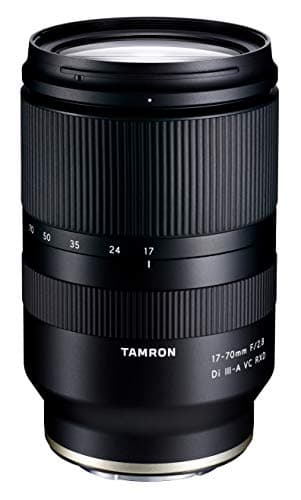
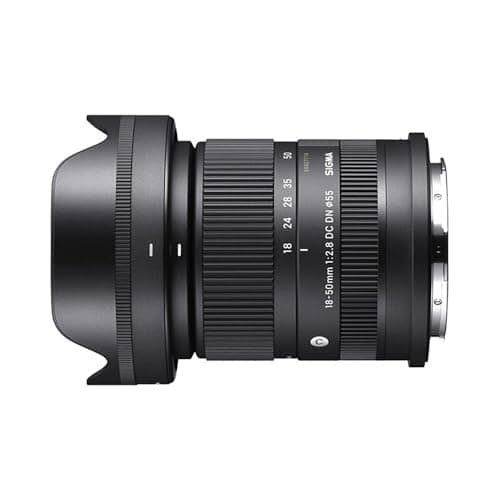
For most travelers, the Sigma 18-50mm f/2.8 is the best travel lens you can carry: it covers the wide-to-standard range you shoot most on a trip, holds a bright constant aperture, and weighs so little you forget it's on the camera. If you want more reach in the same one-lens spirit, the Tamron 17-70mm f/2.8 stretches into short telephoto and adds stabilization. A great travel lens is really a negotiation between two numbers — how much of the scene it can frame, and how much it weighs — and the rest of this guide is about settling that trade for the way you actually travel.
Travel punishes a heavy bag. You carry your kit all day, through airports and train stations and up more stairs than you expect, so every gram counts and the lens that stays on the camera is the one that actually gets used. That reality pushes most people toward a single versatile lens rather than a bag of specialized primes. The dream is one piece of glass that can frame a sweeping coastline, a plate of food across a cafe table, and a candid of a market vendor without a swap — because the shot you miss while changing lenses in a crowd is so often the shot you traveled all that way for.
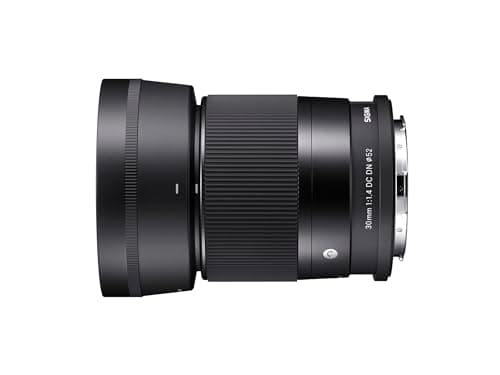
That is why range — the spread from the widest to the longest view a lens can frame — counts for so much here. A standard zoom that runs from wide to short telephoto handles the large majority of travel photos in one barrel. The Sigma 18-50mm covers roughly a 27-75mm-equivalent field of view, which takes in everything from a room interior to a head-and-shoulders portrait. The Tamron 17-70mm reaches further, to about 105mm equivalent, enough to pull in a distant rooftop or a tighter portrait without walking closer. A prime such as the Sigma 30mm f/1.4 or Sony FE 50mm f/1.8 gives up that flexibility entirely, but pays you back in size, brightness and a lighter step.
The other half of the equation is weight, and the two forces pull against each other: more range almost always means a bigger, heavier lens with more glass inside. Where you land depends on whether your shoulders or your framing win the argument at the end of a long day. Both Sigma zooms and the little Sony power zoom are true featherweights; the Tamron is the heaviest lens here by a clear margin, the price it pays for that extra reach. There is no single right answer — only the honest question of whether you would rather carry less or frame more.
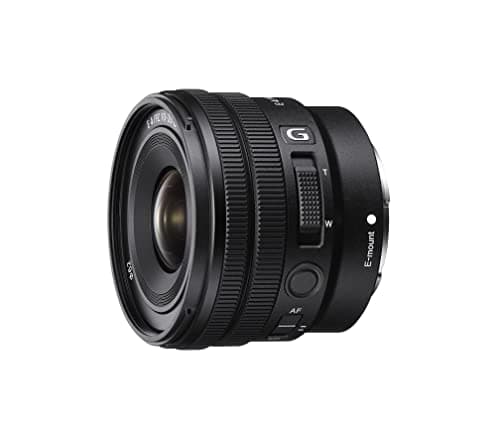
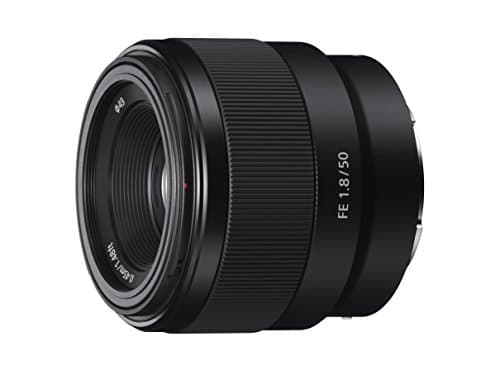
Two situations sit slightly outside the standard-zoom race. When you need to go wider than a kit zoom can reach — cramped hotel rooms, tall cathedrals, big desert skies — the Sony E PZ 10-20mm f/4 G is a tiny ultra-wide you can drop in the bag for almost no weight. And when the light fades, a fast prime earns its keep: the Sony FE 50mm f/1.8 opens far wider than any zoom here, so it keeps shooting in a dim restaurant or a lamplit street where a slower lens gives up. Many experienced travelers pair one small zoom with one small prime for exactly this reason.
One honest note on fit before the picks. These lenses do not all share a single mount, so buy the version built for your camera. Most are Sony E-mount, the system with the deepest and cheapest catalog of compact travel glass; the Tamron 17-70mm is also sold in a Fujifilm X version; and the Sony FE 50mm is a full-frame lens while the zooms and the Sigma 30mm are APS-C. The reasoning below holds whichever system you shoot — only the exact model names change.
It helps to think about durability, too. A travel lens lives a harder life than one that stays at home — dust on a trail, spray at the coast, a knock in a packed bag. Most of the picks here are well-built for their price but not fully weather-sealed, so a cheap protective filter on the front and a little care in bad conditions go a long way. The Tamron adds some sealing at its mounts; the compact Sigmas keep things simple and light. None of this should worry you, but a lens you trust to travel is a lens you will actually take out in the rain, which is exactly where some of the best photos hide.
How to choose a travel lens
Start by being honest about what you actually photograph on a trip. If your camera roll is landscapes, streets, food and the occasional portrait, one standard zoom covers nearly all of it and spares you from carrying — or losing, or getting dust on — a second lens. If you regularly shoot wildlife, sports or faraway architecture, no single travel lens does everything, and you are better served adding a dedicated longer lens for those days. For the great middle of travel photography, the choice comes down to four things, in order: range, weight, aperture and mount.
Range: how much should one lens cover?
A wide-to-standard zoom is the natural travel lens because it frames the two things you shoot most — wide scenes and everyday subjects — without a change. The Sigma 18-50mm f/2.8 nails that core span in the smallest package here, and for many people it is all the lens a trip needs. The Tamron 17-70mm f/2.8 keeps the same bright aperture but pushes the long end out to a genuine short telephoto, so you can isolate a doorway detail or a candid across a plaza. That reach is not free: the Tamron is noticeably bigger and heavier. If you know you like to frame tightly, the Tamron earns its size; if you value a small, grab-and-go kit above all, the Sigma is the lighter companion, and the Sony 10-20mm covers the ultra-wide end neither standard zoom reaches.
Weight: the number your shoulders remember
Range and weight trade directly against each other, and travel is the one time the scale usually wins the argument. A lens you leave in the hotel because it is heavy takes exactly zero pictures. Both Sigmas and the Sony power zoom are light enough to balance nicely on small mirrorless bodies and disappear into a daypack, which is why they dominate this list. The Tamron is still reasonable for the range it delivers, but you will feel it after a full day on your feet. A compact prime such as the Sony FE 50mm f/1.8 is the lightest way to carry a fast lens at all, and on a full-frame Sony body it makes a lovely, tiny walk-around option when you are content to zoom with your feet.
Aperture: shooting into the evening
Travel does not stop when the sun goes down. Lantern-lit alleys, dim cafes and museum interiors are some of the best moments on any trip, and they are exactly where a slow kit lens starts to struggle. A constant f/2.8 zoom like the Sigma or Tamron gathers far more light than a typical kit zoom and holds the same brightness as you zoom, which steadies both your exposure and your handheld shots. A fast prime goes further still: the Sony FE 50mm f/1.8 and Sigma 30mm f/1.4 open much wider, so they thrive after dark and separate your subject from a busy background more strongly. The ultra-wide Sony 10-20mm is the exception at f/4, the slowest lens here, so keep it for daylight or pair it with a faster lens for the evenings.
How the picks compare
The Sigma 18-50mm f/2.8 is the pick for the traveler who wants one small lens to handle almost everything, and it is where most people should start. The Tamron 17-70mm f/2.8 suits the traveler who will trade a heavier bag for real telephoto reach and built-in stabilization. The Sigma 30mm f/1.4 is for the minimalist who prefers to move their feet and wants the brightest, most compact everyday lens, with lovely background blur. The Sony E PZ 10-20mm f/4 G is the specialist for anyone who shoots interiors, architecture or big landscapes and keeps hitting the wide limit of a standard zoom. And the Sony FE 50mm f/1.8 is the featherweight fast prime for full-frame Sony travelers who value low-light ability and a jacket-pocket kit over zoom flexibility.
Common travel-lens mistakes to avoid
The first mistake is over-packing: three or four primes sound versatile but end up staying in the bag while you shoot everything on one of them. The second is under-buying on aperture — a cheap slow zoom looks fine in daylight and then falls apart the moment you step indoors, which is half of travel. The third is ignoring weight until day three, when a lens that felt fine in the store becomes the reason your kit stays at the hotel. The fourth, and easiest to avoid, is buying the wrong mount; a lens for the wrong system simply will not fit. Match the lens to how you really shoot, not to the trip you imagine taking.
Weather sealing and durability
Travel is hard on gear, so it is worth knowing what your lens can shrug off. Weather sealing — gaskets that keep out dust and light rain — is more common on pricier lenses, and among these picks the Tamron 17-70mm offers the most protection at its seals. The compact Sigmas and the Sony FE 50mm keep weight down by leaving sealing out, which is fine for careful use but asks for a little caution in dust and drizzle. A low-cost front filter protects the most exposed glass from scratches and spray for a few dollars, and a padded divider in your bag does the rest. Do not let the lack of sealing stop you traveling with a lens — just pack it thoughtfully.
Filters, size and packing
Two small practicalities decide how pleasant a lens is to travel with. The first is filter size: keeping your lenses to one or two common thread sizes means a single protective or polarizing filter can serve several lenses, saving money and space. The second is how the lens packs — an internally zooming lens like the Sony 10-20mm never changes length, so it slots predictably into a bag, while an externally extending zoom needs a touch more room. The compact primes and the Sigma 18-50mm are the easiest to tuck into a jacket pocket or a corner of a daypack. When every lens has to justify its space, the smallest ones tend to travel the most.
Mount, sensor and where to go next
A lens only fits the system it is built for, so confirm your mount before anything else. Most of these picks are Sony E-mount, which has the widest choice of small, affordable travel glass, and the Tamron 17-70mm is also made in a Fujifilm X version. Sensor size matters too: the Sigma 30mm, the two zooms and the Sony 10-20mm are APS-C lenses, while the Sony FE 50mm is full-frame and will also mount on an APS-C Sony body, where it frames like a 75mm short telephoto. If you are unsure which sensor your camera has, our APS-C vs full-frame guide explains it plainly; if you are still choosing a body, the best mirrorless cameras for beginners are natural partners for this glass; and if you shoot Sony on a budget, the best budget Sony E-mount lenses overlap heavily with a great travel kit. Still deciding between a do-it-all zoom and a small prime? Our kit lens vs prime guide lays out the trade in detail.