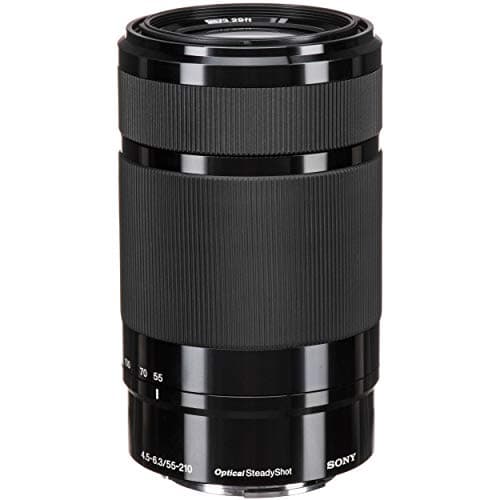
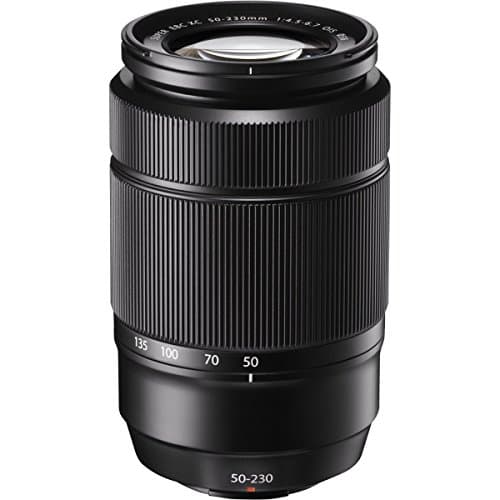
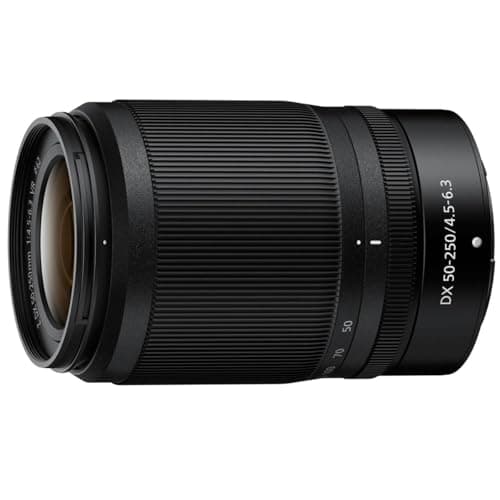
A telephoto zoom is the lens that lets you photograph things you cannot walk up to — sport from the touchline, wildlife across a field, a child at the far end of a stage. The Nikon Z DX 50-250mm is the strongest of the cheap ones; the Sony E 55-210mm and Fujifilm XC 50-230mm are the equivalents for those systems. Every pick here is one per mount, because a telephoto only exists for the camera it fits.
The honest caveat first, because it is the thing nobody selling these mentions. Affordable telephoto zooms are slow — their maximum aperture is around f/4.5 at the wide end and around f/6.3 at full zoom. That is several times less light than a fast prime, which means two practical limits. Indoors and after dark, a cheap telephoto struggles: you either raise ISO until the image gets grainy or accept a shutter speed too slow to freeze movement. And background blur is modest — you get some compression, but not the dramatic separation a fast prime gives.
Within those limits they are excellent value and genuinely fun. In daylight, 250mm on a crop-sensor body frames a distant subject the way a much more expensive lens would, and the compression flattens perspective in a way people find flattering. If you have ever come home from a day out wishing you could have got closer, this is the lens that fixes it — for far less than the fast telephotos professionals carry. Just buy it for daylight, and buy a fast prime for the dark.
How to choose a beginner telephoto
Start with the mount, not the specification
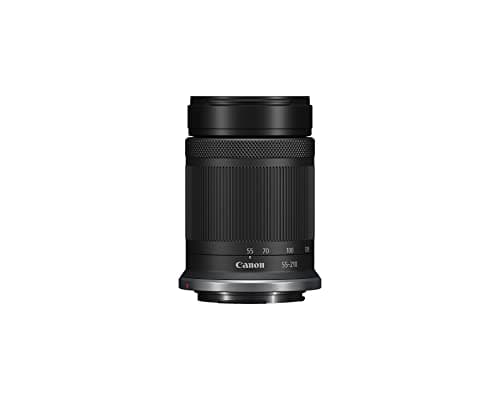
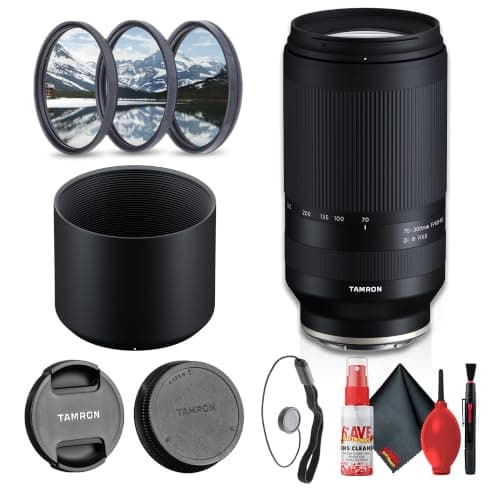
A telephoto lens is only useful if it fits your camera, so the first filter is mechanical. Nikon Z DX bodies take the Z DX 50-250mm. Sony APS-C bodies take the E 55-210mm. Fujifilm X bodies take the XC 50-230mm. Canon RF-S bodies take the RF-S 55-210mm. Full-frame Sony shooters have the Tamron 70-300mm and more besides. Our lens mounts guide explains why this matters more than any other lens decision.
Understand what the crop factor gives you
On an APS-C camera, focal lengths behave as though multiplied by about 1.5 (1.6 on Canon). So a 250mm lens on a Nikon DX body frames like a 375mm equivalent, and a 210mm on a Sony APS-C body frames like about 315mm equivalent. That is real reach, and it is why crop-sensor cameras are quietly good value for telephoto work — you get more magnification per dollar than a full-frame shooter does. Our crop factor explainer covers the math in plain terms.
Stabilization is not optional at this length
Camera shake is magnified along with the subject, so a telephoto amplifies every tremor in your hands. Every lens on this list except the Tamron includes optical stabilization for exactly that reason, and you want it. The rough rule is to keep your shutter speed at least as fast as one over the equivalent focal length — 1/400s at a 375mm equivalent — which is easy in daylight and impossible indoors. Stabilization buys you several stops of margin around that rule. Our stabilization guide explains what it does and does not fix.
Autofocus matters more here than anywhere else
Distant subjects are usually moving subjects, and a narrow field of view is unforgiving of a camera that hunts. This is where a body with modern subject tracking pays off — the Canon R10 and Nikon Z50 II are both notably good at holding a moving subject. A cheap telephoto on a body with fast tracking is a far better sports setup than an expensive lens on a body that cannot find the subject.
What you are giving up versus a fast telephoto
The professional alternative is a constant f/2.8 telephoto zoom, and it costs several times as much for good reasons: it gathers far more light, focuses faster, and blurs backgrounds into cream. If you find yourself shooting indoor sport regularly, that is the upgrade path. For daylight, travel and casual wildlife — which is what almost every beginner actually shoots — the cheap zooms here deliver most of the result for a fraction of the money, and they are light enough that you will bring them.
Pack for the walk
Telephoto lenses are the ones that make a camera bag necessary. A bag that fits the body plus two lenses and a comfortable strap stop a long day being an endurance test — a lens that stays home because it is annoying to carry photographs nothing.