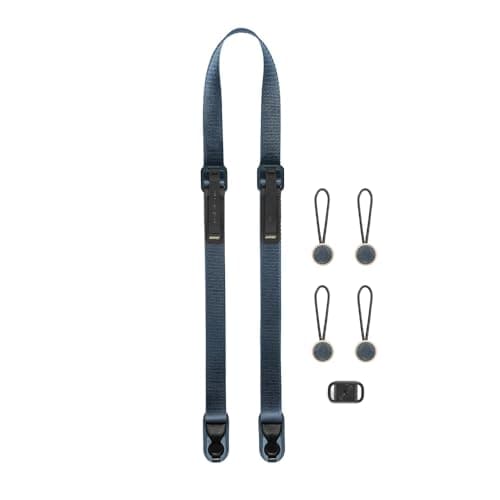
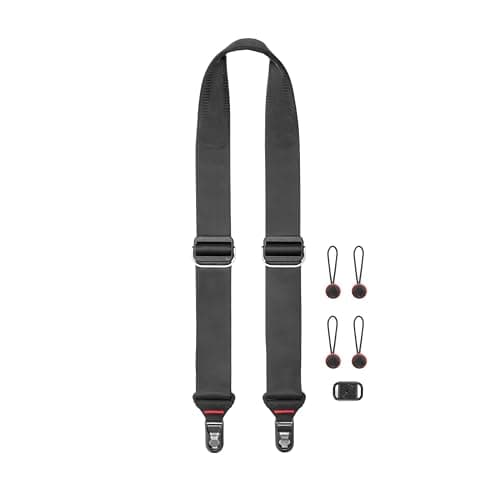
For most people the Peak Design Slide is the best camera strap: quick-connect anchors let it switch between sling, neck and shoulder carry in seconds, and padded webbing keeps it comfortable under a real camera all day. If you want the most comfort for the least money, the neoprene OP/TECH Pro Loop is the value champion. Beyond those two, the right strap depends on how you like to carry.
The strap is the accessory people ignore and then use more than any other. The one bundled in the box is usually a thin, branded neck strap that digs into your neck, bounces the camera against your chest, and advertises exactly what you are carrying. A good strap changes how often you actually shoot: it keeps the camera comfortable, secure and instantly to hand instead of buried in a bag. The main choice is how the camera hangs — around your neck, across your body as a sling, or clipped to a shoulder — and after that it comes down to comfort under load, how easily it adjusts, and how much you want to spend. This guide ranks five straps across that whole range, from a premium do-everything anchor system to a bargain sling.
None of this changes your photos, which is exactly why the strap is so easy to under-buy — and why the right one quietly pays off every time you shoot. A strap that is comfortable, quick to deploy and secure means the camera comes out of the bag and stays in your hands, and that is where good photos actually come from. The five here run from a bargain sling to a premium convert-anything system, so there is a sensible pick at every budget; the trick is matching the carry style to how you actually shoot before you spend.
How to choose a camera strap
Carry style: sling vs neck vs crossbody
This is the decision that shapes everything, and there are three broad styles:
- Neck strap: the classic — the camera hangs at your chest from both sides of the strap. Simple and symmetrical, and a wide or stretchy strap (like the neoprene OP/TECH Pro Loop) is genuinely comfortable for casual walking-around use. The downside is bounce as you move and weight concentrated on the back of your neck.
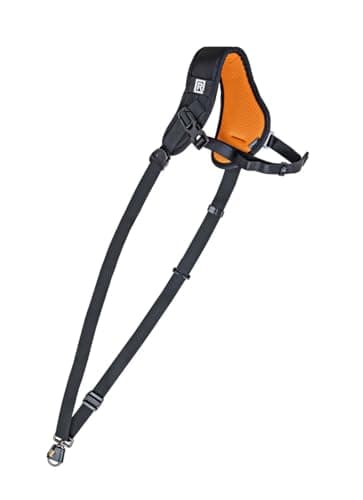
- Sling / crossbody:the strap goes over one shoulder and across your body, with the camera hanging at your hip and sliding up the strap to your eye when you need it. This is fast to draw and spreads weight across your torso rather than your neck. The BlackRapid Sport X and Altura sling work this way, and the Peak Design straps do it too. Slings typically attach at the camera's tripod socket.
- Convertible (anchor) systems:Peak Design's Slide and Leash use small "anchor" links that let one strap switch between sling, neck and shoulder carry in seconds, and let you detach the whole strap instantly to mount on a tripod or drop the camera in a bag. If you want one strap for every situation, this is the design to look at.
There is no single right answer: a neck strap is most comfortable standing still, a sling is fastest and best for a long day on your feet, and a convertible system does both at a premium.
Comfort under load — width, padding and stretch
A camera feels far heavier after an hour than it does in the shop, so how the strap carries weight matters more than anything on the spec sheet. Three things drive comfort: a wider strap spreads the load over more of your shoulder or neck; genuine padding(the Peak Design Slide's seatbelt-style webbing, BlackRapid's contoured shoulder pad) cushions it; and stretch — the trick of the neoprene OP/TECH — absorbs the bounce of each step so the camera feels lighter than it is. A heavier mirrorless-plus-zoom setup rewards width and padding; a light body can get away with a slim strap. If a strap digs in or bounces, you will leave the camera at home, which defeats the point.
How it attaches — and the tripod-socket question
Straps connect to the camera in different ways, and it affects daily use. Traditional straps thread through the camera's lug eyelets on the top corners. Sling straps usually screw into the tripod socketon the base, which puts the camera in a natural lens-down hanging position but means you unclip the strap (or add an adapter) before you can mount the camera on a tripod. Peak Design's anchor system is the most flexible: tiny cords attach to the lugs (or a base plate) and the strap clips to them, so you detach the whole strap in a second and share anchors across multiple bodies. Consider a safety tether too — a backup link (found on the Altura sling) that keeps the camera attached even if the main connector loosens.
Budget to premium — what more money buys
You can spend very little or quite a lot on a strap, and the money goes into materials, hardware and versatility rather than any change to your photos. At the budget end, the OP/TECH Pro Loop and Altura sling do their one job well with plain webbing and simple buckles. In the middle, BlackRapid adds a locking bumper, a padded pad and sturdier hardware for fast, secure carry. At the top, Peak Design charges a premium for aluminum hardware, refined quick-adjusters and the anchor system's convert-anything flexibility. Decide how many ways you actually need to carry before paying for versatility you won't use — a superb neck strap costs a fraction of a superb do-everything system. It is worth thinking a step ahead, too: premium straps last for years and move happily from one body to the next, so if you expect to keep upgrading cameras, a durable anchor system can work out cheaper over time even though it costs more today. A budget strap is the smart buy when you already know exactly how you carry and would rather put the savings toward glass or a bag.
Match the strap to how you shoot
- One strap for everything, premium build: Peak Design Slide.
- The same versatility, lighter and packable: Peak Design Leash.
- Fast draw for events and action: BlackRapid Sport X.
- Most comfort for the least money: OP/TECH USA Pro Loop.
- Cheapest way into a sling: Altura Photo Camera Sling Strap.
Security, safety tethers and peace of mind
A strap is also your camera's insurance policy, so how securely it connects matters as much as how it feels. Sling and anchor systems that attach at the tripod socket or the lugs put the whole weight on one small connector, so look for a locking mechanism(the BlackRapid's locking bumper) or a safety tether— a secondary link, like the one on the Altura sling, that keeps the camera attached even if the main buckle works loose. Screw-in connectors can vibrate loose over a long day, so it is worth a quick check now and then. Peak Design's anchors are rated to hold far more than a mirrorless kit weighs, and their quick-release design is what lets you move a camera between a strap, a tripod and a bag without ever leaving it unsecured — a genuine reassurance when the gear is expensive.
Straps for video and shooting solo
If you shoot a lot of video or work alone, a strap earns its keep in a different way. A convertible strap that tucks away fast keeps webbing out of shot when the camera goes on a tripod or a gimbal, and a quick-detach system means you are not fighting a strap every time you rig up. For filming yourself, a sling or anchor strap lets you carry the camera hands-free between setups and whip it up for a quick handheld shot without unclipping anything. It is a small thing that removes a lot of friction from a solo shooting day, and it is a real reason the anchor-based Peak Design straps are worth their premium for creators.
A strap keeps the camera on you; a camera bag carries the rest of the kit, and a tripod takes the weight entirely when you can set up. All three matter more the longer your day — and a good strap is what makes shooting solo or on the move genuinely practical.