Skip to content
Focal & Frame

Kit · Accessories

The Best ND Filters for Video

The filter that lets you shoot wide open in daylight and keep a cinematic shutter. Five NDs ranked on color neutrality, range and how cleanly they darken.

By Stephen V.Updated How we research
#ad

We earn a commission when you buy through our Amazon links, at no extra cost to you. It never decides our rankings — we say so when the cheaper pick is the better buy. How this works.

For most video shooters the Hoya Variable ND II is the best ND filter: a wide range on genuinely good glass, so one filter holds a cinematic shutter from shade to bright sun. If you want the same convenience for less, the K&F Concept variable ND is the value pick; if you want the cleanest, most neutral result of all, the fixed Urth set never shows a variable filter's color shift. Here is why an ND belongs in every video kit.

A neutral density (ND) filter is just dark glass that cuts the amount of light reaching your sensor without changing the color — like sunglasses for your lens. That sounds minor until you try to shoot video outdoors. To make motion look natural rather than stuttery or soap-opera smooth, video is shot at a shutter speed roughly double the frame rate — the 180-degree shutter rule — which for 24 or 30fps means a fairly slow shutter of around 1/50th of a second. In bright daylight that slow shutter lets in far too much light, so your footage blows out unless you stop the aperture right down (which loses the blurred background you probably bought a fast lens for) or crank the shutter up (which makes motion look unnaturally crisp). An ND filter solves the dilemma: it soaks up the excess light so you can keep the correct shutter and a wide aperturein full sun. It is the single accessory that most separates footage that looks "video-y" from footage that looks cinematic.

The good news is that ND filters are among the cheapest accessories that visibly change your footage, and the choice really comes down to two questions: do you want one filter that adjusts (a variable ND) or the cleanest possible image (a fixed ND), and what thread size does your lens take? Get those two right and any of the five picks here will transform how your daytime video looks — this guide explains both, plus the honest trade-offs each type carries.

The short answer

Quick picks

#ProductBest forScorePrice
01
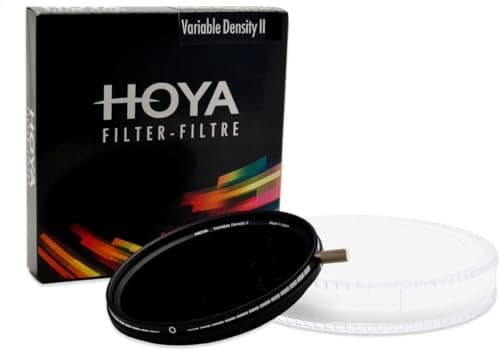
Hoya Hoya Variable ND II (ND3-ND400)
Hoya Variable ND II (ND3-ND400)

The variable ND to buy once and keep. A wide ND3-ND400 range on high-grade optical glass with premium coatings, so you hold a cinematic shutter from shade to bright sun with a single filter.

The best all-round variable ND
8.4
$142.27Amazon
02
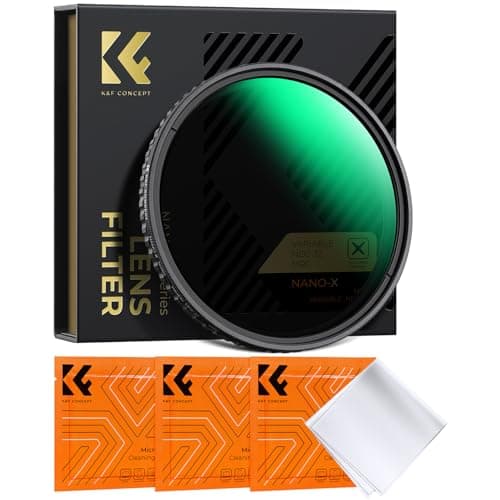
K&F Concept K&F Concept Variable ND (ND2-ND32)
K&F Concept Variable ND (ND2-ND32)

The smart budget variable ND. It caps its range at ND2-ND32 on purpose — exactly the window where variable filters stay clean and dodge the cross-shaped banding that plagues cheap wide-range filters.

The best value variable ND
7.6
$69.99Amazon
03
Freewell Freewell Hybrid Variable ND/CPL
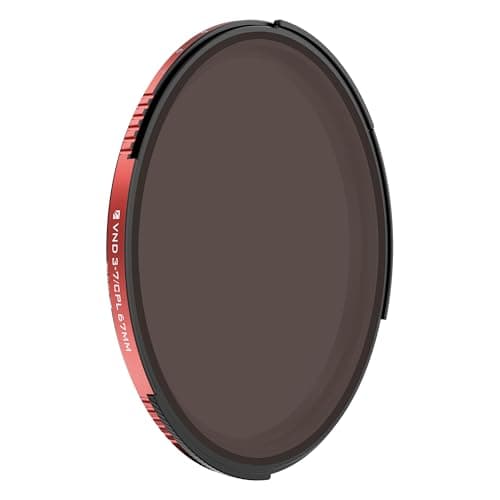
Freewell Hybrid Variable ND/CPL

Two filters in one thread. A 3-7 stop variable ND stacked with a true polarizer, so you cut daylight and kill glare off water, glass and foliage without screwing two rings onto the front of your lens.

The best 2-in-1 ND and polarizer
7.4
$99.99Amazon
04
Urth Urth ND Filter Kit (ND8/ND64/ND1000)
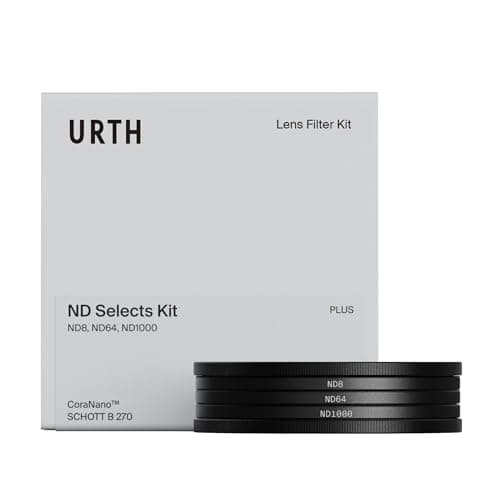
Urth ND Filter Kit (ND8/ND64/ND1000)

The no-color-cast option. Three fixed filters — ND8, ND64 and ND1000 — in one case, giving perfectly even darkening with none of the cross banding a variable ND can show at its extremes.

The cleanest, most neutral result
7.6
$159.00Amazon
05
Tiffen Tiffen Neutral Density 0.9 (3-stop)
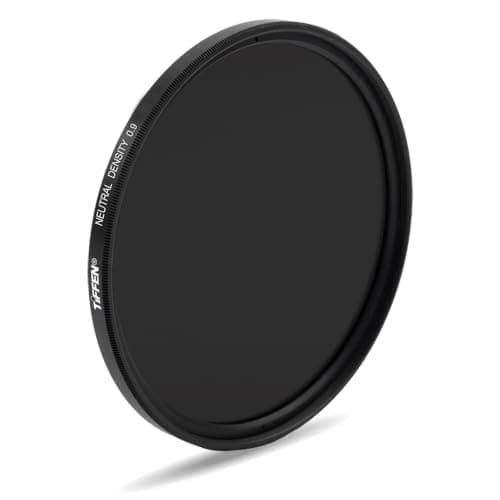
Tiffen Neutral Density 0.9 (3-stop)

The simplest ND there is. One fixed 3-stop filter from a trusted, long-standing glass maker — no dials, no modes, nothing to get wrong when you just need to cut a little light.

The simplest single fixed ND
6.8
$24.95Amazon

#ad · Live prices from the Amazon Product API, as of Sep 4, 2026. Where we have no verified live price, we show none — we would rather leave a gap than print a number that has rotted.

In detail

The picks, in full

01
Hoya Hoya Variable ND II (ND3-ND400)

The best all-round variable ND

Hoya Variable ND II (ND3-ND400)

Variable ND3-ND400 (1.5-9 stops)High-grade optical glassWide control rangePremium coatings
8.4/10

The variable ND to buy once and keep. A wide ND3-ND400 range on high-grade optical glass with premium coatings, so you hold a cinematic shutter from shade to bright sun with a single filter.

Color neutrality
9
Build & coating
9
Range
9
Ease of use
9
Value
6

Pros

  • A wide 1.5-9 stop range covers almost any daylight, so one filter replaces a drawer of fixed ones
  • High-grade glass and premium coatings keep colors clean and hold flare down better than budget variable NDs
  • One threaded filter you dial by hand — the fastest way to stay at a cinematic shutter as the light shifts

Cons

  • Like any variable ND, pushing it to the very top of its range can introduce uneven, cross-shaped darkening across the frame
  • It is the priciest filter here, and you still have to buy the size that matches your lens thread

Don't buy this if…

you want zero risk of any color shift or cross banding. A fixed ND set like the Urth kit gives the cleanest, most neutral result because it never cross-polarizes light the way a variable filter can.

$142.27View on Amazon

Price as of Sep 4, 2026. Prices change — Amazon's is the one that counts.

#ad · we may earn a commission from this link to Hoya Variable ND II (ND3-ND400)

02
K&F Concept K&F Concept Variable ND (ND2-ND32)

The best value variable ND

K&F Concept Variable ND (ND2-ND32)

Variable ND2-ND32 (1-5 stops)Available in common thread sizesNo 'X-cross' in rangeBudget value
7.6/10

The smart budget variable ND. It caps its range at ND2-ND32 on purpose — exactly the window where variable filters stay clean and dodge the cross-shaped banding that plagues cheap wide-range filters.

Color neutrality
7
Build & coating
7
Range
6
Ease of use
9
Value
9

Pros

  • The deliberately limited 1-5 stop range keeps you inside the sweet spot where a variable ND stays even and neutral
  • Sold in all the common thread sizes, so most beginners can match it to their kit lens
  • A lot of everyday daylight control for very little money

Cons

  • Only 1-5 stops, so it can't cut enough light for a wide aperture under the harshest midday sun
  • Coatings and glass are good for the price but not up to the premium clarity of the Hoya

Don't buy this if…

you shoot in very bright conditions or want the widest possible range. The Hoya Variable ND II reaches far deeper, and a strong fixed filter like the ND1000 in the Urth kit handles blinding midday light.

$69.99View on Amazon

Price as of Sep 4, 2026. Prices change — Amazon's is the one that counts.

#ad · we may earn a commission from this link to K&F Concept Variable ND (ND2-ND32)

03
Freewell Freewell Hybrid Variable ND/CPL

The best 2-in-1 ND and polarizer

Freewell Hybrid Variable ND/CPL

Hybrid variable ND + polarizer3-7 stopsThreaded mountCuts glare + light
7.4/10

Two filters in one thread. A 3-7 stop variable ND stacked with a true polarizer, so you cut daylight and kill glare off water, glass and foliage without screwing two rings onto the front of your lens.

Color neutrality
7
Build & coating
8
Range
7
Ease of use
8
Value
7

Pros

  • Combines a variable ND and a circular polarizer, so you tame light and cut reflections with a single filter
  • The 3-7 stop window sits in the range where variable NDs stay clean, avoiding the worst cross banding
  • Saves you carrying and stacking two separate filters for outdoor and travel work

Cons

  • Blending ND and polarizer means the glare-cutting effect changes as you rotate, so it takes a moment to balance both
  • A narrower 3-7 stop range than a dedicated wide variable ND like the Hoya

Don't buy this if…

you don't need polarization or want the widest ND range. A plain variable ND like the Hoya or K&F is simpler to dial, and a fixed set gives the most neutral result.

$99.99View on Amazon

Price as of Sep 4, 2026. Prices change — Amazon's is the one that counts.

#ad · we may earn a commission from this link to Freewell Hybrid Variable ND/CPL

04
Urth Urth ND Filter Kit (ND8/ND64/ND1000)

The cleanest, most neutral result

Urth ND Filter Kit (ND8/ND64/ND1000)

Fixed ND8/ND64/ND1000 setThree filters + caseNo variable color-castRecycled-material build
7.6/10

The no-color-cast option. Three fixed filters — ND8, ND64 and ND1000 — in one case, giving perfectly even darkening with none of the cross banding a variable ND can show at its extremes.

Color neutrality
9
Build & coating
8
Range
7
Ease of use
6
Value
8

Pros

  • Fixed filters never cross-polarize light, so darkening stays perfectly even across the frame — the most neutral look here
  • Three strengths (3, 6 and 10 stops) cover everything from light daylight to long-exposure water and cloud blur
  • Ships in a protective case, and Urth builds its filters from recycled materials with a tree-planting pledge

Cons

  • You physically swap filters to change strength, which is slower than dialing a variable ND
  • Three discrete stops mean no in-between values, so you nudge shutter or aperture to fine-tune exposure

Don't buy this if…

you want to change ND strength on the fly without swapping filters. A variable ND like the Hoya or K&F dials smoothly through its range in seconds, which suits run-and-gun video better.

$159.00View on Amazon

Price as of Sep 4, 2026. Prices change — Amazon's is the one that counts.

#ad · we may earn a commission from this link to Urth ND Filter Kit (ND8/ND64/ND1000)

05
Tiffen Tiffen Neutral Density 0.9 (3-stop)

The simplest single fixed ND

Tiffen Neutral Density 0.9 (3-stop)

Fixed ND 0.9 (3 stops)Single fixed filterTrusted budget glassSimple, no surprises
6.8/10

The simplest ND there is. One fixed 3-stop filter from a trusted, long-standing glass maker — no dials, no modes, nothing to get wrong when you just need to cut a little light.

Color neutrality
8
Build & coating
6
Range
4
Ease of use
7
Value
9

Pros

  • A single fixed 3-stop filter is the most foolproof way to hold a cinematic shutter in moderate daylight
  • Tiffen is a long-established filter maker used widely in film and TV, so the value here is proven
  • Nothing to dial or balance — thread it on and shoot

Cons

  • Just 3 stops and no adjustment, so it can't cope with a wide aperture in the brightest sun on its own
  • Simpler coatings than premium glass, so it can flare a touch more into strong backlight

Don't buy this if…

you need more than 3 stops or want one filter to cover a range. A variable ND like the Hoya spans far more light, and the Urth set adds a strong ND1000 for long exposures.

$24.95View on Amazon

$29.9917% off

Price as of Sep 4, 2026. Prices change — Amazon's is the one that counts.

#ad · we may earn a commission from this link to Tiffen Neutral Density 0.9 (3-stop)

How to choose an ND filter for video

Why ND matters: the 180-degree shutter rule and wide apertures

The reason ND filters exist for video comes down to a trade-off you can't otherwise escape. Natural-looking motion wants a shutter near 1/(2 x frame rate) — about 1/50s at 24 or 25fps. That is a lot of light for a sunny day. Your only levers without an ND are aperture and ISO: close the aperture and you deepen everything into focus, killing the shallow, blurred background; drop ISO and you soon hit its floor with nowhere left to go. An ND filter adds a fourth lever — it simply removes light — so you can shoot at f/1.8 with a 1/50s shutter at noon and get a bright subject against a soft background, exactly the look people buy fast lenses for. The same filter also lets you use slow shutters for long-exposure stills: silky water and streaking clouds in daylight. For a fuller walk-through of the settings this unlocks, see our camera settings for video guide.

Variable vs fixed — the big decision

Every filter here is one of two kinds, and choosing between them is most of the decision:

  • Variable ND (VND):two polarizing elements you rotate to dial the darkness up and down through a range — for example ND2 to ND32. One filter covers changing light, so you never unscrew anything as the sun moves. The Hoya, K&F and Freewell are variable. The catch is explained below.
  • Fixed ND: a single, set strength — say a 3-stop or a 10-stop. You swap filters to change the amount of light, which is slower, but because there is no rotating polarizer a fixed ND is optically the cleanest and most neutral option. The Urth set (three fixed filters) and the Tiffen (one fixed filter) are this type.

For run-and-gun video, a variable ND is usually the more practical buy because you adapt to changing light in a second. For the absolute cleanest image, or for predictable long exposures, fixed NDs win.

The honest catch with variable NDs: the "X-cross"

Variable NDs work by rotating one polarizer against another, and if you push that rotation too far — toward the darkest end of the range — the polarizers start to fight and you get an uneven, dark X-shaped or cross-shaped bandacross the frame, sometimes called the "X-cross" or "X-pattern." It is the number-one complaint about cheap, wide-range variable filters. There are two honest ways around it, and the picks here use both: keep the range modest so you never reach the problem zone (the K&F caps itself at ND2-ND32 precisely for this reason), or spend more on higher-grade glass and coatings that push the effect to the extreme edge of a wider range (the Hoya). If you want a guarantee of no cross banding at all, a fixed ND like the Urth or Tiffen simply cannot produce it.

You must match your lens thread size

This trips up almost every first-time buyer, so be clear on it before you order: a screw-in filter must match the filter thread diameter of your lens, printed on the lens or its cap after a "ø" symbol (common sizes are 49mm, 52mm, 58mm, 67mm, 72mm and 77mm). We use 67mm as the representative size in this guide because it is a very common thread on beginner zooms and primes, but yours may differ — check your own lens and buy that size. If you own several lenses with different threads, either buy the filter to fit your most-used lens or buy one to fit your largest thread and use cheap step-up rings on the smaller lenses. A filter in the wrong size will not thread on at all.

Color neutrality, coatings and build

"Neutral" density is the goal, but cheaper filters can leave a faint color cast — often a slight magenta or green — that you then correct in editing. Better glass and coatings hold color truer, resist flare and ghosting when you shoot toward the sun, and wipe clean more easily. Fixed filters are inherently the most neutral because they don't cross-polarize light. If color accuracy matters to you and you don't want to grade every clip, that is a real reason to choose the Hoya over a bargain VND, or to buy the fixed Urth set outright.

Which type is right for you

  • One filter for changing daylight video: Hoya Variable ND II, or the K&F on a budget.
  • Cutting glare off water and glass too: Freewell Hybrid Variable ND/CPL.
  • The cleanest, most neutral image: Urth ND Filter Kit (fixed).
  • The simplest, cheapest single filter: Tiffen Neutral Density 0.9.

Reading ND numbers: stops, ND8, ND1000 and the rest

ND strength is written in a few different ways, which is confusing until you spot the pattern. The most useful unit is stops: each stop halves the light. You will also see an ND number (ND2, ND8, ND64, ND1000), where the number is the factor by which light is cut — ND2 is 1 stop, ND8 is 3 stops, ND64 is 6 stops, and ND1000 is about 10 stops. Older glass like the Tiffen uses an optical-densityfigure instead: "0.9" also means 3 stops (roughly 0.3 of density per stop). For daytime video at a wide aperture you typically need 2-4 stops; for a bright beach or snow, 5-6; and for long-exposure water or clouds in daylight, a strong 10-stop like the ND1000 in the Urth kit. A variable ND covers a whole span of these values in one filter, which is exactly why it is the convenient default for run-and-gun shooting.

Where a polarizer fits in

One pick here, the Freewell, combines an ND with a circular polarizer (CPL), so it is worth knowing what a polarizer does that an ND cannot. A CPL cuts glare and reflections— the sheen on water, wet roads, glass and leaves — and deepens blue skies, by blocking light arriving from certain angles. An ND simply dims everything evenly. They solve different problems, so a hybrid ND/CPL is genuinely useful outdoors, near water, or when you shoot through windows. The trade-off is that a polarizer's effect shifts as you rotate the filter, so a hybrid takes a little more care to set than a plain ND. If you never battle reflections, a plain variable or fixed ND is simpler to live with.

An ND pairs naturally with the rest of a video kit: a fast lens to open up, a tripod for the long exposures it enables, and on-camera audio to match the picture.

How we picked

We do not run a testing lab

We compiled the manufacturers' published specifications and manuals, did the cost math, and scored each product against a published rubric. The scores are judgments from that documented research — they are notmeasurements we took, because we do not have a lab and we are not going to pretend we do. Where a number came from someone else's testing, we name and link them in Sources.

Questions

Frequently asked

What is the best ND filter for video in 2026?
For most creators, the Hoya Variable ND II — a wide ND3-ND400 range on high-grade glass, so one filter holds a cinematic shutter from shade to bright sun. The K&F Concept variable ND gets you most of the way for less, and for the cleanest, most neutral result the fixed Urth ND kit never shows a variable filter's color shift. Whatever you pick, buy the size that matches your lens thread.
Why do I need an ND filter for video?
To keep natural-looking motion in bright light. Video looks best at a shutter near double the frame rate (the 180-degree shutter rule), which is slow enough to overexpose in daylight unless you close the aperture and lose your blurred background. An ND filter cuts the excess light so you can keep both the correct shutter and a wide aperture. See our video settings guide for the full picture.
What is the 'X-cross' on a variable ND filter?
It's an uneven, dark X-shaped or cross-shaped band that appears across the frame when a variable ND is rotated too far toward its darkest setting, because its two polarizers start to fight each other. Wide-range budget filters show it most. You avoid it by using a filter with a modest range (like the K&F Concept, capped at ND2-ND32), by spending more on better glass (the Hoya), or by using a fixed ND, which can't produce it at all.
Should I buy a variable ND or a fixed ND?
A variable ND is one filter you dial through a range of darkness, which is fastest for run-and-gun video in changing light. A fixed ND is a single set strength you swap out, which is slower but gives the cleanest, most neutral image because it has no rotating polarizer. Choose variable for convenience, fixed for the best optical quality or predictable long exposures — many shooters own both.
What size ND filter do I need?
You need the filter that matches your lens's thread diameter, shown on the lens or lens cap after a diameter symbol (common sizes include 49mm, 52mm, 58mm, 67mm, 72mm and 77mm). We use 67mm as a representative size here, but check your own lens and buy that size. If you have several lenses, buy to fit your most-used lens, or buy your largest size and use step-up rings on smaller lenses.
What do the ND numbers like ND8 and ND1000 mean?
They tell you how much light the filter blocks. The ND number is the factor light is cut by: ND2 is 1 stop, ND8 is 3 stops, ND64 is 6 stops, and ND1000 is about 10 stops (each stop halves the light). Older glass uses optical density instead, where 0.9 also means 3 stops. For daytime video you usually want 2-4 stops; a strong 10-stop like ND1000 is for long exposures of water or clouds in daylight.

Keep reading

Receipts

Sources

We do not run a testing lab, and we do not pretend to. Specs come from manufacturer sheets and manuals; where a figure came from someone else's measurement, we name and link them. Where we could not verify something, we say so on the page rather than quietly leaving it out. Read our full method.