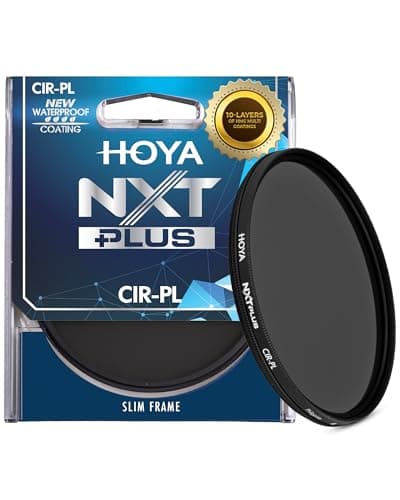
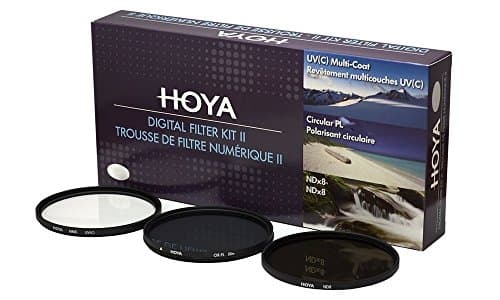
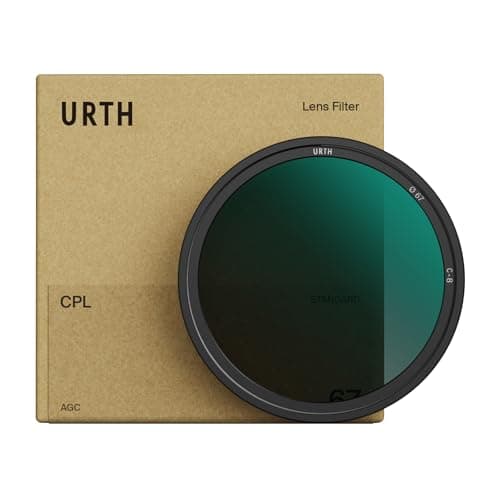
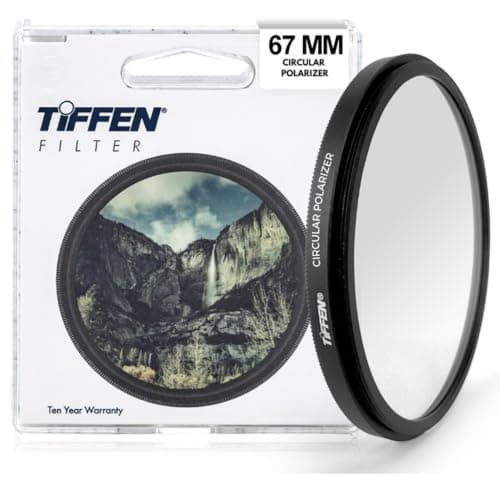
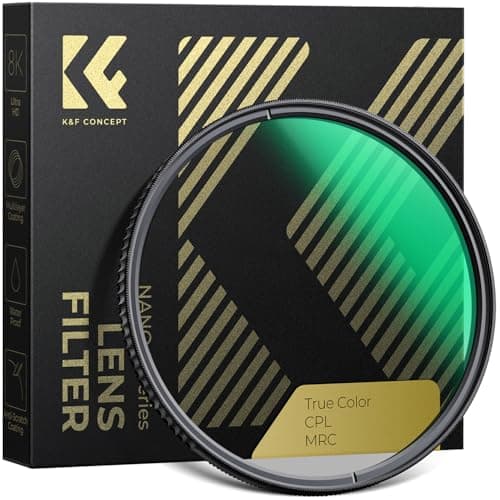
A circular polarizer is the only filter whose effect editing software cannot fake. It removes reflections from water, glass and wet leaves, deepens a blue sky, and cuts atmospheric haze — because it physically blocks light waves oriented in one direction before they reach the sensor. The K&F Concept True Color is the one to buy first; the Hoya NXT Plus is the upgrade.
That claim about editing is worth unpacking, because most filters really are redundant now. A warming filter is a white-balance slider. A graduated filter is a masked exposure adjustment. But polarization is about the physical orientation of light waves: once a reflection has been recorded, no software can distinguish it from the surface underneath. Point a camera at a lake and you photograph the sky bouncing off it; rotate a polarizer and you photograph the stones on the bottom instead. That is a genuinely different photograph, not a different edit.
Two honest caveats before the picks. First, a polarizer costs you one to two stops of light, which is why it lives in the bag rather than on the lens — indoors or at dusk it is simply making your camera work harder for no benefit. Second, the effect depends on the angle between you, the subject and the sun: it is strongest when the sun is roughly ninety degrees to your left or right, and close to nothing when the sun is directly behind or in front of you. On a very wide lens, that variation across the frame can leave a sky unevenly darkened. Neither is a reason to skip the filter — both are reasons to understand it.
How to buy and use a polarizer
Buy the size that matches your lens thread
Filters screw onto the front of a lens, and the thread size is printed on the lens barrel or inside the cap — a number after a diameter symbol, like 55mm or 67mm. It is not the focal length and it is not the same across your lenses. You have two options: buy one filter per thread size, or buy a filter for your largest thread plus cheap step-up rings to fit it to smaller lenses. Step-up rings work, but they add depth, which is the main cause of dark corners on wide-angle lenses. If you own two or three lenses, buying two filters is usually less annoying than a bag of rings.
Slim frames matter on wide lenses
A thick filter ring physically intrudes into the field of view of a very wide lens and darkens the corners of the frame. Every filter here is a slim or low-profile design for that reason. If your widest lens is a wide-angle, treat the slim frame as a requirement rather than a feature.
How to actually use it
Screw it on, then rotate the outer ring while looking through the viewfinder or at the screen. You will see reflections come and go and the sky darken and lighten as you turn. Stop where the image looks how you want it, which is usually not maximum effect — a fully polarized sky can look artificially dark and slightly unnatural, especially in a wide frame. Rotate, judge, stop. And re-check after you recompose, because the effect changes with the angle to the sun.
When to take it off
Take it off indoors, at dusk and at night — you are throwing away one to two stops of light for an effect that needs a bright reflective surface to work on. Take it off for rainbow photographs, because a polarizer can erase a rainbow entirely. And take it off if you are shooting a very wide sky and the uneven darkening looks wrong. A polarizer is a tool for specific conditions, not a permanent lens accessory.
Polarizer or ND — which do you actually need?
These get confused constantly. A neutral density (ND) filter is a gray filter that reduces all light evenly so you can shoot a slow shutter speed or a wide aperture in bright sun. A polarizer changes what the light does before it arrives. Video shooters generally need an ND first, to hold a cinematic shutter speed outdoors — see our ND filter guide. Landscape and travel photographers generally need a polarizer first. If you want both in one filter, some variable ND designs include a polarizing layer, at the cost of some control.
Skip the UV filter debate
You will be offered a UV filter alongside every polarizer. On a digital camera it has no optical purpose — the sensor stack already blocks UV. The only argument for one is physical protection of the front element, and that is a genuine but modest benefit that adds a piece of glass to the light path. We would rather you spent the money on a polarizer, which does something, and used a lens hood for protection.
Where a polarizer sits among the other filter types
A polarizer is the one filter we tell everyone to buy first, because its effect is optical and therefore impossible to add later — a reflection and the thing behind it are the same pixels once the shot is taken. For how it compares with neutral density, variable ND and the largely pointless UV filter, and for how to work out your lens's thread size, see camera lens filters explained.