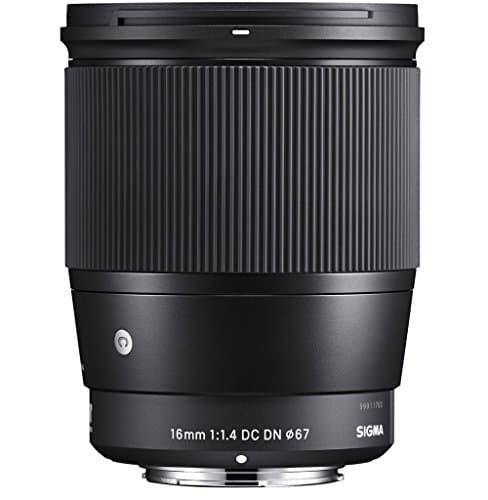
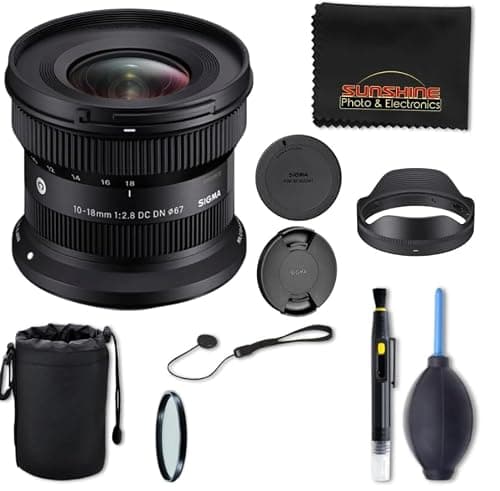
For most people, the Sigma 10-18mm f/2.8 DC DN is the best wide-angle lens to buy: a constant-aperture ultra-wide zoom small enough to carry anywhere, wide enough for sweeping landscapes and tight interiors, and bright enough to shoot the night sky. If you would rather have a fast prime — for the darkest astro work or the strongest low-light performance — the Sigma 16mm f/1.4 is the value pick. Wide-angle is the most misunderstood corner of the lens world, so let's start with what "wide" actually buys you.
A wide-anglelens has a short focal length, which means it takes in a much larger slice of the scene than a normal or telephoto lens. On a full-frame camera, anything below about 35mm counts as wide, and below roughly 24mm is "ultra-wide." That expansive view is what lets you fit an entire mountain range, a whole room, or a star-filled sky into a single frame — subjects a kit lens simply cannot contain. It is also why wide lenses are a favorite for vlogging: held at arm's length, they keep your face and your surroundings in shot at the same time.
There is one catch that trips up every beginner: crop factor. On an APS-C (crop-sensor) camera, the sensor captures a tighter portion of what the lens projects, so every lens frames narrower than its number suggests — a 10mm lens on APS-C frames roughly like a 15mm on full-frame. That is why the ultra-wide APS-C picks here start at focal lengths like 10mm and 11mm: they need to, just to reach a genuinely wide field of view. Our crop factor guide explains the math in plain terms if the numbers feel slippery.
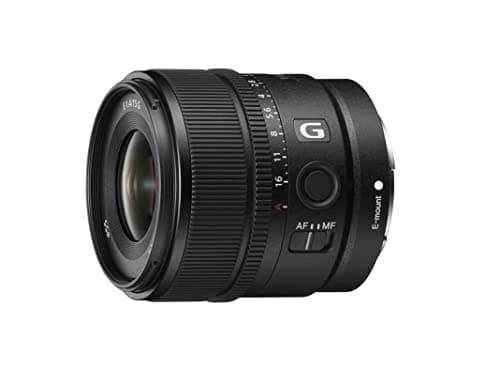
Wide-angle work rewards two very different tools, and this list covers both. A zoom like the Sigma 10-18mm or Sony 10-20mm lets you fine-tune your framing without moving — invaluable for landscapes and interiors where a step back means a step off a cliff or into a wall. A fast prime like the Sigma 16mm f/1.4, Sony 15mm f/1.4 G or Sony 11mm f/1.8 opens far wider, gathering the light that astrophotography and dim interiors demand, and it does it in a smaller, lighter package. Which you want depends on whether flexibility or speed matters more for the way you shoot.
Wide lenses also change the feeling of a photo, not just how much fits in. Because they stretch the sense of distance between near and far, a foreground rock, a leading path or a subject stepping toward the camera all gain drama and depth that a normal lens flattens. Learning to work close to a strong foreground while keeping the sweep of the background is the core skill that separates a snapshot from a striking wide-angle image — and it is a skill any of the lenses here will teach you.
One honest scope note before the picks. The deepest, most affordable catalog of fast wide glass lives on Sony E-mount, where third-party makers compete hardest, so most of the lenses ranked here are E-mount. Canon RF, Nikon Z and Fujifilm X shooters have good ultra-wide options too — we cover the Canon choices in our best Canon RF lenses guide and the fast Fujifilm ultra-wide in best Fujifilm lenses— but the widest, cheapest field is Sony's, and this ranking reflects that.
How to choose a wide-angle lens
Start by being honest about what you shoot wide. Landscapes, interiors, architecture, the night sky and vlogging each pull the choice in a slightly different direction, but the decision comes down to four things in order: how wide you need to go, whether a prime or a zoom suits you, how fast the aperture has to be, and — always — your mount. Get the first two right and the rest falls into place.
How wide do you actually need?
Wider is not automatically better. A moderate wide around 24mm-equivalent (the Sony 15mm f/1.4 G on APS-C) is the most flexible everyday width — dramatic enough for landscapes and interiors without distorting faces at close range. Push to a true ultra-wide around 15-16mm-equivalent (the Sigma 10-18mm at its widest, or the Sony 11mm f/1.8) and you get the sweeping, exaggerated perspective that makes big skies and tight rooms feel enormous — but it takes care to compose, because anything near the edge of the frame stretches. If you are unsure, a wide zoom that spans both ends is the safest first buy.
Prime or zoom for wide-angle?
This is the real fork in the road. A wide zoom lets you frame precisely from a fixed spot, which matters more here than in any other category: when you are standing at a cliff edge or backed against an interior wall, you cannot simply step back to fit more in, so the zoom does the moving for you. The Sigma 10-18mm f/2.8 and the Sony E PZ 10-20mm f/4 G both give you that flexibility. A fast wide prime — the Sigma 16mm f/1.4, Sony 15mm f/1.4 G or Sony 11mm f/1.8 — gives up that framing freedom but opens far wider, which is decisive for astrophotography and dim interiors. Many wide shooters end up owning one of each. Our prime vs zoom guide lays out the trade in full.
Aperture: why it matters more for astro than landscapes
Here is a nuance beginners miss. For daytime landscapes you often shoot stopped down to f/8 or f/11 for front-to-back sharpness, so a lens's maximum aperture barely matters — an f/2.8 zoom and an f/1.4 prime look identical at f/8. But for the night sky, aperture is everything: stars are faint, and a wide f/1.4 prime gathers roughly four times the light of an f/2.8 zoom and far more than the f/4 of a power zoom, so it captures cleaner, brighter astro shots at lower ISO. If you dream of the Milky Way, prioritize a fast prime like the Sigma 16mm f/1.4; if you shoot mostly daytime scenery, the constant f/2.8 of the Sigma 10-18mm is plenty.
Distortion and how to live with it
Every wide lens bends the world a little — straight lines can bow, and subjects near the edges stretch. Modern lenses lean on in-camera correction to tame most of it, and the picks here all clean up well in raw files, so it is rarely a problem in practice. Two habits help: keep the camera level to stop buildings from leaning, and keep people away from the extreme edges of an ultra-wide frame so their features do not distort. Used deliberately, that same exaggerated perspective is a creative tool — it is what makes a foreground rock or a leading path feel powerful in a landscape.
How the picks compare
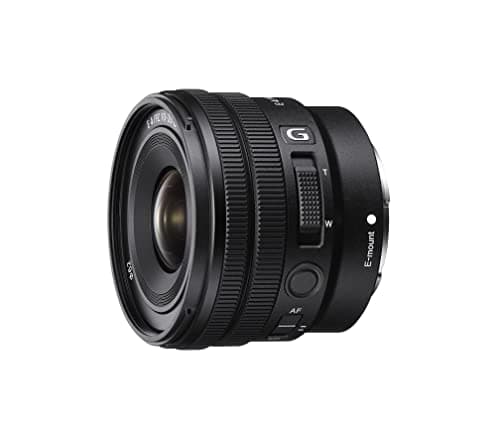
The Sigma 10-18mm f/2.8 is the best all-rounder: a constant-aperture ultra-wide zoom that covers landscapes, interiors and even astro in one compact, affordable package, which is why it leads. The Sigma 16mm f/1.4 is the value prime — brighter than any zoom here, superb for astro and low light, at a friendly price; our full Sigma 16mm f/1.4 reviewcovers the corner softness wide open and which of its mounts to buy. The Sony E 15mm f/1.4 G is the premium prime, adding a de-clickable aperture ring and G-series polish that make it a joy for video as well as stills. The Sony E 11mm f/1.8 is the widest of the group and the specialist for arm's-length vlogging and dramatic interiors. And the Sony E PZ 10-20mm f/4 G is the tiny power zoom for creators who want internal, balanced zooming on a gimbal above all else.
Filters, ND and the practical stuff
Wide lenses ask a little more of your accessories. Their bulging front elements can make filters awkward, and some ultra-wides do not take screw-in filters at all, so check the thread before you buy. For landscapes, a polarizer deepens skies and cuts glare, and a neutral-density filter lets you blur moving water or clouds in daylight — see our best ND filters for the details. Keep your lenses to one or two common filter sizes and a single filter can serve several of them, which saves money and space in the bag.
Wide-angle for video and vlogging
Wide lenses are a natural fit for video, and for two reasons. First, they hide handheld shake better than any other type, so walk-and-talk footage looks steadier even before you add stabilization. Second, held at arm's length they keep your face and your surroundings in frame at once, which is exactly what selfie-style vlogging needs. The Sony E 11mm f/1.8 is the widest and best for held-out vlogging; the Sony E PZ 10-20mm f/4 G adds internal power zoom that keeps a gimbal balanced as it zooms. If video is your main use, our best lenses for video and best vlogging lenses guides go deeper on focus smoothness and weight.
Common wide-angle mistakes to avoid
Three mistakes trip up beginners with wide lenses. The first is a weak or empty foreground: because a wide lens pushes the background far away, a photo with nothing interesting up close looks distant and flat, so always give the frame a strong foreground anchor. The second is a tilted camera, which makes buildings and horizons lean unnaturally — keep the camera level, or embrace the tilt deliberately. The third is putting people at the very edges of an ultra-wide frame, where their faces and limbs stretch; keep them nearer the center. Avoid those three and a wide lens rewards you with images no other focal length can capture.
Mount, sensor and next steps
A lens only fits the system it is built for, so confirm your mount first. Most of these picks are Sony E-mount, the system with the widest choice of affordable fast wides, and all five are APS-C designs aimed at crop-sensor bodies. Canon and Fujifilm shooters are not left out — the Canon RF-S 10-18mm and the fast Viltrox 13mm f/1.4 for Fujifilm are covered in our best Canon RF lenses and best Fujifilm lenses guides. If you shoot video with these wides, our best vlogging lenses narrows the field to the selfie-friendly options.
The genre these lenses exist for
Interiors are the one kind of photography that genuinely cannot be done without a lens from this page, and because the lens costs more than the body in some mounts, it is the lens that should choose your camera rather than the other way around. We rank bodies on exactly that basis in best cameras for real estate photography.