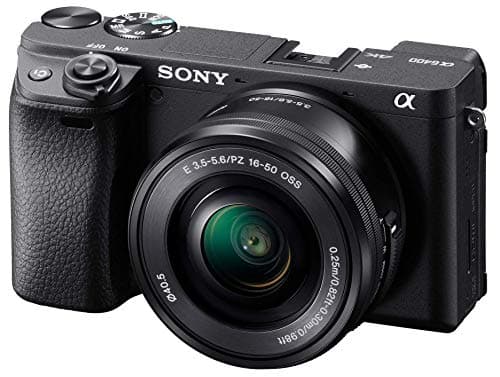
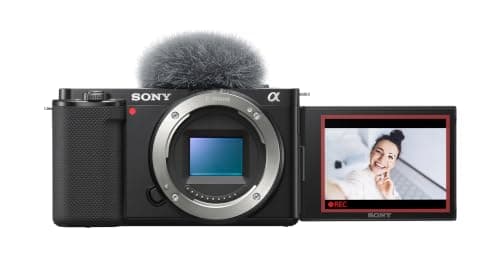
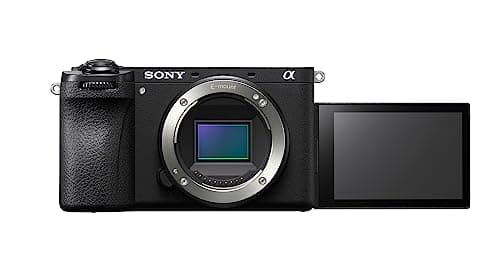
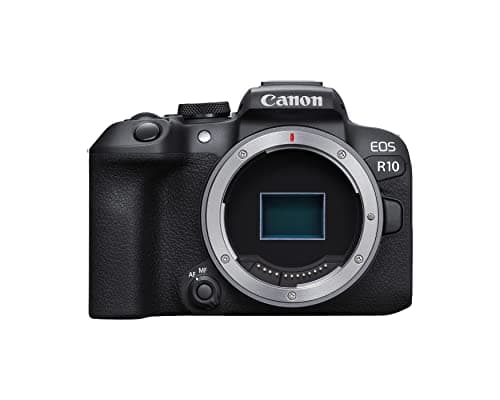
For real estate work the Canon EOS R10 is the best buy, and the reason has almost nothing to do with the body: Canon's RF-S 10-18mm is comfortably the cheapest ultra-wide zoom of any crop system, which makes the R10 the least expensive route to a complete, usable interior kit by a wide margin. The Sony a6400 is the alternative if you want Sony's autofocus and lens depth and can absorb a much pricier wide-angle; the ZV-E10 is the cheapest body if your work leans towards video walkthroughs; the a6700 adds in-body stabilization for handheld walkthroughs.
Real estate photography is a lens problem wearing a camera costume. A kit zoom starting at 18mm equivalent cannot show a bathroom — you back into the wall and still cannot fit the room in. The entire genre depends on getting to roughly 15-16mm equivalent or wider, with straight lines rather than a fisheye bulge, and that is a specific lens rather than a specific camera. So the honest way to rank bodies for this job is to rank the systems by what a usable ultra-wide costs in each one, and then let the body follow.
The second thing that matters is dynamic range handling, and the practical answer there is technique rather than hardware: a bright window against a dim interior is more contrast than any APS-C sensor captures in one frame, so you shoot a bracket of exposures from a tripod and blend them. Every body here can do that. What differs is how comfortably you can work on a tripod at awkward heights, which comes back to the screen.
What matters, in order
| Spec | Canon EOS R10 | Sony a6400 | Sony ZV-E10 | Sony a6700 |
|---|
| Mount | Canon RF / RF-S | Sony E | Sony E | Sony E |
| Cheapest native ultra-wide zoom | Canon RF-S 10-18mm IS STM | Sony E PZ 10-20mm F4 G | Sony E PZ 10-20mm F4 G | Sony E PZ 10-20mm F4 G |
| Sensor | 24MP APS-C | 24MP APS-C | 24MP APS-C | 26MP APS-C |
| Viewfinder | Yes | Yes | No | Yes |
| Screen | Fully articulating | Tilting only | Fully articulating | Fully articulating |
| Video for walkthroughs | Uncropped 4K30 | 4K30 | 4K30 with a crop | 4K with IBIS |
| In-body stabilization | No | No | No | Yes |
Body specifications are manufacturer-published and linked in Sources. Lens prices are live from our price layer on the lens pages linked below — we never write a price into page copy, because it would be stale the day after. We have not tested any of these in a lab; see how we research and score.
Why the ultra-wide decides the system
Add up the real cost of each route and the ranking explains itself. Canon's RF-S 10-18mm is a modest, slow, stabilized zoom that nobody would call exciting — and it is the least expensive native ultra-wide in any crop mount by a large margin, which makes the total Canon kit cheaper than any Sony equivalent even though the R10 body usually costs more than a ZV-E10 or an a6400. Sony's E-mount wides are excellent and considerably more expensive: the power-zoom 10-20mm F4 G is a lovely compact lens, and Sigma's 10-18mm F2.8 is optically the best of the group, but either one roughly doubles your outlay. Current prices for all of them are on our best wide-angle lenses page and in best Canon RF lenses.
A warning about the alternative that looks cheaper: do not solve this with a fisheye or an extreme action-cam-style wide. Real estate photography is judged on straight vertical lines — door frames, wall corners, kitchen cabinets. A rectilinear ultra-wide keeps them straight; a fisheye curves them, and a curved doorway reads as amateur instantly. Lens correction profiles can straighten mild distortion but they cannot rescue a fisheye.
How wide is wide enough?
Roughly 16mm equivalent handles most rooms and is the sensible target. Around 15-16mm you can shoot a standard bedroom from a corner and show the whole room; below that you start including so much floor and ceiling that the image stops looking like the space. Going wider than you need is a real mistake in this genre: a 10mm-equivalent shot of a small bathroom makes it look like a corridor and sets up a viewing that disappoints. Shoot the widest end only when the room genuinely demands it.
The two techniques that matter more than the camera
Bracket and blend. A sunlit window against a shaded interior exceeds what one exposure can hold. The standard fix is to put the camera on a tripod and shoot the same frame at several exposures — one for the room, one for the window — then blend them. Most cameras at this level have automatic exposure bracketing somewhere in the drive or shooting menu (look for AEB or BRK); if yours does not, change the exposure manually between frames. The tripod is non-negotiable, because the frames have to align.
Get the camera level, at chest height. Interiors look wrong when the camera is tilted, because tilting an ultra-wide converges the vertical lines dramatically. Level the camera with the in-body level display or a bubble level, and set it around chest height — roughly 1.2 to 1.5m — which is the height that makes rooms read naturally. A tripod with a level and a decent head pays for itself here, and ours are ranked in best tripods.
Where the screen and the viewfinder come in
A fully articulating screen matters more than it sounds for this work: with the camera levelled on a tripod at chest height, you are standing beside it rather than behind it, and a screen that rotates out lets you compose and check focus without crouching. That is a point for the R10, the ZV-E10 and the a6700, and the main practical mark against the a6400's tilt-only screen.
The viewfinder earns its place on exteriors. Shooting a house front in bright sun with only a rear screen is genuinely difficult, and the three bodies here with an EVF make that half of the job far easier. It is the reason the ZV-E10 ranks third rather than higher despite being the cheapest body.
Video walkthroughs change the answer slightly
If the listings you shoot include a walkthrough video, two things shift. First, uncropped 4K matters, because a crop eats the wide angle you just paid for — the R10 shoots uncropped 4K30 while the ZV-E10's 4K is cropped, which on an ultra-wide lens is a real loss. Second, stabilization matters, because a walkthrough is by definition a walking shot. The a6700 is the only body here with in-body stabilization, which is why it is on the page at all given its price.
The cheaper answer to the walking problem is a gimbal rather than a body upgrade: a stabilizer under a cheap body produces smoother footage than in-body stabilization in an expensive one. Our best gimbals for mirrorless ranking covers the options, and do you need a gimbal works through whether it is worth it for your kind of shooting.
Bodies we considered and did not rank
Canon EOS R50 and R100. The R50 would otherwise be a strong, cheaper route to the same RF-S 10-18mm lens, but neither body shows a buyable offer in our price data as we write and we do not rank picks you cannot buy. If the R50 comes back in stock it is worth comparing — see Canon R50 vs R10.
Nikon Z50 II and Z30.Both are capable bodies with excellent autofocus, and the Z50 II's processor is the best in its class — but Nikon's DX range has no inexpensive native ultra-wide zoom in our registry, which is precisely the lens this genre cannot work without. See best lenses for Nikon Z for what the mount does offer.
Fujifilm X bodies.Lovely cameras and lovely colour, but the affordable Fujifilm wide options in our registry are primes rather than zooms, and interior work wants a zoom so you can fit each room without changing lenses in a client's house. The Fujifilm lens ranking has the detail.