Skip to content
Focal & Frame

Cameras · Mirrorless Cameras

The Best Mirrorless Cameras for Travel

Compact, light and versatile enough to carry all day — the best travel cameras ranked on size, one-lens versatility and battery, with live prices.

By Stephen V.Updated How we research
#ad

We earn a commission when you buy through our Amazon links, at no extra cost to you. It never decides our rankings — we say so when the cheaper pick is the better buy. How this works.

The best travel camera is the one you will actually carry all day, and for most travelers that is the Sony a6400 — compact enough to disappear into a daypack, blessed with a viewfinder for bright-sun shooting, and backed by the deepest catalog of tiny, cheap lenses of any system. If you want in-body stabilization and the longest battery life for a mix of photos and video, the Fujifilm X-S20 is the step-up pick. This list ranks five bodies on what actually matters on the road: size and weight, one-lens versatility, battery, and a viewfinder you can use in harsh light.

Travel punishes the wrong camera. A body that felt reasonable on the shop counter becomes a brick around your neck on day three of a city trip, and a camera that eats batteries has you hunting for a cafe with a plug instead of shooting the golden hour. The specs that win at home — burst speed, dual card slots — matter far less than the ones that win on the road: how little it weighs, how long it runs, and whether one versatile lens can cover a temple, a market and a dim restaurant without a swap.

Every camera here is APS-C, which is the quiet secret of a good travel kit: a crop-sensor body and two small lenses weigh less and cost less than a single full-frame setup, with image quality that is more than enough for prints and screens. If you are still weighing sensor sizes, our APS-C vs full frame guide explains why crop sensors travel so well.

The short answer

Quick picks

#ProductBest forScorePrice
01
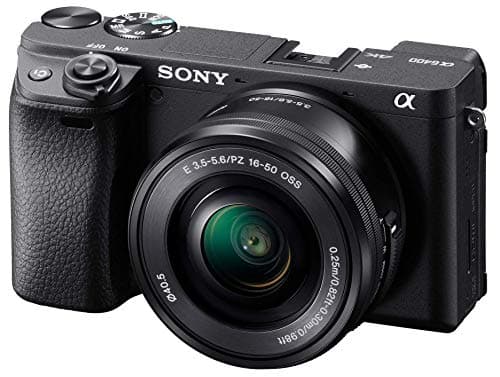
Sony Sony a6400
Sony a6400

Still one of the best autofocus systems you can buy at this price, in a compact body with a proper viewfinder.

Stills shooters who want a viewfinder
7.8
$789.14Amazon
02
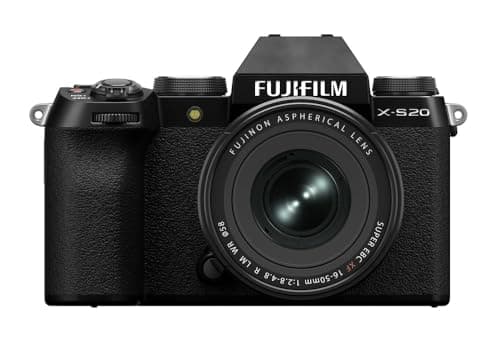
Fujifilm Fujifilm X-S20
Fujifilm X-S20

The one to buy if you'll grow fast: in-body stabilization, a huge battery, and Fujifilm's film simulations that get colors right in-camera.

Beginners who'll outgrow the basics quickly
8.2
$1,899.00Amazon
03
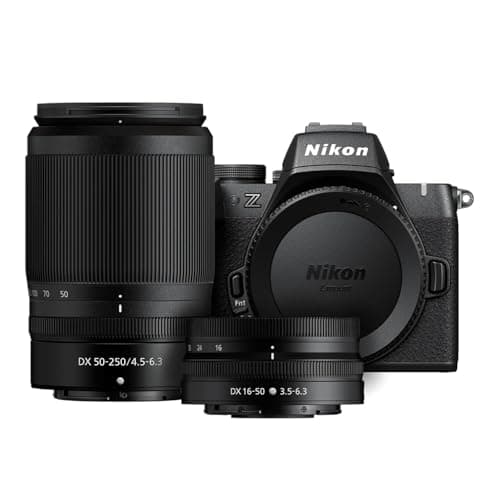
Nikon Nikon Z50 II
Nikon Z50 II

Flagship-grade autofocus in a beginner body — the Z50 II borrows the EXPEED 7 brain from Nikon's flagship cameras.

The best autofocus for the money
8.6
$1,399.95Amazon
04
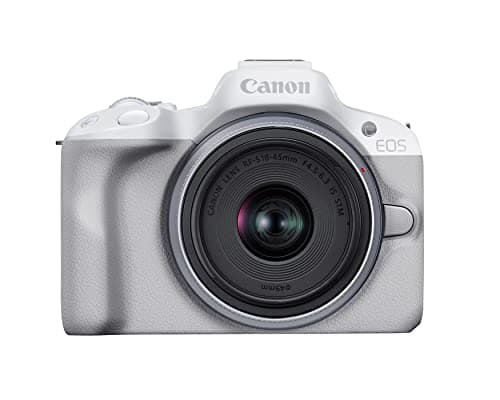
Canon Canon EOS R50
Canon EOS R50

The best all-rounder for a true beginner: uncropped 4K, a viewfinder AND a flip screen, and Canon's famously sticky autofocus.

The best all-round beginner pick
8.4
$799.00Amazon
05
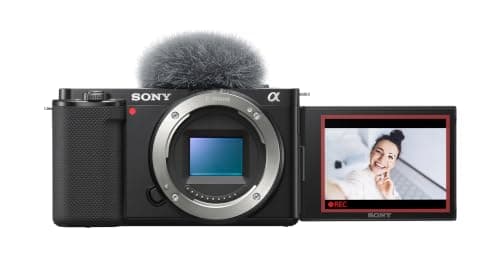
Sony Sony ZV-E10
Sony ZV-E10

The safe first camera if you shoot mostly video — flip-out screen, clean autofocus, and the cheapest lens system to grow into.

Video-first beginners
8.0
$579.00Amazon

#ad · Live prices from the Amazon Product API, as of Sep 4, 2026. Where we have no verified live price, we show none — we would rather leave a gap than print a number that has rotted.

In detail

The picks, in full

01
Sony Sony a6400

Stills shooters who want a viewfinder

Sony a6400

24MP APS-C4K30Real-time tracking AFEVF, tilting screen
7.8/10

Still one of the best autofocus systems you can buy at this price, in a compact body with a proper viewfinder.

Image quality
8
Autofocus
9
Video
7
Handling
7
Value
8

Pros

  • Class-leading real-time tracking and eye AF that still holds up years after release
  • Compact, pocketable-with-a-prime body with a built-in electronic viewfinder
  • Access to the entire, enormous Sony E-mount lens catalog, first- and third-party

Cons

  • No in-body stabilization, and the screen tilts rather than fully articulating (it flips up, not out to the side)
  • The menu system is dated and dense compared with Canon's and Nikon's

Don't buy this if…

you're vlogging yourself. The screen tilts up and is blocked by a tripod or top-mounted mic — the ZV-E10's fully articulating screen is the better tool for that job.

$789.14View on Amazon

$999.9921% off

Price as of Sep 4, 2026. Prices change — Amazon's is the one that counts.

#ad · we may earn a commission from this link to Sony a6400

02
Fujifilm Fujifilm X-S20

Beginners who'll outgrow the basics quickly

Fujifilm X-S20

26MP APS-CIn-body stabilization6.2K/4K videoFilm simulations
8.2/10

The one to buy if you'll grow fast: in-body stabilization, a huge battery, and Fujifilm's film simulations that get colors right in-camera.

Image quality
9
Autofocus
8
Video
9
Handling
8
Value
7

Pros

  • In-body image stabilization (IBIS) — the only camera in this group with it — steadies both handheld stills and walking video
  • The largest battery here by a wide margin; it lasts a genuine full day of mixed shooting
  • Film simulations bake pleasing color into the file, so many people skip editing entirely

Cons

  • Costs meaningfully more than the other beginner bodies — it's the step-up option, not the entry point
  • The deep feature set has a steeper learning curve than the point-and-shoot-friendly R50 or Z30

Don't buy this if…

this is your first-ever camera and the budget is tight. It's a lot of camera; a beginner shooting auto won't touch half of what they paid for. Start with the R50 or ZV-E10 and step up to this later.

$1,899.00View on Amazon

Price as of Sep 4, 2026. Prices change — Amazon's is the one that counts.

#ad · we may earn a commission from this link to Fujifilm X-S20

03
Nikon Nikon Z50 II

The best autofocus for the money

Nikon Z50 II

21MP APS-CEXPEED 7 processorUncropped 4K30Deep grip + EVF
8.6/10

Flagship-grade autofocus in a beginner body — the Z50 II borrows the EXPEED 7 brain from Nikon's flagship cameras.

Image quality
8
Autofocus
10
Video
8
Handling
9
Value
8

Pros

  • The EXPEED 7 processor brings subject-detection autofocus straight from the Z8/Z9 — genuinely a class above at this price
  • The chunkiest, most confident grip of any camera here; it feels like a bigger camera than it is
  • Bright, large viewfinder and a dedicated Picture Control button for quick color looks

Cons

  • 21MP is the lowest resolution in this group — fine for almost everyone, but less cropping room than the 24–26MP rivals
  • Nikon's Z DX native lens lineup is small, though FTZ-adapted F-mount glass fills the gap cheaply

Don't buy this if…

you want the deepest choice of tiny, cheap native lenses. Nikon's Z DX range is the thinnest of the big four; you'll lean on adapters sooner.

$1,399.95View on Amazon

Price as of Sep 4, 2026. Prices change — Amazon's is the one that counts.

#ad · we may earn a commission from this link to Nikon Z50 II

04
Canon Canon EOS R50

The best all-round beginner pick

Canon EOS R50

24MP APS-CUncropped 4K30EVF + articulating screenCanon RF-mount
8.4/10

The best all-rounder for a true beginner: uncropped 4K, a viewfinder AND a flip screen, and Canon's famously sticky autofocus.

Image quality
9
Autofocus
9
Video
8
Handling
8
Value
8

Pros

  • Oversampled, uncropped 4K30 looks cleaner straight out of camera than the ZV-E10's cropped 4K
  • You get both an electronic viewfinder and a flip-out screen — rare at this price, and it covers stills and video equally
  • Dual Pixel CMOS AF II tracks eyes and faces with the confidence usually reserved for far pricier bodies

Cons

  • The native RF-S lens range is still thin, so the best cheap lenses are adapted EF glass or a short list of RF-S options
  • Small battery — carry a spare for a full day

Don't buy this if…

you already own Sony E or Nikon Z lenses, or you want the widest choice of cheap native primes. Canon's RF-S lineup is the youngest of the four systems.

$799.00View on Amazon

Price as of Sep 4, 2026. Prices change — Amazon's is the one that counts.

#ad · we may earn a commission from this link to Canon EOS R50

05
Sony Sony ZV-E10

Video-first beginners

Sony ZV-E10

24MP APS-C4K30 (with crop)Fully articulating screenSony E-mount
8.0/10

The safe first camera if you shoot mostly video — flip-out screen, clean autofocus, and the cheapest lens system to grow into.

Image quality
8
Autofocus
9
Video
7
Handling
7
Value
9

Pros

  • Fully articulating screen and a dedicated background-defocus button make it genuinely built for talking to the lens
  • Sony's real-time eye autofocus is the best in this price class and holds your face while you move
  • The E-mount has more affordable third-party lenses (Sigma, Viltrox, Tamron) than any rival system

Cons

  • No electronic viewfinder, so bright-daylight stills are a squint
  • 4K is taken from a cropped, downsampled region and rolling shutter (jello on fast pans) is noticeable

Don't buy this if…

you shoot a lot of stills outdoors or want to learn with a viewfinder. The missing EVF is the one thing you can't add later — the Canon R50 gives you one for similar money.

$579.00View on Amazon

$698.0017% off

Price as of Sep 4, 2026. Prices change — Amazon's is the one that counts.

#ad · we may earn a commission from this link to Sony ZV-E10

What makes a camera good for travel

Travel is the most demanding test of a camera's practicality, because you carry it for hours and shoot whatever the day throws at you. Four things decide whether a body is a joy or a burden on the road, and none of them is the megapixel count.

Size and weight you will forgive at hour eight

The best camera is the one you have with you, and a body you resent carrying gets left in the hotel. Every pick here is small by interchangeable-lens standards, but they are not equal: the Sony a6400 and ZV-E10 are the most pocketable with a pancake prime attached, the Canon R50 is featherlight, and the Fujifilm X-S20 and Nikon Z50 II are a little chunkier in exchange for bigger grips and, on the Fujifilm, stabilization. Weigh that honestly against how much walking your trips involve — grams you shrug off in the morning feel very different by dusk.

One-lens versatility

The dream travel setup is a single lens that covers most of what you see, so you are not changing glass in a sandy plaza or a drizzly street. A good travel zoom or a versatile standard prime keeps the kit light and the sensor clean. Sony's E-mount has the widest choice of small, affordable all-in-one and prime options; our best travel lenses guide covers the one-lens options for each system, and it is worth reading before you buy the body, because the lens you can travel with matters as much as the camera behind it.

Battery that lasts a day of sightseeing

Nothing ends a shoot faster than a dead battery three hours from your charger. This is the Fujifilm X-S20's trump card — its larger battery runs a genuine full day of mixed shooting, where the smaller Sony and Canon bodies have you carrying spares as a matter of course. If you travel light and hate swapping cells, the X-S20 buys you peace of mind; if you do not mind a spare or two and a USB-C charger, the smaller bodies claw back their size advantage.

A viewfinder for bright light

Travel happens in harsh midday sun as often as soft golden hour, and a rear screen washes out to a useless mirror in bright light. A viewfinder lets you frame confidently and hold the camera steadier against your face. The a6400, X-S20, Z50 II and R50 all have one; the ZV-E10 does not, which is the main reason it sits lower here despite being a lovely little camera.

How the five picks rank for travel

1. Sony a6400 — the compact all-rounder

The a6400 wins on the exact things travel rewards: it is small and light, it has a viewfinder, its autofocus is still a benchmark, and it taps the deepest catalog of tiny primes going. Pair it with a pancake or a compact travel zoom and it slips into a daypack while covering street, landscape, food and the odd portrait. Its tilt-up screen is the compromise, but for a stills-led traveler it is barely a factor. Read our full Sony a6400 review for the detail, or weigh it against the newer flagship in our a6400 vs a6700 comparison.

2. Fujifilm X-S20 — the do-everything hybrid

If your trips are as much about video as photos, the X-S20 is the strongest all-rounder. In-body stabilization smooths handheld walking clips, the big battery outlasts everything here, and the film simulations mean many travelers post straight from the camera with no editing. It is a touch larger and pricier — that is the trade for carrying one body that genuinely does it all, from a daytime market to an evening piece to camera.

3. Nikon Z50 II — the confident hybrid

The Z50 II brings the best grip and viewfinder in the group and flagship-grade autofocus, so it is a reassuring travel companion for photos of moving kids, markets and wildlife. It is slightly bigger and its native DX lens range is thinner, which nudges it below the Sony for a light one-lens kit — but few cameras this size feel as solid in the hand on a long day, and its uncropped 4K keeps travel video honest.

4. Canon EOS R50 — the featherweight

The R50 is the lightest way to travel with a viewfinder and a flip screen, and its automatic modes make it a stress-free grab-and-go. The catches are a small battery — carry spares — and a young RF-S lens range that limits your compact one-lens options. For a traveler who values simplicity and low weight above all, it is an easy camera to love, and it doubles happily as a vlog camera for the trip diary.

5. Sony ZV-E10 — the video-first pick

The ZV-E10 is the most travel-friendly pure video camera here: light, with a fully articulating screen and the same cheap E-mount lenses as the a6400. It ranks last for general travel only because it has no viewfinder, which is a real limitation for daytime stills on the road. If your trips are mostly vlogs and B-roll, move it up your own list.

Durability and the weather you will meet

Travel exposes a camera to dust, spray and temperature swings a shelf queen never sees, so a little ruggedness pays off. None of these are professional weather-sealed bodies, but some shrug off a light drizzle better than others, and a simple rain cover or a zip-lock bag in the daypack covers the rest. More important is habit: keep a lens on at all times to keep dust off the sensor, carry a microfiber cloth for sea spray and fingerprints, and let the camera acclimatize in your bag when you move between a cold street and a warm cafe to avoid condensation. Sensible handling protects a modest body better than sealing protects a neglected one.

Zoom or prime for a trip?

The one-lens question usually comes down to a travel zoom versus a fast prime, and the honest answer is that it depends on your trip. A superzoom or a standard zoom gives you the most flexibility from a single lens — wide enough for a cathedral interior, long enough for a detail across a square — which is exactly what you want when you cannot predict what the day holds and do not want to swap glass on a dusty street. A fast prime trades that reach for a smaller size, a lower price and much better low-light performance, so it shines for evening streets, restaurants and portraits but forces you to zoom with your feet. Many seasoned travelers carry one of each: a compact zoom for daytime versatility and a small fast prime for after dark. If you can bring only one, a versatile standard zoom is the safer default for a first trip.

The rest of the travel kit

Whichever body you choose, a small versatile lens and a couple of spare batteries do more for a trip than any spec upgrade. A fast prime keeps low-light restaurants and museums in reach without a tripod — see our 50mm guide — and the beginner camera kit guide works out what a complete, travel-ready setup really costs before you commit.

How we picked

We do not run a testing lab

We compiled the manufacturers' published specifications and manuals, did the cost math, and scored each product against a published rubric. The scores are judgments from that documented research — they are notmeasurements we took, because we do not have a lab and we are not going to pretend we do. Where a number came from someone else's testing, we name and link them in Sources.

Questions

Frequently asked

What is the best mirrorless camera for travel?
For most travelers, the Sony a6400 — it is compact, has a viewfinder for bright sun, offers benchmark autofocus, and taps the deepest catalog of small, cheap lenses. If you shoot a lot of video or want the longest battery life, the Fujifilm X-S20 is the better step-up. See the full ranking above for who each suits.
Is APS-C or full frame better for travel?
APS-C is usually the smarter travel choice. A crop-sensor body and two small lenses weigh and cost far less than a single full-frame setup, with image quality that is more than enough for prints and screens. Our APS-C vs full frame guide explains the trade-offs in full.
What is the best travel lens setup?
The lightest, most versatile option is a single travel zoom or one compact standard prime, so you are not swapping glass on the move. Add a small fast prime for low light if you have room. Our best travel lenses guide covers the one-lens options for each system.
Which travel camera has the best battery life?
The Fujifilm X-S20, by a clear margin — its larger battery runs a genuine full day of mixed shooting. The smaller Sony and Canon bodies have shorter endurance, so plan to carry one or two spare batteries and a USB-C charger if you pick one of those.
Do I need a viewfinder for travel photography?
It helps a lot. Travel happens in harsh midday light as often as golden hour, and a rear screen washes out in bright sun. A viewfinder lets you compose confidently and hold the camera steadier. Four of our five picks have one; the ZV-E10 is the exception, which is why it ranks lower for general travel.
Is the Sony ZV-E10 a good travel camera?
It is a great travel camera for video and a good one for photos, held back for general travel only by the missing viewfinder — composing on the rear screen in bright sun is a squint. If your trips are mostly vlogs and B-roll, it is light, cheap to build a kit around, and easy to recommend. For stills-led travel, the a6400 is the better-balanced pick.
Should I take a zoom or a prime lens traveling?
A versatile zoom is the safer single-lens choice — it covers wide interiors and distant details without a swap, which is ideal when you cannot predict the day. A fast prime is smaller, cheaper and far better in low light, but forces you to move to reframe. Many travelers carry a compact zoom for daytime and a small prime for evenings. Our travel lens guide weighs the options.

Keep reading

Receipts

Sources

We do not run a testing lab, and we do not pretend to. Specs come from manufacturer sheets and manuals; where a figure came from someone else's measurement, we name and link them. Where we could not verify something, we say so on the page rather than quietly leaving it out. Read our full method.