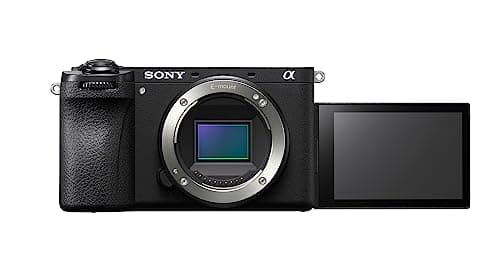
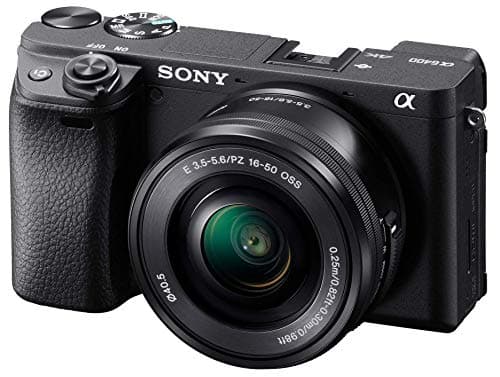
Buy the Sony a6400 if you want benchmark autofocus, a viewfinder and the deepest cheap lens catalog for the least money. Buy the Sony a6700 if you want in-body stabilization, the newest AI autofocus, a fully articulating screen and 4K60 — and you are willing to pay a step-up price for them. This is the classic Sony APS-C question: save money on the proven older body, or step up to the modern flagship? Here is exactly what the extra money buys.
These two share a lot. Both are APS-C E-mount cameras with a viewfinder, both tap the same enormous, affordable lens catalog, and both take excellent photos you would happily print. The a6400 is the older, cheaper design that endures because it got the important thing — autofocus — right years ago. The a6700 is the current flagship of Sony's crop-sensor line, and it adds the features owners spent years asking for. The differences below are what actually separate them; everywhere else, they are close enough to call a tie.
The differences that actually matter
1. Stabilization: the a6700 has IBIS, the a6400 doesn't
The single biggest gap. The a6700 has in-body 5-axis image stabilization; the a6400 has none. IBIS steadies handheld stills so you can shoot at slower shutter speeds in dim rooms, and it smooths handheld video enough that a lot of casual walking footage no longer needs a gimbal. On the a6400 you offset the missing stabilization with a stabilized lens or a steadier stance. If you shoot handheld video at all, this alone can decide it in the a6700's favor.
2. Autofocus: both are excellent, the a6700 is a generation ahead
The a6400's real-time tracking and eye AF were a benchmark when it arrived and remain genuinely excellent today. The a6700 goes further with a dedicated AI processing unit that recognizes more subject types — people, animals, birds, cars, insects — and tracks them more tenaciously. For most everyday shooting you would be delighted with either; for fast, erratic subjects the a6700 has a real edge in how often it nails the eye.
3. Screen: tilt versus fully articulating
The a6400's screen tilts up, which Sony marketed as a selfie feature but which gets blocked the moment you mount a microphone in the hot shoe above it. The a6700's screen fully articulates to the side and faces forward cleanly, clearing a top-mounted mic and swinging to high or low angles. For stills the two are comparable; for filming yourself the a6700's screen is clearly the better tool.
4. Video: the a6700 adds 4K60 and oversampling
Both shoot 4K, but the a6700 is the stronger video camera. It records oversampled 4K up to 60 frames per second for slow motion, with a deeper feature set and the stabilization to hold it steady. The a6400 shoots solid 4K30 but is a stills camera that films competently rather than a video-first body. If slow-motion 4K or serious video is on your list, the a6700 is built for it.
5. Handling and menus: the a6700 is the modern one
The a6700 has a deeper grip, an extra control dial and Sony's newer, cleaner touch-menu system. The a6400 wears its age here: the menus are the old, dense, deeply nested layout, and there is one less dial to work with. Neither changes the photos, but the a6700 is simply more pleasant to live with day to day.
6. Image quality: a near tie in good light
The a6400's 24MP and the a6700's 26MP sensors both resolve plenty of detail and hold up well in dim light, and in good light you would be hard pressed to tell their files apart. The a6700's newer sensor and processing give it a slight edge in the shadows and at higher sensitivities, but it is a difference of degree, not kind. If your priority is simply lovely photos of people and places, do not agonize over image quality between these two — spend your attention on stabilization, video and price instead.
7. Price and value: the a6400 is the bargain
Here the a6400 pushes back hard. It costs far less — often dramatically so during sales — and the money you save can go straight into a lens, which improves your photos more than any of the a6700's features would. Both buy into the same deep, cheap E-mount catalog, so the lens path is identical. If budget is your first concern, the a6400 delivers most of what makes Sony APS-C great for a fraction of the outlay.
8. Battery and the practical details
The a6700 uses Sony's larger Z-series battery, so it runs noticeably longer on a charge than the a6400's older, smaller cell — a real convenience for a long day of shooting or video. The a6700 also adds a faster UHS-II card slot and a more modern USB-C data path, where the a6400 sticks with slower UHS-I storage. Neither changes the picture that comes out, but if you shoot long days, record a lot of video, or simply dislike swapping batteries, the a6700's stamina and faster storage are quiet quality-of-life wins that add up over the years you own it.
So, save money or step up?
Frame it around one question: do you shoot handheld video, or film yourself? If yes, the a6700's stabilization and fully articulating screen are worth the stretch — they solve the two things the a6400 is genuinely weak at, and no lens or accessory fully replaces them. If you mostly shoot stills, especially in good light, the a6400 gives you the same benchmark-class autofocus, the same viewfinder and the same lens catalog for far less, and you will struggle to see where the extra money went.
Buy the a6400 if budget matters, you shoot mostly stills, you want the most camera per dollar, or you would rather put the savings toward a fast prime. It remains one of the best-value cameras in the whole APS-C market, and it is the smarter buy for a stills-first beginner who does not need the newest video features.
Buy the a6700 if you shoot a lot of handheld video, you film yourself, you want the very best autofocus Sony puts in a crop body, or you simply want a camera you will not outgrow for many years. It is the more capable, more future-proof choice — you are paying for stabilization, AI tracking, 4K60 and a modern interface, and if you will use them, they are worth it.
Think about the whole kit, not just the two price tags. Because both share the same mount, your lens budget is identical either way, and a fast prime is the first upgrade for both. If the a6700 stretches your budget to the point where you can only afford the kit zoom, the a6400 plus a good prime will often take better pictures for the same total spend.
Still weighing it up? Read our full Sony a6400 review for the detail on the cheaper body, and see where the a6400 lands against other systems in the best under $1,000 ranking. Whichever you choose, you are buying into the deepest, most affordable lens catalog in the business — and that, more than any body feature, is why Sony APS-C stays so easy to recommend.
One more way to decide: think about which camera you will resent in a year. If you buy the a6400 and quickly find yourself fighting the tilt screen and wishing for stabilized video, that regret costs more than the a6700 would have. If you buy the a6700 and never turn on 4K60 or walk-and-talk with IBIS, you paid for headroom you do not use. Be honest about which mistake you are more likely to make — most people already know, and the answer usually points cleanly at one body.