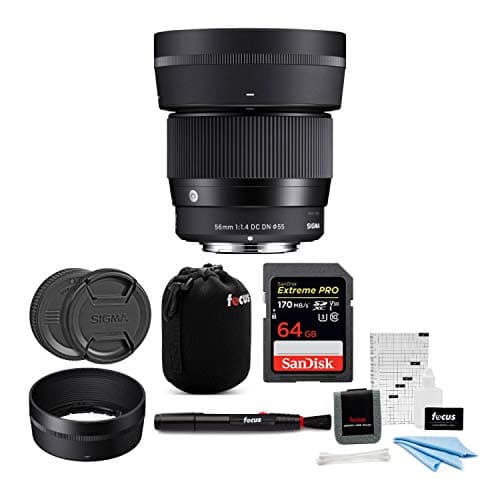
For most people shooting portraits on a crop-sensor camera, the Sigma 56mm f/1.4 is the best lens you can buy: it delivers the flattering ≈84mm-equivalent framing and creamy background blur of a much pricier lens, for a fraction of the money. On full-frame, the Sony FE 85mm f/1.8 is the classic choice. The whole game with portraits is a fast, short-telephoto prime — here's why, and which one suits your camera.
Great portraits come down to two things a lens controls. The first is compression: a longer focal length (around 85mm on full-frame, or ~56mm on APS-C, which frames the same way) flattens features flatteringly and lets you stand back a comfortable distance, so your subject doesn't feel crowded. The second is background blur: a wide aperture like f/1.4 or f/1.8 melts the background into a soft wash of color, isolating the person. Both together are the "portrait look."
As with 50mm primes, sensor size decides the number you buy. On APS-C, a ~56mm lens frames like an 85mm on full-frame, which is why the crop-sensor portrait primes here are 56mm while the full-frame pick is an actual 85mm. A 50mm can double as a lightweight portrait lens too, which is why two nifty fifties round out this list — they're a fine, cheaper starting point before you commit to a dedicated portrait lens.
The short answer
Quick picks
| # | Product | Best for | Score | Price |
|---|
| 01 | Sigma 56mm F1.4 DC DNThe budget portrait king. An ≈84mm-equivalent short telephoto with creamy f/1.4 blur and biting sharpness, for a fraction of a full-frame 85mm's price. | The best-value portrait lens | | $469.99·Amazon |
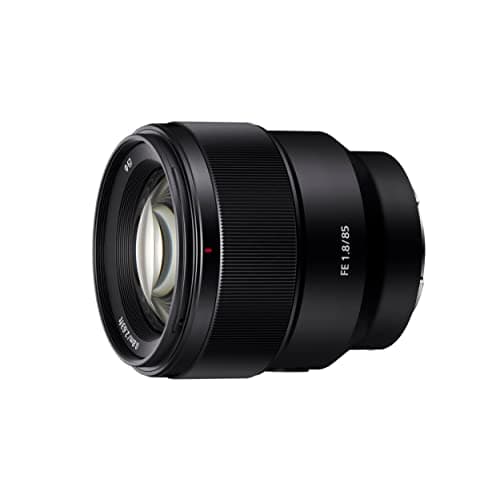
| 02 | Sony FE 85mm F1.8The classic portrait telephoto for Sony full-frame: fast, confident autofocus and lovely f/1.8 rendering in a lens that stays reasonably priced. | The full-frame portrait classic | | Check price → |
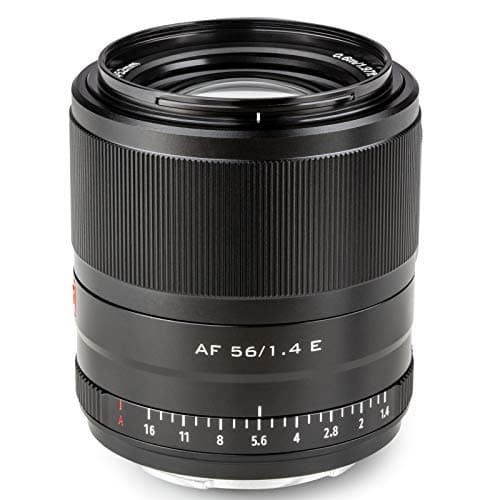
| 03 | Viltrox 56mm F1.4The cheapest way into real portrait glass: an autofocus ≈84mm-equivalent f/1.4 that gets you most of the Sigma's look for noticeably less. | The cheapest autofocus portrait prime | | $239.00·Amazon |
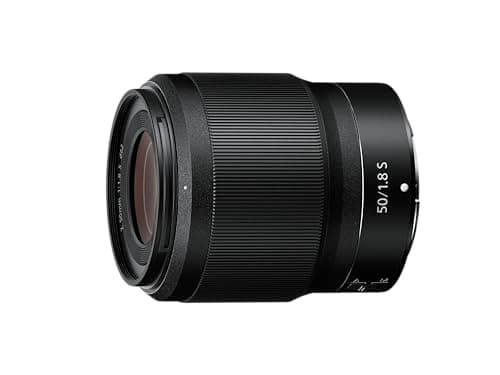
| 04 | Nikon Z 50mm f/1.8 SThe sharpest 'nifty fifty' here by a clear margin — Nikon's S-line optics and near-silent autofocus in a lens that costs more but earns it. | The sharpest 50mm, for Nikon Z | | $466.95·Amazon |
| 05 | Canon RF 50mm F1.8 STMThe default first upgrade for any Canon mirrorless owner: tiny, sharp, genuinely cheap, and it gives your photos the soft-background 'real camera' look a kit lens can't. | The best nifty fifty for Canon | | $199.00·Amazon |
#ad · Live prices from the Amazon Product API, as of October 19, 2026. Where we have no verified live price, we show none — we would rather leave a gap than print a number that has rotted.
In detail
The picks, in full
The best-value portrait lens
Sigma 56mm F1.4 DC DN
56mm f/1.4 (≈84mm equivalent)Sony E mount (APS-C)Stepping-motor AF55mm filter thread
The budget portrait king. An ≈84mm-equivalent short telephoto with creamy f/1.4 blur and biting sharpness, for a fraction of a full-frame 85mm's price.
- Sharpness
- 9
- Autofocus
- 8
- Aperture & bokeh
- 9
- Build & size
- 8
- Value
- 10
Pros
- +The ≈84mm-equivalent focal length is the sweet spot for flattering head-and-shoulders portraits with natural compression
- +f/1.4 renders a soft, creamy background that isolates your subject — the look people buy a prime for
- +Remarkably sharp on the eyes wide open, with quiet autofocus, at a genuinely low price
Cons
- −APS-C only, so it won't cover a full-frame sensor
- −No weather sealing, and the barrel is well-made but plastic
Don't buy this if…
…you shoot full-frame or need weather sealing for outdoor work. On full-frame you'd want a native 85mm like the Sony FE 85mm f/1.8 instead.
The full-frame portrait classic
Sony FE 85mm F1.8
85mm f/1.8Sony E mount (full-frame)Linear-motor AFFocus-hold button + AF/MF switch
The classic portrait telephoto for Sony full-frame: fast, confident autofocus and lovely f/1.8 rendering in a lens that stays reasonably priced.
- Sharpness
- 8
- Autofocus
- 9
- Aperture & bokeh
- 9
- Build & size
- 7
- Value
- 8
Pros
- +The 85mm focal length is the traditional portrait length — flattering compression and a comfortable working distance from your subject
- +Fast, quiet linear-motor autofocus with reliable eye tracking, so more frames come back sharp
- +Smooth, pleasing background blur and natural skin rendering wide open
Cons
- −Bigger and heavier than the APS-C portrait primes — it's a full-frame lens and feels it
- −On an APS-C body it frames like a ~127mm, which is tight for anything but headshots
Don't buy this if…
…you shoot on an APS-C camera in tight spaces. The ≈127mm-equivalent reach forces you to back up a long way — a 56mm APS-C prime is the more usable portrait length on crop bodies.
The cheapest autofocus portrait prime
Viltrox 56mm F1.4
56mm f/1.4 (≈84mm equivalent)Sony E mount (APS-C)STM autofocusUSB firmware-update port
The cheapest way into real portrait glass: an autofocus ≈84mm-equivalent f/1.4 that gets you most of the Sigma's look for noticeably less.
- Sharpness
- 8
- Autofocus
- 7
- Aperture & bokeh
- 8
- Build & size
- 7
- Value
- 10
Pros
- +Delivers the flattering ≈84mm-equivalent framing and soft f/1.4 background for one of the lowest prices in autofocus glass
- +Light and compact, and updatable over its USB port as Viltrox refines the focus firmware
- +Genuinely sharp results that hold up against lenses costing much more
Cons
- −Autofocus is a step behind the Sigma and Sony — slower and less sure in low light or on fast subjects
- −No weather sealing, and it flares more against bright light sources
Don't buy this if…
…you shoot events or anything fast-moving where you can't miss focus. For static portraits it's superb value; for reliability under pressure the Sigma 56mm f/1.4 is the safer buy.
The sharpest 50mm, for Nikon Z
Nikon Z 50mm f/1.8 S
50mm f/1.8Nikon Z mount (full-frame)S-line premium opticsWeather-sealed build
The sharpest 'nifty fifty' here by a clear margin — Nikon's S-line optics and near-silent autofocus in a lens that costs more but earns it.
- Sharpness
- 10
- Autofocus
- 9
- Aperture & bokeh
- 8
- Build & size
- 7
- Value
- 7
Pros
- +Exceptionally sharp corner to corner, even wide open — it out-resolves every other 50mm f/1.8 on this list
- +Fast, near-silent autofocus with minimal focus breathing, so it doubles as a strong video lens
- +Weather-sealed and solidly built, a genuine step up in feel from the budget nifty fifties
Cons
- −Bigger, heavier and much pricier than a typical f/1.8 nifty fifty — it's a premium lens, not a bargain
- −The performance only pays off on Nikon Z; there's no cheaper Nikon 50mm that matches it
Don't buy this if…
…you just want the cheap, fun 'first prime' experience. This is a near-professional lens at a near-professional price — if the budget is tight, Nikon's 40mm f/2 gets you a similar look for far less.
The best nifty fifty for Canon
Canon RF 50mm F1.8 STM
50mm f/1.8Canon RF mount (full-frame)STM stepping-motor AFCompact and light (~160g)
The default first upgrade for any Canon mirrorless owner: tiny, sharp, genuinely cheap, and it gives your photos the soft-background 'real camera' look a kit lens can't.
- Sharpness
- 8
- Autofocus
- 7
- Aperture & bokeh
- 7
- Build & size
- 8
- Value
- 10
Pros
- +Renders a soft, blurred background at f/1.8 that instantly separates your subject from the clutter behind them
- +One of the smallest, lightest lenses you can buy for the system — it barely adds weight and disappears in a bag
- +A control ring lets you dial in aperture, ISO or exposure compensation without diving into menus
Cons
- −The STM focus motor can hunt and buzz in low light, and focus breathing is visible on video
- −Build is mostly plastic with a plastic mount — it feels as inexpensive as it is
Don't buy this if…
…you shoot an APS-C Canon body (an R50, R10 or R100) and want the classic 50mm 'normal' look. On those the 50mm frames like an 80mm short telephoto, so a wider lens gets you closer to a true nifty-fifty view.
How to choose a portrait lens
Match the focal length to your sensor, then get the fastest aperture your budget allows. On APS-C, aim for a 56mm (≈84mm equivalent); on full-frame, an 85mm. A 50mm-equivalent works in a pinch and in tighter spaces, but the longer length is more flattering for head-and-shoulders shots.
Why aperture matters more here than anywhere
Portraits are the one job where paying for f/1.4 over f/1.8 is most worth it. The wider aperture blurs the background more completely and separates your subject cleanly, and it gathers more light for indoor and evening shoots. The Sigma and Viltrox 56mm primes both open to f/1.4; the full-frame Sony 85mm at f/1.8 still blurs beautifully because the larger sensor does some of that work for you. Our Sigma 56mm vs Sony 50mm comparison shows what the f/1.4-versus-f/1.8 gap means on an APS-C Sony.
Autofocus reliability is the hidden decider
At f/1.4 the in-focus zone is razor-thin, so the eyes have to be tack-sharp or the shot is lost. This is where the Sigma's and Sony's quicker, more confident autofocus earns its slightly higher price over the very cheap Viltrox — for relaxed, static portraits the Viltrox is superb value, but for kids, pets or events that don't hold still, the more reliable focus pays off.
Budget vs premium, honestly
The best value in portrait glass sits on Sony E-mount, where the Sigma and Viltrox 56mm primes cost a fraction of first-party lenses. Canon RF, Nikon Z and Fujifilm X shooters have fewer cheap third-party portrait options today, so the native 50mm-class primes above are the sensible starting point on those mounts. Whichever you pick, a fast prime is the upgrade people notice most — see the best 50mm primesif you'd rather start there and add a dedicated portrait lens later.
How we picked
We do not run a testing lab
We compiled the manufacturers' published specifications and manuals, did the cost math, and scored each product against a published rubric. The scores are judgments from that documented research — they are notmeasurements we took, because we do not have a lab and we are not going to pretend we do. Where a number came from someone else's testing, we name and link them in Sources.
Questions
Frequently asked
What is the best lens for portraits in 2026?+
For crop-sensor (APS-C) cameras, the Sigma 56mm f/1.4 is the standout — it gives you flattering ≈84mm-equivalent framing and creamy background blur for a low price. For full-frame cameras, the Sony FE 85mm f/1.8 is the classic pick. Both are fast, short-telephoto primes, which is exactly what portraits want.
What focal length is best for portraits?+
Around 85mm on a full-frame camera, or about 56mm on an APS-C camera (which frames the same as 85mm because of the crop factor). That length gives flattering compression and lets you stand a comfortable distance from your subject. A 50mm-equivalent works too and is handier in small rooms.
Is the cheap Viltrox 56mm f/1.4 good enough for portraits?+
Yes, for static portraits it's excellent value — sharp, with lovely f/1.4 background blur. The trade-off is autofocus: it's slower and less sure than the Sigma 56mm, so for fast-moving subjects like kids or events the Sigma is the safer, more reliable buy.
Can I use a 50mm lens for portraits?+
You can, and many people do — a 50mm is a fine lightweight portrait lens, especially in tighter spaces. It's just a little shorter than the classic portrait length, so you'll stand a bit closer. If you want the most flattering look, step up to a 56mm (APS-C) or 85mm (full-frame). See the
best 50mm primes for double-duty options.
Receipts
Sources
We do not run a testing lab, and we do not pretend to. Specs come from manufacturer sheets and manuals; where a figure came from someone else's measurement, we name and link them. Where we could not verify something, we say so on the page rather than quietly leaving it out. Read our full method.