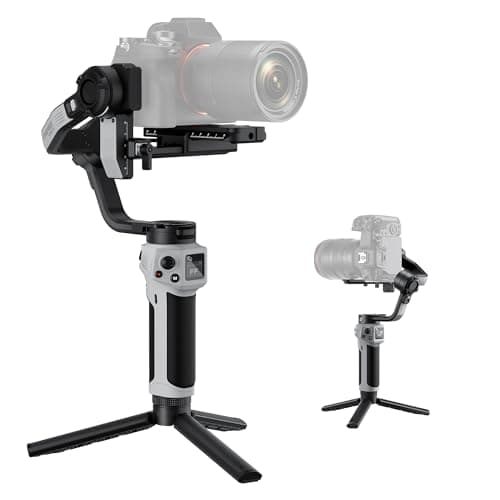
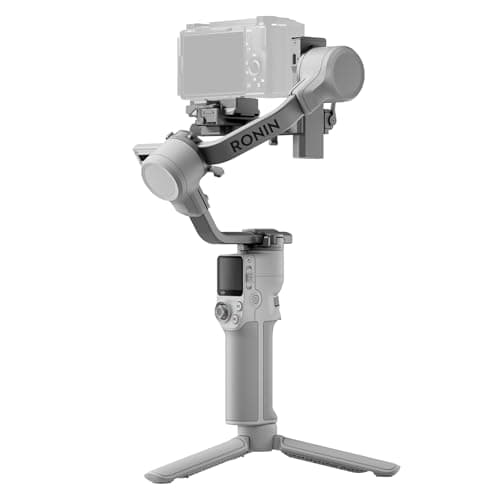
Buy the DJI RS 4 Mini if you want the most polished app and the lightest body to carry. Buy the Zhiyun Weebill 3E if you want more payload headroom and better value — and a safe option if DJI is hard to buy where you are. Both are excellent 3-axis stabilizers for mirrorless. The decision comes down to software versus hardware, and to how heavy your rig is.
The four things that actually differ
1. App and ecosystem: DJI is more polished
This is DJI's trump card. The RS 4 Mini's app, teleprompter, follow-focus and accessory ecosystem are the most refined in the category — the menus are cleaner, the firmware updates are smoother, and the automatic axis locks make balancing genuinely quick. If you value plug-and-play polish and want the shortest learning curve, DJI is ahead. Zhiyun's app and firmware on the Weebill 3E are perfectly usable and have improved a lot, but they remain a step behind DJI for finish.
2. Hardware and value: Zhiyun gives you more for less
The Weebill 3E answers software polish with hardware you can feel. It carries a higher ~3kg payload, and reviewers at Digital Camera World and Camera Jabber list its battery at up to 16 hours, against 13 hours stationary for the RS 4 Mini. One catch: the sling handle that makes low-mode shots comfortable is sold separately. And it is consistently priced below the comparable DJI. If you would rather spend on capability than on software refinement, Zhiyun wins the value argument outright.
3. Payload and weight: it depends on your rig
The RS 4 Mini is the lighter gimbal at roughly 890g, with a ~2kg payload — ideal for a compact mirrorless body and a prime, and the easier one to carry all day. The Weebill 3E is a little heavier but rated to ~3kg, which gives a body-plus-zoom combo real headroom. Remember the payload rule: your camera and its heaviest lens must weigh comfortably less than the rating, with room to spare. If your rig is light, the Mini is the nicer thing to hold; if it is heavier, the Weebill's headroom is the safer bet.
4. Battery: the Weebill runs longer on paper
DJI rates the RS 4 Mini's built-in battery at up to 13 hours stationary and notes that runtime drops when the gimbal is moving; the Weebill 3E is rated for up to 16 hours. Neither figure reflects a day of constant movement, so a power bank is still worth carrying on a long shoot. For typical creator use — a few hours of intermittent shooting — both get through it fine.
Who should buy which
If you shoot a compact mirrorless body with light primes, value a slick app and want the lightest gimbal to carry, buy the DJI RS 4 Mini. If you shoot a heavier body with zooms, want the longest rated runtime, and care about getting the most hardware for your money, buy the Zhiyun Weebill 3E. There is also the availability angle: if DJI is hard to buy in the US the week you shop, the Weebill 3E is a genuine equal, not a downgrade.
The bottom line
Both gimbals will give you smooth, professional-looking motion. If you had to flip a coin: the RS 4 Mini is the better experience (lighter, slicker app, faster to balance), and the Weebill 3E is the better value and the safer payload bet (more headroom, more built-in hardware, lower price). A light-kit creator who prizes polish should take the DJI; a shooter with heavier glass, or anyone who wants the most gimbal per dollar, should take the Zhiyun.
And the honest caveat that applies to both: if your camera has in-body stabilization and you shoot mostly static or slow footage, you may not need either gimbal yet. See our main gimbal guide for where a gimbal actually pays off, and the best video lenses if a lens is the better spend.