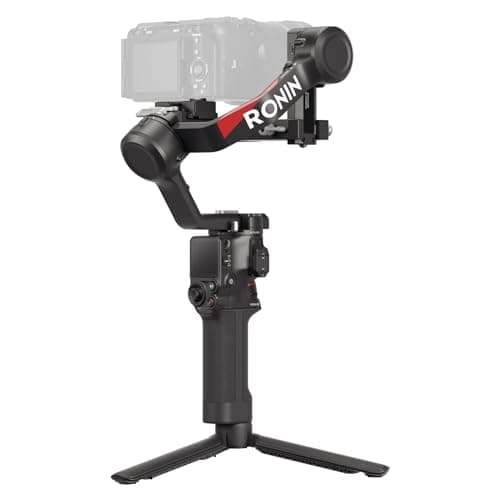
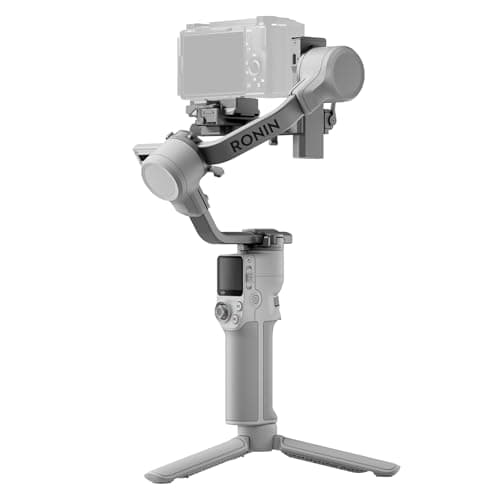
Buy the DJI RS 4 Mini if you shoot a compact mirrorless body and value the lightest gimbal to carry for the lowest price. Buy the DJI RS 4 if you run a heavier body with big zooms and want more payload headroom and a battery you can swap. Both are excellent 3-axis stabilizers with the same polished DJI app and automatic axis locks. The decision is almost entirely about the weight of your rig — and whether you need a gimbal at all.
Before either one, ask the honest question we put at the top of every gimbal page: if your camera has in-body image stabilization (IBIS) and you shoot mostly static or slow footage, you may not need a gimbal yet. A modern IBIS body with a stabilized lens holds a locked-off interview, a gentle pan or a careful walk-and-talk cleanly on its own. A gimbal earns its keep for real motion — walking shots, running, reveals, orbits and tracking a moving subject. If that is your work, read on; if it is not, the money is better spent on a better lens.
One more caveat that shapes this whole comparison: DJI's availability in the US has been uncertain at times. Both of these are DJI gimbals, so if neither is easy to buy the week you shop, do not force it — the Zhiyun Weebill 3E does the same job for similar money, and we lay out that alternative in Zhiyun vs DJI. With that said, if you have settled on DJI, here is exactly how the Mini and the full-size RS 4 differ.
The four things that actually differ
1. Weight and portability: the Mini is the one you carry
This is the Mini's trump card, and for a lot of creators it decides the whole thing. The RS 4 Mini weighs roughly 890g, while the full-size RS 4 is around 1.3kg — not a huge number on paper, but a real difference in the hand after an hour, and a bigger one in the bag you decide whether to pack. The lightest gimbal you can get away with is the one you will actually bring, and a gimbal left at home stabilizes nothing. If you shoot travel, events or anything where you carry your kit all day, the Mini's weight advantage is worth more than any spec on the RS 4. The RS 4 is not heavy for what it is, but it earns its bulk only if you need the payload it buys.
2. Payload: the RS 4 buys headroom
Payload is the maximum camera-plus-lens weight the motors can balance and stabilize, and it is the number that should decide any gimbal purchase. The RS 4 Mini is rated to about 2kg, which comfortably handles a compact mirrorless body with a prime or a light zoom. The full-size RS 4 is rated to about 3kg, which swallows a heavier body with a fast zoom and still leaves margin. The rule does not bend: your camera and its heaviest lens must weigh comfortably lessthan the rating, with headroom to spare — running a gimbal near its limit strains the motors, drains the battery faster and produces shakier footage, which defeats the point. Weigh your actual rig with the biggest lens you own or plan to buy. If it is close to 2kg, skip the Mini and take the RS 4's headroom; if it is a light setup well under 2kg, the Mini's payload is plenty and the extra RS 4 capacity is weight and cost you will never use.
3. Battery: the Mini lasts longer, the RS 4 swaps
On a single charge the Mini is actually rated slightly longer: DJI quotes up to 13 hours for the RS 4 Mini's 3,100mAh battery and up to 12 hours for the RS 4's 3,000mAh one, both measured with the gimbal balanced and stationary, so real shooting runs shorter on either. The difference that matters is how the battery is built. The RS 4 Mini's is built in, so when it runs down you plug in, and DJI quotes about 1 hour 50 minutes for a full charge. The RS 4's battery lives in its detachable BG21 grip, so you can carry a spare grip and swap it in without stopping. For a few hours of intermittent shooting, both get through it comfortably. For all-day shoots away from power, the swappable grip tilts the choice toward the RS 4.
4. Price and value: the Mini asks less
The RS 4 Mini is the cheaper gimbal, and for a light-kit creator it is also the better value, because you are not paying for payload capacity you will never touch. The RS 4 costs more and justifies it only when you genuinely need the higher payload, the swappable battery or the sturdier frame for a demanding load. There is no software gap to pay up for here — both share DJI's most polished app, teleprompter, follow-focus and native vertical shooting, and both have the second-generation automatic axis locks that make balancing quick. That shared feature set is why the choice comes down to your rig's weight and your budget rather than to capability you can only get from one of them.
Who should buy which
Buy the DJI RS 4 Mini if you shoot a compact mirrorless body with light primes or small zooms, want the lightest gimbal to carry all day, and would rather not pay for payload you will not use. It is the easier gimbal to live with for most creators, and its weight advantage is the kind of thing that quietly decides whether the gimbal comes with you or stays in a drawer. Buy the DJI RS 4 if your rig is heavier — a larger body with a fast zoom, or a setup pushing toward 2kg and beyond — and you want real payload headroom, the swappable battery grip for full shoot days, and a sturdier frame under a demanding load. Both give you the same slick DJI software, so you are choosing hardware capacity, not features.
The one number to check first
Do not guess. Put your camera on a kitchen scale with the heaviest lens you own attached, note the weight, and add a bit for a mic or a cage if you use one. If that total sits comfortably under 2kg, the Mini is all the gimbal you need and the smarter buy. If it is close to 2kg or over, the RS 4's roughly 3kg rating is the safe choice — you want margin, not a spec you are fighting. This single measurement settles the decision more reliably than any feature comparison, because a gimbal that cannot comfortably hold your rig is the wrong gimbal at any price.
What neither gimbal makes you give up
It is worth being clear about what is noton the table in this decision, because it keeps the choice simple. Both gimbals share the same DJI app, the same teleprompter and follow-focus tools, the same native vertical shooting, and the same second-generation automatic axis locks that fold the arms and speed up balancing. Build quality is excellent on both, and both accept the same broad range of DJI accessories. So you are not trading away features or software polish by picking the cheaper Mini — you are only trading away payload capacity and a swappable battery grip that a light-kit shooter rarely needs. If anything, the Mini's lower price leaves room in the budget for the extras that actually improve your footage — a focus motor or a phone mount — which often matter more than the step up to the larger body. That is what makes the weight of your rig the honest deciding factor: everything else is effectively equal.
The bottom line
Both gimbals deliver the same smooth, professional motion and the same polished DJI experience; the difference is entirely one of scale. If you had to flip a coin, the RS 4 Mini is the better pick for the majority of mirrorless creators, because most people shoot lighter kit than they think and value the portability more than they expect. The full-size RS 4 is the right call for the minority with genuinely heavy rigs or long professional days, where the extra payload and battery stop being luxuries and become the reason the shot holds together. Match the gimbal to the weight you actually carry, not to the one that looks more capable on paper.
Two honest caveats before you spend
First, the IBIS question again: if your camera has in-body stabilization and you shoot mostly static or slow footage, you may not need either of these yet — buy a gimbal when your work genuinely calls for smooth movement, and until then put the money toward a better lens. Second, the availability hedge: these are both DJI gimbals, and DJI's US supply has wobbled before, so if neither is in stock at a fair price, the Zhiyun Weebill 3E is a genuine equal that carries a similar payload for similar money. See our full ranking in best gimbals for mirrorless and the head-to-head in Zhiyun vs DJI before you commit.