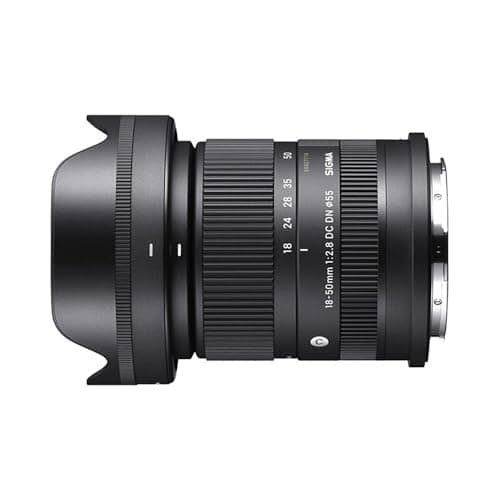
For most creators, the Sigma 18-50mm f/2.8 is the best all-round video lens: a tiny, constant-aperture zoom that covers wide-to-standard framing, stays balanced on a gimbal, and looks far better than any kit lens. If you want more reach and built-in stabilization, the Tamron 17-70mm f/2.8 is the do-it-all alternative. Video asks a few specific things of a lens that photography doesn't — here's what actually matters.
The single most useful trait for video is a constant aperture. A kit zoom gets darker as you zoom in, so your exposure jumps mid-shot; a constant-f/2.8 zoom holds the same brightness across the whole range, keeping footage even. The second is smooth, quiet autofocus— you don't want a lens hunting or buzzing into your microphone. The third is weight: gimbals have payload limits and light lenses balance faster, so a small lens is a real advantage.
One more video-specific term worth knowing: focus breathing is when the framing subtly zooms in or out as focus shifts — distracting on video, and something the better lenses here minimize. Between a versatile constant-aperture zoom and one fast prime for low light, most creators are covered. As with the rest of our lens picks, the deepest, cheapest choice sits on Sony E-mount, so several options here are E-mount; we note the alternatives where they exist.
The short answer
Quick picks
| # | Product | Best for | Score | Price |
|---|
| 01 | Sigma 18-50mm F2.8 DC DNThe best all-round APS-C lens for the money, full stop. A tiny constant-f/2.8 zoom that replaces the kit lens and comes off far sharper and brighter. | The best all-round APS-C zoom | | $548.89·Amazon |
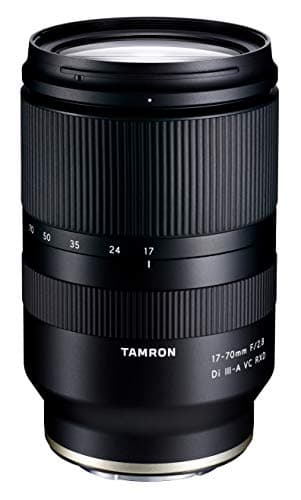
| 02 | Tamron 17-70mm F2.8One lens that covers almost everything: a stabilized constant-f/2.8 zoom with a genuinely useful wide-to-short-telephoto range for APS-C. | The do-it-all stabilized zoom | | Check price → |
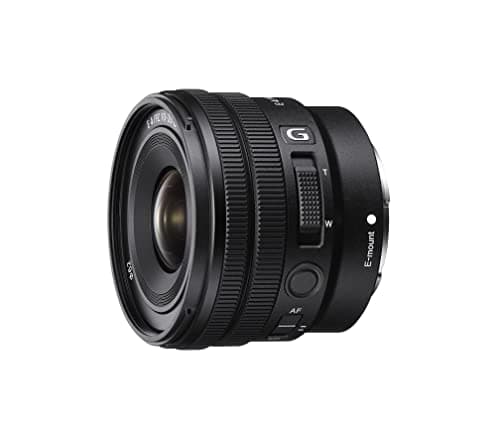
| 03 | Sony E PZ 10-20mm F4 GA pocket-sized ultra-wide power zoom built for video: tiny, internally zooming, and wide enough to vlog or capture cramped interiors with ease. | The best ultra-wide for video | | $848.00·Amazon |
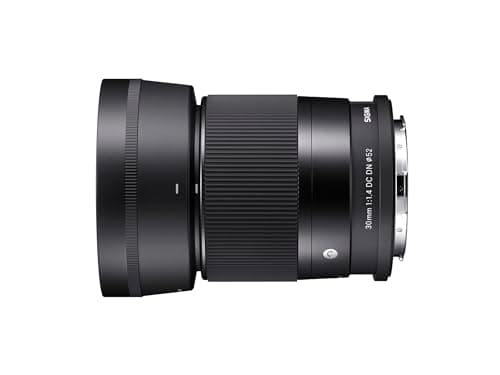
| 04 | Sigma 30mm F1.4 DC DNThe APS-C nifty fifty: a fast, sharp, affordable 30mm that frames like a ~45mm 'normal' lens and blurs backgrounds beautifully at f/1.4. | The best 50mm-equivalent for APS-C | | $332.00·Amazon |
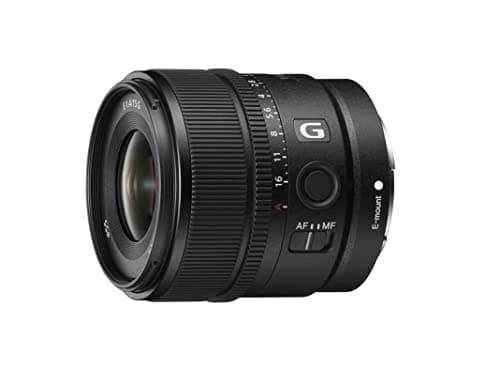
| 05 | Sony E 15mm F1.4 GThe premium creator prime: a fast, sharp 15mm with a clicked/de-clicked aperture ring that's as happy shooting stills as smooth, cinematic video. | The premium wide creator prime | | $948.00·Amazon |
#ad · Live prices from the Amazon Product API, as of October 19, 2026. Where we have no verified live price, we show none — we would rather leave a gap than print a number that has rotted.
In detail
The picks, in full
The best all-round APS-C zoom
Sigma 18-50mm F2.8 DC DN
18-50mm f/2.8 (constant)Sony E mount (APS-C)Stepping-motor AF55mm filter thread
The best all-round APS-C lens for the money, full stop. A tiny constant-f/2.8 zoom that replaces the kit lens and comes off far sharper and brighter.
- Sharpness
- 8
- Autofocus
- 8
- Aperture & bokeh
- 6
- Build & size
- 9
- Value
- 10
Pros
- +A constant f/2.8 across the whole zoom range holds exposure steady and blurs backgrounds far more than a kit lens
- +Astonishingly small and light for a fast zoom — barely bigger than a prime, and ideal on a gimbal
- +Sharp throughout the range with quiet, quick autofocus that flatters both photos and video
Cons
- −The 18-50mm range (≈27-75mm equivalent) doesn't reach into telephoto for tight portraits or distant subjects
- −APS-C only, with no built-in stabilization — you lean on in-body IS or a gimbal
Don't buy this if…
…you need reach or a longer portrait length. This is a standard zoom — for compression and telephoto framing you'd add a portrait prime like the Sigma 56mm f/1.4 alongside it.
The do-it-all stabilized zoom
Tamron 17-70mm F2.8
17-70mm f/2.8 (constant)Sony E, Fuji X, Canon RF, Nikon Z (APS-C)VC image stabilization67mm filter thread
One lens that covers almost everything: a stabilized constant-f/2.8 zoom with a genuinely useful wide-to-short-telephoto range for APS-C.
- Sharpness
- 8
- Autofocus
- 8
- Aperture & bokeh
- 6
- Build & size
- 6
- Value
- 8
Pros
- +The 17-70mm range (≈25.5-105mm equivalent) covers wide scenes, everyday shots and short-telephoto portraits in one lens
- +Built-in VC stabilization steadies handheld video and low-light stills — a real advantage on cameras without in-body IS
- +Holds a constant f/2.8 throughout, so exposure and background blur stay consistent as you zoom
Cons
- −Large and heavy next to the Sigma 18-50mm — it's noticeably front-heavy on small bodies and gimbals
- −The extending zoom barrel and size make it less discreet for run-and-gun or travel
Don't buy this if…
…you want the smallest, lightest setup for a gimbal or travel. The Sigma 18-50mm f/2.8 is far more compact; the Tamron trades size for reach and stabilization.
The best ultra-wide for video
Sony E PZ 10-20mm F4 G
10-20mm f/4 (power zoom)Sony E mount (APS-C)Internal power zoomVery light (~178g)
A pocket-sized ultra-wide power zoom built for video: tiny, internally zooming, and wide enough to vlog or capture cramped interiors with ease.
- Sharpness
- 8
- Autofocus
- 8
- Aperture & bokeh
- 4
- Build & size
- 9
- Value
- 7
Pros
- +The ultra-wide 10-20mm range (≈15-30mm equivalent) is superb for vlogging, interiors and sweeping landscapes
- +Very light, with internal zoom and power-zoom control, so the balance never shifts on a gimbal
- +Sharp and distortion-corrected across the frame, with fast, near-silent autofocus
Cons
- −f/4 is relatively slow, so it struggles in dim light and blurs backgrounds only a little
- −APS-C only, and the constant f/4 aperture limits low-light and shallow-depth work
Don't buy this if…
…you shoot in low light or want strong background separation. For dim rooms and blur, a fast wide prime like the Sony E 11mm f/1.8 or Sigma 16mm f/1.4 is the better tool.
The best 50mm-equivalent for APS-C
Sigma 30mm F1.4 DC DN
30mm f/1.4 (≈45mm equivalent)Sony E mount (APS-C)Stepping-motor AFBrass bayonet mount
The APS-C nifty fifty: a fast, sharp, affordable 30mm that frames like a ~45mm 'normal' lens and blurs backgrounds beautifully at f/1.4.
- Sharpness
- 8
- Autofocus
- 8
- Aperture & bokeh
- 8
- Build & size
- 8
- Value
- 9
Pros
- +The ≈45mm-equivalent view is the true 'nifty fifty' framing on a crop-sensor camera — natural and flexible
- +f/1.4 gathers more light and blurs backgrounds more than the f/1.8 full-frame primes, for less money
- +Sharp wide open with fast, quiet autofocus that suits both stills and video
Cons
- −Covers APS-C only, so it won't work uncropped on a full-frame body
- −Lab reviewers measure real barrel distortion — straight vertical edges bow outward until a correction profile is applied
- −No stabilization of its own, plus heavy corner shading and some purple fringing wide open at f/1.4
Don't buy this if…
…you shoot full-frame. This lens is designed for crop-sensor cameras like the Sony ZV-E10 or a6400 — on a full-frame body it vignettes heavily or forces a crop.
The premium wide creator prime
Sony E 15mm F1.4 G
15mm f/1.4 (≈22.5mm equivalent)Sony E mount (APS-C)Aperture ring + click switchG-series optics
The premium creator prime: a fast, sharp 15mm with a clicked/de-clicked aperture ring that's as happy shooting stills as smooth, cinematic video.
- Sharpness
- 9
- Autofocus
- 8
- Aperture & bokeh
- 7
- Build & size
- 8
- Value
- 7
Pros
- +f/1.4 is genuinely fast for a wide lens — bright in low light and capable of real background separation
- +An aperture ring with a click on/off switch gives tactile, smooth exposure control for video
- +G-series sharpness and quick, quiet autofocus in a still-compact, still-light package
Cons
- −Pricier than the Sigma 16mm f/1.4, which covers similar ground for less
- −The ≈22.5mm-equivalent view is a touch tight for the closest arm's-length selfie vlogging
Don't buy this if…
…you're on a budget and mainly want a wide vlogging prime. The Sigma 16mm f/1.4 gives you f/1.4 and a similar field of view for noticeably less money.
How to choose a lens for video
Decide first whether you want the flexibility of a zoom or the low-light strength and blur of a prime. Most creators start with one constant-aperture zoom for everyday shooting and add a fast prime later for dim rooms and a more cinematic look.
Zoom: pick your size-versus-reach trade
The Sigma 18-50mm f/2.8 is the compact champion — barely bigger than a prime, superb on a gimbal, and it covers the ≈27-75mm-equivalent range that suits most talking-head and b-roll work. The Tamron 17-70mm f/2.8 trades size for a longer ≈25.5-105mm-equivalent reach and built-in VC stabilization, which is a genuine help if your camera lacks in-body IS. If you shoot mostly handheld and want reach, the Tamron; if you shoot on a gimbal and value size, the Sigma.
Prime: for low light and background blur
A fast prime like the Sigma 30mm f/1.4 or the premium Sony 15mm f/1.4 G opens far wider than any zoom, so it thrives in dim light and throws backgrounds beautifully out of focus. The Sony 15mm G adds an aperture ring you can de-click for smooth, silent exposure changes while recording — a lovely touch for video. The trade-off is that a prime doesn't zoom, so you frame with your feet.
Ultra-wide and power zoom
For vlogging-style wide shots and cramped interiors, the Sony E PZ 10-20mm f/4 G is a tiny internal power zoom that keeps a gimbal balanced and never shifts weight as it zooms. It gives up low-light ability at f/4, so pair it with a fast prime if you film after dark. If your video is mostly you at arm's length, our best vlogging lenses narrows this down further. And whatever glass you choose, a gimbal is the accessory that most improves handheld video.
How we picked
We do not run a testing lab
We compiled the manufacturers' published specifications and manuals, did the cost math, and scored each product against a published rubric. The scores are judgments from that documented research — they are notmeasurements we took, because we do not have a lab and we are not going to pretend we do. Where a number came from someone else's testing, we name and link them in Sources.
Questions
Frequently asked
What is the best all-round lens for video?+
The Sigma 18-50mm f/2.8 is the best all-rounder for most creators: it holds a constant f/2.8 across a useful wide-to-standard zoom range, focuses smoothly and quietly, and is tiny enough to balance easily on a gimbal. Add a fast prime later for low-light and more background blur.
Why does a constant aperture matter for video?+
A basic kit zoom gets darker as you zoom in, so your exposure and brightness jump mid-shot. A constant-aperture lens (like f/2.8 throughout) keeps the same brightness across the whole zoom range, so your footage stays even and you don't have to re-adjust settings every time you reframe.
Do I need a stabilized lens for video?+
It helps if your camera has no in-body stabilization — the Tamron 17-70mm's built-in VC steadies handheld shots noticeably. But the smoothest results come from a
gimbal, which stabilizes any lens, including small unstabilized primes. Many creators skip stabilized lenses and use a gimbal instead.
Should I use a zoom or a prime for video?+
A constant-aperture zoom is the more flexible everyday choice — you reframe without swapping lenses. A fast prime opens wider for low light and stronger background blur, at the cost of zooming. Most creators own one zoom and one fast prime and switch based on the shot.
Receipts
Sources
We do not run a testing lab, and we do not pretend to. Specs come from manufacturer sheets and manuals; where a figure came from someone else's measurement, we name and link them. Where we could not verify something, we say so on the page rather than quietly leaving it out. Read our full method.