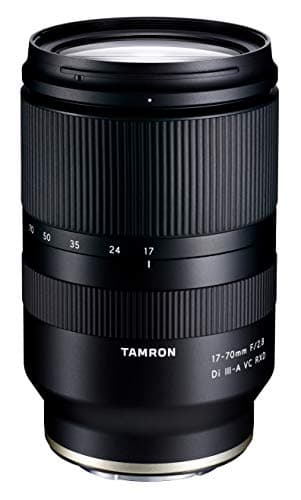
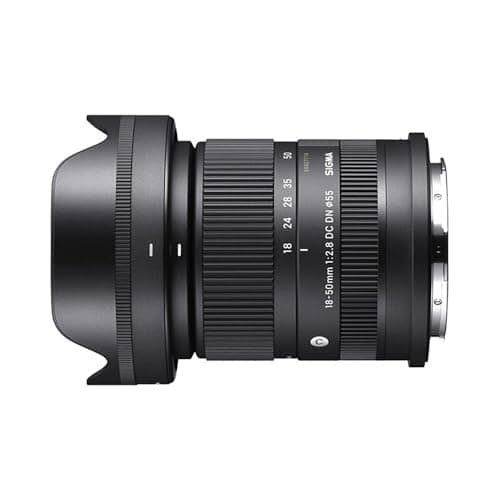
Buy the Sigma 18-50mm F2.8 if you want the smallest, lightest constant-f/2.8 zoom — it is barely bigger than a prime and the better choice on a gimbal or for travel. Buy the Tamron 17-70mm F2.8 if you want more reach for portraits and built-in stabilization, especially on a camera with no IBIS. Both replace a kit zoom with something meaningfully better. Both hold f/2.8 across their whole range. Neither is a mistake — this is a genuine fork.
Why either beats the kit lens
Before the comparison, the context. A typical kit zoom starts around f/3.5 at its widest and drops to about f/5.6 or f/6.3 when you zoom in. That means two problems at once: as you zoom, the lens lets in progressively less light, and it can never blur a background much. A constant f/2.8 zoom fixes both. It holds the same aperture from one end to the other, so your exposure does not shift when you reframe, and f/2.8 is roughly two stops brighter than f/5.6 — the difference between a usable indoor shot at a sensible shutter speed and a blurred one. Our kit lens vs prime guide covers the wider decision if you are still weighing a zoom against a prime.
The four things that actually differ
1. Size and weight — the Sigma's whole argument
The Sigma 18-50mm is remarkably small for a fast zoom. On a compact APS-C body it balances properly and does not turn the camera into something you leave at home. The Tamron 17-70mm is noticeably larger and heavier, with an extending barrel that makes it front-heavy on small bodies. If you shoot on a gimbal, this matters twice over: payload headroom and balance are both easier with the Sigma.
2. Reach — the Tamron's whole argument
The Sigma covers 18-50mm, which on APS-C is roughly a 27-75mm equivalent field of view. The Tamron covers 17-70mm, roughly 25.5-105mm equivalent. That extra reach is not a rounding error: 105mm equivalent is a genuine short-telephoto portrait length, where faces look flattering and backgrounds compress. With the Sigma you top out just past a standard view and would add a portrait prime alongside it. With the Tamron, one lens covers a wide room shot and a head-and-shoulders portrait.
3. Stabilization — and whether your camera needs it
The Tamron has built-in VC optical stabilization; the Sigma has none. On a body with in-body image stabilization this barely matters, because the camera is already doing the work. On a body without IBIS — which includes most beginner APS-C cameras — the Tamron's stabilization is a real, everyday advantage for handheld video and low-light stills. Check your camera before you decide: our stabilization explainer covers which systems do what.
4. Mounts and availability
Sigma lists the 18-50mm in Sony E, Canon RF, Fujifilm X and L-mount — our full Sigma 18-50mm reviewcovers the differences between the mount versions. The Tamron 17-70mm started out in Sony E and Fujifilm X, and in July 2026 Tamron added Canon RF and Nikon Z versions for APS-C bodies. That makes the Tamron the only one of the two a Nikon Z shooter can buy, and gives Canon RF-S shooters a real choice between them. For Nikon's own alternatives, our Nikon Z guide lays out the options. Check the listing carefully before you buy either — third-party zooms are frequently sold in several mount versions from the same product page family, and the wrong one will not fit.
Who should buy which
Buy the Sigma 18-50mm F2.8 if you value size above everything: travel shooters, gimbal users, anyone whose camera lives in a jacket pocket rather than a bag, and anyone whose body already has in-body stabilization. It is also usually the cheaper of the two, which makes it the default recommendation for a first serious lens.
Buy the Tamron 17-70mm F2.8 if you want one lens to do the whole job. The extra reach turns it into a portrait lens as well as a walkaround, and the built-in stabilization is genuinely valuable on a body without IBIS. Accept that it is bigger and heavier — that is the entire price of the extra capability.
The bottom line
The honest framing is this: the Sigma is a lens you will carry every day and supplement with a prime later; the Tamron is a lens that tries to be your only lens. If you already own or plan to buy a portrait prime — a Sigma 56mm f/1.4, say — the Sigma zoom is the better partner because the two together stay small. If you want to carry one lens and be done, the Tamron is built for exactly that.
Either way, both are large upgrades over a kit zoom, and both are more useful to most people than a new camera body would be. See where each sits in our best lenses for video and best travel lenses rankings.