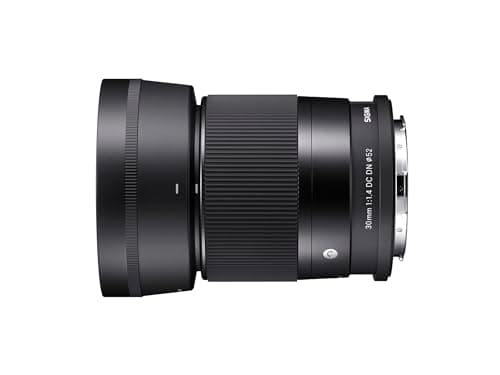
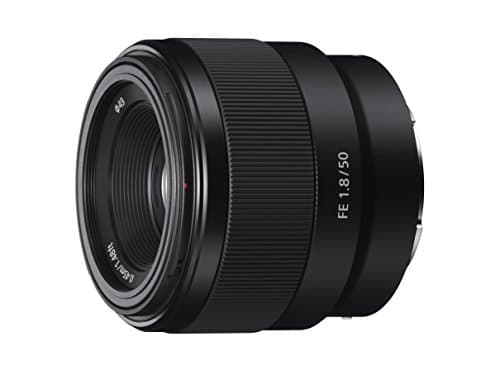
The Sony FE 50mm f/1.8 is the cheapest fast prime in the entire Sony E-mount lineup, and it fits every Sony E camera — full-frame or APS-C — which makes it the natural first step up from a kit lens. If you shoot a crop-sensor body and want a more natural "normal" framing plus quicker autofocus, the Sigma 30mm f/1.4 is the runner-up. Sony E-mount is the reason a beginner can build a genuinely good kit for less than on any rival system, and this guide is the shortlist of the best-value glass to grow it.
There is a real reason Sony shooters have more cheap, sharp lenses to choose from than anyone else. Sony opened its E-mount to third-party lens makers early and widely, so companies like Sigma, Tamron and Viltrox all build native autofocus lenses for it — often at a fraction of first-party prices. Canon and Nikon have kept tighter control of their newer RF and Z mounts, so affordable third-party options there are thinner, and Fujifilm's X system, while excellent, is smaller. The upshot is that Sony E-mount has the deepest catalog of budget fast primes in mirrorless, which is exactly what a beginner needs to grow a kit without overspending.
The best value on any mount is a fast prime, and Sony E has them in abundance. A prime does not zoom, but that constraint is why it is cheap, sharp and bright — and a fast prime does more to improve a beginner's photos than almost any other purchase, because it gathers light a kit zoom cannot and blurs backgrounds a kit zoom never will. The picks here cover the focal lengths a growing kit actually needs, in the order most people buy them: a normal lens for everyday, a short telephoto for portraits, a wide for interiors and low light, and an ultra-wide for vlogging.
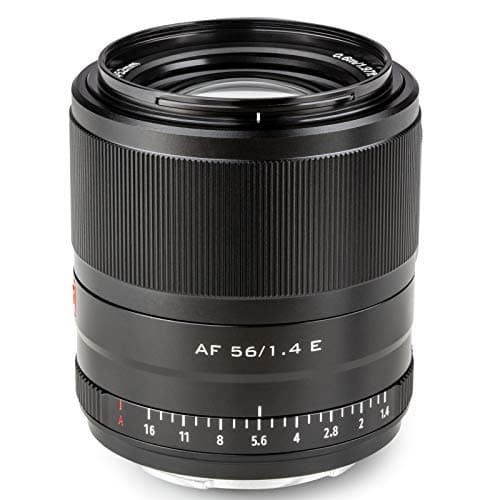
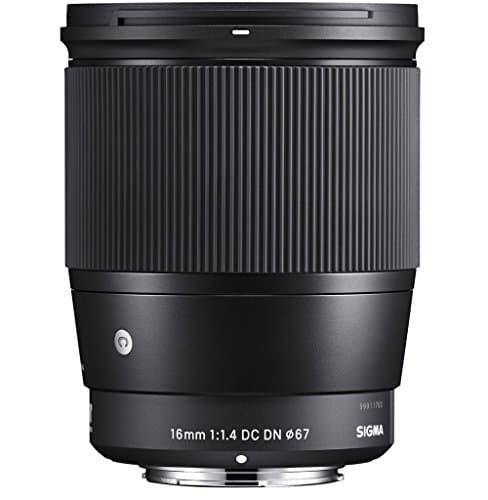
Sony's E-mount spans two sensor sizes under one lens mount, which is worth understanding before you buy. Crop-sensor APS-C bodies like the ZV-E10 and a6400, and full-frame bodies like the a7 series, all share the same mount. Full-frame lenses (Sony labels them "FE") work on both; APS-C lenses cover only the smaller sensor and will crop or darken the corners on a full-frame body. Of the picks below, the Sony FE 50mm is full-frame and fits everything, while the Sigma 30mm, Viltrox 56mm, Sigma 16mm and Sony E 11mm are APS-C lenses aimed at crop-sensor bodies.
One honest caveat runs through this whole list: these are budget lenses, and they earn their low prices by giving up a little. Expect some to focus a touch slower, skip weather sealing, or use plastic where a premium lens uses metal. For a growing kit that is exactly the right trade — you get most of the image quality that matters for a small share of the money. And to be clear on fit: every lens here is Sony E-mount only. None of them fit Canon RF, Nikon Z or Fujifilm X bodies, so this guide is for Sony shooters specifically.
It is worth saying why this guide leans on primes rather than a fancier zoom. A better zoom is a natural upgrade wish, but for the money a fast prime gives a beginner more of what they actually notice: brighter low-light shots and softer backgrounds. A single f/1.4 prime often costs less than a mid-range zoom and takes visibly better pictures of people and evenings, even if it cannot reframe on the fly. Once a few primes have taught you which focal lengths you reach for, a zoom becomes an informed purchase rather than a guess — which is the cheaper way to learn.
How to build a budget Sony E-mount kit
You do not need every lens at once. The smartest way to grow a Sony kit on a budget is to add one fast prime at a time, in the order that most improves your photos: a normal prime first, then a portrait prime, then a wide. Each one is cheap enough to buy without much agonizing, and each transforms a different kind of shot. Here is how to sequence it.
Why Sony E-mount is the value champion
The reason this list exists at all is Sony's open lens ecosystem. Because Sigma, Tamron and Viltrox all make native autofocus lenses for E-mount, prices are driven down and choice is driven up in a way no other current mirrorless mount matches. A Sony beginner can put together a three-lens prime kit — normal, portrait and wide — for less than a single premium first-party lens on some rival systems. That value is the single best argument for starting in Sony's system, and it is why so many of the budget picks across this site happen to be E-mount.
Start with a normal prime
Your first buy should be a normal-framing fast prime, because it replaces the kit lens for the everyday shots you take most and immediately delivers the brighter, background-blurred look people notice. On full-frame, the Sony FE 50mm f/1.8 is the cheapest way in, and it works on APS-C bodies too, where it frames like a 75mm short telephoto. Its one real weakness is autofocus that is slow and audible — fine for still subjects, less so for video or fast action. On a crop-sensor body, the Sigma 30mm f/1.4 is the better all-rounder: it frames like a natural 45mm-equivalent normal lens, opens wider at f/1.4, and focuses more quickly and quietly than the Sony FE 50mm. For the portrait-length version of the same choice, see Sigma 56mm vs Sony FE 50mm.
Add a portrait prime
Once you have a normal lens, a short-telephoto portrait prime is the upgrade that flatters people most. The Viltrox 56mm f/1.4 is the standout budget choice: it gives you the flattering roughly 84mm-equivalent framing and the soft f/1.4 background blur of far pricier glass, for one of the lowest prices in autofocus lenses. The trade is autofocus that is a step behind the best — perfect for relaxed, posed portraits, less sure for wriggling kids or events. For most people building a first kit, that is an easy trade to accept given how much you save.
Add a wide or vlogging prime
The third lens depends on what you shoot. If you photograph interiors, landscapes, events or the night sky, the Sigma 16mm f/1.4 is a superb value wide prime — bright enough for low light and wide enough to take in a room. If you make videos of yourself, the Sony E 11mm f/1.8 is the vlogging specialist: wide enough to hold your face and the background at arm's length, light enough not to tire your arm, and fast enough for indoor light. Both are affordable, both are sharp, and either rounds out a kit that can now handle nearly any everyday situation.
APS-C or full-frame E — what fits what
Because E-mount covers two sensor sizes, a quick check saves confusion. If you own a full-frame Sony (an a7-series body), you can use both full-frame FE lenses and APS-C lenses, though APS-C lenses crop the image down. If you own an APS-C Sony (a ZV-E10, a6400 or similar), every lens here works, and the APS-C primes are designed exactly for it. The only lens on this list that is full-frame is the Sony FE 50mm; the rest are APS-C. Our APS-C vs full-frame guide explains what that means for framing if you are unsure which body you have.
Native lenses or adapting old glass?
A tempting budget shortcut is to adapt older, cheaper lenses from other systems onto a Sony body. It can work, but it is usually a false economy for a beginner. Adapters add bulk and often cripple autofocus, so you end up focusing manually — slow and frustrating for everyday shooting. The native E-mount primes here cost little more than a good adapted lens once you add the adapter, and they focus automatically, meter correctly and balance properly on the camera. Save adapting for a specific vintage look you want later; to grow a first kit, native glass is simpler, faster and, all in, rarely more expensive.
First-party or third-party?
Sony makes excellent lenses, but its budget-friendly options are thinner than the third-party field. For value, Sigma and Viltrox are not a downgrade — they are the reason Sony glass is affordable at all. A Sigma prime often matches or beats a pricier first-party lens on sharpness, and Viltrox undercuts everyone while still autofocusing natively. The first-party advantage tends to show in autofocus polish and weather sealing, which matter most for fast action and hard weather. For a beginner shooting everyday scenes and portraits, the third-party primes deliver the image quality that shows up in the photo, and the savings buy you a second lens sooner.
What a full budget kit looks like
Put together, these picks make a complete kit for surprisingly little. A normal prime for everyday and street, a 56mm for portraits, and a wide for interiors and low light cover the vast majority of what a beginner shoots — three fast primes, all sharp, all bright, for less than a single high-end lens on some systems. Add the ultra-wide vlogging prime only if you make videos of yourself. You do not need to buy them together; adding one at a time spreads the cost and lets each lens teach you what you reach for next. That staggered, prime-first path is the cheapest route to a kit that genuinely lifts your photos.
Where to spend and where to save
Not every lens deserves the same share of your budget. Spend where autofocus reliability matters most — a normal prime you use constantly, or a portrait lens for moving kids, is worth the small step up from the very cheapest option to something that focuses surely. Save on the lenses you use for slower, deliberate work: a wide prime for landscapes or interiors rarely needs the quickest autofocus, so the value pick is all you need. Matching your spend to how hard each lens has to work keeps the whole kit affordable without leaving you fighting focus on the shots that matter.
Growing beyond the budget picks
A budget kit is a starting point, not a ceiling. As your eye develops you will notice which focal lengths you live on and where the cheap glass holds you back — perhaps you want faster autofocus for events, weather sealing for the outdoors, or a longer reach the primes here do not offer. That is the moment to upgrade one lens deliberately, keeping the budget primes that still serve you well. Because E-mount has such depth, there is always a step up when you are ready. Start cheap, learn what you love to shoot, and let your kit grow toward it rather than guessing expensively on day one.
Budget trade-offs and next steps
None of these lenses is perfect, and knowing what you give up keeps expectations honest. Budget primes generally focus a little slower than premium ones, skip weather sealing, and feel less solid in the hand — but they deliver the image quality that actually shows up in a photo for a fraction of the price, which is the whole point of a growing kit. Start with a normal prime, add a portrait lens and a wide as your interests pull you, and you will have a kit that punches far above its cost. For the first lens in more detail, see our best 50mm primes; for glass chosen around gathering light, our best low-light lenses; and if you are still choosing the camera itself, the best mirrorless cameras for beginners.
Buying for one specific body
If the camera is already decided, the question narrows usefully. For the a6400 — the most common body these lenses end up on — the buying order and what each focal length is actually for is in best lenses for the Sony a6400. And if the thing stopping you is that most of the picks above are not made by Sony, that is worth reading about properly: third-party vs brand-name lenses.