The short answer: on Sony E-mount, third-party lenses from Sigma, Tamron and Viltrox are not a downgrade — they are frequently the better buy, and in several categories they are the only sensible buy. What you give up is first-party service and the certainty that a future camera body's newest autofocus feature will work perfectly on day one. What you save is often 40-60% of the price for optics that show up identically in the photograph. But this answer is mount-specific: Canon has kept tight control of RF, so Canon owners genuinely have fewer and more expensive options, and no amount of advice changes that.
"Third-party" means a lens made by a company that does not make the camera. The serious names in that category today are Sigma, Tamron, Viltrox, Samyang/Rokinon and Laowa, and the first three build native autofocus lenses that talk to the camera properly rather than adapted or manual-focus glass. That distinction matters enormously and is the first thing to check on any listing.
Why third-party lenses are cheaper
Not because the glass is worse. Four structural reasons, none of which is "lower quality":
- No brand premium and no bundled ecosystem. Camera makers price lenses as part of a system you are already invested in; a third party has to win the sale on the number.
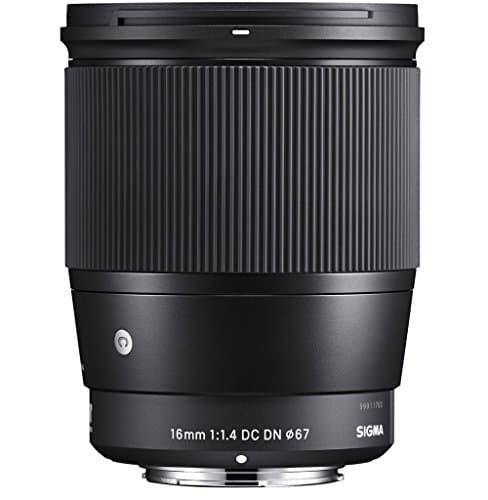
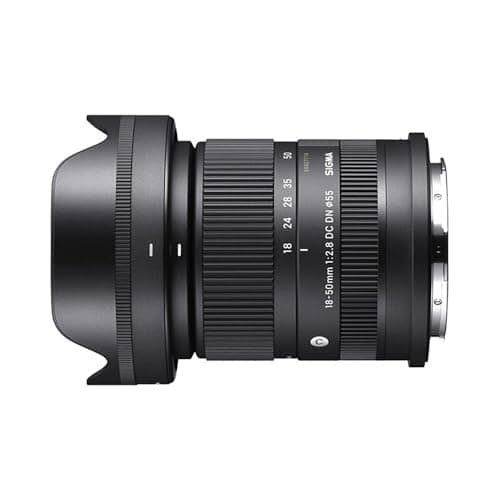
- One optical design, several mounts. Sigma publishes the 16mm F1.4 DC DN in seven mounts and the 18-50mm F2.8 in four. The expensive part — designing and tooling the optics — is amortised across all of them.
- They skip the halo products. Third parties concentrate on the focal lengths that sell in volume rather than maintaining a full professional catalogue including the exotic lenses that exist mainly for prestige.
- Less expensive weather sealing and build on the budget lines. This one is a real difference, not an accounting one — see below.
What you actually give up
Here is the honest list, in rough order of how likely it is to matter to you.
Autofocus edge cases, not autofocus. A native third-party lens uses a licensed communication protocol, and in ordinary use it focuses as fast and as accurately as a first-party lens of the same class. Where differences appear is at the frontier: the newest subject-detection mode on a brand-new body, the highest burst rates, or video autofocus behaviour that the camera maker tuned against its own lenses. If you shoot fast-moving sport for a living, buy first-party. If you shoot anything else, this is theoretical.
Firmware risk, and the firmware fix. A camera firmware update can occasionally change behaviour on a third-party lens. The mitigation is now built in: Sigma sells a USB dock, and Viltrox puts a USB or USB-C firmware port on the lens itself, which is why our Viltrox entries list that port as a feature. A lens you can update is a lens that gets fixed; a lens with no update path is the one to be wary of.
Weather sealing.Sigma's Contemporary line and most Viltrox budget primes are not sealed designs, and the first-party WR and S-line lenses usually are. If you shoot in rain regularly this is the difference that matters most, and it is a specification you can check rather than a vague quality claim.
Resale and service. First-party lenses hold value slightly better and are serviced at the same place as your camera. Third-party service is a separate relationship and a separate warranty, which is worth two minutes of reading before you buy.
The cost math, with live prices
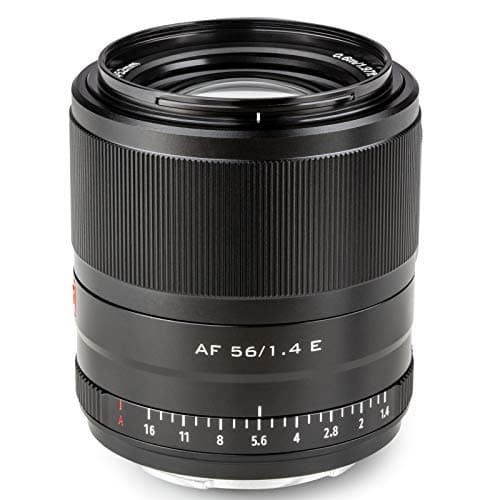
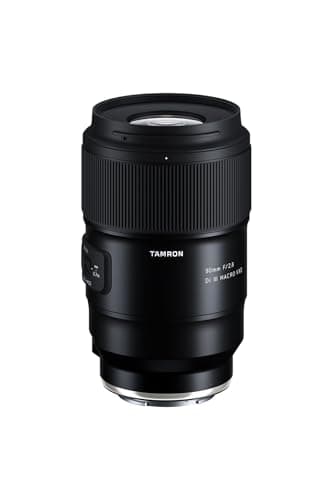
The picks below are four third-party lenses this site already ranks, and they are here to make one point: these are not budget substitutes for first-party lenses, they are the lenses that define their categories. The Sigma 18-50mm F2.8 is the best all-round APS-C zoom on any mount. The Sigma 16mm F1.4 is the value creator wide. The Viltrox 56mm F1.4 is the cheapest autofocus portrait prime that is genuinely good. The Tamron 90mm F2.8 Di III Macro is a true 1:1 macro with the working distance that makes close-up work of living subjects pleasant.
Prices move, so read them live from the table rather than from this paragraph — the comparison that matters is between a third-party lens and the first-party lens that covers the same job, and that gap is exactly what the live prices on this page show you.
The answer by mount
| Mount | Third-party autofocus support | What it means for you |
|---|
| Sony E | Broad and mature — Sigma, Tamron, Viltrox and others build native autofocus lenses | The cheapest fast primes in mirrorless live here. Third-party is the default answer, not the fallback |
| Fujifilm X | Good and improving — Sigma and Viltrox both ship native X-mount autofocus lenses | Real choice, though Fujifilm's own primes have build and handling character worth paying for |
| Nikon Z | Opening up — licensed Sigma primes and Viltrox autofocus lenses now exist for Z DX | Thinner than Sony E but no longer bare; the cheapest fast primes for Z DX are third-party |
| Canon RF | Tightly restricted — few native third-party autofocus options, and Canon limits RF-S autofocus lenses in particular | Plan your kit around Canon's own strong budget primes. The cheap third-party flood has not arrived |
This is the single most useful thing on the page, and it is why "are Sigma lenses as good as Canon?" is a different question from "are Sigma lenses as good as Sony?". Against Sony, Sigma competes directly and often wins on value. Against Canon RF, the comparison frequently cannot be made at all, because the Sigma equivalent does not exist for the mount. Our per-mount rankings are at best budget Sony E-mount lenses, best Canon RF lenses, best Nikon Z lenses and best Fujifilm X lenses.
When to buy first-party anyway
Four cases where we would spend the extra, honestly:
You shoot in weather, routinely. Sealed first-party lenses exist for this reason, and the unsealed budget primes are the weak link on a sealed body.
You shoot fast action for money. The frontier autofocus modes on the newest bodies are tuned against first-party glass first. If a missed frame costs you a client, do not optimise for price.
There is no third-party equivalent.On Canon RF this is often the situation, and Canon's own cheap primes — the RF 50mm F1.8 and RF 16mm F2.8 — are genuinely good lenses at genuinely low prices. The honest advice on that mount is to buy the first-party budget glass rather than wait.
You value the handling.Fujifilm's aperture rings and metal construction, Sony's G and GM ergonomics, Nikon's S-line control layouts — these are real differences in how a lens feels to use, and nobody can tell you how much that is worth to you. It is not a quality argument, it is a preference, and it is allowed to be the deciding factor.
How to check a third-party lens before you buy
Four checks, each a minute:
- Is it native, or adapted?The listing must name your mount specifically — "for Sony E", not "with adapter". An adapted lens is a different product with different autofocus behaviour.
- Does it autofocus? Several very cheap third-party lenses are manual focus only. On a camera bought for its autofocus, that is a large thing to discover after delivery.
- Is there a firmware path? A USB port on the lens, or a dock, means the lens can be updated when a camera body changes. This is the single best predictor of how well a third-party lens ages.
- Is it sealed, and do you need it to be?Check the specification rather than assuming. "Dust and splash resistant" and "weather-sealed" are not the same claim.
Do third-party lenses void the camera warranty?
No. Using a lens from another manufacturer does not void a camera warranty — the camera makers license the mount communication, and the lenses are legitimate products. What a warranty does not cover is damage, on either side, and the two warranties are separate: a fault in the lens is the lens maker's problem and a fault in the body is the body maker's. Keep both receipts.
Are third-party lenses sharper or softer?
Neither, as a category. Sharpness is a property of a specific lens design, and several third-party lenses out-resolve the first-party lens at the same focal length and price — independent lab reviews, which we link in Sources where we rely on them, show this repeatedly. The reliable generalisation is not about sharpness at all: third-party budget lines save money on sealing, exotic coatings and mechanical refinement, not on the optical formula.
What about used first-party lenses instead?
A genuinely good alternative, and often the best value of all. A used first-party prime can cost less than a new third-party one, with first-party service and resale intact. The risks are the usual ones — fungus, stiff focus, impact damage — and they are checkable. Our used camera buying guide covers what to inspect and what to walk away from.
The one-line version
On Sony E and increasingly on Fujifilm X and Nikon Z DX, buy the lens that does the job best at the price and ignore the badge — the third-party options there are not compromises. On Canon RF, buy Canon's own budget primes, because the alternative mostly is not available. And in every case, prefer a lens with a firmware update path, and check sealing against what you actually shoot in. The full picture by job rather than by brand starts at best 50mm primes and kit lens vs prime.