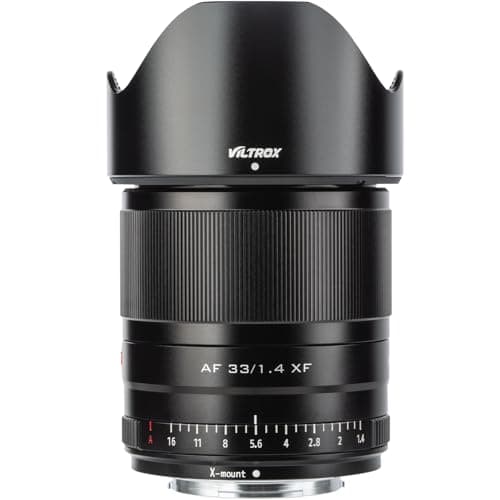
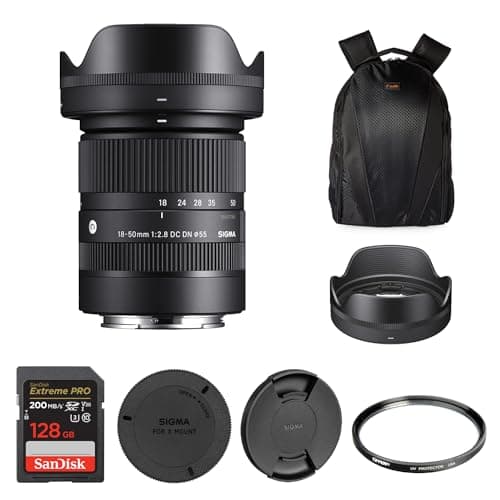
For most Fujifilm owners, the Sigma 18-50mm f/2.8 DC DN is the best lens to buy first: a tiny constant-aperture zoom that replaces the kit lens and comes off far sharper, brighter and more versatile, for less than Fujifilm's own fast zooms. If you would rather have a prime, the Viltrox 33mm f/1.4 is the value nifty fifty — a fast, affordable everyday lens. Fujifilm's X system takes glass from more makers than beginners realize, and that is good news for your wallet.
A quick primer on the X system. Every Fujifilm X camera is APS-C (crop-sensor), which means a 1.5x crop factor: a lens frames tighter than its number suggests, so a 35mm lens gives roughly the "normal" ≈53mm-equivalent view, and a 23mm gives the classic ≈35mm documentary look. Keep that in mind as you read the focal lengths below — it is why a 33mm or 35mm is Fujifilm's nifty fifty, and a 13mm is a dramatic ultra-wide. Our APS-C vs full-frame guide covers the crop factor if it is new to you.
The other thing worth knowing is that not all the best Fujifilm lenses are made by Fujifilm. For years the X mount was a first-party world, but Sigma and Viltrox now build excellent native autofocus lenses for it — often faster and cheaper than the equivalent XF lens. That opens up genuinely affordable fast primes and a superb compact zoom that were not options a few years ago, which is exactly what a beginner growing a kit needs. This list mixes the best first-party and third-party glass rather than sticking to one badge.
There is a trade-off to be honest about, though: Fujifilm's own lenses give you the tactile aperture ringand, on the WR models, weather sealing and metal construction that are a big part of the X-system's charm. The cheaper third-party lenses usually drop the aperture ring and the sealing to hit their price. Neither choice is wrong — it is a question of whether you value handling and build, or the lowest price and the widest aperture. The picks below span both ends so you can decide.
It is worth saying why primes feature so heavily here. Fujifilm bodies are compact and tactile, and they pair beautifully with small, fast primes — a 23mm or 33mm on an X body is a joy to carry and shoot, and the fixed focal length teaches you to see. A single prime also does more to improve a beginner's photos than a pricier zoom, because it gathers more light and blurs backgrounds more. The Sigma zoom leads this list for sheer versatility, but do not overlook a prime as a first upgrade if you want the biggest jump in image quality for the money.
One more note for the truly budget-minded: if even the Viltrox 33mm is a stretch, Fujifilm's own XC 35mm f/2 is the cheapest way onto a nifty fifty — it uses lovely optics in a plain plastic body with no aperture ring. It did not make the ranked five because the Viltrox 33mm f/1.4 offers a faster aperture for a similar outlay, but it is a fine, inexpensive starting prime. With that context set, here are the five lenses that best grow a Fujifilm kit.
How to choose a Fujifilm X lens
Because every X body shares the same APS-C sensor and mount, choosing is refreshingly simple: pick the focal length for the shots you take, decide how much you value Fujifilm's aperture ring and weather sealing versus a lower price, and choose between a versatile zoom and a fast prime. The crop factor is the only math involved, and once you have it, the rest is about taste and budget.
Start here: zoom or prime?
Your first upgrade from the kit lens is the biggest decision. A fast standard zoom like the Sigma 18-50mm f/2.8 keeps the flexibility beginners rely on — one lens for wide scenes, everyday shots and tighter framing — while adding the constant bright aperture and sharpness a kit lens lacks. A fast prime like the Viltrox 33mm f/1.4 gives up zooming but opens far wider, for brighter low-light shots and stronger background blur, and teaches you to see in a single focal length. Most Fujifilm beginners are happiest starting with the zoom and adding a prime later — our prime vs zoom guide weighs it in full.
The nifty fifty: 33mm or 35mm?
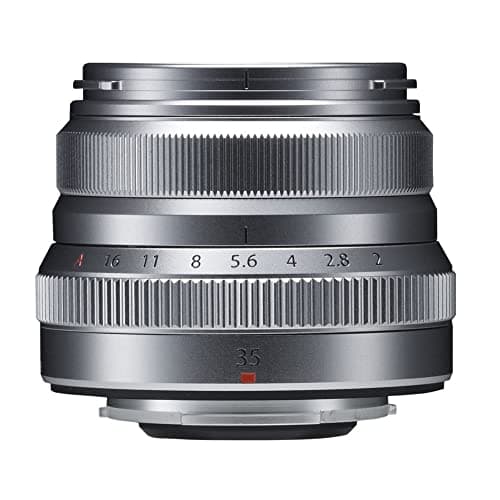
Fujifilm's "normal" lens is a 33-35mm, because the crop factor turns it into the ≈50mm-equivalent view your eye finds natural. You have three ways to get there. The Viltrox 33mm f/1.4 is the value champion — a fast f/1.4 aperture for lovely blur, at a low price, with autofocus a small step behind Fujifilm's. The XF 35mm f/2 R WR is the premium pick: an aperture ring, weather-resistant metal build and quick, quiet focus, at f/2 rather than f/1.4. And the XC 35mm f/2 is the bargain, sharing good optics in a plainer body. Pick the Viltrox for maximum blur and value, the XF for handling and durability.
The everyday and street pick: 23mm f/2
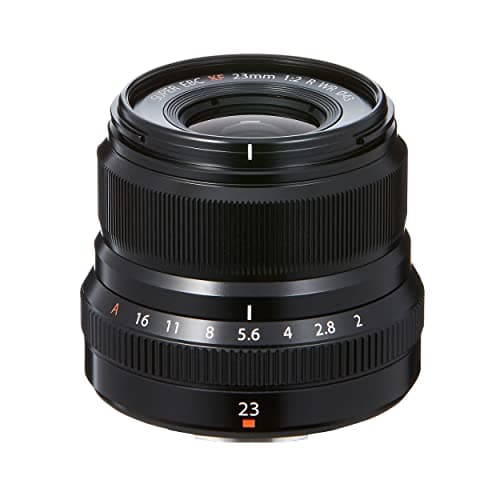
If you prefer a slightly wider, more documentary feel, the XF 23mm f/2 R WR frames like a classic ≈35mm — wide enough to include context around your subject, natural for street, travel and everyday life. It is one of the most loved lenses in the whole X range: compact, weather resistant, metal, with a proper aperture ring, and it feels far pricier than it is. It gathers a little less light than the f/1.4 primes and blurs backgrounds a little less, but as a leave-it-on walk-around lens it is hard to beat. Many Fujifilm shooters pair a 23mm with a 33mm and rarely need anything else.
Going wide: the Viltrox 13mm f/1.4
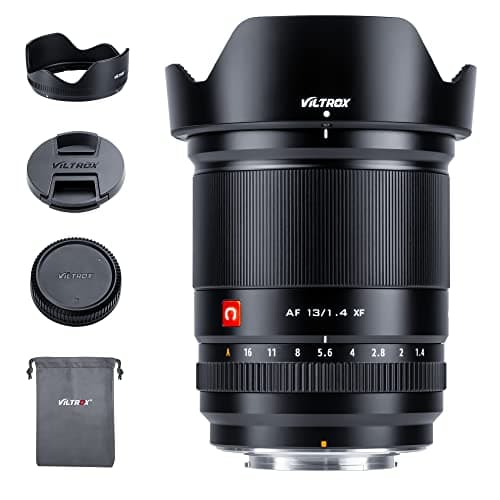
For landscapes, interiors, architecture and the night sky, the Viltrox 13mm f/1.4 is a standout — a ≈20mm-equivalent ultra-wide that is genuinely fast, which is rare and expensive on any system. That f/1.4 aperture makes it excellent for astrophotography and dim interiors where slower wides give up, and its price undercuts a first-party ultra-wide by a wide margin. It is a specialist, not an everyday lens — too wide for portraits or general shooting — so buy it as a second or third lens once your normal and everyday framing are covered. Our best wide-angle lenses guide sets it in context against the wider field.
The aperture ring and weather sealing question
This is the choice that most defines a Fujifilm kit. The XF lenses put a physical aperture ring on the barrel — a tactile, satisfying way to set exposure that suits the retro dials on X bodies — and the WR models add sealing against dust and light rain. The third-party Sigma and Viltrox lenses usually skip both to lower the price, setting aperture from the camera instead. If you shoot outdoors in poor weather, or you fell for Fujifilm because of its hands-on controls, the XF premium is worth paying. If you mainly shoot in fair conditions and want the most lens for your money, the third-party picks deliver the image quality that shows up in the photo for less.
How the picks compare
The Sigma 18-50mm f/2.8 leads because it is the single most useful upgrade for a beginner: a compact, bright, sharp zoom that replaces the kit lens and covers most of what you shoot. The Viltrox 33mm f/1.4 is the value prime — the cheapest route to real background blur and a fast nifty fifty. The XF 35mm f/2 R WR is the premium normal prime for those who want the aperture ring and weather sealing. The XF 23mm f/2 R WR is the everyday and street lens with the classic ≈35mm feel. And the Viltrox 13mm f/1.4 is the fast ultra-wide specialist for landscapes and astro. Between them they cover a complete beginner kit.
Autofocus and video on Fujifilm
Autofocus is the one area where Fujifilm shooters should set expectations. Fujifilm's own recent primes focus quickly and quietly, and the XF 23mm and 35mm f/2 lenses are reliable for everyday and street work. The third-party Sigma and Viltrox lenses focus well for stills but can lag Fujifilm's best slightly, particularly in low light or on fast subjects, and firmware updates over their USB ports steadily improve them. For video, the smooth, quiet focus of the primes and the compact Sigma zoom all work; just avoid expecting sports-grade tracking from the budget lenses. If reliable autofocus for action is your priority, favor a first-party XF lens.
Common Fujifilm lens mistakes
Three things trip up new Fujifilm owners. The first is forgetting the crop factor and buying a 35mm expecting a wide documentary view — on the APS-C X system a 35mm frames like a ≈53mm normal lens, so reach for a 23mm if you want the classic 35mm look. The second is buying three near-identical normal primes — an XC 35, an XF 35 and a Viltrox 33 all cover roughly the same ≈50mm view, so pick one and spend the rest on a different focal length. The third is dismissing third-party glass on principle; Sigma and Viltrox are native autofocus lenses, not adapters, and they deliver excellent image quality for the money.
Building a Fujifilm kit and next steps
A satisfying two-lens Fujifilm kit is a fast standard zoom plus one prime — the Sigma 18-50mm for flexibility and the Viltrox 33mm or XF 23mm for low light and character. Add the 13mm ultra-wide only if you shoot landscapes, interiors or the night sky. Buy one lens, learn what you reach for, then add the next; that staggered path spreads the cost and builds a kit you actually use. For portraits specifically, our best portrait lenses covers the longer, faster primes that flatter faces, and if you travel, the best travel lenses overlap heavily with a compact Fujifilm kit.
Fujifilm glass or third-party?
X-mount now has real third-party autofocus options from Sigma and Viltrox, which was not true a few years ago — and the honest trade-off is handling and sealing rather than optics. We work through it mount by mount in third-party vs brand-name lenses.