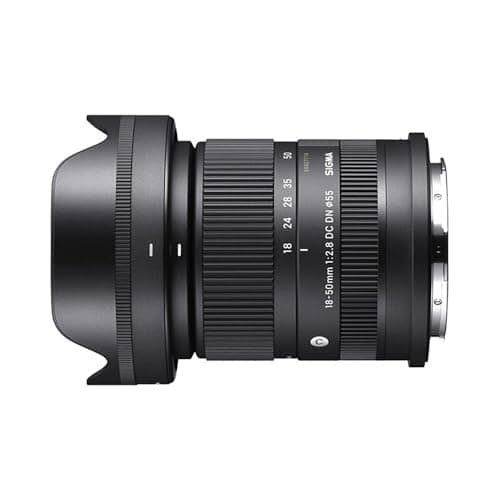
The short answer: buy the Sigma 18-50mm F2.8 DC DN first and treat it as the lens that replaces the 16-50mm kit zoom permanently. It covers the same everyday range at a constant f/2.8 — about two stops brighter than the kit lens at the long end — in a body barely larger, and it is the single upgrade that changes every photo you take with the a6400. After that the order depends on what you shoot: the Sigma 56mm F1.4 if it is people, the Sigma 16mm F1.4 if it is video or low light, and the Sony E 55-210mm if it is anything far away. All five lenses are native Sony E mount with autofocus, and the prices are live.
Start with what the a6400 actually is, because it determines the whole lens answer. It is a 24.2MP APS-C body with 11fps shooting, a 2.36-million-dot viewfinder, weather sealing, and the real-time tracking autofocus that is still the main reason people buy it. What it does not have is in-body stabilization. That single absence shapes every recommendation below: on this body, optical stabilization in the lens is the only stabilization you get, and for handheld video a wide focal length and a fast aperture do more for you than any amount of software.
The second thing that shapes the answer is the crop factor. The a6400's APS-C sensor applies a 1.5x factor, so a 16mm lens frames like a 24mm on full frame, a 56mm frames like an 84mm, and the 18-50mm zoom covers roughly a 27-75mm equivalent range. That is why the numbers on APS-C lenses look unfamiliar — the useful portrait length here is 56mm, not 85mm. If that is new, crop factor explained does the arithmetic properly.
Why the kit lens is the thing to replace
The 16-50mm that ships with most a6400 kits is a retracting power zoom built to be small and cheap, and it succeeds at both. Its problems are f/3.5-5.6 — meaning it gets dimmer as you zoom in, right when you need light most — and soft corners wide open. On a body with no IBIS, a dim lens is a double penalty: less light means slower shutter speeds, and slower shutter speeds on an unstabilized body means blur.
The Sigma 18-50mm F2.8 fixes that by holding f/2.8 across the whole range. Two stops of extra light at 50mm is the difference between 1/30s and 1/125s at the same ISO, which is the difference between a sharp handheld frame and a soft one. It also has a 55mm filter thread and stepping-motor autofocus, so it pairs with the a6400's tracking rather than lagging it. This is the lens we would buy before a second camera body, a gimbal, or anything else.
The lenses, and what each one is for
| Lens | Equivalent framing | Published specs | Buy it for |
|---|
| Sigma 18-50mm F2.8 DC DN | ~27-75mm | Constant f/2.8, stepping-motor AF, 55mm filter thread, Sony E APS-C | The everyday lens. Replaces the kit zoom for good |
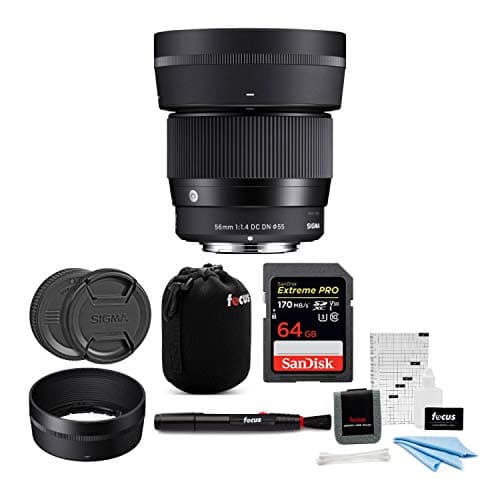
| Sigma 56mm F1.4 DC DN | ~84mm | f/1.4, stepping-motor AF, 55mm filter thread, Sony E APS-C | Portraits, and the classic blurred-background look |
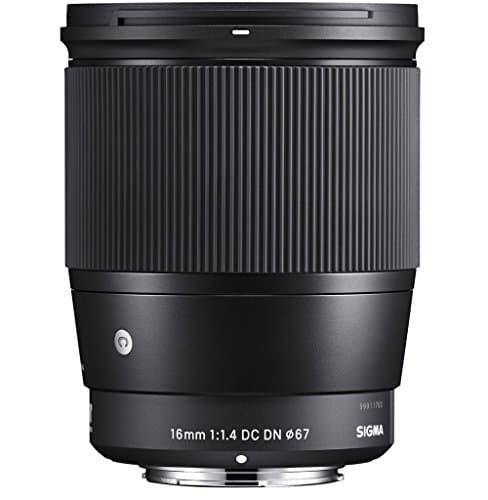
| Sigma 16mm F1.4 DC DN | ~24mm | f/1.4, stepping-motor AF, 67mm filter thread, Sony E APS-C | Handheld video, interiors, astro and low light |
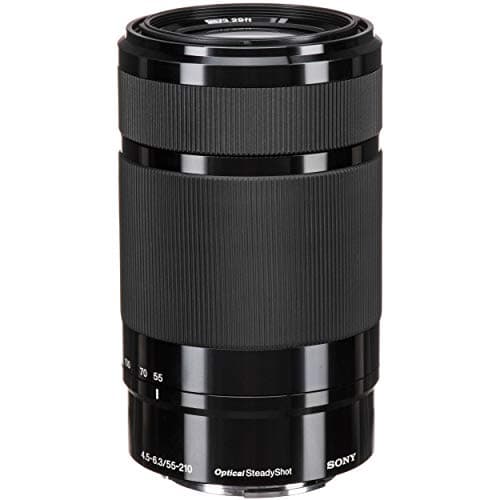
| Sony E 55-210mm F4.5-6.3 OSS | ~82-315mm | f/4.5-6.3, OSS optical stabilization, 49mm filter thread, Sony E APS-C | Reach, in daylight, for the least money |
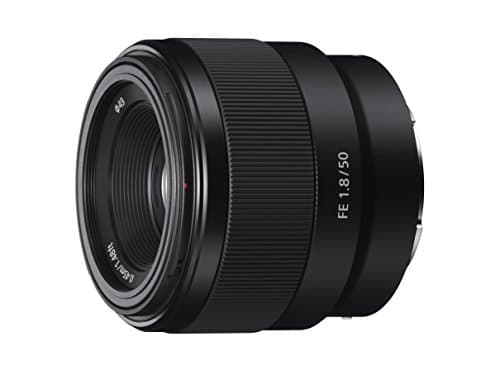
| Sony FE 50mm F1.8 | ~75mm | f/1.8, DC-motor AF, ~186g, Sony E full-frame | The cheapest fast prime, if the budget is the constraint |
One honest note on the FE 50mm F1.8: it is the cheapest fast autofocus prime that fits this body, and its autofocus is slow and audible because it uses an older DC motor. On an a6400, whose whole selling point is fast tracking autofocus, that is a real mismatch — it is ranked here because the price is genuinely low, not because it is the better lens than the Sigma 56mm. Compare the live prices above and be clear about which trade you are making.
Notice also that four of these five are third-party or first-party APS-C designs, and the one full-frame lens is the compromise. That is not an accident: Sony opened E-mount to other manufacturers early and widely, which is why a6400 owners have the cheapest fast-prime options of any mount. We work through what that actually costs you in third-party vs brand-name lenses.
The buying order, by what you shoot
Everything, generally: Sigma 18-50mm F2.8, then stop. One good zoom covers more real situations than three primes you have to swap between, and for a lot of a6400 owners it is the last lens they need.
People and portraits: Sigma 18-50mm, then Sigma 56mm F1.4. The 56mm is the APS-C equivalent of the classic 85mm portrait length, and f/1.4 on a crop sensor still throws a background convincingly out of focus at that length.
Video, vlogging or anything handheld:Sigma 16mm F1.4, early. Wide focal lengths hide handshake — a 16mm magnifies your wobble far less than a 50mm does — and on a body without IBIS that is the stabilization you have. It is also the lens that lets you hold the camera at arm's length and still be in frame.
Sport, wildlife, anything distant: Sony E 55-210mm OSS. It is not an exciting lens and it needs daylight, but it is the cheapest route to 315mm-equivalent reach with stabilization built in. The step up from here gets expensive fast — see best telephoto lenses for beginners.
What the a6400 cannot do, and which lens helps
No IBIS. Favour the OSS-stabilized zoom for telephoto work and the wide fast primes for handheld video, and keep your shutter speed at or above roughly one over the equivalent focal length — 1/125s at 56mm, not 1/60s. The mechanism is in image stabilization explained.
A screen that tilts up, not out.The a6400's screen flips upward, which a top-mounted microphone or a tripod plate blocks. If you film yourself often, this is a body limitation no lens fixes, and the fully articulating ZV-E10 is the better tool — see ZV-E10 vs a6400.
Weather sealing that the cheap lenses do not match. The body is sealed; the Sigma Contemporary primes and the 55-210mm are not weather-sealed designs. In real rain the weakest link is the lens, not the body.
Will full-frame FE lenses work on the a6400?
Yes — every FE lens mounts and autofocuses on an a6400, and it uses the centre portion of the image circle, which is usually the sharpest part. The catch is size, weight and price: a full-frame 85mm costs far more than the Sigma 56mm and frames tighter (about 127mm equivalent). FE lenses make sense on this body when there is no APS-C equivalent, or when you expect to move to full frame later. Do I need full frame? is the honest version of that question.
Is the 16-50mm kit lens worth keeping?
Keep it, do not sell it. It is worth very little second-hand and it retracts to almost nothing, which makes it the lens that goes in a coat pocket on a day you did not plan to take photographs. It is also a sensible backup for the day the good zoom is away being repaired.
a6400 or a6700 before buying lenses?
If you are deciding between bodies, decide first — the lenses above fit both, but the a6700 adds IBIS and a newer processor, which changes how much the lens has to do for you. Our comparison is at a6400 vs a6700. If the a6400 is already in your hands, nothing above changes.
What we would not buy for this body
A second standard zoom in a slightly different range — the Sigma 18-50mm already covers it. A cheap manual-focus prime, because you are giving up the one thing this camera is best at. And an expensive G Master telephoto, which on a 24MP APS-C body is a lot of money for resolution the sensor will not show you. Our wider rankings, by job rather than by body, are at best budget Sony E-mount lenses and best portrait lenses.