Skip to content
Focal & Frame

Cameras · Mirrorless Cameras

The Best Mirrorless Cameras Under $500

The most camera you can get for roughly $500 — and an honest account of the last-generation and vlog-first bodies you're actually choosing between at this budget.

By Stephen V.Updated How we research
#ad

We earn a commission when you buy through our Amazon links, at no extra cost to you. It never decides our rankings — we say so when the cheaper pick is the better buy. How this works.

For most people the Sony a6100 is the most camera you can get for around $500 — it is the only body at this budget that pairs a real viewfinder with Sony's benchmark autofocus, and it opens the door to the cheapest lens system going. If you shoot mostly video, the Sony ZV-E10 is the better buy for its fully articulating screen and creator features. The honest part comes first, though: at roughly $500 you are not buying the newest technology. You are choosing between last-generation bodies and vlog-focused ones that deliberately dropped a feature to hit the price.

That is not a warning so much as a map. Every camera here takes genuinely good photos and shoots real video; none of them is a toy. What separates them at this budget is the short, predictable list of things a manufacturer cuts to reach it — the viewfinder disappears, the screen stops articulating, the 4K gets cropped, or the processor is a few years old. Match the corners a camera cuts to the corners you do not care about, and you will get a remarkable amount of camera for the money.

A quick reality check on price, too. Bodies at this end of the market are heavily affected by sales, bundles and stock, so "under $500" can mean body-only one week and body-with-kit-lens the next. The live prices above tell you which deal is real today. If a pick has drifted a little over the line when you look, it is worth checking the wider best budget ranking before you decide, because the cheapest sensible body in each system moves around.

The short answer

Quick picks

#ProductBest forScorePrice
01
Sony a6100

The budget door into Sony's E-mount, with the same excellent autofocus in a simpler, cheaper body.

Cheapest route into Sony E-mount
7.6
Check price →
02
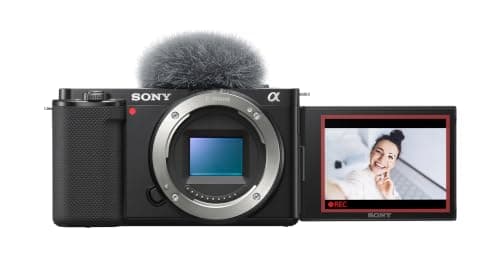
Sony Sony ZV-E10
Sony ZV-E10

The safe first camera if you shoot mostly video — flip-out screen, clean autofocus, and the cheapest lens system to grow into.

Video-first beginners
8.0
$579.00Amazon
03
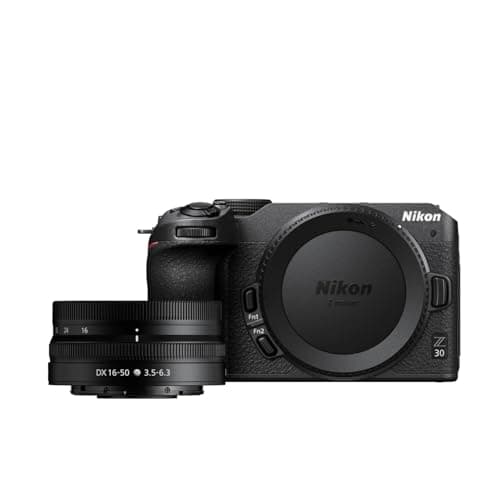
Nikon Nikon Z30
Nikon Z30

Nikon's vlogging-first body: no viewfinder, a great flip screen, and a grip that's comfortable to hold out at arm's length.

Budget vlogging with great handling
7.6
$796.95Amazon
04
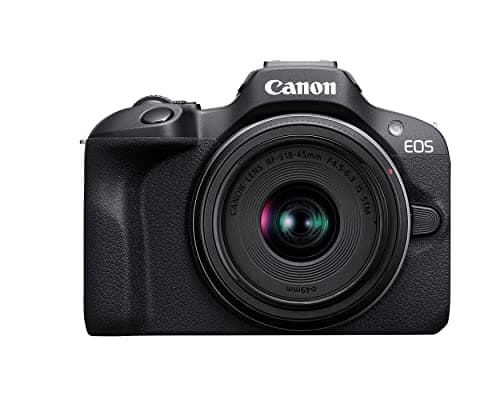
Canon Canon EOS R100
Canon EOS R100

The cheapest way into a real interchangeable-lens camera — and honest about what it gives up to get there.

The lowest price of entry
6.4
Check price →

#ad · Live prices from the Amazon Product API, as of Sep 4, 2026. Where we have no verified live price, we show none — we would rather leave a gap than print a number that has rotted.

In detail

The picks, in full

01

Cheapest route into Sony E-mount

Sony a6100

24MP APS-C4K30Real-time eye AFEVF + tilting screen
7.6/10

The budget door into Sony's E-mount, with the same excellent autofocus in a simpler, cheaper body.

Image quality
7
Autofocus
9
Video
7
Handling
7
Value
8

Pros

  • Carries Sony's real-time eye AF, which is the main reason to buy into the system
  • Has a viewfinder, unlike the vlog-focused ZV bodies, so it suits stills-first beginners
  • Opens the door to the vast, affordable E-mount lens catalog

Cons

  • Same dated menus and tilt-only screen as the a6400, with slightly stripped-back build and controls
  • No IBIS; the plasticky kit lens is soft at the edges

Don't buy this if…

the a6400 is only a little more at the time you're buying. The a6400 adds a better screen mechanism and weather resistance — check the live prices side by side before choosing.

Check price on Amazon →

We don't have a verified live price for this right now, so we aren't showing one.

#ad · we may earn a commission from this link to Sony a6100

02
Sony Sony ZV-E10

Video-first beginners

Sony ZV-E10

24MP APS-C4K30 (with crop)Fully articulating screenSony E-mount
8.0/10

The safe first camera if you shoot mostly video — flip-out screen, clean autofocus, and the cheapest lens system to grow into.

Image quality
8
Autofocus
9
Video
7
Handling
7
Value
9

Pros

  • Fully articulating screen and a dedicated background-defocus button make it genuinely built for talking to the lens
  • Sony's real-time eye autofocus is the best in this price class and holds your face while you move
  • The E-mount has more affordable third-party lenses (Sigma, Viltrox, Tamron) than any rival system

Cons

  • No electronic viewfinder, so bright-daylight stills are a squint
  • 4K is taken from a cropped, downsampled region and rolling shutter (jello on fast pans) is noticeable

Don't buy this if…

you shoot a lot of stills outdoors or want to learn with a viewfinder. The missing EVF is the one thing you can't add later — the Canon R50 gives you one for similar money.

$579.00View on Amazon

$698.0017% off

Price as of Sep 4, 2026. Prices change — Amazon's is the one that counts.

#ad · we may earn a commission from this link to Sony ZV-E10

03
Nikon Nikon Z30

Budget vlogging with great handling

Nikon Z30

21MP APS-CUncropped 4K30Fully articulating screenNo EVF
7.6/10

Nikon's vlogging-first body: no viewfinder, a great flip screen, and a grip that's comfortable to hold out at arm's length.

Image quality
7
Autofocus
8
Video
7
Handling
8
Value
8

Pros

  • One of the most comfortable small cameras to hold at arm's length — the grip is genuinely good
  • Uncropped 4K30 and a fully articulating screen aimed squarely at solo creators
  • A tally lamp and a large record button make it easy to confirm you're actually recording

Cons

  • No viewfinder and no in-body stabilization
  • Nikon's small Z DX lens range limits your cheap native options

Don't buy this if…

you also want to shoot a lot of stills in bright sun. Without a viewfinder you're composing on a screen you can barely see outdoors — a body with an EVF suits mixed shooting better.

$796.95View on Amazon

Price as of Sep 4, 2026. Prices change — Amazon's is the one that counts.

#ad · we may earn a commission from this link to Nikon Z30

04
Canon Canon EOS R100

The lowest price of entry

Canon EOS R100

24MP APS-C4K24 (cropped)Fixed screenCanon RF-mount
6.4/10

The cheapest way into a real interchangeable-lens camera — and honest about what it gives up to get there.

Image quality
7
Autofocus
6
Video
5
Handling
6
Value
8

Pros

  • Usually the least expensive new mirrorless body with a kit lens — a genuine on-ramp
  • The 24MP sensor and viewfinder take lovely stills in good light, same as pricier Canons
  • Small, light and dead simple to point and shoot

Cons

  • The screen is fixed — it doesn't tilt or flip, which rules it out for filming yourself
  • 4K is cropped and uses slower contrast-detect AF; smooth eye tracking is limited to 1080p

Don't buy this if…

you want to vlog or shoot serious 4K. The fixed screen and cropped, slow-focusing 4K are exactly the corners cut to hit the price. Stretch to the R50 if video matters at all.

Check price on Amazon →

No buyable offer at the last price check (Sep 4, 2026). We show nothing rather than a stale number.

#ad · we may earn a commission from this link to Canon EOS R100

What roughly $500 actually buys you

Manufacturers hit a price by cutting a specific, predictable list of things, and once you know the list you can shop with clear eyes. Under $500 the cuts are almost always some combination of these: the viewfinder is removed, the rear screen tilts instead of fully articulating (or does not move at all), the 4K is taken from a cropped region and focuses more slowly, in-body stabilization is left out, and the processor is a generation or two behind the latest bodies. None of those make a camera bad. They make it specific — a fixed screen is a non-issue if you never film yourself, and a missing viewfinder barely matters if you shoot mostly video on the flip screen.

The single biggest budget win: buy last year's camera

The best value at this budget is not a stripped-down new body — it is a slightly older one that used to cost far more. The Sony a6100 and ZV-E10 are both years old now, yet their autofocus has aged remarkably well and still embarrasses newer rivals from other brands. You give up the latest processor and a few video modes, and in exchange you save a lot and gain features — a viewfinder, class-leading tracking — that brand-new entry-level cameras cut to hit the same price. Where a new-versus-old choice exists, the older enthusiast body is usually the smarter buy near $500.

New under $500, or a better used camera?

It is worth asking honestly whether a new budget body is the right call at all. For the same money, a gently used mid-range camera from a reputable seller often gives you a better sensor, faster autofocus and more video features than anything new at this price. If buying used does not scare you, it is frequently the smarter value — just check the shutter count and confirm it ships with a charger and at least one battery. If you would rather have a warranty and a box-fresh camera, the new picks below are all safe bets that will not let you down.

Viewfinder or flip screen — pick the one you will use

This is the decision that sorts the whole list. A viewfinder (EVF) lets you compose with the camera to your eye, which is far easier in bright sun and steadier for stills — the a6100 is the only pick here that has one. A fully articulating screen swings out to face you, which is what you want for filming yourself — the ZV-E10 and Z30 prioritize that and drop the viewfinder to do it. You rarely get both at this budget, so decide whether you shoot more stills outdoors or more video of yourself, and let that choose your camera.

How the four picks stack up

1. Sony a6100 — the best all-rounder near $500

The a6100 is our top pick because it is the only genuinely well-rounded camera at this budget. It has a viewfinder, it carries Sony's real-time eye autofocus, and it buys into the deepest, cheapest lens catalog of any system. The trade-offs are honest — a tilt-only screen, dated menus and no stabilization — but none of them stop it being a camera you can grow with for years rather than months. For a stills-first beginner who wants to buy once and learn slowly, nothing else in the bracket matches its balance of features to price.

2. Sony ZV-E10 — the video-first choice

If you are here to make videos, the ZV-E10 is the better tool. It shares the a6100's excellent autofocus and lens mount but swaps the viewfinder for a fully articulating screen and adds creator touches like a one-press background-defocus button and a product-showcase mode. The catch is the cropped 4K and the rolling shutter on fast pans — fine for talking-head clips, less so for run-and-gun. As a first camera for a solo creator on a tight budget, it is hard to beat.

3. Nikon Z30 — the best-handling vlog body

The Z30 has the most comfortable grip of any camera on this list and shoots uncropped 4K30, which the ZV-E10 cannot. It is a lovely vlog-first camera with a tally lamp and a big record button that make solo filming easy. It sits at number three only because Nikon's native DX lens range is the thinnest of the big systems, so your cheap-lens path is narrower than on Sony — and, like the ZV-E10, it has no viewfinder for bright-day stills.

4. Canon EOS R100 — the cheapest door, with the most cut

The R100 is usually the least expensive new interchangeable-lens camera you can buy, and in good light it takes lovely photos with the same reliable Canon color as its pricier siblings. It ranks last because it cuts the most to get there: the screen is fixed and not a touchscreen, the 4K is cropped and uses slower focusing, and the RF-S lens range is young. If your only goal is the lowest possible price of entry it is a genuine on-ramp — read our full Canon R100 review before you commit, because its compromises are real and worth understanding.

Which system should a budget buyer commit to?

Buying a camera is really buying a lens mount, because the body you get today is the one you will likely replace first while the lenses stay with you for years. At this budget three systems are in play, and each asks something different of a wallet over time. Sony's E-mount is the clear value winner: it has the deepest catalog of cheap, sharp third-party primes from Sigma, Tamron and Viltrox, so your upgrade path is both wide and kind to your budget — which is a big part of why two of our four picks are Sony bodies. Canon's RF-S range is the youngest, so the cheapest options are a short native list plus adapted EF glass. Nikon's Z DX range sits in between, thin on native primes but well served by inexpensive adapted F-mount lenses. None of this decides the body on its own, but if you expect to add two or three lenses, factor the system cost in now — it will outweigh the price gap between the bodies before long.

The two accessories worth buying at any budget

Two small purchases matter more than any spec on the bodies above. The first is a fast SD card rated for 4K — a slow card causes dropped frames and buffer stalls that make an otherwise capable camera feel broken. The second is a spare battery, because every camera in this bracket has modest endurance and nothing kills a day of shooting faster than a flat cell with no backup. Budget for both from the start; together they cost a fraction of the body and save you the two most common first-week frustrations. If you film yourself, add a simple external microphone to that short list — on-camera audio is the weakest link in almost every beginner video.

Do not spend the whole budget on the body

Whatever you save at this end of the market, keep some back for the rest of the kit. A cheap fast 50mm-equivalent prime improves your photos more than any budget-body upgrade would, and you will also want a fast SD card and a spare battery. We work out the true cost of a starter kit in the beginner camera kit guide — read it before you set a hard number, because the body is only ever part of the bill.

How we picked

We do not run a testing lab

We compiled the manufacturers' published specifications and manuals, did the cost math, and scored each product against a published rubric. The scores are judgments from that documented research — they are notmeasurements we took, because we do not have a lab and we are not going to pretend we do. Where a number came from someone else's testing, we name and link them in Sources.

Questions

Frequently asked

What is the best mirrorless camera under $500?
For most people, the Sony a6100 — it is the only body near this price with both a viewfinder and Sony's benchmark autofocus, and it buys into the cheapest lens system going. If you shoot mostly video, the Sony ZV-E10 is the better pick for its fully articulating screen. See the full ranking above for who each one suits.
Can you get a genuinely good mirrorless camera for under $500?
Yes, with clear eyes about the trade-offs. At this budget you are buying last-generation bodies or vlog-focused ones that dropped a feature to hit the price. Every pick here takes very good photos and real 4K — you are simply choosing which corner (a viewfinder, a fully articulating screen, uncropped 4K, or stabilization) you can live without.
Should I buy a new budget camera or a used mid-range one?
A gently used mid-range body often beats a new entry-level one for the same money, especially on autofocus and video. If you are comfortable buying used from a reputable seller, it is frequently the better value — check the shutter count and that it comes with a charger and battery. If you want a warranty, the new picks here are all dependable.
Do any cameras under $500 have a viewfinder?
At this budget the Sony a6100 is the standout with a built-in electronic viewfinder — most others in the bracket, like the ZV-E10 and Nikon Z30, drop it to save size and money. If composing in bright sun matters to you, prioritize the a6100. For a wider look at value bodies, see our best budget mirrorless ranking.
Is a camera under $500 good enough for YouTube?
Absolutely. The ZV-E10 and Nikon Z30 are both genuinely good for YouTube — prioritize a fully articulating screen and a microphone input over headline resolution. The ZV-E10 adds vlogging-specific features and cheaper wide lenses, while the Z30 shoots uncropped 4K and handles beautifully at arm's length.
Which lens system is cheapest to grow on a budget?
Sony E-mount, comfortably. It has the deepest catalog of affordable third-party primes from Sigma, Tamron and Viltrox, so adding lenses stays cheap for years — which is why two of our four picks are Sony bodies. Canon's RF-S range is younger and leans on adapted EF glass for bargains, and Nikon's Z DX range is thin but well served by adapted F-mount lenses. See our 50mm guide for a strong, cheap first prime.

Keep reading

Receipts

Sources

We do not run a testing lab, and we do not pretend to. Specs come from manufacturer sheets and manuals; where a figure came from someone else's measurement, we name and link them. Where we could not verify something, we say so on the page rather than quietly leaving it out. Read our full method.