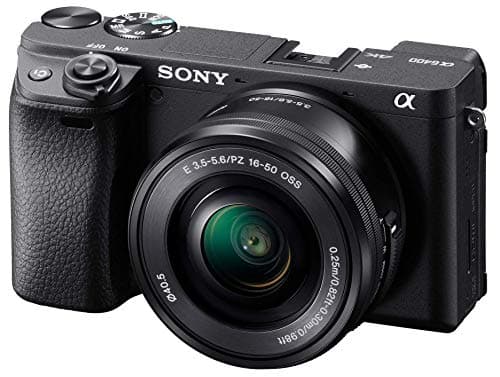
The verdict: buy the a6400 unless the a6100 is meaningfully cheaper on the day you look. They share the same 24.2MP APS-C sensor, the same 11fps burst and the same real-time eye autofocus — the thing people actually buy a Sony crop body for — so the a6400's advantages are three: weather sealing, a 2.36-million-dot viewfinder against the a6100's 1.44 million, and Sony's Picture Profiles including S-Log2, S-Log3 and HLG, which the a6100 does not have at all. If you shoot video you want that last one. If the a6100 is the cheaper listing, the gap has to be small to justify giving all three up. Check the live prices in the table — these two bodies trade places, and on some days the a6100 listing is the more expensive of the two.
This is one of the cleanest comparisons in the Sony range, because Sony built both cameras around the same core. The sensor is the same 23.5 x 15.6mm, 24.2MP CMOS, giving a 6000 x 4000 image. The native ISO range is 100-32,000 on both. Continuous shooting is 11fps on both. The autofocus system — the real-time tracking and eye AF that still embarrasses cameras costing twice as much — is the same system. Shortest shutter speed is 1/4000 second on both, and neither has in-body stabilization.
So a buyer can skip every spec that is identical and look at the four that are not. That is what this page does.
The specification differences, in full
| Specification | Sony a6100 | Sony a6400 |
|---|
| Sensor | 24.2MP APS-C CMOS, 6000 x 4000 | 24.2MP APS-C CMOS, 6000 x 4000 |
| Native ISO | 100-32,000 (expandable to 51,200) | 100-32,000 (expandable to 102,800) |
| Continuous shooting | 11fps | 11fps |
| Viewfinder | Electronic, 1,440,000 dots, 1.07x magnification | Electronic, 2,359,296 dots, 1.07x magnification |
| LCD | 3.0in tilting touchscreen, 921,600 dots | 3.0in tilting touchscreen, 921,600 dots |
| Picture Profiles (S-Log2 / S-Log3 / HLG) | Not available | Available |
| Weather sealing | No | Yes |
| In-body stabilization | No | No |
| Video | 4K at 24/25/30p, 1080p to 120p | 4K at 24/30p, 1080p to 120p |
| Microphone input | Yes | Yes |
| Headphone output | No | No |
| Battery life (CIPA) | 420 shots | 410 shots |
| Weight | 396g | 403g |
The battery and weight rows are the useful kind of boring: the a6100 is seven grams lighter and rated for ten more frames, differences nobody will ever notice. That is the point of the table — it tells you where not to look.
The three differences that are real
1. Picture Profiles, and this is the big one for video. Sony strips its Picture Profile system out of the a6100 entirely, which removes S-Log2, S-Log3 and HLG. Those are the flat recording profiles that preserve highlight and shadow detail for grading later — the mechanism is explained in do you need 10-bit video. If you intend to colour-grade, the a6100 cannot give you a gradeable file and the a6400 can. If you shoot straight-out-of-camera video, you will never open the menu this lives in.
2. Weather sealing. The a6400 is sealed against dust and moisture; the a6100 is not. This matters more than spec sheets make it sound if you shoot outdoors — though note that the cheap lenses most people put on these bodies are not sealed either, so the body sealing only helps if the lens matches it. Our a6400 lens guide flags which of the common picks are sealed designs.
3. A sharper viewfinder.2.36 million dots against 1.44 million is a visible difference at the same magnification — the a6400's viewfinder image looks cleaner and makes manual focus easier to judge. It is a usability improvement rather than an image-quality one: the photographs are identical either way.
The thing neither camera does
Both screens tilt rather than articulate. They flip upward, which means a top-mounted microphone or a tripod plate blocks the screen exactly when you want to see yourself. For filming yourself, that is a limitation neither body escapes, and the fully articulating ZV-E10 is the right tool instead — see ZV-E10 vs a6400. Neither body has a headphone jack either, so you cannot monitor audio on either one.
The short answer
Quick picks
| # | Product | Best for | Score | Price |
|---|
| 01 | Sony a6400Still one of the best autofocus systems you can buy at this price, in a compact body with a proper viewfinder. | Stills shooters who want a viewfinder | | $811.48·Amazon |
| 02 | Sony a6100The budget door into Sony's E-mount, with the same excellent autofocus in a simpler, cheaper body. | Cheapest route into Sony E-mount | | Check price → |
#ad · Live prices from the Amazon Product API, as of October 16, 2026. Where we have no verified live price, we show none — we would rather leave a gap than print a number that has rotted.
In detail
The picks, in full
Stills shooters who want a viewfinder
Sony a6400
24MP APS-C4K30Real-time tracking AFEVF, tilting screen
Still one of the best autofocus systems you can buy at this price, in a compact body with a proper viewfinder.
- Image quality
- 8
- Autofocus
- 9
- Video
- 7
- Handling
- 7
- Value
- 8
Pros
- +Class-leading real-time tracking and eye AF that still holds up years after release
- +Compact, pocketable-with-a-prime body with a built-in electronic viewfinder
- +Access to the entire, enormous Sony E-mount lens catalog, first- and third-party
Cons
- −No in-body stabilization, and the screen tilts rather than fully articulating (it flips up, not out to the side)
- −The menu system is dated and dense compared with Canon's and Nikon's
Don't buy this if…
…you're vlogging yourself. The screen tilts up and is blocked by a tripod or top-mounted mic — the ZV-E10's fully articulating screen is the better tool for that job.
Cheapest route into Sony E-mount
Sony a6100
24MP APS-C4K30Real-time eye AFEVF + tilting screen
The budget door into Sony's E-mount, with the same excellent autofocus in a simpler, cheaper body.
- Image quality
- 7
- Autofocus
- 9
- Video
- 7
- Handling
- 7
- Value
- 8
Pros
- +Carries Sony's real-time eye AF, which is the main reason to buy into the system
- +Has a viewfinder, unlike the vlog-focused ZV bodies, so it suits stills-first beginners
- +Opens the door to the vast, affordable E-mount lens catalog
Cons
- −Same dated menus and tilt-only screen as the a6400, with slightly stripped-back build and controls
- −No IBIS; the plasticky kit lens is soft at the edges
Don't buy this if…
…the a6400 is only a little more at the time you're buying. The a6400 adds a better screen mechanism and weather resistance — check the live prices side by side before choosing.
Which one, by what you shoot
Stills, mostly, in good conditions: whichever is cheaper. The photographs from these two cameras are the same photographs. If the a6100 saves you real money, spend it on the lens — a better lens changes your images and the viewfinder resolution does not.
Any video you intend to grade: a6400, without hesitation. Picture Profiles are the single non-negotiable difference, and no price gap makes a camera that cannot record a flat profile into one that can.
Outdoors, hiking, weather: a6400, and pair it with a sealed lens or accept that the sealing stops at the mount.
Manual focus work, or you simply look through the viewfinder a lot: a6400. The sharper EVF is the kind of difference you stop noticing because you stop being annoyed by it.
Watch the listing, not just the model
A specific warning for these two bodies. The a6100 is widely sold as a kit with the 16-50mm power zoom and the a6400 is commonly sold body-only, so the two listings are frequently not comparing the same thing — and because the a6100 has been in the market longer, its remaining listings are often seller stock at seller prices. It is entirely normal for the a6100 kit to be priced above the a6400 body, which inverts the whole argument for buying it.
The prices in the table above are live and carry their own "as of" date for exactly this reason. Read them before you decide, check whether each listing includes a lens, and remember that the 16-50mm kit zoom is the lens most a6400 owners end up replacing anyway — which makes it worth less in the comparison than its retail price suggests.
Is the a6100 still worth buying in 2026?
Only at a real discount. The camera itself is no worse than it was — the sensor and the autofocus are the same ones in the a6400 — but it sits in an awkward spot: the a6400 is better for a little more, and the ZV-E10 is better for video at a similar price with an articulating screen. Our wider budget ranking is at best mirrorless cameras under $500.
a6400 or a6700?
A different and bigger question, because the a6700 adds in-body stabilization, a newer processor, 10-bit S-Log3 and a fully articulating screen for substantially more money. If you are weighing all three, the a6100 drops out first. The full comparison is at a6400 vs a6700.
Do the same lenses fit both?
Yes — identical Sony E mount, identical APS-C sensor size, so every lens recommendation is the same for both bodies, and nothing you buy now is wasted if you upgrade within the system later. That mount compatibility is a bigger long-term argument than anything on this page: see lens mounts explained.
Neither has IBIS. How much does that matter?
For stills, very little — keep your shutter speed at or above roughly one over the equivalent focal length and you will be fine. For handheld video it matters a lot, and the fixes are lens-side: a wide focal length, a stabilized (OSS) lens, or a gimbal. The mechanics are in image stabilization explained.
How we picked
We do not run a testing lab
We compiled the manufacturers' published specifications and manuals, did the cost math, and scored each product against a published rubric. The scores are judgments from that documented research — they are notmeasurements we took, because we do not have a lab and we are not going to pretend we do. Where a number came from someone else's testing, we name and link them in Sources.
Questions
Frequently asked
What is the difference between the Sony a6100 and a6400?+
Three things that matter. The a6400 has weather sealing, a 2,359,296-dot viewfinder against the a6100's 1,440,000, and Sony's Picture Profiles including S-Log2, S-Log3 and HLG - which the a6100 does not have at all. Sensor, autofocus, 11fps burst, ISO range, screen and ports are the same on both.
Is the a6400 worth the extra over the a6100?+
For video, yes without question - the a6100 cannot record a flat log profile for grading, and the a6400 can. For stills in good conditions, only if the price gap is small, because the photographs are identical. Check the live prices: the a6100 is usually sold as a 16-50mm kit and sometimes lists above the a6400 body.
Do the a6100 and a6400 use the same sensor?+
Yes - the same 23.5 x 15.6mm 24.2MP APS-C CMOS sensor, producing the same 6000 x 4000 images with the same 100-32,000 native ISO range. Image quality from the two bodies is the same, which is why the choice comes down to features and price rather than picture quality.
Does the Sony a6100 have S-Log?+
No. Sony removed the Picture Profile system from the a6100 entirely, which takes S-Log2, S-Log3 and HLG with it. Only the a6400 and a6600 in that generation get them. If you plan to colour-grade your video, this is the single most important difference between the two cameras.
Is the a6100 weather-sealed?+
No. The a6400 is sealed against dust and moisture; the a6100 is not. Worth knowing that the cheap lenses most buyers put on either body are usually not sealed either, so body sealing only helps if the lens matches it - our a6400 lens guide notes which common picks are sealed designs.
Does the a6100 or a6400 have in-body stabilization?+
Neither. Any stabilization comes from the lens, which is why an OSS-stabilized telephoto is the sensible choice on both bodies and why wide fast primes are the right answer for handheld video. For stills, keeping shutter speed at or above roughly one over the equivalent focal length handles it.
Which has better battery life?+
Effectively the same. The a6100 is CIPA-rated at 420 shots and the a6400 at 410 - a ten-frame difference nobody notices in practice. The a6100 is also seven grams lighter at 396g against 403g, which is the other difference in this category that does not matter.
Should I buy an a6100 in 2026?+
Only at a genuine discount. Nothing has got worse about the camera, but its position is awkward: the a6400 is better for a little more money, and the ZV-E10 is better for video at a similar price with a fully articulating screen. Compare all three live prices before committing to the oldest of them.
Receipts
Sources
We do not run a testing lab, and we do not pretend to. Specs come from manufacturer sheets and manuals; where a figure came from someone else's measurement, we name and link them. Where we could not verify something, we say so on the page rather than quietly leaving it out. Read our full method.