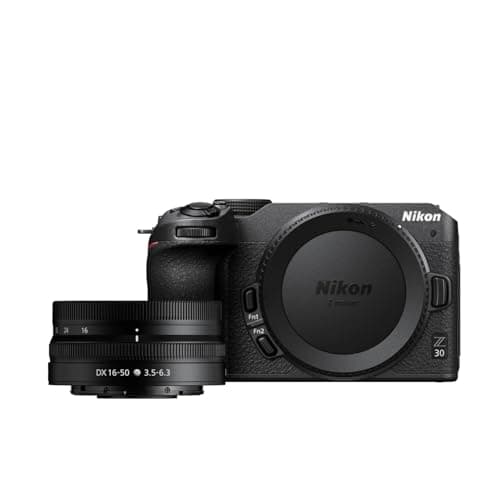
The Nikon Z30 is the cheapest sensible route to uncropped 4K in a body that is genuinely pleasant to hold at arm's length. If you film yourself and shoot stills as a secondary activity, it is excellent value. The absence of a viewfinder is not a spec-sheet quibble — it changes what the camera is good for.
As always: we have not lab-tested the Z30. This is compiled from Nikon's published specifications and documented owner experience, scored against our rubric. Informed opinion from research, not bench measurements.
Who it's for
The Z30 is aimed at the solo creator: someone who sets a camera down, walks into frame and talks. Nikon designed it around that job. The screen flips fully to the front, there is a red tally lamp on the front so you can see at a glance that you are recording, the record button is large and obvious, and — the detail owners mention most — the handgrip is deep and properly shaped, which makes holding the camera out at arm's length for a two-minute take far less tiring than on the flat, blocky rivals.
It also suits the buyer who wants the cheapest way into a modern camera system without accepting a cropped 4K image. Plenty of budget bodies list 4K and then quietly take it from a small central region of the sensor, which zooms everything in and makes tight rooms impossible. The Z30 records 4K30 from the full sensor width. For a small-apartment vlogger that single spec is worth more than most of the feature list.
Who should look past it? Anyone who shoots a lot of stills outdoors. Without a viewfinder you compose on a rear screen that is hard to see in direct sun, and holding a camera at arm's length is a less stable way to take a photograph. If your shooting is half-and-half, the Nikon Z50 II adds a viewfinder and a much newer autofocus system for meaningfully more money.
Where it's strong
Uncropped 4K30 in a cheap body
The headline. Full-width 4K30 means a 16mm lens still looks like a 16mm lens when you hit record, so you can sit close to the camera in a small room and still fit yourself and some background in frame. Cameras that crop for 4K force you backwards, or force you to buy a wider lens to compensate. At the Z30's price, getting the uncropped version is the single most practical advantage it has.
The grip, and the small creator details
Nikon has always made good grips and the Z30 inherits that. It matters more than it sounds: a camera that is comfortable held out in front of you is a camera you will actually film with. Add the front tally lamp, the fully articulating screen that clears a tripod head, and a dedicated video record button, and the Z30 reads as a camera designed by people who had watched someone try to vlog rather than one that had a flip screen bolted on.
Straightforward, unintimidating stills
The 21MP APS-C sensor is the same generation of hardware powering Nikon's other DX bodies, and in good light the photographs are lovely — natural color, plenty of detail, and enough resolution to crop. The menus are among the clearest in the industry, and Nikon's automatic modes are sensible rather than fussy. As a camera to learn on, it gets out of your way.
The honest catches
No viewfinder — and this is the big one
The Z30 has no electronic viewfinder at all. On a bright day, a rear LCD washes out and you end up guessing at composition and exposure. You also lose the stability that comes from bracing a camera against your face, which costs you sharpness at slower shutter speeds. For a video-first creator none of this matters, because you are filming from a tripod or at arm's length either way. For a stills-first beginner it is a daily irritation. Be honest with yourself about the split before you buy — our what camera should I buy guide walks through that decision.
No in-body stabilization
There is no IBIS. Walking footage will show your footsteps unless you use a stabilized lens, Nikon's electronic VR (which crops in), or a gimbal. Static and tripod-based filming is unaffected, which is what most solo creators do most of the time — but if your plan is walk-and-talk, factor a stabilizer into the budget rather than discovering the problem afterwards.
The Z DX lens range is short
Nikon's crop-sensor Z DX lineup is small. There are excellent lenses in it — the DX 16-50mm is one of the best kit zooms anyone makes, and the DX 24mm f/1.7 is a genuinely good prime — but the list is short compared with Sony E-mount, and the affordable third-party options are still arriving. You can adapt Nikon F DSLR lenses with the FTZ adapter, which opens a huge cheap second-hand catalog at the cost of size. Our best Nikon Z lenses guide is an honest map of what exists today.
Recording limits and heat on long takes
Like most small mirrorless bodies, the Z30 is not designed for hour-long continuous recordings; extended 4K clips are subject to per-clip limits and the body warms up. For the ten-second-to-ten-minute segments most creator work is made of, this is a non-issue. For filming a full lecture or a ceremony in one take, it is the wrong tool.
The verdict
The Z30 is a focused camera, and focus is what makes it good value. It gives a solo creator the two things that matter most — uncropped 4K and a body that is comfortable to hold in front of you — and spends nothing on features that audience does not use. If that description fits you, it is one of the better ways to spend this much money.
If you shoot stills as much as video, the missing viewfinder will bother you more than any spec suggests, and the Z30 vs Z50 II comparison shows what the step up buys. And if you are choosing between systems rather than between Nikons, the Sony vs Canon vs Nikon breakdown covers the lens-range question that outlives any single body.