For a first camera, Canon is the safest all-round choice, Sony is the best choice if you care about cheap lenses and video autofocus, and Nikon is the value pick if you film yourself and want the nicest thing to hold. All three make good cameras — the real difference is the lens system you are joining. Bodies get replaced every few years. A lens you buy today can outlast three of them, so the mount is the decision that lasts.
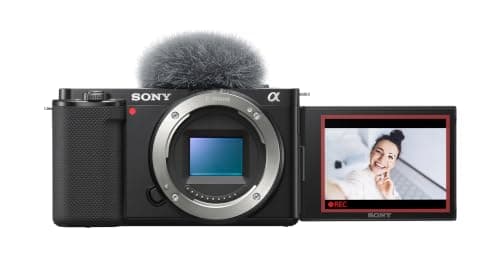
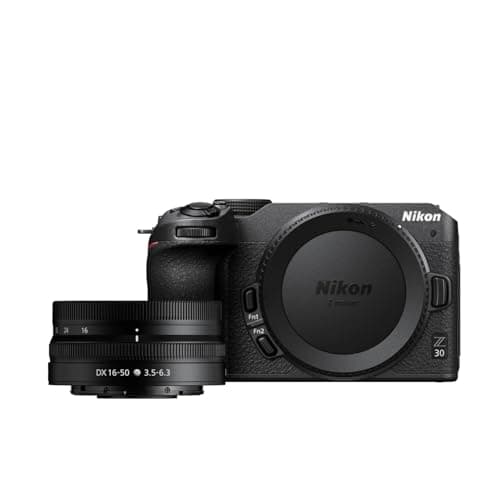
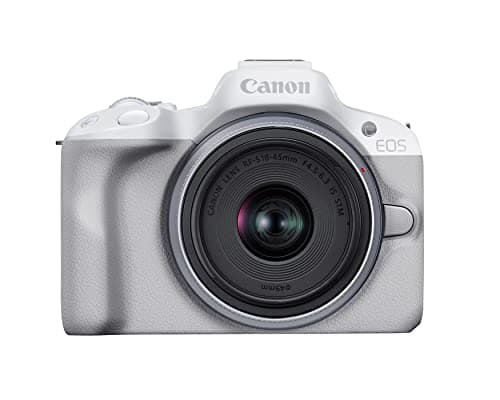
To keep this concrete rather than abstract, we compare through each brand's best-known beginner body: the Canon EOS R50, the Sony ZV-E10 and the Nikon Z30. They are not identical cameras — that is part of the point, because each brand chose different compromises at this price.
The comparison that matters: lenses
| System | Cheap native lens options | Third-party autofocus lenses | Adapting older DSLR glass |
|---|
| Sony E | Broad — the oldest mirrorless mount here, so the catalog is deep | Excellent: Sigma, Tamron, Viltrox and more all build for it | Possible with adapters, rarely needed |
| Canon RF / RF-S | Thin — RF-S is the youngest crop-sensor lineup here | Limited; Canon has been restrictive about third-party RF autofocus | Very good — Canon's EF adapter opens a huge used catalog |
| Nikon Z / Z DX | Short but high quality; the DX 16-50mm kit zoom is genuinely excellent | Improving — Viltrox and others now build Z-mount autofocus primes | Good — the FTZ adapter takes Nikon F lenses |
Read that table before you read any spec sheet. If your budget over the next three years is one body and three lenses, Sony's catalog will save you real money, because the third-party primes that cost a fraction of first-party glass are all built for E-mount first. Canon's answer is the EF adapter and the enormous second-hand DSLR lens market — cheaper still, but bulkier. Nikon sits in between with a short, well-chosen native list and a growing third-party presence.
Autofocus, color and handling
Autofocus: Sony set the benchmark, Canon closed the gap
Sony's real-time eye autofocus has been the reference point in this price class for years, and it is still the reason many creators choose the system: it finds an eye and holds it while you move. Canon's Dual Pixel AF II is now genuinely comparable for stills and video and is arguably more intuitive to drive on a touchscreen. Nikon's current systems are good and improving quickly — the Z50 II inherits detection from much pricier Nikons — but the Z30 specifically is the oldest autofocus generation of these three.
Color: the difference you will actually notice
Straight-out-of-camera color is a real and underrated difference. Canon's rendition is warm and flattering on skin, which is why so many portrait and family photographers stay with it. Nikon leans natural and slightly cooler, and its greens are widely liked for landscape work. Sony is the most neutral of the three, which is excellent if you edit and less immediately pleasing if you do not. None of this is measurable quality — it is taste, and it is worth looking at real photographs from each before you buy.
Handling: Nikon's quiet advantage
Nikon makes the most comfortable small grips of the three, and the Z30's is conspicuously good for holding at arm's length. Canon's menus and touch interface are the friendliest for a newcomer. Sony's bodies are the most compact and the most feature-dense, with menus that have improved but still assume you want options. If you can, hold all three; the one that feels right is the one you will carry.
Where each brand wins at this price
Canon EOS R50 — the best all-rounder. A flip-out touchscreen, an electronic viewfinder, uncropped 4K30 and modern subject-tracking autofocus in a small body. It is the camera we recommend to the largest number of beginners because it does nothing badly. Its weakness is the native lens range, softened considerably by the EF adapter.
Sony ZV-E10 — the cheapest system to grow into. Built for talking to the lens, with the best autofocus value here and a mount that opens onto the most affordable lens catalog in mirrorless. Its weakness is the missing viewfinder and a cropped 4K that shows rolling-shutter skew on fast pans.
Nikon Z30 — the value creator body. Uncropped 4K30 and the best grip of the three, at the lowest price. Its weaknesses are no viewfinder, no stabilization, and the shortest native lens list — though the lenses that do exist are good.
How to choose between them in one minute
Answer three questions honestly and the decision usually makes itself.
- Will you buy more than two lenses? If yes, lean Sony — the third-party catalog is where your savings live over the years.
- Do you want one camera that does everything reasonably well?If yes, lean Canon — the R50's viewfinder plus flip screen plus uncropped 4K is the most balanced package here.
- Is filming yourself the main job, on the tightest budget? If yes, lean Nikon — the Z30 gives you uncropped 4K and the best ergonomics for the money.
The things that should not decide it
Megapixels should not. All three bodies here are in the same 21-24MP class and you will never see the difference in a print or on a screen. Brand loyalty should not, unless you already own lenses for that mount — in which case it absolutely should, because adapting them is usually cheaper than switching. And a single spec-sheet number should not: a camera you find awkward will lose to a camera you enjoy, every time.
What about Fujifilm and the others?
We limited this comparison to the three brands beginners ask about most, but they are not the only good answers. Fujifilm's X-series has an excellent lens range and film-simulation color that many people love straight out of camera — see the X-S20 review and our Fujifilm lens guide. Panasonic and OM System share the Micro Four Thirds mount, with the smallest lenses of all. Neither is a mistake; both are simply chosen less often by first-time buyers.
When you have picked a side, our how to choose a mirrorless camera guide walks the rest of the decision, and the beginner ranking puts all the current bodies side by side with live prices.