Skip to content
Focal & Frame

Cameras · Mirrorless Cameras

The Best Cameras for Street Photography

Street photography rewards the camera you actually have with you, that nobody notices, and whose pictures you like straight out of the card. Five crop-sensor bodies ranked on those three things, not on spec-sheet bragging rights.

By Stephen V.Updated How we research
#ad

We earn a commission when you buy through our Amazon links, at no extra cost to you. It never decides our rankings — we say so when the cheaper pick is the better buy. How this works.

For most beginners, the best camera for street photography is the Fujifilm X-M5. It weighs 355g with the battery and card in it, its electronic shutter is completely silent and runs to 1/32000 of a second, and its twenty film simulations mean the picture you take is usually the picture you post. If you want a viewfinder — and many street photographers do — the Sony a6400 is the cheapest honest way to get one, and the Sony a6700 is the most capable body here if your budget stretches. The Canon R10 and Nikon Z50 II round out the list for people already in those systems. All five are APS-C, which is deliberate: smaller sensor, smaller lenses, smaller camera, less attention.

A note on how this page was put together. We have not walked a city with all five of these cameras. Everything below comes from Fujifilm's, Sony's, Canon's and Nikon's published specifications and from reviewers' documented findings, named and linked in Sources. Where a reviewer criticized a camera, we say so and say which one. Prices are pulled live by our price pipeline; we never print a number we have not checked.

What a street camera actually has to do

Street photography is unusual among genres in that almost none of the things camera marketing emphasizes matter. Resolution does not matter — you are not printing a billboard from a photograph of a man waiting for a bus. Burst rate barely matters. Weather sealing is a nice-to-have. What matters is a short list, and it is a different short list from the one that decides a wildlife camera or a vlogging camera.

1. Small enough that you bring it, plain enough that nobody looks

This is the whole game. A camera left at home has taken no photographs, and a camera that looks expensive changes how people behave in front of it. Both problems get worse the bigger the body and lens get. The X-M5 is 111.9 x 66.6 x 38.0mm and 355g with battery and card, which is genuinely jacket-pocket territory with a small prime. The Sony a6400 and a6700 are rangefinder-shaped and flat-topped, which reads as "tourist" rather than "press". The Canon R10 and Nikon Z50 II have SLR-style humps and deeper grips: more comfortable to hold all day, more conspicuous on a quiet street.

Be honest with yourself about which trade-off you want. A deep grip genuinely helps over six hours of walking. It also makes the camera look like equipment rather than an accessory.

2. A silent shutter — and knowing when not to use it

A mechanical shutter makes a noise, and on a quiet street at close range that noise is the moment someone notices you. Every camera here has an electronic shutter option that makes no sound at all. The Fujifilm X-M5 takes this furthest: Fujifilm specifies its electronic shutter from 30 seconds to 1/32000 of a second, against 1/4000 for the mechanical one.

That top speed is not a gimmick for street. It is what lets you shoot a fast prime wide open in daylight. At f/1.4 at ISO 160 in bright sun, 1/4000 is not fast enough and your frames come out white; 1/32000 is. The alternative on the other bodies is to screw on a neutral-density filter, which our ND filter guide covers.

The catch, and it is a real one: electronic shutters read the sensor line by line rather than all at once, so fast horizontal movement can lean or skew — a passing cyclist, a car, a swung arm. For most street work that is invisible. For anything moving quickly across the frame, switch back to mechanical and accept the click.

3. Autofocus that locks on a stranger in half a second

You rarely get a second attempt at a street photograph. What you want is a camera that finds a human face in a cluttered scene and stays on it while the person walks. All five of these do that competently; two do it exceptionally. The Sony a6700 has Sony's current subject-recognition system, and the Nikon Z50 II runs the EXPEED 7 processor from Nikon's flagship Z8 and Z9, which is the single most surprising spec in this group at this price. The Sony a6400's real-time tracking is older but has aged remarkably well, and remains one of the reasons that camera is still recommended years after launch.

4. Colors you will actually keep

This is the criterion that separates a camera you shoot with from a camera you edit with, and for street photography — where the whole point is volume and immediacy — it matters far more than it does elsewhere. Fujifilm's film simulations are the reason the X-M5 tops this list: twenty of them, including Provia, Velvia and the black-and-white Acros, selected from a dedicated dial on the top plate rather than buried in a menu. You shoot, you look, you post. Nobody edits four hundred street frames.

Nikon's answer is a dedicated Picture Control button on the Z50 II, which is the same idea with less history behind it. Sony and Canon both produce good color, but neither makes switching looks a physical control, and Sony's default JPEG rendering is the flattest of the four.

5. A way to compose that is not holding the camera at arm's length

Two schools here, and they genuinely split people. A viewfinder lets you shoot at eye level with the camera pressed to your face, which is faster, steadier and far easier in bright sun. A tilting or articulating screen lets you shoot from the hip or waist, which is less intrusive because you are not visibly pointing a camera at anyone.

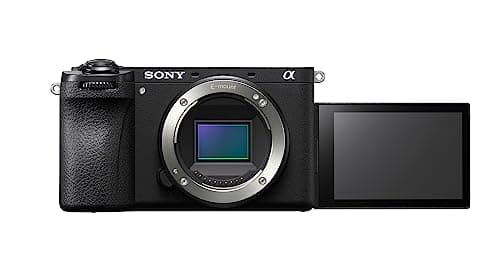
The X-M5 has no viewfinder at all — it is screen-only, with a 3-inch vari-angle panel of about 1.04 million dots. That is the price of its size, and it is the main reason somebody might rank the a6400 first instead. The a6400 tilts rather than articulates; the a6700, R10 and Z50 II all have both a viewfinder and a fully articulating screen.

6. The lens matters more than the body

A fixed focal length is the traditional street setup for a reason: one lens, one framing, no decisions to make while the moment happens. The classic choices are a 35mm-equivalent and a 50mm-equivalent, which on these APS-C bodies means roughly a 23mm and a 30-35mm lens. Our Sigma 30mm f/1.4 review covers the cheapest good option for four mounts, and our best 35mm lenses page covers the wider classic.

This is also where the mounts separate. Sony E has by far the deepest catalog of small, cheap, fast primes from Sigma, Tamron, Viltrox and Sony itself. Fujifilm X has fewer but very good ones. Canon RF-S has none at all from Canon — every APS-C-native RF lens Canon builds is a variable-aperture zoom — so Canon owners are reliant on Sigma's recent RF-mount primes. Nikon Z DX is the thinnest native range of the four. If you are choosing a system from scratch rather than adding to one, that hierarchy should weigh heavily, and our lens mounts explained guide sets out why the mount outlives the body.

How we ranked them

In that order of priority: discretion and carry weight first, silent shooting second, autofocus reliability third, straight-out-of-camera color fourth, composing method fifth, and the availability of small fast primes on the mount as the tiebreaker. Price is the final filter rather than a scoring criterion — a camera that is wrong for street does not become right by being cheap.

One body we deliberately did not rank: the Fujifilm X-S20. On paper it is arguably the best street camera on this site — the X-M5's colors with in-body stabilization and a viewfinder added — but the listing we can point you at is a lens kit at a price that makes it poor value against the alternatives here. Our X-S20 review covers it properly, and if you find the body on its own at a sensible price, it belongs near the top of this list.

The short answer

Quick picks

#ProductBest forScorePrice
01
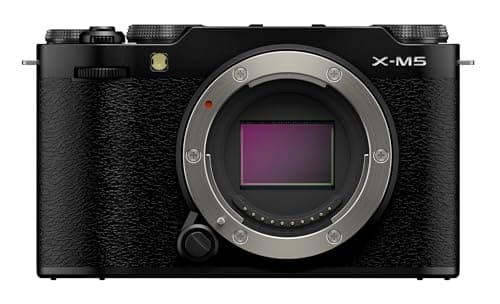
Fujifilm Fujifilm X-M5
Fujifilm X-M5

A tiny, cheap creator camera with Fujifilm's colors and surprisingly serious video for the money.

Style-conscious budget creators
7.8
$899.00Amazon
02
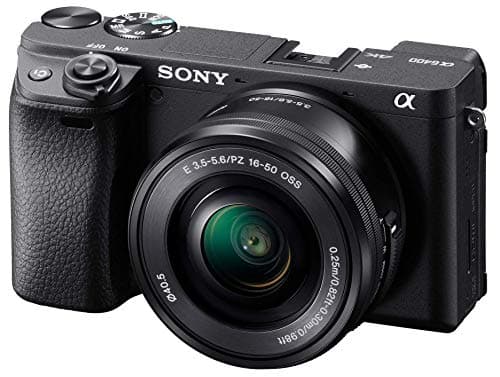
Sony Sony a6400
Sony a6400

Still one of the best autofocus systems you can buy at this price, in a compact body with a proper viewfinder.

Stills shooters who want a viewfinder
7.8
$811.48Amazon
03
Sony Sony a6700
Sony a6700

Sony's flagship APS-C body finally adds in-body stabilization and AI-driven autofocus to the crop line — the a6400 grown up, at a step-up price.

The step-up APS-C Sony
8.6
$1,498.00Amazon
04
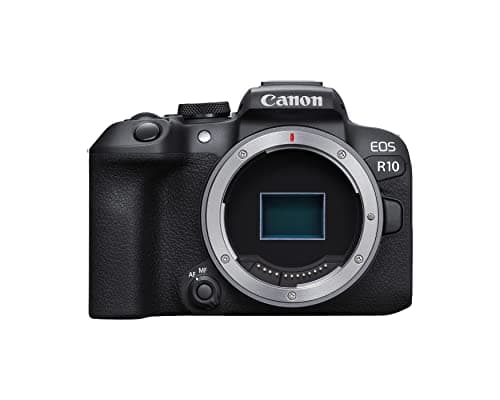
Canon Canon EOS R10
Canon EOS R10

The fast one. If you shoot kids, pets or sport, the R10's burst speed and tracking punch well above its price.

Action, sport and pets
8.2
$999.00Amazon
05
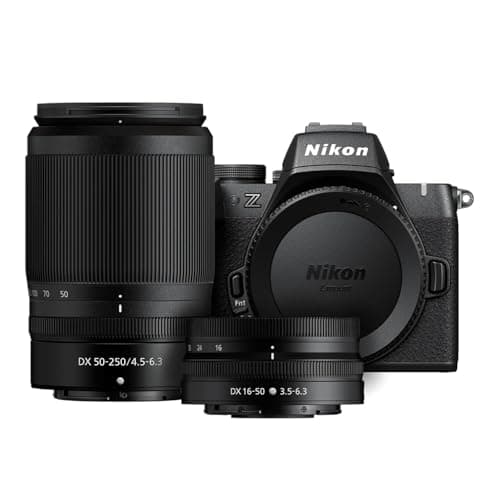
Nikon Nikon Z50 II
Nikon Z50 II

Flagship-grade autofocus in a beginner body — the Z50 II borrows the EXPEED 7 brain from Nikon's flagship cameras.

The best autofocus for the money
8.6
$1,396.95Amazon

#ad · Live prices from the Amazon Product API, as of October 10, 2026. Where we have no verified live price, we show none — we would rather leave a gap than print a number that has rotted.

In detail

The picks, in full

01
Fujifilm Fujifilm X-M5

Style-conscious budget creators

Fujifilm X-M5

26MP APS-C6K open-gate / 4KFilm simulations dialNo IBIS / no EVF
7.8/10

A tiny, cheap creator camera with Fujifilm's colors and surprisingly serious video for the money.

Image quality
8
Autofocus
8
Video
8
Handling
7
Value
8

Pros

  • Fujifilm's film simulations plus a dedicated dial make lovely color effortless — no editing required
  • Punches above its price on video, including 6K open-gate capture and a proper vlogging flip screen
  • Genuinely pocketable and one of the best-value routes into the Fujifilm X system

Cons

  • No in-body stabilization and no viewfinder
  • Small grip and battery — it's a camera you accessorize for a long shoot

Don't buy this if…

…you need stabilized handheld video or a viewfinder. The X-M5 trims both to hit its size and price; the X-S20 adds IBIS and an EVF if you want them.

$899.00View on Amazon

Price as of October 10, 2026. Prices change — Amazon's is the one that counts.

#ad · we may earn a commission from this link to Fujifilm X-M5

02
Sony Sony a6400

Stills shooters who want a viewfinder

Sony a6400

24MP APS-C4K30Real-time tracking AFEVF, tilting screen
7.8/10

Still one of the best autofocus systems you can buy at this price, in a compact body with a proper viewfinder.

Image quality
8
Autofocus
9
Video
7
Handling
7
Value
8

Pros

  • Class-leading real-time tracking and eye AF that still holds up years after release
  • Compact, pocketable-with-a-prime body with a built-in electronic viewfinder
  • Access to the entire, enormous Sony E-mount lens catalog, first- and third-party

Cons

  • No in-body stabilization, and the screen tilts rather than fully articulating (it flips up, not out to the side)
  • The menu system is dated and dense compared with Canon's and Nikon's

Don't buy this if…

…you're vlogging yourself. The screen tilts up and is blocked by a tripod or top-mounted mic — the ZV-E10's fully articulating screen is the better tool for that job.

$811.48View on Amazon

$999.9919% off

Price as of October 10, 2026. Prices change — Amazon's is the one that counts.

#ad · we may earn a commission from this link to Sony a6400

03
Sony Sony a6700

The step-up APS-C Sony

Sony a6700

26MP APS-C sensorIn-body 5-axis stabilization4K60 oversampled videoAI-based subject autofocusSony E mount (APS-C)
8.6/10

Sony's flagship APS-C body finally adds in-body stabilization and AI-driven autofocus to the crop line — the a6400 grown up, at a step-up price.

Image quality
9
Autofocus
10
Video
9
Handling
8
Value
7

Pros

  • AI-based subject recognition tracks people, animals and birds with a tenacity that outclasses every cheaper body in this class
  • In-body 5-axis stabilization steadies handheld stills and smooths walking video — the piece the a6400 never had
  • A fully articulating screen and a modernized menu fix the two things owners complained about most on older Sony APS-C bodies

Cons

  • Costs meaningfully more than the a6400 and the entry-level bodies — this is the premium APS-C option, not a budget pick
  • The deep, enthusiast-grade feature set is more camera than an absolute first-timer needs on day one

Don't buy this if…

…you are a first-time buyer on a tight budget, or you shoot mostly stills in good light. Much of what you pay for — IBIS, 4K60, AI tracking — goes untouched at that level, and the a6400 covers the basics for far less.

$1,498.00View on Amazon

Price as of October 10, 2026. Prices change — Amazon's is the one that counts.

#ad · we may earn a commission from this link to Sony a6700

04
Canon Canon EOS R10

Action, sport and pets

Canon EOS R10

24MP APS-C15fps mechanical / 23fps electronicUncropped 4K30EVF + articulating screen
8.2/10

The fast one. If you shoot kids, pets or sport, the R10's burst speed and tracking punch well above its price.

Image quality
8
Autofocus
9
Video
8
Handling
8
Value
8

Pros

  • Burst speeds (up to 23fps electronic) that used to cost three times as much — it nails moving subjects
  • Same excellent Dual Pixel AF II and subject tracking as its pricier RF siblings
  • Uncropped 4K30 oversampled from 6K, plus a cropped 4K60 for slow motion

Cons

  • No in-body stabilization, so handheld video leans on the lens or a gimbal
  • Shares the R50's thin native RF-S lens problem

Don't buy this if…

…you mainly shoot static subjects and video. You'd be paying for burst speed you won't use — the R50 covers everything else for less.

$999.00View on Amazon

$1,098.019% off

Price as of October 10, 2026. Prices change — Amazon's is the one that counts.

#ad · we may earn a commission from this link to Canon EOS R10

05
Nikon Nikon Z50 II

The best autofocus for the money

Nikon Z50 II

21MP APS-CEXPEED 7 processorUncropped 4K30Deep grip + EVF
8.6/10

Flagship-grade autofocus in a beginner body — the Z50 II borrows the EXPEED 7 brain from Nikon's flagship cameras.

Image quality
8
Autofocus
10
Video
8
Handling
9
Value
8

Pros

  • The EXPEED 7 processor brings subject-detection autofocus straight from the Z8/Z9 — genuinely a class above at this price
  • The chunkiest, most confident grip of any camera here; it feels like a bigger camera than it is
  • Bright, large viewfinder and a dedicated Picture Control button for quick color looks

Cons

  • 21MP is the lowest resolution in this group — fine for almost everyone, but less cropping room than the 24–26MP rivals
  • Nikon's Z DX native lens lineup is small, though FTZ-adapted F-mount glass fills the gap cheaply

Don't buy this if…

…you want the deepest choice of tiny, cheap native lenses. Nikon's Z DX range is the thinnest of the big four; you'll lean on adapters sooner.

$1,396.95View on Amazon

Price as of October 10, 2026. Prices change — Amazon's is the one that counts.

#ad · we may earn a commission from this link to Nikon Z50 II

The lens to put on it

Buy one prime and leave it on. Which one depends on how close you are willing to get. A roughly 35mm-equivalent lens — a 23mm or 24mm on these cameras — includes the street around the person and is the classic documentary framing; you will be close enough that people can see you. A roughly 50mm-equivalent — a 30mm to 35mm lens here — isolates the subject and lets you stand further back, which is easier when you are starting out and nervous.

Our honest recommendation for a first street prime on most of these mounts is the Sigma 30mm f/1.4 DC DN: it frames like a 45mm, costs less than any first-party equivalent, and is sold for Sony E, Canon RF, Nikon Z and Fujifilm X. The Sigma 16mm f/1.4 is the wide alternative if you want the environment in the frame, though at around 405g it unbalances the smallest bodies here. For everything else on each mount, see best budget Sony E lenses, best Fujifilm X lenses, best Canon RF lenses and best Nikon Z lenses.

Settings that make street easier

Three changes turn any of these cameras into a street camera. First, aperture priority at around f/5.6 to f/8 in daylight, with auto ISO capped and a minimum shutter speed set to 1/250s. That combination gives you enough depth of field that approximate focus is still sharp focus, and a shutter fast enough to freeze a walking person. Second, continuous autofocus with face detection on, so the camera is already tracking before you raise it. Third, silent electronic shutter as the default, switching to mechanical when something is moving fast across the frame.

If any of that is unfamiliar, our exposure triangle explainer and autofocus modes guide cover the mechanics, and JPEG vs raw is worth reading before you commit to shooting JPEG for the colors.

What you do not need

A telephoto zoom. Street photographs taken from across the road with a long lens look like surveillance, and the lens itself is the most conspicuous object you could carry. A gimbal, unless you are filming rather than photographing. A camera bag — a strap and a jacket pocket are the point. And almost certainly not full frame: the bodies and lenses are larger, heavier and far more expensive, for a benefit you will not see in a daylight street frame. Our do I need full frame guide makes that argument at length.

What is worth buying is a decent strap, because the camera will be on you for hours — our camera strap roundup ranks the comfortable ones — and a spare battery, because the X-M5 in particular is rated at only around 330 frames per charge in normal mode and a good street walk goes through more than that.

A word on shooting people

In the United States, photographing people in public places is generally lawful, but lawful and decent are not the same test. The practical advice that experienced street photographers give is consistent: be visible rather than sneaky, smile when someone notices, stop when someone objects, and do not photograph people in distress for aesthetics. A camera that is small and quiet makes all of that easier, which is the non-technical reason the top pick here is the smallest and quietest one.
How we picked

We do not run a testing lab

We compiled the manufacturers' published specifications and manuals, did the cost math, and scored each product against a published rubric. The scores are judgments from that documented research — they are notmeasurements we took, because we do not have a lab and we are not going to pretend we do. Where a number came from someone else's testing, we name and link them in Sources.

Questions

Frequently asked

What is the best camera for street photography for a beginner?
The Fujifilm X-M5. It is the smallest and lightest body here at 355g with battery and card, its electronic shutter is silent and runs to 1/32000 of a second, and its twenty film simulations are selected from a dial on the top plate so the pictures look finished without editing. The main compromise is that it has no viewfinder — composition is on the 3-inch articulating screen only.
Do I need a viewfinder for street photography?
No, but many people prefer one. A viewfinder is faster, steadier and far easier to use in bright sunlight, and holding the camera to your eye is a more deliberate way to shoot. A screen lets you shoot from the hip, which is less obvious to the people around you. If you want a viewfinder at the lowest price here, that is the Sony a6400; our a6400 review covers it in full.
What lens should I use for street photography?
One prime, left on the camera. A 23mm or 24mm on these APS-C bodies frames like a classic 35mm and includes the street around your subject; a 30mm or 35mm frames like a 50mm and isolates the subject from further away. The Sigma 30mm f/1.4 is the cheapest good option and is made for four of these mounts. Avoid telephoto zooms — they are conspicuous and the results look like surveillance.
Is APS-C good enough for street photography, or do I need full frame?
APS-C is not a compromise here, it is an advantage. Smaller sensor means smaller lenses and a smaller, less conspicuous camera, which is the single most important property a street camera can have. Full frame gathers more light, which helps after dark, but the bodies and lenses cost far more and draw far more attention. Our APS-C vs full frame guide sets out the real trade-off.
Is a silent shutter better for street photography?
Usually, yes. An electronic shutter makes no noise at all, so nothing gives you away at close range. The catch is that electronic shutters read the sensor progressively rather than all at once, so anything moving quickly across the frame — a cyclist, a car — can come out leaning. Use the silent shutter as your default and switch to mechanical for fast movement.
Why is the Fujifilm X-M5 ranked above cameras with better specifications?
Because street photography rewards different things. The Sony a6700 has better autofocus and in-body stabilization, and the Nikon Z50 II has a flagship processor, but the X-M5 is the one that fits in a jacket, makes no noise and produces images you will post without editing. Those three things decide how many good street photographs you actually come home with. If stabilized video or a viewfinder matters more to you, the a6700 is the better camera in general terms.
Can I use these cameras for street photography at night?
Yes, with a fast lens rather than a better body. None of these cameras is a low-light specialist, and the fastest way to improve night street photos is an f/1.4 or f/1.8 prime, which gathers several times more light than a kit zoom. The a6700 is the only pick here with in-body stabilization, which helps at slower shutter speeds. See best low-light lenses for the options.
Is street photography legal?
In the United States, photographing people in public places is generally lawful, and this page is not legal advice. Rules differ by country and some places — museums, transit systems, private plazas that look public — set their own. The practical etiquette matters as much as the law: be visible rather than furtive, stop if someone objects, and do not photograph people in distress for the aesthetics of it.

Keep reading

Receipts

Sources

We do not run a testing lab, and we do not pretend to. Specs come from manufacturer sheets and manuals; where a figure came from someone else's measurement, we name and link them. Where we could not verify something, we say so on the page rather than quietly leaving it out. Read our full method.