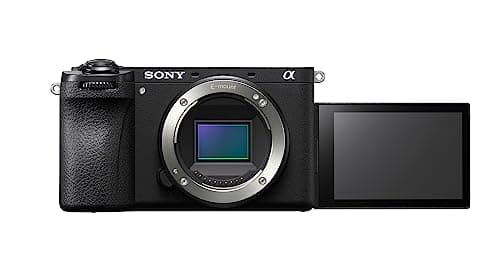
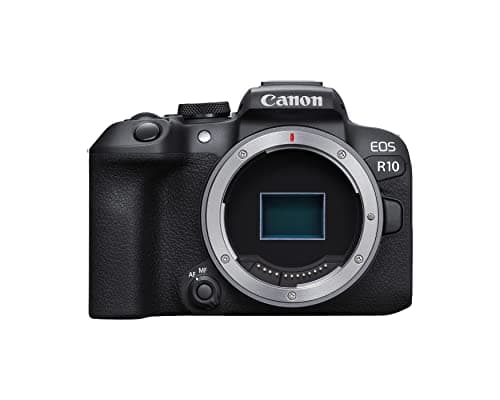
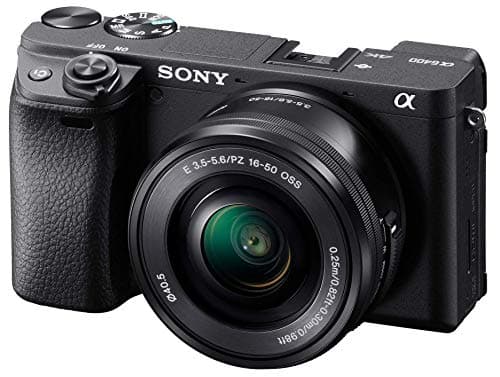
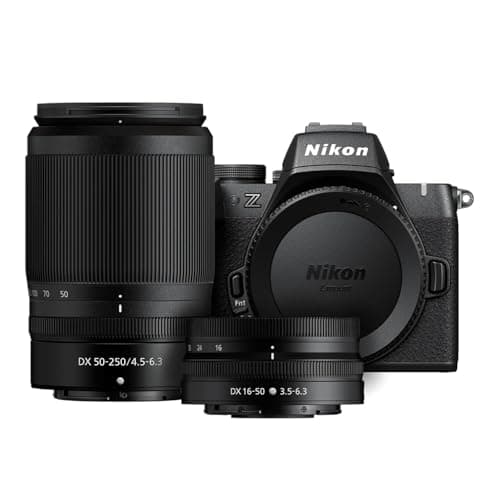
For most beginners, the best camera for wildlife photography is the Nikon Z50 II in its two-lens kit. It is the only pick here that comes with a telephoto zoom in the box, the NIKKOR Z DX 50-250mm VR, and the body recognizes birds and animals, shoots up to 30 frames per second and can keep up to a second of frames from before you fully press the shutter. If you can spend more, the Sony a6700 is the most capable wildlife body in this group. The Canon R10 has the fastest burst, and the Sony a6400 is the cheapest way in. All four are APS-C cameras, and that is deliberate: a smaller sensor gives you extra reach from every lens.
A note on how this page was put together. We have not taken these cameras into the field. Everything below comes from Nikon's, Canon's and Sony's published specifications and from the documented findings of reviewers at DPReview, Amateur Photographer and Digital Camera World, all named and linked in Sources. Where a reviewer criticized a camera, we say which one.
What a wildlife camera actually has to do
Wildlife asks three things of a camera that everyday photos do not. The subject is far away, so you need reach. It moves unpredictably, often behind branches or long grass, so the autofocus has to know what it is looking at. And the moment worth keeping, a wingbeat or a head turn, lasts a fraction of a second, so the camera has to fire quickly and keep firing. Everything else on a spec sheet comes second to those three.
Reach: why a crop sensor helps
An APS-C sensor is smaller than full frame, so it records a tighter slice of the image the lens projects. In practice a lens frames as though it were about 1.5 times longer on Nikon and Sony APS-C bodies, and about 1.6 times on Canon's. The 50-250mm zoom in the Z50 II kit therefore frames like a 375mm lens at its long end. That is reach you do not pay for, and it is why every pick here is a crop-sensor camera: for a beginner, APS-C buys more magnification per dollar than full frame does. Our crop factor explainer works through the math, and the best beginner telephoto lenses page ranks the first long zoom for each mount.
Autofocus that knows what an animal is
Every camera here has subject detection: software trained to recognize the shape of an animal or a bird, find its eye or head, and hold focus on it as it moves. It matters more in wildlife than anywhere else. Without it, a camera tends to lock onto whatever is nearest or most contrasty, which in a hedge or a reed bed is the twig in front of the bird. With it, you place the focus area roughly over the animal and the camera picks out the eye for you. It is not infallible. DPReview found the Canon R10's animal detection less dependable than its people detection, especially with birds in profile, and Amateur Photographer points out that the Sony a6700 makes you choose the subject type in advance. But it is the single feature that most separates these cameras from an older body or a phone. Our autofocus modes guide explains the settings you will actually use.
Burst speed, and the buffer behind it
A fast burst turns the decisive moment from luck into a choice between frames. The headline frame rate is only half the story, though. The buffer, the camera's short-term memory, decides how long it can keep shooting before it stalls to write files to the card. Canon's own figures give the R10 29 RAW frames at its 15fps mechanical rate on a UHS-II card, about two seconds of shooting, and DPReview found the RAW buffer full in under two seconds. Amateur Photographer lists 59 RAW frames for the a6700 at 11fps. Birds rarely warn you before they take off, which is why the Z50 II's pre-release capture, frames buffered before you finish pressing the button, is such a useful feature for a beginner.
Stabilization, the viewfinder and the weather
Long lenses magnify every tremor in your hands. Stabilization can live in the body (IBIS), in the lens, or both. Of these four, only the a6700 has it in the body, so on the other three you want a stabilized lens, and both lenses in the Z50 II kit carry Nikon's VR (vibration reduction). A viewfinder matters too: holding the camera to your eye braces a long lens and lets you see the subject in bright light, and all four picks have one. Weather sealing is the last check. DPReview lists the a6700's sealed magnesium-alloy body as a strength, Digital Camera World says the Z50 II has seals designed to survive light rain, and DPReview notes that Sony claims weather sealing for the a6400. DPReview lists no weather sealing on the R10. None of them is a camera for a downpour, but dew, drizzle and dust come with the hobby.
Why your phone struggles with wildlife
Phones are superb at what phones are built for, and wildlife is close to the opposite. A phone's longest camera is still a short lens in front of a small sensor. Zoom past it and the phone is enlarging a crop, which is where fur and feathers turn to smudges. There is no viewfinder to brace against and no longer lens to swap in, and at dawn and dusk, when many animals are most active, a small sensor runs out of light first. If the animals you photograph let you walk up close, a phone may be all you need. If they do not, this is the category where a dedicated camera earns its place. Our camera vs phone guide covers the wider question.
The best mirrorless cameras for wildlife, side by side
| Camera | In the box (listing we link) | Animal and bird detection | Fastest burst | In-body stabilization | Weather sealing |
|---|
| Nikon Z50 II | Body, 16-50mm VR and 50-250mm VR zooms | Yes: birds, dogs and cats among nine subject types | 11fps mechanical; 30fps JPEG, with pre-release capture | No (both kit lenses have VR) | Seals for light rain |
| Sony a6700 | Body only | Yes: separate animal, bird and insect modes | 11fps mechanical or electronic | Yes, 5-axis, rated 5 stops | Sealed body |
| Canon EOS R10 | Body only | Yes: dogs, cats and birds | 15fps mechanical; 23fps electronic | No | None listed |
| Sony a6400 | Body and 16-50mm standard zoom | Animal Eye AF, added by 2019 firmware | 11fps | No | Weather sealing claimed by Sony |
"In the box" describes the specific Amazon listing each buy button links to, checked when we published. Listings for the same camera vary between body-only and kit versions, so read the title before you buy. The other figures are the manufacturers' own, as reported by the reviewers in Sources.
The Z50 II takes first place because it is the only listing that arrives ready for wildlife, and because its autofocus, burst and pre-release capture cover all three jobs above well for the money. The a6700 is the stronger body but needs a lens bought separately, the R10 is the speed specialist with a short buffer, and the a6400 is the budget entry that shows its age. Here are the four, ranked.
How to choose a beginner wildlife camera
Budget for the kit, not just the body
The most common wildlife mistake is spending the whole budget on a body and having nothing left for the lens. Two of the four listings we link, the R10 and the a6700, are body only: there is no lens in the box at all. The a6400 listing includes Sony's 16-50mm standard zoom, which is lovely for everyday photos and far too short for a deer across a field. For all three, add a telephoto to the price before you compare. The Z50 II listing is the exception, since it includes both the 16-50mm and the 50-250mm, and that is the main reason it tops this page. When we checked for this page, the whole Z50 II two-lens kit cost less than the a6700 body on its own.
The telephoto path on each mount
The lens you can afford to put in front of the sensor decides your pictures as much as the sensor does, so look at where each system goes after the first zoom.
- Nikon Z (Z50 II):the kit's 50-250mm f/4.5-6.3 VR frames like roughly 75-375mm, which is a genuinely useful wildlife range for a first season. The honest catch is the next step. DPReview's Z50 II review says Nikon's DX range lacks affordable lens options for birding and sports, so going longer means a bigger jump in cost.
- Sony E (a6700 and a6400):the widest choice of any mount here. Amateur Photographer paired the a6700 with Sigma's 100-400mm F5-6.3 DG DN OS, which frames like about 150-600mm on APS-C, and reported an impressively high hit rate on birds. It also notes a good range of APS-C E-mount lenses from Sony, Sigma and Tamron.
- Canon RF (R10):the natural step up is Canon's RF 100-400mm F5.6-8 IS USM, which frames like about 160-640mm on the R10. Digital Camera World praises it as compact and light for a super-telephoto at 635g, with a 5.5-stop optical stabilizer, and lists its slow f/5.6-8 aperture and lack of weather seals as the drawbacks.
Slow apertures are the common thread. Affordable telephotos let in far less light than a fast prime, so they shine in daylight and struggle at dusk. Plan your outings for good light and the cheap zooms deliver; plan them for twilight and you will be fighting grain or blur.
Why the ranking falls this way
1. Nikon Z50 II.A complete wildlife kit in one purchase. Birds, dogs and cats are among the nine subject types it recognizes, it fires at 11fps with the mechanical shutter and 30fps in its JPEG-only high-speed mode, and Nikon's pre-release capture keeps up to a second of frames from before the full press. The catches are real: there is no IBIS, DPReview found its tracking less dependable than Nikon's pro models, and its CIPA battery rating of 230 shots through the viewfinder is low (the R10's is lower still), so carry spares. Read the full Z50 II review for the rest.
2. Sony a6700.The best wildlife body here on paper. It lists separate animal, bird and insect subject modes, DPReview called its autofocus best in class, it is the only pick with in-body stabilization, and its buffer runs far deeper than the R10's. Amateur Photographer adds a detail worth knowing: its full 11fps mode does not show a live view between frames, while the 8fps mode does and, in compressed RAW, holds 390 frames. It ranks second only because it is body-only and the most expensive start. Our Sony a6700 review covers the whole camera.
3. Canon EOS R10.The speed pick. At 15fps mechanical and 23fps electronic it out-fires everything here, and Canon's 1.6x crop adds a little extra reach. It is held back by a short RAW buffer, no in-body stabilization, no weather sealing and a body-only listing. Switching to Canon's compressed C-RAW format helps: Canon lists 157 frames at 15fps on a UHS-II card. See the Canon R10 review for the detail.
4. Sony a6400.The budget route, and the lowest-priced listing of the four when we checked. It shoots 11fps, DPReview's 2019 review called its autofocus industry-leading, and Sony added Animal Eye AF by firmware later that year. Its age shows: DPReview's report on that update noted that animal detection runs slower than the human version, the review flagged the UHS-I card slot's slow write times, and there is no in-body stabilization. It ships with a standard zoom, so budget for a telephoto.
Torn between the top two Sony and Canon bodies? Our Canon R10 vs Sony a6700 comparison goes through every difference, including video.
Your first outing: three settings that matter
First, set subject detection to the animal or bird mode rather than people, and switch the focus mode to continuous (AF-C on Nikon and Sony, Servo on Canon) so the camera keeps adjusting as the animal moves. Second, keep the shutter speed high. A rough rule is at least one over the equivalent focal length, so 1/400s at the Z50 II kit's 375mm equivalent, and faster for anything in flight. Third, use the mechanical shutter for fast action unless you need the extra frames: electronic shutters read the sensor line by line, which can skew wings and fast-moving legs. Then be patient. Most good wildlife frames come from waiting quietly in the right place far more than from the camera.