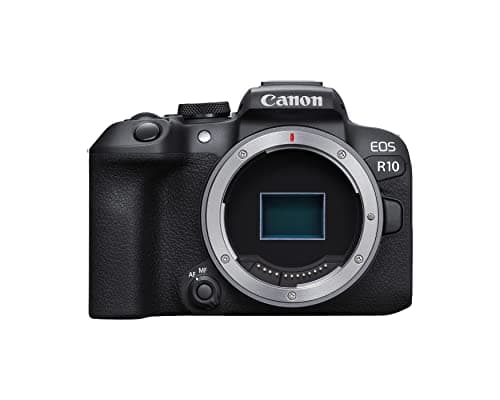
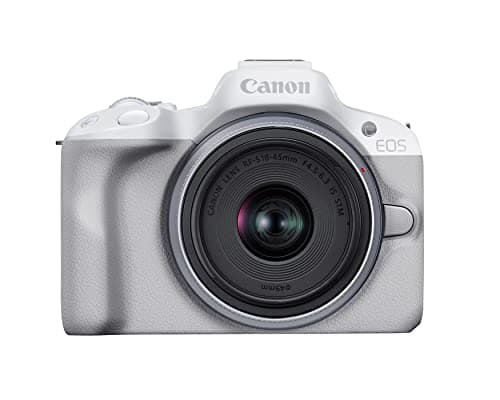
Buy the Canon R50 if you want the smaller, cheaper, more vlog-friendly body. Buy the Canon R10 if you shoot action, kids or pets and want faster burst speed and better handling. These two share a sensor, the same excellent autofocus and the same RF mount — so the decision comes down to a handful of concrete differences, not image quality.
Because the R50 and R10 have so much in common, it is easy to overthink this one. Both take near-identical photos in good light, both record clean uncropped 4K30, and both use Canon's Dual Pixel CMOS AF II. What separates them is speed, size, controls and price. Here is where they actually differ.
Both descend from the same generation of Canon technology, so a lot of what you read about one applies to the other. That is good news: it means you are not choosing between a good camera and a bad one, only between two good cameras tuned for different jobs. Keep that in mind as you read — the gaps below are real, but none of them touch the core image quality you will get in everyday light.
The differences that actually matter
1. Burst speed: the R10 is the fast one
This is the biggest gap. The R10 shoots noticeably faster — up to 15 frames per second with its mechanical shutter and up to 23 with the electronic shutter — where the R50 tops out lower. When you are photographing a toddler mid-run, a dog catching a ball, or any kind of sport, that extra speed is the difference between catching the peak moment and just missing it. Paired with Canon's sticky subject tracking, the R10 is a genuine budget action camera. If fast-moving subjects are a big part of what you shoot, this one factor can decide the whole thing.
It is worth being concrete about what that speed feels like. At the R10's fastest settings you can hold the shutter for a split second and come away with a dozen frames of the same moment, then pick the one where the eyes are open and the ball is in shot. On the R50 you get fewer frames per burst, so you lean more on timing. For predictable scenes that is no problem; for chaos — a birthday party, a dog park, a soccer match — the extra frames are what turn near misses into keepers.
2. Handling: the R10 feels like the bigger camera
The R10 has a deeper grip and more physical controls, including an extra dial and a small joystick for moving the focus point. That makes it faster to adjust settings on the fly and more comfortable through a long day, especially with a larger lens. The R50 trims those controls to stay compact and simple, which suits a true beginner but gives you less to work with as you grow. If you like clubs for thumbs and dials to spin, the R10 is the more satisfying tool.
3. Size and weight: the R50 is smaller and lighter
The flip side of the R10's handling is bulk. The R50 is smaller and lighter, which is exactly what you want if the camera is going to be held out at arm's length for vlogging, slipped into a small bag, or carried all day while traveling. Both have fully articulating screens for filming yourself, but the R50's lighter body is easier to hold steady in one hand. For a creator who films themselves or a traveler who counts grams, smaller wins.
4. Video: a near tie, with a small edge to the R10
For video the two are close. Both shoot uncropped, oversampled 4K30 that looks clean straight out of camera. The R10 adds a cropped 4K60 mode for slow motion, which the vlog-friendly R50 lacks. Neither has in-body stabilization, so handheld footage leans on a stabilized lens or a gimbal on both. If slow-motion 4K matters to you, that is a point for the R10; otherwise call this one even.
5. Price and lenses: R50 costs less, both share the mount
The R50 is the cheaper of the two, and for a beginner on a budget that gap can pay for a lens. Both cameras use the same Canon RF mount and share the same honest limitation: the native RF-S lens range is the youngest of the big four, so the cheapest options are a short list or mean adapting older EF glass. Whichever you pick, the system cost and lens path are identical — so lenses are not a reason to choose one over the other.
6. Screen and viewfinder: effectively identical
Both bodies pair a small electronic viewfinder with a fully articulating touchscreen that swings out to face forward, so for composing stills or filming yourself the experience is much the same. Neither viewfinder is large, but both do the essential job of letting you compose in bright sun where a rear screen washes out. If a flip-out screen for vlogging is a must-have, you get it either way — this is not a point of difference, and it is worth saying so plainly rather than inventing a gap that is not there.
7. Stills quality: a genuine dead heat
Because they share a 24MP APS-C sensor and the same processing, the R50 and R10 take essentially indistinguishable photos in good light. Detail, color and low-light behavior are the same, and both keep grain tidy at the sensitivities a beginner actually uses. If your priority is simply lovely photos of people and places, do not agonize over image quality between these two — it will not be the thing that separates them. Spend your attention on speed, size and price instead.
8. Who each camera was designed for
Step back from the spec sheet and the split is clear. Canon built the R50 to be the friendliest possible on-ramp — small, light, affordable and happy pointed at your own face. It built the R10 as the enthusiast's crop-sensor body: faster, grippier and ready for a telephoto lens at a sports field or a wildlife hide. Neither is strictly a beginner or a pro camera; they are a travel-and-vlog camera and an action camera that happen to share a lot of parts. Picture the shooting you do most, and the right one usually names itself.
If you are genuinely on the fence, there is a simple tie-breaker: handle both if you can. The R10's deeper grip and extra dial feel great to some hands and like more camera than needed to others, and that preference alone often settles it. Failing that, default to the R50 — it is the cheaper, lighter, more beginner-friendly choice, and it leaves room in the budget for the lens that will improve your photos more than any body feature on this page.
The bottom line
These are two takes on the same camera. The R50 is the smaller, cheaper, simpler body built for a beginner who leans toward video and everyday shooting; the R10 is the faster, better- handling body built for someone who photographs movement. Neither takes better photos in normal light — they are separated by speed, controls and size, not image quality.
Buy the R50 if you are a first-timer, you vlog or film yourself, you travel light, or the lower price frees up money for a lens. Buy the R10 if you shoot kids, pets or sport, you want faster burst and slow-motion 4K, or you simply prefer a camera with more dials and a deeper grip to grow into. Most beginners are well served by the R50; the R10 is the pick when speed and handling are worth the extra outlay.
It is worth being realistic about the money, too. The R10's advantages — burst speed, extra controls, a 4K60 slow-motion mode — only pay off if you use them. If you photograph fast action, they are worth every cent. If you mostly shoot portraits, landscapes and talking-head video, that budget buys you nothing you will notice, and the same money spent on a fast prime for the R50 would improve your results far more. Match the spend to the shooting, not to the bigger number on the spec sheet.
Want the wider view first? Read our full Canon R50 review, see where both land in the best under $1,000 ranking, and budget for the first upgrade with our 50mm lens guide.
One last practical note: whichever Canon you choose, the RF-S kit lens is a fine place to start, but the single best upgrade for either body is a fast prime for low light and blurred backgrounds. Both share the RF mount, so the same lenses fit each — meaning you can buy the body that suits you now and keep every lens if you ever trade up within the Canon system later.