Skip to content
Focal & Frame

Kit · Accessories

Camera Lens Filters Explained

Four filter types do almost everything, and only two of them do something your editor cannot. Here is what each one changes, in plain terms, and the one to buy first.

By Stephen V.Updated How we research
#ad

We earn a commission when you buy through our Amazon links, at no extra cost to you. It never decides our rankings — we say so when the cheaper pick is the better buy. How this works.

If you buy one filter, buy a circular polarizer. It is the only common filter whose effect genuinely cannot be reproduced in editing — it removes reflections off glass, water and wet leaves, and deepens a pale sky, by physically filtering the light before it reaches the sensor. The second one worth owning is a neutral density filter, and only if you shoot video or want long exposures. Everything else is optional, and one popular category is close to pointless on a modern camera.

A filter is a disc of glass that screws onto the front of your lens and changes the light on its way in. That is the whole concept. What matters is which changes are optical — and therefore impossible to add later — and which are just colour adjustments you could have made in two seconds on a slider. Film photographers needed a drawer full of filters because the colour had to be right in the camera. Digital shooters need two.

The four types, and what each actually does

CPL — circular polarizer

A polarizer blocks light waves oscillating in one orientation and passes the rest. You screw it on and physically rotate the front ring, watching the effect change as you turn it. Three things happen. Reflections off non-metallic surfaces — a shop window, a car windscreen, the surface of a lake, the sheen on wet foliage or glossy packaging — reduce or disappear, letting you see through into the water or the window. A hazy blue sky goes deeper and the clouds separate from it. And saturation in foliage and paint increases, because you have removed the white glare sitting on top of the colour.

None of that is recoverable in software, because the reflection and the thing behind it are the same pixels once the shot is taken. The costs are real though: a polarizer eats roughly one to two stops of light, the effect varies with your angle to the sun, and on a very wide lens the sky can darken unevenly across the frame. Our CPL filter ranking goes deeper on which glass to buy.

ND — neutral density

A neutral density filter is sunglasses for your lens: it cuts the amount of light evenly across all colours without changing them. It exists so you can use a slower shutter speed or a wider aperture than the light would otherwise allow.

For video this is not a luxury, it is the fix for a specific problem. Natural-looking motion in video comes from a shutter speed around double your frame rate — 1/50s at 25fps, 1/60s at 30fps. On a bright day, that shutter speed at your lens's nicest aperture massively overexposes, and your only options are stopping the aperture down (losing the background blur you wanted) or raising the shutter speed (which makes motion look stuttery and video-ish). An ND filter solves it by removing light rather than changing a setting. For stills, an ND is what turns moving water into silk and a crowd into a blur.

Variable ND

A variable ND is two polarizing elements that rotate against each other, giving you a range of strengths in one filter instead of a bag of fixed ones. The convenience is enormous for video, where the light changes between shots. The catch is that at the far end of its range you can get an X-shaped dark cross across the frame, and because the mechanism is polarizing, it brings some of a polarizer's side effects with it. Good ones restrict their range specifically to avoid the cross. Our ND filter ranking covers the trade-off in detail.

UV / protection

The honest answer: a UV filter does essentially nothing optically on a digital camera. Digital sensors have UV-blocking built into the filter stack, and the haze-cutting effect that mattered on film is not a thing you will see. People still buy them as a sacrificial sheet of glass in front of an expensive front element, which is a defensible reason — a $30 filter is cheaper to replace than a lens. But understand it as insurance, not as an image improvement, and buy decent glass if you use one, because a cheap filter in front of a good lens adds flare and softness for no benefit at all.

How to pick the right size

Filters are sold by thread diameter in millimetres, and it is a property of the lens, not the camera. Look at the front of your lens barrel or the inside of the lens cap for a number after the ø symbol — 49, 52, 55, 58, 62, 67, 72 and 77 are the common ones. A 67mm filter fits any lens with a 67mm thread and nothing else. Two consequences: buy the size for the lens you actually use it on, and if you own several lenses, buy for the largest and use a cheap step-up ring on the smaller ones rather than buying the same filter four times.

The four types at a glance

TypeWhat it changesLight costCan software do it instead?
CPL (circular polarizer)Removes reflections off glass, water and wet foliage; deepens a hazy sky; cuts glareAbout 1-2 stopsNo — the reflection and what is behind it are the same pixels
ND (fixed neutral density)Cuts light evenly across all colors so you can use a slower shutter or wider apertureExactly its ratingNo — motion blur and depth of field are baked into the exposure
Variable NDThe same, across a range, by rotating two polarizing elementsAdjustable within its rangeNo, with the caveat of an X-cross at the extreme of the range
UV / protectionEssentially nothing optically on a digital camera; acts as sacrificial glassNegligibleThere is nothing to do — buy it for protection or not at all

The four picks, and what each listing is

PickTypePublished specsBuy it when
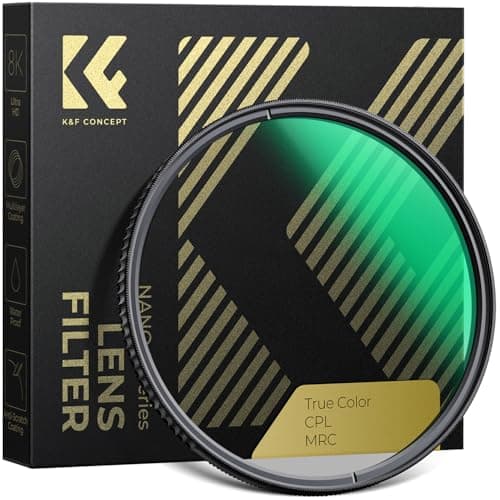
K&F Concept True Color CPLCPL28-layer multi-coating, optical glass in a slim frame, sold in every common thread sizeFirst, before any other filter
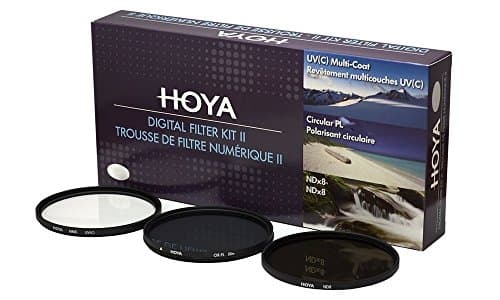
Hoya Digital Slim Filter Set IICPL + ND16 + UVThree slim multi-coated filters with a storage case, common thread sizesYou would rather buy once and find out what you reach for
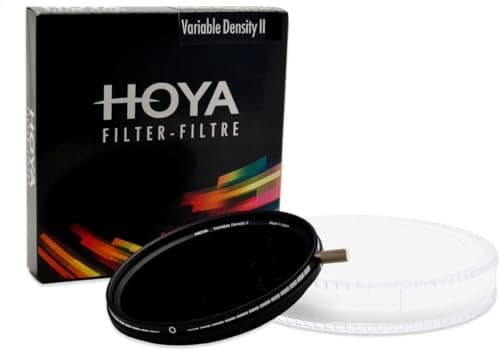
Hoya Variable ND IIVariable NDND3-ND400, roughly 1.5-9 stops, high-grade optical glass, premium coatingsYou shoot video and the light changes between shots
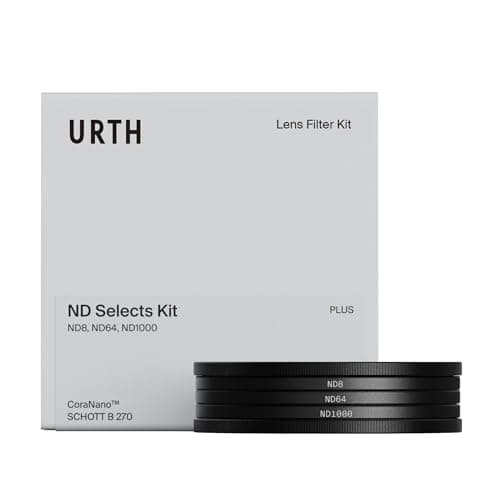
Urth ND Filter KitFixed ND setND8 / ND64 / ND1000, three filters plus a case, no variable color castStills and long exposures, where optical purity wins

Specs are as published by each manufacturer and linked in Sources; prices beside each buy button are live and date-stamped. We have not tested these filters in a lab.

The short answer

Quick picks

#ProductBest forScorePrice
01
K&F Concept K&F Concept True Color CPL
K&F Concept True Color CPL

The polarizer to buy first: multi-coated glass tuned to keep colors honest, at a price that does not make you flinch about buying two thread sizes.

The best all-round polarizer
8.0
$47.49Amazon
02
Hoya Hoya Digital Slim Filter Set II (UV, CPL, ND16)
Hoya Digital Slim Filter Set II (UV, CPL, ND16)

Three filters for close to the price of two: a polarizer, a neutral density and a protective UV, in one slim-frame set.

The starter filter set
8.0
$81.90Amazon
03
Hoya Hoya Variable ND II (ND3-ND400)
Hoya Variable ND II (ND3-ND400)

The variable ND to buy once and keep. A wide ND3-ND400 range on high-grade optical glass with premium coatings, so you hold a cinematic shutter from shade to bright sun with a single filter.

The best all-round variable ND
8.4
$136.95Amazon
04
Urth Urth ND Filter Kit (ND8/ND64/ND1000)
Urth ND Filter Kit (ND8/ND64/ND1000)

The no-color-cast option. Three fixed filters — ND8, ND64 and ND1000 — in one case, giving perfectly even darkening with none of the cross banding a variable ND can show at its extremes.

The cleanest, most neutral result
7.6
$159.00Amazon

#ad · Live prices from the Amazon Product API, as of October 11, 2026. Where we have no verified live price, we show none — we would rather leave a gap than print a number that has rotted.

In detail

The picks, in full

01
K&F Concept K&F Concept True Color CPL

The best all-round polarizer

K&F Concept True Color CPL

Circular polarizer (CPL)28-layer multi-coatingOptical glass, slim frameSold in every common thread size
8.0/10

The polarizer to buy first: multi-coated glass tuned to keep colors honest, at a price that does not make you flinch about buying two thread sizes.

Color neutrality
8
Build & glass
7
Coating
8
Ease of use
7
Value
10

Pros

  • The True Color coating is designed to avoid the heavy warm or magenta cast cheap polarizers add, so skies darken without skin going strange
  • A slim frame keeps it clear of the frame edges on wide lenses, where a thick filter ring causes dark corners
  • Cheap enough to own in two thread sizes rather than fiddling with step-up rings all day

Cons

  • The rotating ring is smooth rather than precise — it takes a moment to land exactly where you want it
  • As with any polarizer, it costs you a stop or two of light, which matters indoors

Don't buy this if…

…you need the absolute cleanest, most neutral glass for paid work. The Hoya NXT Plus holds color and flare down more consistently, and the gap is visible when you shoot straight into bright side light.

$47.49View on Amazon

$49.995% off

Price as of October 11, 2026. Prices change — Amazon's is the one that counts.

#ad · we may earn a commission from this link to K&F Concept True Color CPL

02
Hoya Hoya Digital Slim Filter Set II (UV, CPL, ND16)

The starter filter set

Hoya Digital Slim Filter Set II (UV, CPL, ND16)

CPL + ND16 + UVSlim frames, multi-coatedIncludes storage caseSold in common thread sizes
8.0/10

Three filters for close to the price of two: a polarizer, a neutral density and a protective UV, in one slim-frame set.

Color neutrality
8
Build & glass
8
Coating
8
Ease of use
8
Value
8

Pros

  • The three filters most people end up owning, bought once at a lower total cost than buying them separately
  • Slim frames throughout, so stacking or using them on wide lenses is less likely to darken the corners
  • The ND16 is a genuinely useful 4-stop filter for video, letting you hold a cinematic shutter speed outdoors

Cons

  • The bundled polarizer is not quite the equal of Hoya's standalone NXT Plus in coating quality
  • Fixed ND16 only — if the light changes a lot you will still want a variable ND

Don't buy this if…

…you only want a polarizer. Buying the set to get one filter you need and two you may not is false economy — the standalone NXT Plus is better glass for similar money.

$81.90View on Amazon

Price as of October 11, 2026. Prices change — Amazon's is the one that counts.

#ad · we may earn a commission from this link to Hoya Digital Slim Filter Set II (UV, CPL, ND16)

03
Hoya Hoya Variable ND II (ND3-ND400)

The best all-round variable ND

Hoya Variable ND II (ND3-ND400)

Variable ND3-ND400 (1.5-9 stops)High-grade optical glassWide control rangePremium coatings
8.4/10

The variable ND to buy once and keep. A wide ND3-ND400 range on high-grade optical glass with premium coatings, so you hold a cinematic shutter from shade to bright sun with a single filter.

Color neutrality
9
Build & coating
9
Range
9
Ease of use
9
Value
6

Pros

  • A wide 1.5-9 stop range covers almost any daylight, so one filter replaces a drawer of fixed ones
  • High-grade glass and premium coatings keep colors clean and hold flare down better than budget variable NDs
  • One threaded filter you dial by hand — the fastest way to stay at a cinematic shutter as the light shifts

Cons

  • Like any variable ND, pushing it to the very top of its range can introduce uneven, cross-shaped darkening across the frame
  • It is the priciest filter here, and you still have to buy the size that matches your lens thread

Don't buy this if…

…you want zero risk of any color shift or cross banding. A fixed ND set like the Urth kit gives the cleanest, most neutral result because it never cross-polarizes light the way a variable filter can.

$136.95View on Amazon

Price as of October 11, 2026. Prices change — Amazon's is the one that counts.

#ad · we may earn a commission from this link to Hoya Variable ND II (ND3-ND400)

04
Urth Urth ND Filter Kit (ND8/ND64/ND1000)

The cleanest, most neutral result

Urth ND Filter Kit (ND8/ND64/ND1000)

Fixed ND8/ND64/ND1000 setThree filters + caseNo variable color-castRecycled-material build
7.6/10

The no-color-cast option. Three fixed filters — ND8, ND64 and ND1000 — in one case, giving perfectly even darkening with none of the cross banding a variable ND can show at its extremes.

Color neutrality
9
Build & coating
8
Range
7
Ease of use
6
Value
8

Pros

  • Fixed filters never cross-polarize light, so darkening stays perfectly even across the frame — the most neutral look here
  • Three strengths (3, 6 and 10 stops) cover everything from light daylight to long-exposure water and cloud blur
  • Ships in a protective case, and Urth builds its filters from recycled materials with a tree-planting pledge

Cons

  • You physically swap filters to change strength, which is slower than dialing a variable ND
  • Three discrete stops mean no in-between values, so you nudge shutter or aperture to fine-tune exposure

Don't buy this if…

…you want to change ND strength on the fly without swapping filters. A variable ND like the Hoya or K&F dials smoothly through its range in seconds, which suits run-and-gun video better.

$159.00View on Amazon

Price as of October 11, 2026. Prices change — Amazon's is the one that counts.

#ad · we may earn a commission from this link to Urth ND Filter Kit (ND8/ND64/ND1000)

What to buy, in order

First: a circular polarizerin your most-used lens's thread size. It is the filter that does something nothing else can, it works for both stills and video, and good ones are not expensive. The K&F True Color CPL ranked first above is the one we point people at because its coating is tuned to avoid the colour cast cheap polarizers add.

Second, if you shoot video: a variable ND. The moment you want a shallow depth of field outdoors at a proper shutter speed, there is no alternative. If you only shoot stills and want the cleanest possible result, a set of fixed NDs is optically better than a variable one and cheaper per stop — that is the case for the Urth fixed set ranked fourth.

Third, optionally: a starter set. The Hoya Digital Slim Set II ranked second is the cheapest sensible way to own all three categories at once, since it bundles a CPL, an ND16 and a UV. It is the right purchase if you would rather buy once and find out which filters you actually reach for than research three separately.

Four mistakes worth avoiding

Stacking filters. Every piece of glass adds reflections. Two or three stacked on a wide lens also physically intrude into the frame and vignette the corners. Use one at a time.

Buying cheap glass for an expensive lens. The filter becomes the weakest optical element in the path. Flare, ghosting and softness all come from poor coatings, and you paid for a lens specifically to avoid those.

Leaving a polarizer on permanently. It costs you one to two stops of light at all times, which you do not want indoors or at dusk, and its effect is actively unhelpful on some subjects — a polarized rainbow disappears, and so does the attractive sheen on a freshly-painted car.

Forgetting the thread size.Measure before you order. The number is printed on the lens barrel and on most lens caps, after a ø symbol.

Do filters still matter now that software is so good?

Two of them do, for one reason: they change the light before it is recorded. A polarizer removes a reflection, which means the detail behind it is in the file — software can only edit pixels that already exist, and a reflection and the thing behind it occupy the same pixels. A neutral density filter lets you use a shutter speed and an aperture that would otherwise be impossible, and motion blur and depth of field are both baked into the exposure.

Everything else has largely moved into the editor. Warming and cooling filters, colour correction, graduated filters that darken a sky, soft-focus filters — all of those are now sliders, and doing them in software is non-destructive and free. That is why this page ranks four filters rather than fifteen. If your goal is better-looking video rather than better-looking gear, the lighting you put in front of the camera will change far more than anything you screw onto the lens, and your shutter and aperture settings matter more than both.

A note on cleaning and storage

A filter is a lens surface and deserves the same care: blow dust off before wiping it, never use household glass cleaner, and keep it in its case rather than loose in a bag where it collects grit. The cleaning kit guide covers which tool suits which surface. A scratched filter is worth replacing immediately — unlike a scratched lens, it costs very little to fix.
How we picked

We do not run a testing lab

We compiled the manufacturers' published specifications and manuals, did the cost math, and scored each product against a published rubric. The scores are judgments from that documented research — they are notmeasurements we took, because we do not have a lab and we are not going to pretend we do. Where a number came from someone else's testing, we name and link them in Sources.

Questions

Frequently asked

What camera lens filters do I actually need?
A circular polarizer, and a neutral density filter if you shoot video or long exposures. Those two change the light optically, so their effects cannot be added later. A UV filter does essentially nothing optically on a digital camera - buy one only as a sacrificial sheet of glass protecting an expensive front element, and buy good glass if you do.
What does a CPL filter do?
It blocks light oscillating in one orientation, which removes reflections from non-metallic surfaces such as glass, water and wet foliage, deepens a hazy blue sky, and increases saturation by stripping the white glare sitting on top of colours. You rotate the front ring to dial the effect. It costs roughly one to two stops of light and its strength depends on your angle to the sun.
Why do I need an ND filter for video?
Natural-looking video motion needs a shutter speed around double your frame rate - 1/50s at 25fps, 1/60s at 30fps. Outdoors in daylight that shutter speed at a wide aperture is massively overexposed, and your only alternatives are closing the aperture (losing background blur) or raising the shutter (making motion look stuttery). An ND removes light so you can keep both settings where you want them.
Is a variable ND better than fixed ND filters?
More convenient, slightly worse optically. A variable ND gives you a range of strengths in one filter, which is excellent for video where light changes between shots, but its two polarizing elements can produce an X-shaped dark cross at the extreme end of the range and bring some polarizer side effects with them. A set of fixed NDs is cleaner and cheaper per stop if you have time to swap them.
Do I need a UV filter to protect my lens?
Only if you want insurance rather than an image improvement. It does nothing optically on a digital camera, because the sensor stack already blocks UV. As a sacrificial piece of glass in front of an expensive front element it is a reasonable purchase - but a cheap one in front of a good lens adds flare and softness, so either buy decent glass or use the lens hood instead.
What size lens filter do I need?
Check the front of your lens barrel or the inside of the lens cap for a number after the diameter symbol - commonly 49, 52, 55, 58, 62, 67, 72 or 77mm. It is a property of the lens, not the camera, so two lenses on the same body often need different sizes. If you own several, buy for the largest thread and use cheap step-up rings on the rest.
Can I stack filters on top of each other?
You can, but avoid it. Every extra air-to-glass surface adds reflections and flare, and stacked filters on a wide lens physically intrude into the frame and darken the corners. If you need both a polarizer and an ND, use a hybrid filter that combines them rather than screwing two together.
Do filters reduce image quality?
A good filter's effect is negligible; a bad one is clearly visible as flare, ghosting and reduced contrast, especially shooting into a light source. The filter becomes part of your optical path, so it sets a ceiling on the lens behind it. Buy fewer, better filters rather than a drawer of cheap ones.

Keep reading

Receipts

Sources

We do not run a testing lab, and we do not pretend to. Specs come from manufacturer sheets and manuals; where a figure came from someone else's measurement, we name and link them. Where we could not verify something, we say so on the page rather than quietly leaving it out. Read our full method.