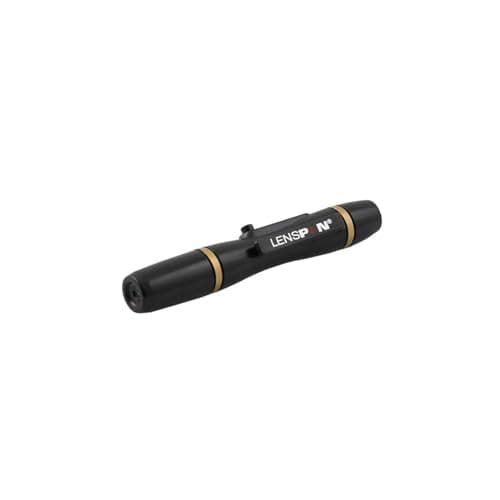
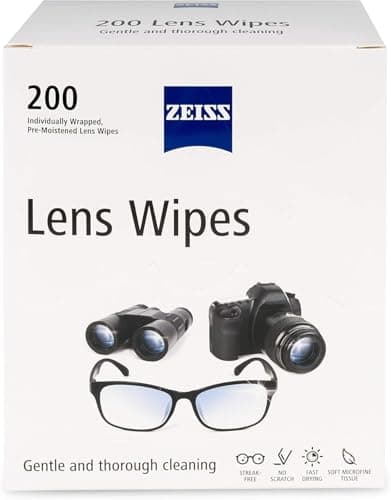
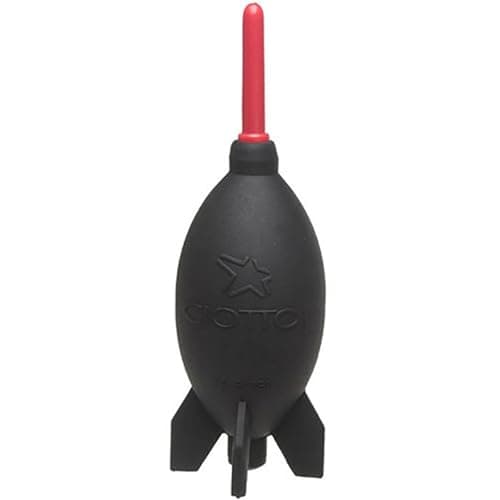
Buy a rocket blower first and possibly only. Air removes dust with nothing touching your glass, and dust is the overwhelming majority of what you will ever need to clean. Add a LensPen for fingerprints and a packet of pre-moistened wipes for smears, and you have covered everything a beginner will encounter.
The reason this page exists is that cleaning is where beginners do real, permanent damage to expensive equipment. The two mistakes are both understandable. The first is rubbing a dusty lens with a cloth, which drags grit across a coating and leaves fine scratches you cannot undo. The second is reaching straight for the sensor because a spot appeared in a photograph. Almost everything can be solved with air, and air is the one method that cannot scratch anything.
So the order matters more than the products. Blow first. If a mark survives air, it is oil or moisture rather than dust, and only then do you touch it — with a LensPen or a pre-moistened wipe designed for coated optics, never a shirt, never a household glass cleaner, and never a paper towel. Sensor cleaning is a separate, later, more careful conversation, and most people never need to do it themselves.
What actually works, and in what order
1. Air, every time, first
A hand-squeezed rocket blower moves enough air to lift loose dust off a front element, out of a lens cap and off a sensor without anything making contact. Buy the version with a one-way intake valve so it draws clean air from the back rather than sucking the dust it just removed straight back in. Avoid canned compressed air entirely: it can spray propellant onto the glass and its pressure is high enough to damage sensitive parts.
2. A LensPen or a wipe, for marks that survive air
Fingerprints and smears need contact. A LensPen's carbon tip lifts finger oil without leaving the smear that a dry cloth almost always produces, and its brush end handles dust when you have no blower. Pre-moistened wipes are the alternative and have one significant advantage: the correct amount of liquid is already on them, so nothing runs down into the lens barrel. Work from the center outward in a spiral, gently.
3. Never household cleaner, never your shirt
Modern lenses carry multiple coating layers a few molecules thick, and those coatings are what control flare and color. Ammonia-based glass cleaners can attack them. A shirt tail or a paper towel is abrasive at that scale and holds grit. If you take one thing from this page, take that: the surface you are cleaning is softer than it looks.
The sensor: read this before you touch it
Most sensor dust is not on the sensor
If you see the same dark spot in the same place in every photograph, especially at narrow apertures like f/16, it is probably dust on the sensor's protective filter stack. But before assuming that, check the front and rear elements of your lens and the inside of the lens cap. A spot that moves when you change lenses is on the lens, not the camera.
Try the free options first
Every mirrorless camera has a sensor-shake cleaning function in the menu that vibrates dust loose. Run it, then take another test shot. If the spot survives, point the camera face down and use a blower from a short distance — never insert the blower tip inside the body, and never use canned air. That combination clears the large majority of sensor dust for free and with no contact.
Wet cleaning, and the honest risk
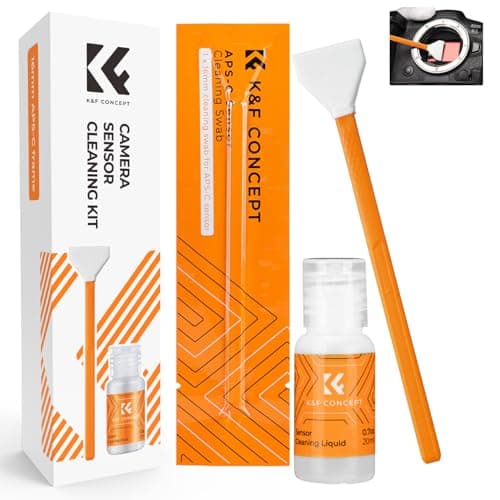
If a spot survives shaking and air, it is stuck — usually a speck of moisture residue or oil from the shutter mechanism — and wet swabbing is the remaining option. It works, and it is nerve-wracking, and doing it wrong can leave streaks or scratches. Two rules if you proceed: use a swab of the correct width for your sensor size (APS-C swabs for an APS-C camera; full-frame swabs are too wide and clean unevenly), and use each swab for one pass in each direction, then throw it away. If that makes you uncomfortable, a camera shop will do it for a modest fee and it is money well spent.
Prevention beats cleaning
Change lenses with the camera body facing down so gravity works against dust, do it quickly and out of the wind, and keep a rear cap on every lens that is off the camera. Keep the camera in a closed bag rather than loose in a rucksack with your keys. And leave a filter or a lens hood on the front if you are somewhere dusty — a scratched filter is a cheap problem.
What you can skip
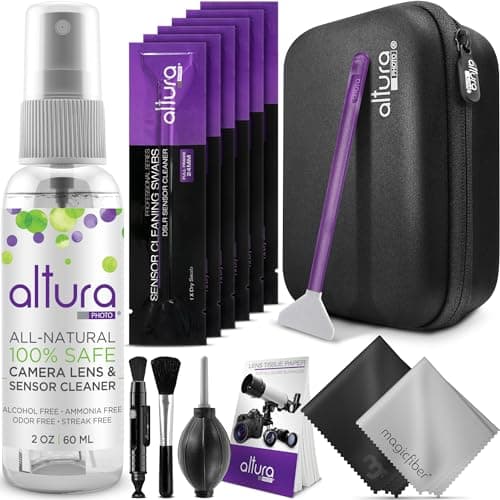
Most bundled cleaning kits pad the box: multiple identical microfibre cloths, a tiny screwdriver set, a lens cap holder, a cheap brush that sheds. None of that is harmful, none of it is necessary, and it is why we rank the individual tools above the boxes. If a single purchase is genuinely easier, the all-in-one kits here are decent — just know you are buying convenience, not better components.
The sensor is a separate job with a separate method
Lens tools and sensor tools are not interchangeable, and the order you do things in matters more than which kit you buy: the camera's own sensor-shake routine and a blower remove most dust without anything touching the sensor, and the risk lives entirely in the step where something does. Our guide to cleaning a camera sensor walks through the sequence, including why swab width is the spec that decides whether the job goes well.
The technique matters more than the kit
Owning the right tool is the easy half. The order of operations is what protects a coating — air before brush, brush before anything damp, and never a dry wipe — and we walk through it step by step in how to clean a camera lens.