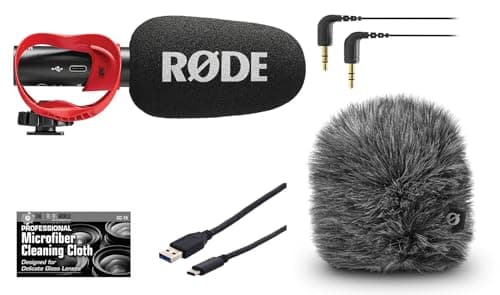
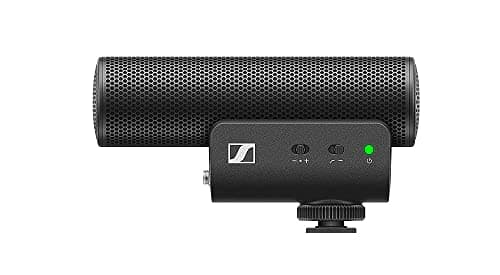
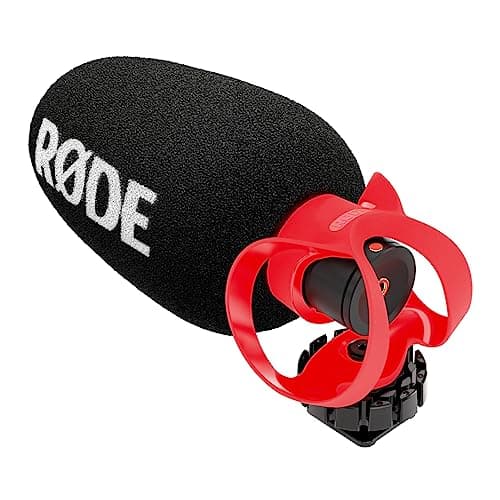
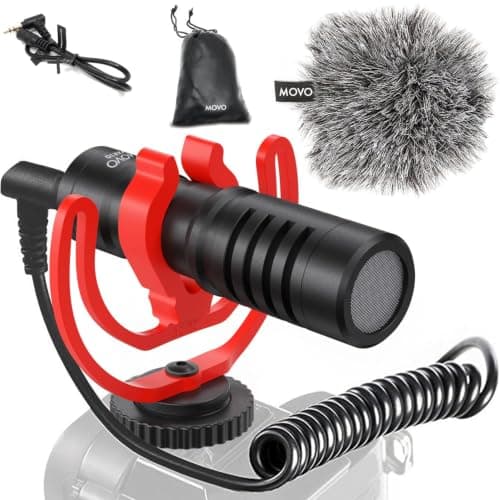
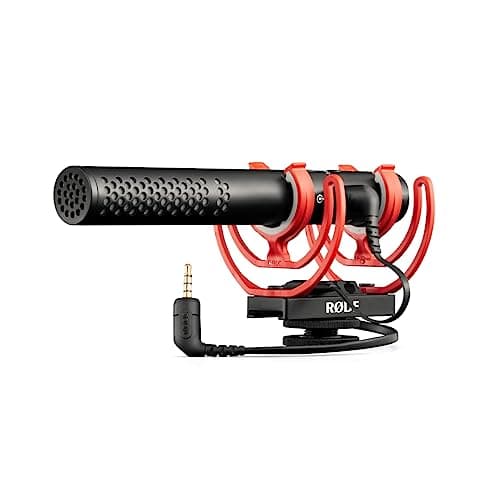
For most people the Rode VideoMic NTG is the best on-camera shotgun: broadcast-grade sound, a safety channel and a USB mode that lets one mic serve your camera and your desk. If you want almost the same result for less, the Rode VideoMic GO II is the value pick — a featherweight shotgun that needs no battery at all. The rest of this list is about matching a shotgun to your camera and your budget.
A shotgun mic is the classic answer to the first problem every new creator hits: the camera's built-in microphone sounds thin, hollow and full of handling noise. A shotgun sits on the hot shoe, points forward with the lens, and listens to a narrow slice of the world in front of you while rejecting much of the room to the sides and behind. Mounted a few feet from your face, it captures a clear, focused voice with none of the pairing, charging or wireless dropouts of a lav system. It is the simplest real upgrade you can make to your sound — plug in and roll. This guide ranks five shotguns and, just as importantly, explains when a shotgun is the right tool and when a wireless lav will serve you better.
On-camera shotguns also happen to be the most affordable way into serious audio, which is why we treat them as the default first mic for a new creator. The five here span the whole range: the Rode VideoMic NTG is the do-everything flagship, the VideoMic GO II strips it back to the essentials at a friendlier price, the Sennheiser MKE 400 is the fuss-free run-and-gun option with its own headphone jack, and the tiny VideoMicro II and Movo VXR10 are pocketable, plug-in mics that still trounce anything built into a camera. Every one of them is a bigger, cheaper upgrade to your videos than a new lens or a new body.
How to choose a shotgun microphone
What a shotgun actually is — the pickup pattern
A microphone's pickup patternis the shape of the area it listens to, and a shotgun's is a narrow, forward-facing beam. Most on-camera shotguns are described as supercardioid or cardioid: both point forward, but a supercardioid (the VideoMic NTG, GO II and Sennheiser MKE 400) is tighter and rejects the sides and rear more aggressively, while a cardioid (the VideoMicro II and Movo VXR10) is a little wider and more forgiving of a subject that drifts off-axis. The tighter the pattern, the more the mic isolates whatever the lens is pointed at — which is exactly what you want when you are talking to camera, but it also means aiming matters. The name "shotgun" comes from the long, slotted tube (an interference tube) that narrows the pattern; the longer the tube, the more reach and directionality, which is one reason a full-size NTG out-reaches a tiny VideoMicro II.
When a shotgun beats a wireless lav
The honest truth is that a shotgun and a wireless lavalier solve different problems, and plenty of creators own both. A shotgun wins when:
- Your subject stays close to the camera.Talking to camera at arm's length, sitting at a desk, or filming a scene right in front of you — a shotgun captures it cleanly with zero setup.
- You want to grab and go. There is no transmitter to clip on, no pairing, no batteries to charge on the no-battery models, and nothing to fall out of sync. Plug the cable into the camera and you are recording.
- You cannot put a mic on the subject. B-roll, wildlife, a crowd, a musician mid-performance — anywhere clipping a lav on is impossible, a shotgun captures the sound from where the camera stands.
A wireless lav wins the moment your mouth moves far from the camera, because it keeps the mic a few inches from the source no matter the distance, while a shotgun's sound gets thinner and picks up more room echo the further away you get. If you interview people, film walk-and-talks, or shoot pieces to camera from across a room, read the wireless microphone guide instead. For everything close to the lens, a shotgun is simpler and cheaper.
Plug-in power vs battery
Shotguns get their power in one of two ways, and it shapes how you live with them:
- Plug-in power (no battery):the VideoMic GO II, VideoMicro II and Movo VXR10 draw the tiny amount of power they need straight from the camera's 3.5mm jack. There is nothing to charge and nothing to run flat mid-shoot — the mic is always ready. The trade-off is that they lean on the camera's own preamp, so a noisy camera can add a little hiss, and there are usually no controls on the mic itself.
- Battery or USB powered:the VideoMic NTG has an internal rechargeable battery (topped up over USB-C) and the Sennheiser MKE 400 runs on a AAA. Onboard power lets these mics run their own clean preamp and add features — gain dials, a safety channel, low-cut filters and a headphone jack — that plug-in mics can't. The cost is one more thing to charge or a spare battery in the bag.
Neither is "better" outright: plug-in power is the most foolproof, while an onboard battery buys you cleaner sound and real controls. Beginners who value simplicity gravitate to plug-in models; anyone serious about audio appreciates what the powered NTG adds.
The features that separate good from great
- A safety channel:the VideoMic NTG records a second track around 10dB lower, so a sudden loud moment doesn't clip your only take — a genuine safety net.
- Onboard monitoring: a headphone output on the mic (the MKE 400) lets you confirm you are recording clean sound even on cameras that lack a headphone jack.
- Shock mount and windshield:a built-in shock mount tames handling rumble, and a furry "deadcat" windshield is essential outdoors. The MKE 400 and VideoMicro II include what you need; check what comes in the box before buying extras.
- A USB mode: the VideoMic NTG and the Rode plug-in mics double as USB microphones, so the same purchase records podcasts, voiceover and streams at your desk.
Mounting, wind and handling noise
A shotgun only sounds as good as the way it is mounted, and two problems catch out beginners. The first is wind: even a light breeze roars across a bare mic. Every shotgun should sit inside a foam windscreen indoors, and outdoors you want a furry "deadcat" cover — the VideoMicro II and MKE 400 include what you need, while the others may want a cheap add-on. The second is handling and contact noise: bumps, button presses and the rustle of your hands travel up the camera and into the mic. A good shock mount — an elastic suspension that floats the mic — isolates most of it, so check the mic ships with one or has it built in. Keep cables from tapping the body, and if lens or zoom-motor noise is a problem, mount the mic on a small extension arm or grip rather than the hot shoe.
How much should you spend?
You do not need to spend a lot to beat a built-in mic. The Movo VXR10 and Rode VideoMicro II are the entry point — genuinely useful sound for pocket money, ideal if audio is a nice-to-have rather than the whole point of your channel. The Rode VideoMic GO II sits in the sweet spot for most people: clean, light, no battery, and cheap enough to leave on the camera permanently. Step up to the Sennheiser MKE 400 if you value onboard monitoring and run-and-gun switches, or to the Rode VideoMic NTG if audio quality is central to what you do and you want a mic that also works as a desk microphone. Buy once at the level that matches how much your sound matters, and you will not need to upgrade for years.
Whichever you pick, the mic is one part of a system. Pair it with a vlogging camera setup that has a mic input, dial in the right camera settings for video, and you have clean sound with almost no effort.
Is a shotgun even the right shape of microphone?
A shotgun capsule is a better microphone than a lavalier capsule, and none of that survives being three metres from a mouth in a room with hard walls — distance beats quality, every time. If your subject moves, if the camera sits more than about a metre away, or if you ever record two people, a clip-on wireless kit is the safer tool. We work through that choice properly in lavalier vs shotgun mic.