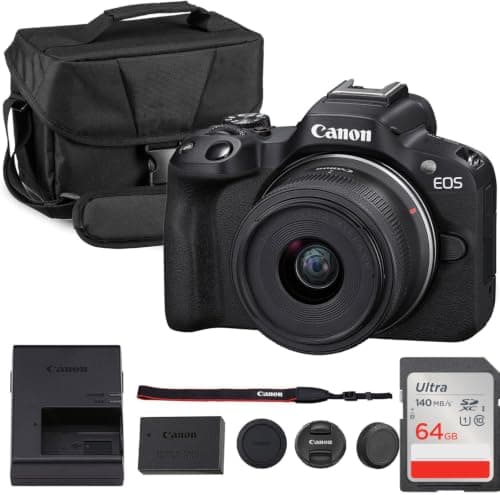
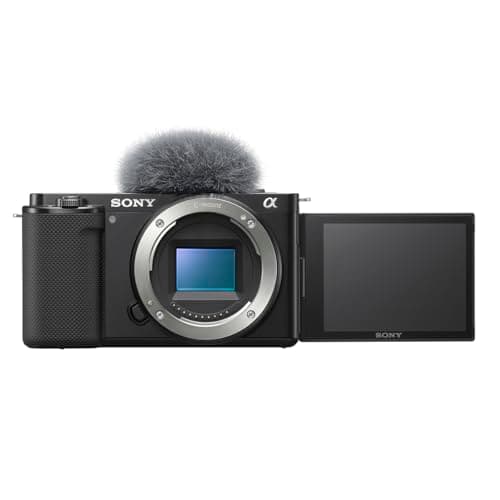
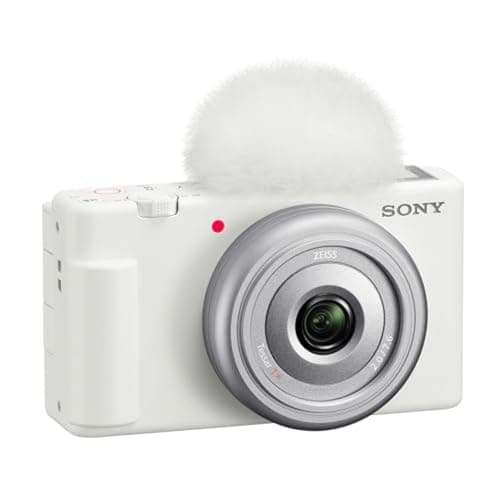
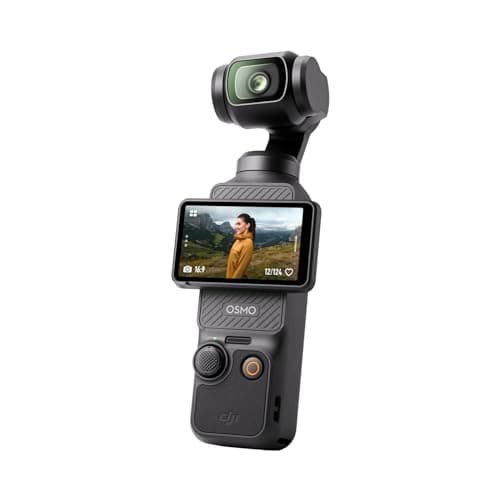
The best camera for TikTok videos, for most people, is the DJI Osmo Pocket 3: rotate its screen and it records native 9:16 vertical video, a built-in 3-axis gimbal keeps walk-and-talk clips steady, and footage goes straight to your phone through DJI's app. If you film mostly sitting down and want the soft, optically blurred background a phone can only imitate, the Canon EOS R50 is the better buy. And before you buy either, an honest point: a recent phone is a perfectly legitimate TikTok camera, so this page starts with what a dedicated camera actually adds, and when it doesn't.
The usual disclosure: we haven't tested these cameras ourselves. Everything below comes from manufacturer specifications and manuals, TikTok's own video spec, and the published findings of DPReview, Digital Camera World and Photography Blog, all linked in Sources.
Is your phone already enough?
Often, yes. A phone held upright already records vertical video, it is the device you edit and post from, so there is no transfer step, and it is always in your pocket. DPReview made the point sharply in its review of the Sony ZV-1F, a camera built for people stepping up from a phone: its footage beats a phone's selfie camera, but you give up "features like 4K/60P, faster sensor readout and optical stabilization that most smartphones offer." Its review of the pricier ZV-1 Mark II went further and said it would not recommend that camera to anyone whose needs a good smartphone already meets.
So if your TikToks look fine but sound thin or echoey, a camera is the wrong fix and a clip-on microphone is the right one. A dedicated camera earns its place when you want one of these specific things:
- Background blur that is optical, not computed.The R50 and ZV-E10 use APS-C sensors and take interchangeable lenses, so a fast lens separates you from the room the way a phone's portrait mode only approximates. Our camera vs phone guide explains why sensor size and a real aperture make that difference.
- A proper audio input. Every camera here accepts an external microphone, and the ZV-E10 adds a headphone jack so you can hear exactly what you are recording.
- Mechanical stabilization.The Pocket 3's gimbal physically holds the camera level while you walk, rather than smoothing the clip in software afterward.
- Filming yourself on the good camera.Every pick has a screen that faces you, so the camera recording your face is the main one, not a phone's secondary selfie lens.
- A battery that isn't your phone's. An afternoon of retakes drains a separate camera, not the device you need to edit, post and reply to comments on.
What actually decides a TikTok camera
Resolution is not the question. TikTok's own in-feed video specification lists 9:16 vertical as the recommended shape, and every camera here has pixels to spare for it. What separates a good short-form camera from a frustrating one is everything around the vertical frame, so we ranked on these, roughly in order of how much they matter day to day.
1. Vertical video that arrives upright
Turn most cameras on their side and they record an ordinary horizontal file lying on its side. Whether it plays upright on your phone depends on the camera writing orientation information into the file. The Pocket 3 sidesteps the problem entirely: DJI says it switches between horizontal and vertical shooting automatically when you rotate the screen, and it records true 9:16 files, up to 1728 x 3072 at up to 60 frames per second. Canon's R50 manual documents an Add movie rotate info setting that, when enabled, plays movies on smartphones "in the orientation in which they were recorded." The manual doesn't say how it is set out of the box, so switch it on the day you unbox the camera. DPReview found the ZV-E10 saves metadata with vertical clips so they display correctly on a mobile device, and Digital Camera World's launch coverage of the ZV-1F says it records native vertical clips that need no editing and tags them for sharing.
2. Enough pixels in a 9:16 frame
A 1080 x 1920 vertical frame is simply full HD stood on its end. Shoot vertically on any of these cameras and you clear that comfortably: the Pocket 3's native 9:16 mode goes up to 1728 x 3072, and the other three record their full 4K frame on its side. Crop a vertical slice out of a horizontal 4K clip instead and the math is less kind: a 9:16 slice of a 3840 x 2160 frame is about 1215 x 2160 pixels. That still clears full HD, but you keep less than a third of the frame's width, which is fine for a loosely framed sit-down clip and hopeless for an arm's-length selfie where the whole wide frame was your face and the room behind you.
3. How fast a clip reaches your phone
This is the step you repeat for every single video, so it matters more than it looks on a spec sheet. DJI's FAQ says Pocket 3 footage downloads to your phone through the DJI Mimo app, or over a USB-C cable to a phone that supports OTG. Photography Blog notes the R50 pairs with Canon's Camera Connect app for quick file sharing. The ZV-1F has a genuinely short-form feature in Shot Mark, which lets you mark and send 15, 30 or 60-second segments of a clip to your phone, and DPReview notes the ZV-E10 can transfer movies through Sony's Imaging Edge app even when the camera is switched off. Test Sony's software before you rely on it, though: reviewing the ZV-1 Mark II, DPReview found Sony's Creators' App finicky on iOS, with failed connections and dropped signals.
4. A screen you can see and focus that follows your face
All four picks have a screen that turns to face you: the Pocket 3's 2-inch rotating touchscreen, the R50's vari-angle screen, and articulating screens on the two Sonys. Autofocus is where they part. DPReview calls the ZV-E10's video autofocus class-leading, with face and eye detection on by default, and Photography Blog rated the R50's autofocus excellent. The Pocket 3's Face Auto-Detect mode, per DJI, recognizes a single person and keeps them in the center of the frame. The ZV-1F is the soft spot: DPReview found its contrast-detect autofocus can "flutter" while recording.
5. Stabilization, audio and size
For walking clips, only the Pocket 3 stabilizes mechanically; the others use electronic stabilization that crops the frame to steady it (more on that below). For audio, the Pocket 3 has three built-in mics and accepts two DJI Mic 2 or Mic Mini transmitters directly, with no receiver; the others take a standard 3.5mm microphone. On size, DJI lists the Pocket 3 at 179 g, while Photography Blog lists the R50 at 375 g with battery and card, before you add a lens.
At a glance
| Camera | Vertical video | Stabilization | Audio | Getting clips to your phone |
|---|
| DJI Osmo Pocket 3 (1-inch) | Native 9:16 by rotating the screen; up to 1728 x 3072 | 3-axis mechanical gimbal | 3 built-in mics; 2 DJI transmitters direct; 3.5mm via adapter | DJI Mimo app, or USB-C to phone |
| Canon EOS R50 (APS-C) | Turn the camera; Add movie rotate info tags orientation | Electronic (Movie Digital IS) | 3.5mm mic in; no headphone jack | Canon Camera Connect app |
| Sony ZV-E10 (APS-C) | Turn the camera; vertical metadata saved, per DPReview | Electronic Active mode (1.44x crop) | 3.5mm mic in and headphone out | Sony's Imaging Edge app |
| Sony ZV-1F (1-inch) | Turn the camera; vertical clips tagged, per Digital Camera World | Electronic Active mode (slight crop) | 3-capsule mic; 3.5mm mic in; no headphone jack | Shot Mark clip transfer via Sony's app |
The short answer, ranked
1. DJI Osmo Pocket 3 wins because it is the only camera here designed around the vertical frame: rotate the screen and you are shooting native 9:16, the gimbal handles walking, and the app handles transfer. Its catches are a fixed wide lens and a small battery; our Osmo Pocket 3 review covers them in full.
2. Canon EOS R50 is the pick for sit-down TikToks, tutorials and product clips. Photography Blog notes its 4K is oversampled from 6K and that it supports vertical capture for reels and stories, and Canon documents the orientation setting that makes those clips play upright.
3. Sony ZV-E10 does the same job with better audio tools, a mic input plus a headphone jack, and autofocus DPReview calls class-leading. It ranks below the R50 here because its 4K at 30fps is cropped and DPReview flagged significant rolling-shutter wobble in 4K.
4. Sony ZV-1F is the non-DJI pocket option, with vertical tagging, Shot Mark and a Product Showcase mode DPReview says works well, held back by autofocus that can flutter.
How to choose a camera for TikTok
Walk-and-talk or sit-down? Decide that first
Almost every choice on this page follows from one question: does your camera move? If your TikToks are filmed walking through a city, a store or a kitchen, stabilization decides everything and the Pocket 3's mechanical gimbal is in a different class from the electronic modes on the other three. If you film at a desk, on a sofa or at a counter, the camera sits on a tripod and stabilization is irrelevant; what matters then is a clean image, background blur and audio, which is where the APS-C R50 and ZV-E10 pull ahead. If you do both, a Pocket 3 for going out plus a bigger body for home is a sensible split, and our best cameras for content creation ranking weighs up that kind of mixed use.
Rotate the camera, or shoot horizontal and crop?
If TikTok is your only platform, shoot vertical. You get the full sensor height in the long side of the frame and nothing to crop later. If you also post horizontal video to YouTube, the trade-off is real: shooting horizontal 4K and cropping costs you two-thirds of the width, as the math above shows, so it works for loose, centered framing and fails for tight selfie shots. The Pocket 3 has a neat way around this. DJI lists a 3K square mode at 3072 x 3072, and a square frame contains both a 1728 x 3072 vertical slice and a 3072 x 1728 horizontal one, so one clip can feed both platforms without dropping below full HD in either.
One practical note for the interchangeable-lens bodies: handheld, turning the camera sideways is easy, but on a tripod you need a head that tips a full 90 degrees or an L-shaped bracket, or the camera will flop over. Check your tripod head before you plan a vertical setup around it.
Mind the crop when stabilization is on
Electronic stabilization steadies a shot by cropping into the frame and shifting the crop to cancel your movement, and that crop narrows your view, which matters when the camera is at arm's length. DPReview measured a 1.44x crop in the ZV-E10's Active mode and noted the kit lens gives a 24mm-equivalent view at its widest; with Active mode on, that becomes roughly a 35mm-equivalent view, tight for a selfie with any of the room in it. Separately, DPReview notes 4K at 30fps on the ZV-E10 is cropped 1.23x, while 4K at 24fps uses the full sensor width. It describes the ZV-1F's Active mode crop as slight and notes the mode isn't available at 120fps. The Pocket 3 is the exception: its gimbal steadies the camera with motors, so it doesn't rely on cropping the frame the way electronic modes do.
Audio is the upgrade viewers hear first
Built-in microphones hear the room, and on a busy street they hear mostly the street. A clip-on wireless transmitter a few inches from your mouth fixes that on any camera here. The Pocket 3 has the neatest setup: DJI's FAQ confirms it connects to two DJI Mic 2 or Mic Mini transmitters with no receiver at all, and it takes third-party mics through USB-C or a 3.5mm adapter. The R50, ZV-E10 and ZV-1F all take a receiver in their 3.5mm microphone input, and only the ZV-E10 lets you plug in headphones to check the sound while you record. Our best wireless microphones ranking covers which kit suits which camera.
Battery on a day of short clips
Short-form means lots of short takes, and every camera spends power waking up, reviewing and transferring. DJI rates the Pocket 3 at 166 minutes, but that figure is measured at 1080p/24 with Wi-Fi and the screen off, which is not how you film yourself. The saving grace is charging speed: DJI says it reaches 80% in 16 minutes on a 65W charger, so a quick top-up between locations goes a long way. Whatever you buy, carry a power bank or a spare battery for a full day out.
Why the Sony ZV-1 II isn't on this list
We considered it and left it out on the evidence. For TikTok it adds a wide-to-normal zoom over the ZV-1F, but DPReview found Sony's phone app finicky with it on iOS, judged its built-in audio "flat and tinny," and said it would not recommend the camera to anyone a good smartphone already serves. When we checked prices it also cost more than the ZV-E10, which brings a far larger sensor. If you want a zoom in your pocket anyway, see where it ranks in our best compact vlogging cameras.
A note on buying DJI in the US
PetaPixel reported in April 2026 that the newer Osmo Pocket 4 isn't sold in the US because its authorization is still pending, a knock-on effect of the FCC adding DJI to its Covered List in December 2025. Products approved before that, the Pocket 3 among them, are still stocked by US retailers. If it is out of stock the week you shop, the ZV-1F is the non-DJI pocket alternative; our Osmo Pocket 3 vs ZV-1F comparison lays out exactly what you give up.
Which one should you buy?
- You film on the move, or want the simplest vertical workflow: the DJI Osmo Pocket 3. Native 9:16, a real gimbal and direct DJI mic pairing.
- You film sitting down and want background blur: the Canon EOS R50, with Add movie rotate info switched on.
- You film sitting down and care most about sound: the Sony ZV-E10, for its headphone jack and face tracking.
- You want a pocket camera that isn't a DJI: the Sony ZV-1F, ideally for product and tabletop clips where its autofocus has less to chase.
- Your phone already looks fine: keep it, and spend on a mic and a light instead.
Whichever camera you choose, it is one piece of a kit. Our creator starter kit guide sets out the microphone, light and support to buy first, and in what order, and it applies just as much to TikTok as to YouTube.