Skip to content
Focal & Frame

Creator · Vlogging Cameras

DJI Osmo Pocket 3 vs Sony ZV-1F

Two small cameras that answer completely different questions. One is built around motion; the other is built around being cheap and simple.

By Stephen V.Updated How we research
#ad

We earn a commission when you buy through our Amazon links, at no extra cost to you. It never decides our rankings — we say so when the cheaper pick is the better buy. How this works.

Buy the DJI Osmo Pocket 3 if any real part of your filming happens while you walk — its built-in mechanical 3-axis gimbal produces smoothness nothing else in this size can match. Buy the Sony ZV-1F if you film mostly seated or from a tripod and want the cheapest simple pocket camera with a wide lens and a flip screen. Both are pocketable, both have 1-inch sensors, and both are aimed at solo creators. What separates them is motion.

The four things that actually differ

1. Stabilization: a mechanical gimbal versus none

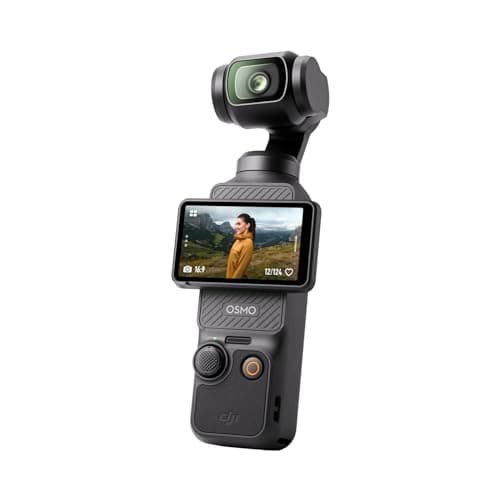
This is the comparison. The Pocket 3 has motors physically holding the camera steady against your hand and footsteps before the light ever reaches the sensor. The ZV-1F has no in-body stabilization and relies on digital stabilization, which crops the image and cannot remove the up-and-down of walking. If you film on the move, the difference is not subtle — it is the difference between usable footage and footage you delete. Our stabilization explainer covers why the mechanical version wins.

2. Framing: rotating and controllable versus fixed wide

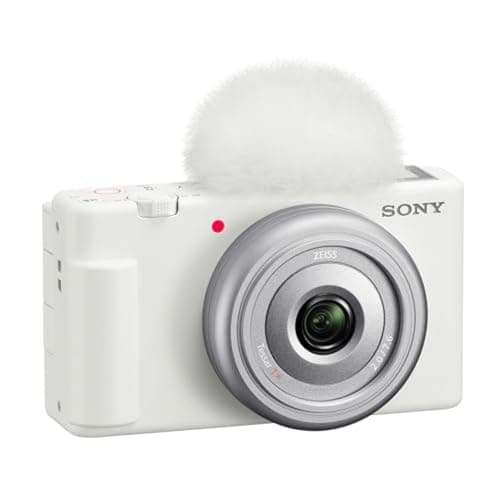
The Pocket 3's screen rotates between landscape and portrait and the camera follows, so you shoot vertical short-form natively instead of cropping it out of a wide frame. The ZV-1F has a fixed 20mm-equivalent wide lens and a flip-out screen — very good for arm's-length selfie framing with room to spare, and inflexible for anything else. You cannot reframe tighter on the ZV-1F, and you cannot make it less wide.

3. Video capability

The Pocket 3 records 4K up to 120 frames per second for slow motion and captures 10-bit color, which gives real latitude when you grade. The ZV-1F tops out at 4K30 with a simpler color pipeline and uses contrast-detect autofocus rather than the faster hybrid system in Sony's pricier compacts. For straightforward talking-head clips posted without grading, that gap barely shows. For anything more ambitious, it does.

4. Price and what each one is really selling

The ZV-1F is the cheaper camera and it is honest about what it is: the least expensive way into a real Sony vlog camera, with a wide lens and not much to think about. The Pocket 3 costs more because you are buying a mechanical stabilizer, and that is a fair price for hardware nobody else puts in this form factor. Neither is overpriced; they are answering different questions.

Where they are the same

Both use 1-inch sensors, so low-light performance is broadly comparable and both are behind an APS-C body with a fast lens in a dim room. Both are genuinely pocketable. Both have fixed lenses you cannot change. Both have short battery lives by the standards of a larger camera, and both benefit enormously from an external microphone — see our best microphones for vlogging for what actually helps.

The short answer

Quick picks

#ProductBest forScorePrice
01
DJI DJI Osmo Pocket 3
DJI Osmo Pocket 3

A pocket camera with a real 3-axis gimbal built in — the steadiest walking footage here, no editing stabilization needed.

Run-and-gun walking vlogs
7.8
$439.00Amazon
02
Sony Sony ZV-1F
Sony ZV-1F

The cheapest way into a Sony vlog camera — a fixed wide lens, a flip screen, and not much to think about.

Cheapest simple pocket vlogger
6.8
$598.00Amazon

#ad · Live prices from the Amazon Product API, as of Sep 4, 2026. Where we have no verified live price, we show none — we would rather leave a gap than print a number that has rotted.

In detail

The picks, in full

01
DJI DJI Osmo Pocket 3

Run-and-gun walking vlogs

DJI Osmo Pocket 3

1-inch sensorBuilt-in 3-axis gimbal4K / 120fpsRotating touchscreen
7.8/10

A pocket camera with a real 3-axis gimbal built in — the steadiest walking footage here, no editing stabilization needed.

Video quality
8
Autofocus
7
Screen & handling
9
Audio & inputs
7
Value
8

Pros

  • The built-in mechanical 3-axis gimbal delivers glass-smooth walking footage that no in-body or digital stabilization can match
  • A 1-inch sensor, 4K up to 120fps, and a rotating touchscreen that flips to frame yourself
  • Tiny enough to actually carry every day, and it pairs seamlessly with DJI's wireless mics

Cons

  • The lens is fixed and moderately wide, and the small form factor means shorter battery life on long shoots
  • Autofocus and low-light latitude trail a proper APS-C body with a fast lens

Don't buy this if…

you want interchangeable lenses, the shallowest background blur, or the best low-light image. It's a specialist run-and-gun tool, not a do-everything camera — pair it with an APS-C body if you need both.

$439.00View on Amazon

$499.0012% off

Price as of Sep 4, 2026. Prices change — Amazon's is the one that counts.

#ad · we may earn a commission from this link to DJI Osmo Pocket 3

02
Sony Sony ZV-1F

Cheapest simple pocket vlogger

Sony ZV-1F

20MP 1-inch sensorFixed 20mm equiv. wide4K30Flip-out screen
6.8/10

The cheapest way into a Sony vlog camera — a fixed wide lens, a flip screen, and not much to think about.

Video quality
6
Autofocus
7
Screen & handling
7
Audio & inputs
6
Value
8

Pros

  • The fixed 20mm-equivalent wide lens is ideal for arm's-length selfie vlogging with room to spare in the frame
  • About as simple as a real camera gets: flip the screen, hit record, and Sony's face tracking does the rest
  • Pocketable and the least expensive route into Sony's ZV vlog line

Cons

  • The lens is fixed and wide-only — there's no zoom, so you can't reframe tighter for a flattering headshot
  • It uses contrast-detect autofocus rather than the faster hybrid system in the ZV-1 II, and there's no headphone jack

Don't buy this if…

you want any framing flexibility or the fastest autofocus. The single wide focal length and slower focus are the corners cut to hit the price — the ZV-1 II adds a zoom and better AF for more.

$598.00View on Amazon

Price as of Sep 4, 2026. Prices change — Amazon's is the one that counts.

#ad · we may earn a commission from this link to Sony ZV-1F

Who should buy which

Buy the DJI Osmo Pocket 3 if you are a travel, street or walking-and-talking creator, if you post vertical short-form regularly, or if you want slow motion. The gimbal is the reason to buy it and it is a genuinely unmatched piece of hardware at this size.

Buy the Sony ZV-1F if you film seated at a desk or from a tripod, if the budget is the binding constraint, or if you want the simplest possible camera that is still a proper camera. Its wide lens and flip screen do the basic job well and it costs considerably less.

The bottom line

Ask one question: what fraction of your footage is filmed while you are moving? If the answer is more than about a quarter, the Pocket 3 pays for itself in shots you keep. If the answer is close to none, you are paying for motors that will sit still, and the ZV-1F does your job for less.

One caveat we flag on every DJI pick: DJI's US availability has been uncertain at times, and no other brand makes a pocket gimbal camera. If the Pocket 3 is hard to buy, the honest fallback is an interchangeable-lens body plus a separate budget gimbal, or a compact like the Sony ZV-1 II.

How we picked

We do not run a testing lab

We compiled the manufacturers' published specifications and manuals, did the cost math, and scored each product against a published rubric. The scores are judgments from that documented research — they are notmeasurements we took, because we do not have a lab and we are not going to pretend we do. Where a number came from someone else's testing, we name and link them in Sources.

Questions

Frequently asked

Is the Osmo Pocket 3 worth the extra over a Sony ZV-1F?
It depends entirely on whether you film while moving. The Pocket 3's mechanical 3-axis gimbal makes walking footage smooth in a way the ZV-1F cannot approach, and it adds 4K120 slow motion and a rotating screen for vertical video. For seated, tripod-based filming, the ZV-1F does the job for meaningfully less.
Which has the better image quality?
They both use 1-inch sensors so they are broadly comparable in still conditions, with the Pocket 3 ahead on video specification thanks to 4K120 and 10-bit capture. Neither competes with an APS-C body and a fast lens in low light — see best cameras for YouTube if image quality is the priority.
Can you change the lens on either camera?
No. Both have fixed lenses. The Pocket 3's is moderately wide with a rotating gimbal head; the ZV-1F's is a fixed 20mm-equivalent wide with no zoom at all. If you want to change focal lengths, you need an interchangeable-lens body such as the Sony ZV-E10.
Do I need an external microphone with either?
You will want one for anything beyond a quiet room. Both have small built-in microphones that pick up handling noise and wind. The Pocket 3 connects directly to DJI's wireless transmitters; the ZV-1F takes a 3.5mm microphone input. Our wireless microphone guide covers both routes.

Keep reading

Receipts

Sources

We do not run a testing lab, and we do not pretend to. Specs come from manufacturer sheets and manuals; where a figure came from someone else's measurement, we name and link them. Where we could not verify something, we say so on the page rather than quietly leaving it out. Read our full method.