Skip to content
Focal & Frame

Creator · Vlogging Cameras

Sony ZV-1 II vs ZV-1F

Same sensor, same 4K, same flip screen. One has a zoom and the faster autofocus system; the other costs a lot less and does one job well. Here is which one suits you.

By Stephen V.Updated How we research
#ad

We earn a commission when you buy through our Amazon links, at no extra cost to you. It never decides our rankings — we say so when the cheaper pick is the better buy. How this works.

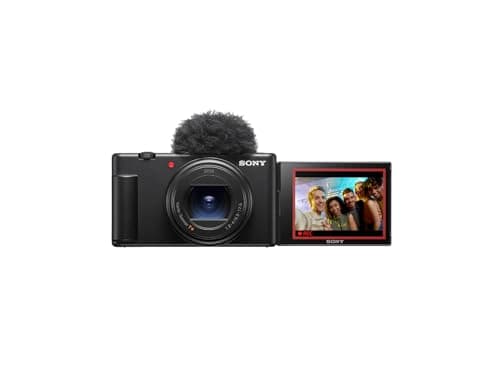
Sony Sony ZV-1 II

Our #1 pick

Sony ZV-1 II

A pocket all-in-one with a wide-to-normal zoom — no lenses to buy, just switch on and talk.

Don't buy it if you shoot a lot in low light or want the shallow, cinematic background blur of a big sensor. A 1-inch compact can't match an APS-C body with a fast prime there.

#ad · Live Amazon price as of October 11, 2026. No verified price → we show none.

The Sony ZV-1 II is the better camera and the one to buy if the budget stretches: its 18-50mm-equivalent zoom lets you shoot both a wide arm's-length selfie and a flattering tighter talking-head from the same spot, and it uses Sony's faster hybrid autofocus rather than the ZV-1F's contrast-detect system. The ZV-1F is the value pick, and a genuinely good one if you only ever film yourself at arm's length — its fixed 20mm-equivalent wide lens is the right focal length for exactly that, and it costs substantially less. Before you pay full ZV-1 II money, though, look at the third pick on this page.

These two cameras share more than they differ on. Both use a 20MP 1-inch sensor, both shoot 4K30, both have a screen that flips round to face you, both have a microphone input and neither has a headphone output. Neither has in-body stabilization. So the specification comparison is unusually short, and it comes down to two things: the lens on the front, and the autofocus behind it.

That makes this an easier decision than most. If you can describe your videos as "me, holding the camera, talking", the ZV-1F covers it and the money you save is better spent on a microphone and a light, both of which will improve your videos more than a zoom would. If your videos include anything you point the camera at — a product, a place, a person across a table — the fixed wide lens becomes a daily frustration and the ZV-1 II is worth the difference.

At a glance

SpecSony ZV-1 IISony ZV-1F
Sensor20MP 1-inch20MP 1-inch
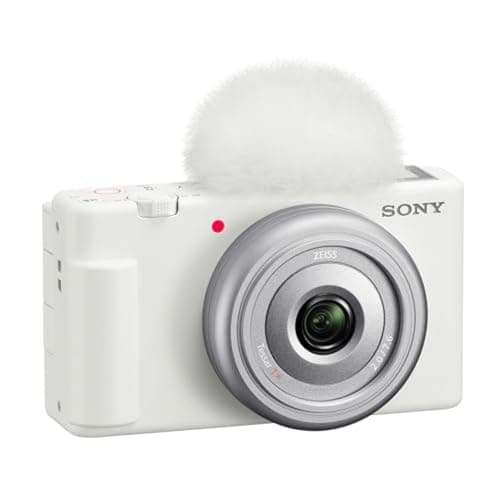
Lens (35mm equivalent)18-50mm zoomFixed 20mm wide
AutofocusHybrid (phase plus contrast detect)Contrast detect
Video4K304K30
ScreenFlip-out, faces forwardFlip-out, faces forward
Built-in microphone3-capsule directionalDirectional, simpler array
Microphone inputYesYes
Headphone outputNoNo
In-body stabilizationNoNo
Creator featuresBackground defocus, product showcaseBackground defocus, product showcase

Every figure above is a Sony-published specification, linked in Sources. We have not tested either camera and we do not run a lab — see how we research and score. The prices beside each buy button are live and carry the date they were read.

The short answer

Quick picks

#ProductBest forScorePrice
01
Sony Sony ZV-1 II
Sony ZV-1 II

A pocket all-in-one with a wide-to-normal zoom — no lenses to buy, just switch on and talk.

Grab-and-go vlogging without lenses
7.2
$898.00Amazon
02
Sony Sony ZV-1F
Sony ZV-1F

The cheapest way into a Sony vlog camera — a fixed wide lens, a flip screen, and not much to think about.

Cheapest simple pocket vlogger
6.8
$548.00Amazon
03
Canon Canon PowerShot V1
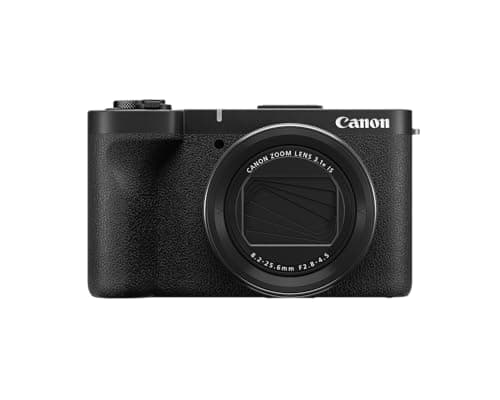
Canon PowerShot V1

Canon's compact creator answer: a larger-than-usual 1.4-inch sensor, a genuinely wide zoom, and a built-in ND filter.

Compact shooters who want a bigger sensor
7.6
$779.63Amazon

#ad · Live prices from the Amazon Product API, as of October 11, 2026. Where we have no verified live price, we show none — we would rather leave a gap than print a number that has rotted.

In detail

The picks, in full

01
Sony Sony ZV-1 II

Grab-and-go vlogging without lenses

Sony ZV-1 II

20MP 1-inch sensor18-50mm equiv. zoom4K30Flip-out screen
7.2/10

A pocket all-in-one with a wide-to-normal zoom — no lenses to buy, just switch on and talk.

Video quality
7
Autofocus
8
Screen & handling
8
Audio & inputs
6
Value
7

Pros

  • The 18-50mm-equivalent zoom is wide enough for arm's-length selfie framing and long enough for a flattering talking-head, with nothing to swap
  • Pockets easily and includes a capable 3-capsule directional mic built in, plus a flip-out screen
  • Sony's autofocus and a background-defocus button carry over from the bigger ZV bodies

Cons

  • The 1-inch sensor gathers less light than the APS-C bodies, so it's noisier in dim rooms
  • There's a mic input but no headphone jack, and no in-body stabilization for walking shots

Don't buy this if…

…you shoot a lot in low light or want the shallow, cinematic background blur of a big sensor. A 1-inch compact can't match an APS-C body with a fast prime there.

$898.00View on Amazon

$1,049.9914% off

Price as of October 11, 2026. Prices change — Amazon's is the one that counts.

#ad · we may earn a commission from this link to Sony ZV-1 II

02
Sony Sony ZV-1F

Cheapest simple pocket vlogger

Sony ZV-1F

20MP 1-inch sensorFixed 20mm equiv. wide4K30Flip-out screen
6.8/10

The cheapest way into a Sony vlog camera — a fixed wide lens, a flip screen, and not much to think about.

Video quality
6
Autofocus
7
Screen & handling
7
Audio & inputs
6
Value
8

Pros

  • The fixed 20mm-equivalent wide lens is ideal for arm's-length selfie vlogging with room to spare in the frame
  • About as simple as a real camera gets: flip the screen, hit record, and Sony's face tracking does the rest
  • Pocketable and the least expensive route into Sony's ZV vlog line

Cons

  • The lens is fixed and wide-only — there's no zoom, so you can't reframe tighter for a flattering headshot
  • It uses contrast-detect autofocus rather than the faster hybrid system in the ZV-1 II, and there's no headphone jack

Don't buy this if…

…you want any framing flexibility or the fastest autofocus. The single wide focal length and slower focus are the corners cut to hit the price — the ZV-1 II adds a zoom and better AF for more.

$548.00View on Amazon

$599.999% off

Price as of October 11, 2026. Prices change — Amazon's is the one that counts.

#ad · we may earn a commission from this link to Sony ZV-1F

03
Canon Canon PowerShot V1

Compact shooters who want a bigger sensor

Canon PowerShot V1

22MP 1.4-inch sensor16-50mm equiv. zoomBuilt-in 3-stop ND filter4K60 (4K30 uncropped)
7.6/10

Canon's compact creator answer: a larger-than-usual 1.4-inch sensor, a genuinely wide zoom, and a built-in ND filter.

Video quality
8
Autofocus
8
Screen & handling
8
Audio & inputs
7
Value
7

Pros

  • The 1.4-inch sensor is bigger than the 1-inch chips in rival compacts, so it holds up better in low light and blurs backgrounds more
  • A 16-50mm-equivalent zoom goes wide enough for handheld selfie framing, and the built-in ND filter tames bright sun for smooth shutter speeds
  • Canon's Dual Pixel autofocus and a flip-out screen make it an easy point-and-talk creator cam

Cons

  • Bigger and pricier than the pocketable 1-inch compacts, so it's less of a throw-in-a-pocket camera
  • No in-body stabilization: it leans on the lens's optical IS plus digital IS, and 4K60 comes with a 1.4x crop

Don't buy this if…

…you want the smallest possible pocket camera or the cheapest entry. The larger sensor and zoom add bulk and cost — the ZV-1F or Osmo Pocket 3 are truer pocket cameras.

$779.63View on Amazon

$849.008% off

Price as of October 11, 2026. Prices change — Amazon's is the one that counts.

#ad · we may earn a commission from this link to Canon PowerShot V1

The zoom is the whole decision

A fixed 20mm-equivalent lens is wide. Held at arm's length it gives you your head and shoulders with a generous amount of room around them, which is exactly what you want for a walk-and-talk — and it is the reason Sony chose that focal length for its cheapest vlog camera. What it cannot do is get tighter. You cannot frame a flattering seated talking-head without moving the camera uncomfortably close to your face, you cannot isolate a product on a desk, and you cannot compress a background the way a longer focal length does. Your only zoom is walking.

The ZV-1 II's 18-50mm range fixes all of that from one position. 18mm is slightly wider than the ZV-1F for selfie framing, and 50mm is a genuinely different camera: faces look more natural, backgrounds blur more, and you can shoot something at a sensible distance instead of looming over it. For anyone whose channel involves demonstrating, reviewing, cooking, or interviewing, that range is not a nice-to-have.

The autofocus difference, honestly sized

The ZV-1 II uses a hybrid autofocus system with phase detection; the ZV-1F uses contrast detection only. In practice this shows up as confidence rather than catastrophe — contrast-detect systems hunt a little more in low light and are slower to re-acquire a subject that moves sharply towards or away from the camera. The ZV-1F will keep a face in focus for a static talking-head perfectly well. It is less sure of itself when you hand something towards the lens or turn quickly, which are both common vlogging moves.

Why the third pick is on this page

This is the part a straight Sony-versus-Sony comparison would hide. At the prices showing above, the Canon PowerShot V1 generally undercuts the ZV-1 II while offering a physically larger 1.4-inch sensor, a wider 16mm-equivalent lens, a 3-stop ND filter built in, and a headphone terminal that neither Sony has. If you are about to spend ZV-1 II money, you owe yourself five minutes with Canon PowerShot V1 vs Sony ZV-1 II before you do. What Sony keeps is a smaller, lighter body and a much deeper accessory and tutorial ecosystem — real advantages, just not spec-sheet ones.

We are not going to pretend the ZV-1 II is the obvious buy when a competitor is cheaper and better specified. It is the better Sony, it is the right answer if you want the zoom and the Sony ecosystem, and if the price gap closes it is comfortably recommendable. The ZV-1F is a different proposition entirely: it is not trying to be the best camera, it is trying to be the cheapest one that does the job properly, and at its price it succeeds.

What neither of them does

Walking footage. Neither has in-body stabilization, so both produce the characteristic soft bounce of digital stabilization when you walk. If your videos are mostly walking, a gimbal camera is a different class of tool — see Osmo Pocket 3 vs ZV-1F, which puts that choice directly against the cheaper Sony.

Shallow, cinematic background blur. A 1-inch sensor cannot do what an APS-C body with a fast prime does, and both Sony compacts include a background-defocus button precisely because the optics need the help. If separation from the background is your main goal, the money is better spent on a body and a lens — our best mirrorless under $1,000 ranking is where that starts, and a cheap fast 50mm-equivalent is the lens that does it.

Audio monitoring. Neither has a headphone output, so you cannot hear what you are recording while you record it. Both do have a 3.5mm microphone input, which is the more important of the two — the fix is to use an external mic with onboard backup recording or reliable level control, covered in our wireless microphone ranking.

Where each one lands in our wider rankings

Both appear in best compact vlogging cameras, and the ZV-1F is a fixture of best budget vlogging cameras. If you are still deciding whether a fixed-lens compact is the right shape of camera at all, best vlogging cameras for beginners covers interchangeable-lens bodies alongside compacts.
How we picked

We do not run a testing lab

We compiled the manufacturers' published specifications and manuals, did the cost math, and scored each product against a published rubric. The scores are judgments from that documented research — they are notmeasurements we took, because we do not have a lab and we are not going to pretend we do. Where a number came from someone else's testing, we name and link them in Sources.

Questions

Frequently asked

What is the difference between the Sony ZV-1 II and the ZV-1F?
Two things: the lens and the autofocus. The ZV-1 II has an 18-50mm-equivalent zoom and Sony's hybrid phase-plus-contrast autofocus; the ZV-1F has a fixed 20mm-equivalent wide lens and contrast-detect autofocus only. Sensor, 4K30 video, flip screen, microphone input and creator features are effectively the same on both.
Is the ZV-1 II worth the extra money over the ZV-1F?
If your videos involve anything other than you holding the camera and talking - demonstrating, reviewing, cooking, interviewing - yes, because the zoom lets you reframe without moving. If you only ever film yourself at arm's length, the ZV-1F's fixed wide lens is already the right focal length and the money is better spent on a microphone and a light.
Does the ZV-1F have a zoom?
No. It has a fixed 20mm-equivalent wide lens, so your only zoom is walking closer. That is a deliberate design choice rather than a defect - 20mm equivalent is the right width for arm's-length selfie framing - but it means you cannot frame a tighter, more flattering seated shot or isolate a small subject.
Which has better autofocus?
The ZV-1 II, because it adds phase detection to the contrast detection the ZV-1F uses alone. The practical difference is confidence rather than capability: the ZV-1F holds focus on a static face fine, but hunts more in low light and is slower to re-acquire a subject moving sharply towards or away from the lens.
Should I buy the Canon PowerShot V1 instead?
It is worth checking before you pay full ZV-1 II money. The Canon has a physically larger 1.4-inch sensor, a wider 16mm-equivalent lens, a built-in 3-stop ND filter and a headphone terminal, and it has generally been cheaper than the ZV-1 II. What Sony keeps is the smaller body and a deeper accessory and tutorial ecosystem.
Do either of them have image stabilization for walking?
Neither has in-body stabilization. Both rely on digital stabilization, which produces the familiar soft bounce when you walk. If walking footage is the main thing you shoot, a camera with a real mechanical gimbal is a different class of tool and usually costs less than the ZV-1 II.
Can I use an external microphone with both?
Yes, both have a 3.5mm microphone input, and using one is the biggest single improvement you can make to either camera. Neither has a headphone output, so you cannot monitor while recording - which is a good argument for a wireless kit with reliable automatic level control or onboard backup recording.
Are these better than a phone for vlogging?
For audio they clearly are, because a microphone input changes everything and a phone needs adapters or a separate recorder. For image quality in good light the gap is narrower than it used to be. Buy one of these for the microphone input, the real zoom on the ZV-1 II, and a dedicated device that is not interrupted by notifications.

Keep reading

Receipts

Sources

We do not run a testing lab, and we do not pretend to. Specs come from manufacturer sheets and manuals; where a figure came from someone else's measurement, we name and link them. Where we could not verify something, we say so on the page rather than quietly leaving it out. Read our full method.