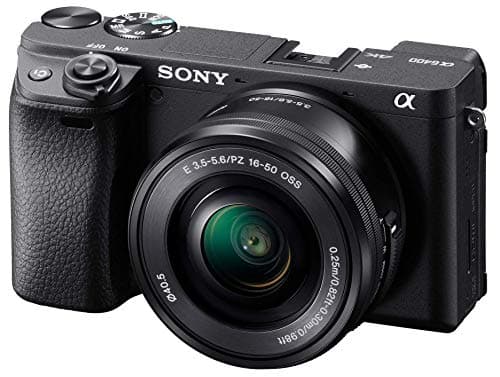
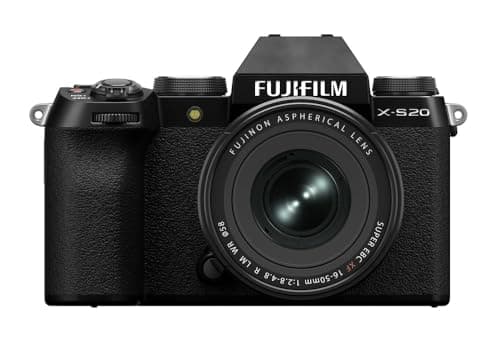
Buy the Fujifilm X-S20 if you want in-body stabilization, a bigger battery, film-simulation color and stronger video in one hybrid body. Buy the Sony a6400 if you want to spend less and tap a deeper, cheaper lens catalog with benchmark autofocus. This is the modern step-up camera against the proven classic, and the right answer depends on budget and what you shoot.
These two sit at different points in their lives. The X-S20 is a newer, more feature-packed body; the a6400 is an older design that endures because it got the important thing — autofocus — right years ago. Here is where they genuinely differ.
One is not simply better than the other; they were designed years apart for slightly different buyers. The X-S20 is the do-everything hybrid you buy when you already know you are ambitious; the a6400 is the value benchmark that still wins on autofocus and price. The differences below are what actually separate them — everywhere else, the two are close enough to call a tie, and you will be happy with the photos from either.
The differences that actually matter
1. Stabilization: the X-S20 has IBIS, the a6400 doesn't
The X-S20 has in-body image stabilization; the a6400 has none. This is a real, everyday gap. IBIS steadies handheld stills so you can shoot at slower shutter speeds in dim rooms, and it smooths walking video enough that a lot of casual footage no longer needs a gimbal. On the a6400 you steady handheld video with a stabilized lens or accept the movement. If you shoot handheld video at all, this alone can decide it in the Fujifilm's favor.
The effect reaches beyond video, too. Stabilization lets you hand-hold a slower shutter speed and still get a sharp photo, which means you can keep shooting in a dim restaurant or a museum without cranking the sensitivity and inviting grain into the file. On the a6400 you offset the missing stabilization with a fast lens or a steadier stance, both of which work but ask more of you. For a beginner who shoots a lot indoors or after dark, the X-S20 quietly makes more of your frames usable.
2. Battery: the X-S20 lasts far longer
The X-S20 uses a much larger battery and runs a genuine full day of mixed shooting. The a6400 uses Sony's older, smaller cell and has you swapping batteries far sooner, so you carry spares as a matter of course. For travel, events or a long day of video, the X-S20's stamina is a meaningful practical advantage.
3. Video: the X-S20 is the stronger camera
Both shoot 4K, but the X-S20 is clearly the more capable video tool. It captures higher- resolution 6.2K, offers higher frame rates and a deeper recording buffer, and pairs all of it with IBIS to hold the shot steady. The a6400 shoots solid 4K30 but is a stills camera that films competently rather than a video-first body — and its tilt-up screen gets blocked by a top-mounted microphone, which the X-S20's fully articulating screen avoids.
4. Color: film simulations vs a clean, neutral file
Fujifilm's film simulations bake a finished look into the file, so many X-S20 owners shoot and post with no editing at all — reds, greens and skin tones land right in-camera. Sony's straight-out-of-camera color is cleaner and more neutral, which is a fine starting point but usually wants a little editing to sing. If you dislike editing and love a ready-made look, the X-S20 flatters that workflow; if you prefer a neutral file to grade yourself, the a6400 is happy to oblige.
5. Price and lenses: the a6400 wins on value and catalog
Here the a6400 pushes back hard. It is the cheaper body, sometimes by a wide margin, and it buys into Sony E-mount — the deepest, most affordable lens catalog of any system, with cheap sharp primes from Sigma, Tamron and Viltrox. Fujifilm's X-mount lenses are lovely but generally cost more, with fewer bargain options. Over the years you keep a camera, the lens catalog costs you more than the body, so this is a bigger deal than it first looks — and it is the a6400's strongest card.
6. Autofocus: the a6400 leads, the X-S20 is close
Sony's real-time tracking and eye AF were a benchmark when the a6400 arrived and they still are, so for locking onto a moving face or pet it remains the surer bet of the two. Fujifilm has closed much of the gap and the X-S20 tracks well for most everyday shooting, but if your top priority is getting the eye sharp on fast, unpredictable subjects, the a6400 has the edge. It is the one area where the older camera still out-punches the newer one.
7. Viewfinder and screen: a real split
Both have an electronic viewfinder, so neither leaves you composing on a washed-out rear screen in bright sun. The difference is the rear screen itself: the a6400's only tilts up and gets blocked by a top-mounted microphone, while the X-S20's fully articulates to the side and faces forward cleanly for filming yourself. For stills the two are comparable; for video and self-recording the X-S20's screen is clearly the better tool.
8. Age and the little conveniences
The X-S20 is the newer design and it shows in the details: a cleaner menu, USB-C convenience, a deeper video toolkit and that big battery. The a6400 wears its years in a dense, dated menu and an older feature set. None of this changes the photos it takes, but it does change how pleasant the camera is to live with day to day. If a modern, friendly interface matters to you, that is a quiet point in the Fujifilm's favor.
Put the two side by side and a pattern emerges. The X-S20 wins the features that help you get a shot you otherwise could not — stabilization, battery, a screen that clears a microphone, a deeper video toolkit. The a6400 wins the fundamentals that never go out of style — autofocus, price and a lens catalog nobody can match. Neither list is wrong; they simply reward different buyers, which is exactly why this comparison comes down to you rather than to a scoreboard.
The bottom line
This is a choice between a modern hybrid and a proven classic. The X-S20 gives you stabilization, battery, stronger video and ready-made color — it is the more capable, more future-proof camera, and it costs accordingly. The a6400 gives you benchmark autofocus, a viewfinder and the cheapest, deepest lens catalog going, for less money — it is the better value and the smarter buy if you lean stills.
Buy the X-S20 if you shoot a lot of handheld video, you want the longest battery life, you love film-simulation color, or you know you will grow fast and want to buy once. Buy the a6400 if budget matters, you shoot mostly stills, or you want the widest choice of cheap lenses to grow the kit. A video-leaning creator should lean Fujifilm; a value-minded, stills-first beginner should lean Sony.
Think about the total spend, not just the sticker price. The a6400's lower cost and cheaper lenses mean a complete two-lens kit lands for less, which is a big deal on a fixed budget. The X-S20 costs more up front and its lenses ask a little more, but you are buying stabilization, battery and video you would otherwise add later or go without. Add up the body, two lenses and a card for each before you decide — the gap on paper often narrows once you cost the whole kit.
Still stuck? Use a quick rule of thumb. If your instinct on reading this was "I want the one that just handles more of the hard parts for me," that is the X-S20 talking. If it was "I want the most camera for the least money and the cheapest path to more lenses," that is the a6400. Buyers rarely regret following that first gut read, because it usually reflects how they actually shoot rather than how they imagine they will.
Read the full Fujifilm X-S20 review and Sony a6400 review for the deeper picture, and see where both land in the best under $1,000 ranking.
If you are still torn, let your main subject break the tie. Handheld video, walking vlogs and low-light events point to the stabilized X-S20; photos of fast-moving kids and pets, travel on a budget, and a desire for the widest cheap lens choice point to the a6400. Both are cameras you can happily keep for years — there is no wrong answer here, only the one that fits how you shoot.