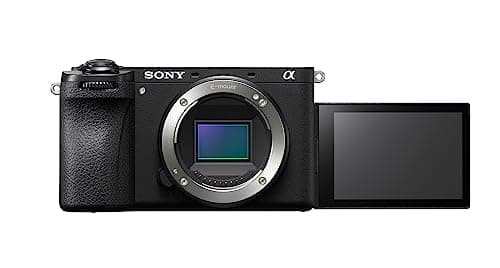
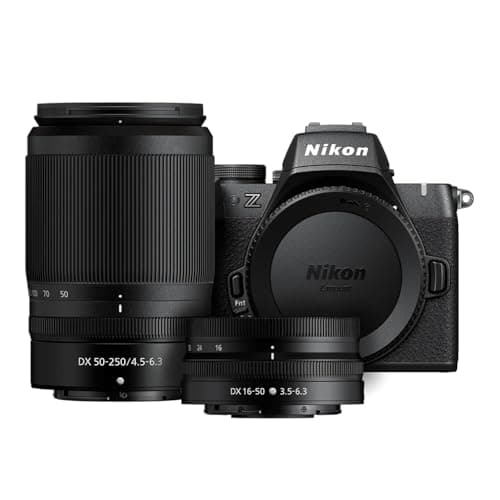
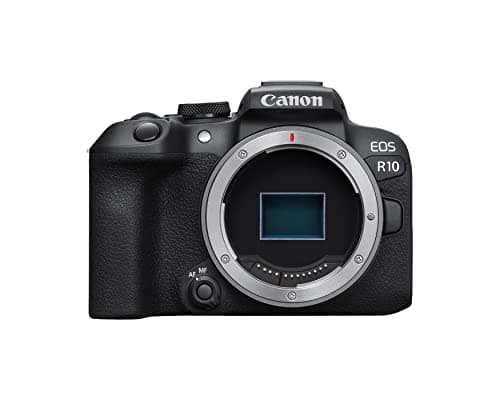
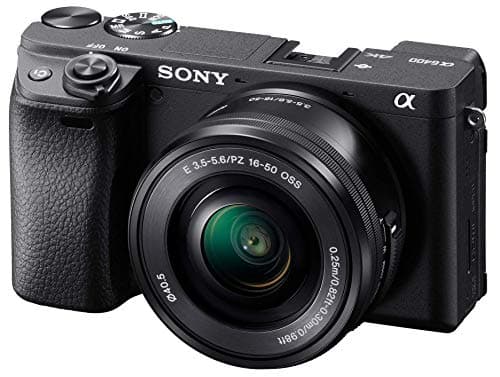
For most people the best landscape camera on this page is the Sony a6400. It is weather sealed, it has a 24-megapixel sensor and a 100%-coverage viewfinder you can actually compose through in bright sun, it is the lightest body here at 403g, and it sits on the mount with the widest and cheapest selection of ultra-wide lenses. That last point is the one people skip, and it is the one that decides landscape photographs. The body records what the lens shows it. The lens decides what the photograph is of.
Landscape is the use case where modern camera marketing is least useful. Nothing you are sold on — burst speed, eye autofocus, subject tracking, 4K60, in-body stabilization — does anything for a static scene shot from a tripod at f/8. What actually matters is dull by comparison: can the camera survive the weather you went out in, can you see the frame in daylight, will the battery last from before sunrise to after sunset in the cold, how much detail can you crop into, and what does a good wide lens cost on that mount. This page ranks on those five things and nothing else.
How this page was made: we have not hiked all four of these bodies up a hill. The specifications below are the manufacturers' published figures, read across all four cameras from DPReview's specification tables so that the same field means the same thing on each — manufacturer pages state sealing and battery life in four different ways, which makes them useless for a comparison. Every source is linked at the foot of the page. Our scores are judgments against our rubric, never measurements of our own, and prices are read live rather than quoted in prose.
The five criteria, and why these five
1. Weather sealing, because landscape happens outdoors
The best landscape light arrives with weather attached: the twenty minutes after a rain squall, the fog in a valley at dawn, spray at the bottom of a waterfall, blowing sand on a dune. A sealed body does not make a camera waterproof — nothing at this price is — but it means gaskets at the seams, the card door and the battery door, and a camera that survives drizzle and spray rather than dying in it. Three of the four bodies here are described by their makers as environmentally sealed. The Canon EOS R10 is not, and that is the single biggest reason it ranks fourth on a page where it would otherwise rank higher.
One caveat worth stating plainly: sealing only works end to end. A sealed body with an unsealed lens on the front is an unsealed camera, because the mount is the biggest opening in the system. If you buy a sealed body for weather, budget for a sealed lens too.
2. A viewfinder you can see at midday
This is the criterion that eliminates more cameras than any other. Landscape is shot outdoors in bright light, often with the sun somewhere in or near the frame, and a rear screen in those conditions is a mirror with a faint picture behind it. You cannot judge a horizon, a histogram or critical focus on a screen you are squinting at. All four cameras here have a 2.36-million-dot electronic viewfinder with 100% coverage — meaning the frame you see is the frame you get, with nothing cropped off the edges — which is why all four are here and several otherwise good cameras are not.
3. Detail, and how much you can crop
Landscape is the one genre where resolution genuinely earns its keep: you print bigger, you crop to fix a composition you could not walk closer to, and fine texture — leaves, rock, distant trees — is the subject rather than the background. The spread here is real but smaller than the spec sheets imply: 26 megapixels on the a6700, 24.2 on the a6400, 24 on the R10 and 20.9 on the Nikon Z50 II. From 20.9 to 26 megapixels is about an 11% difference in linear detail, which is the difference between a 20-inch and a 22-inch print. It is not nothing. It is also not a reason to choose a camera on its own.
The sensor sizes differ slightly too, and in a direction people do not expect. Sony and Nikon use roughly 23.5 x 15.6mm sensors; Canon's is 22.2 x 14.8mm. That is why Canon crop bodies multiply focal length by 1.6x where the others use 1.5x — a 10mm lens is a 15mm-equivalent on Sony and a 16mm-equivalent on Canon. On a genre built around getting wide, that is a real, if small, handicap. Crop factor explained has the full arithmetic.
4. Battery, because landscape days are long and cold
A landscape day is not a shoot, it is a vigil: out before dawn, waiting, shooting a burst of frames in twenty good minutes, waiting again. The camera sits powered on far longer than it is taking pictures, and lithium cells lose capacity in the cold. The published CIPA ratings separate these four bodies more than any other number on this page: 570 shots for the a6700, 450 for the R10, 410 for the a6400 and 250 for the Nikon Z50 II. CIPA ratings are conservative and real-world figures are usually better, but the ranking between them holds — and a 250-shot rating in January means carrying two spares, not one.
5. What a good wide lens costs on that mount
A landscape kit is a wide lens with a camera behind it, so the mount you buy into sets your ceiling and your budget for years. Sony E is the clear winner: the longest-established crop mount, with first-party ultra-wides and cheap, excellent third-party options from Sigma, Tamron and Viltrox. Fujifilm X is strong. Nikon Z DX and Canon RF-S are thin, and both lean on adapting older glass or on a short list of native options — which is slowly improving on both but is still a real constraint today. Our best wide-angle lenses ranking is the companion to this page, and the mount-by-mount pages — Sony E, Nikon Z and Canon RF — set out what each system actually offers.
What the camera body does not fix
Two honest notes before the rankings, because a landscape page that implies the body is the variable would be selling you the wrong thing.
In-body stabilization barely matters here. Only the a6700 has it, and on a tripod — which is where most serious landscape work happens — you switch it off. It earns its place for handheld shooting in low light at the edges of the day, which is a real situation, but it is not a landscape feature the way it is a video feature. If you want the long version, our image stabilization explainer separates the four kinds.
A tripod and a polarizer will change your landscapes more than any body on this page. A tripod lets you shoot at base ISO at f/8 at whatever shutter speed the scene needs, which is where every one of these sensors looks its best. A circular polarizer cuts glare off wet rock and foliage and deepens a blue sky in a way no editing recreates. Both cost a fraction of a camera. We rank them at best tripods and best CPL filters.
How the four compare, field by field
| Spec | Sony a6400 | Sony a6700 | Nikon Z50 II | Canon EOS R10 |
|---|
| Resolution | 24.2MP | 26MP | 20.9MP | 24MP |
| Sensor size | 23.5 x 15.6mm | 23 x 15.5mm | 23.5 x 15.7mm | 22.2 x 14.8mm |
| Environmentally sealed | Yes | Yes | Yes | No |
| Battery (CIPA, LCD) | 410 shots | 570 shots | 250 shots | 450 shots |
| Weight with battery and card | 403g | 493g | 550g | 426g |
| Viewfinder | 2.36M dots, 100% | 2.36M dots, 100% | 2.36M dots, 100% | 2.36M dots, 100% |
| Screen | Tilting | Fully articulating | Fully articulating | Fully articulating |
| In-body stabilization | No | Yes | No | No |
| Crop factor | 1.5x | 1.5x | 1.5x | 1.6x |
Why the a6400 wins, and when it does not
The a6400 wins on arithmetic rather than excitement. It ticks the three hard requirements — sealed, 24 megapixels, a proper viewfinder — at the lowest weight here, and it does it on the mount where a good ultra-wide is cheapest and most plentiful. Everything it gives up is something landscape does not use: it has no in-body stabilization, which matters on a tripod not at all, and its screen tilts rather than articulating, which matters when you are shooting low to the ground and want the screen out to the side.
The honest case against it is age and ergonomics. It is an older design with Sony's dense legacy menus, and the tilting screen flips up into the path of anything mounted on the hot shoe. If you shoot a lot from very low angles — a stream, a foreground of flowers, a rock at your feet — the fully articulating screens on the other three are genuinely better tools for that job.
Choose the a6700 instead if the body budget is not the constraint. It is the most capable camera here on every axis that matters: 26 megapixels, the best battery rating on the page by a wide margin, sealing, in-body stabilization for the handheld twilight shots, and a fully articulating screen. It costs substantially more than the a6400 and the extra buys you comfort and margin rather than a different photograph. Our a6400 vs a6700 comparison takes that decision apart properly.
Choose the Nikon Z50 IIif you want the nicest camera here to hold and use. It has the deepest grip of any body on this page, the EXPEED 7 processor from Nikon's flagship bodies, and the best out-of-camera color controls, with a dedicated Picture Control button. For landscape specifically it carries two real penalties: it is the lowest-resolution body here at 20.9 megapixels, and its 250-shot CIPA rating is the worst on the page by a long way — on a cold full-day outing, plan for spare batteries rather than hoping. It is also the heaviest at 550g.
Choose the Canon EOS R10only if you are already in the Canon system or you want one camera that shoots landscapes and your kid's football. It is an excellent all-round camera — fast, light at 426g, 24 megapixels, a good 450-shot battery rating — and it is the wrong pick on a landscape page for two specific reasons. It is not weather sealed, which on this genre is a disqualifier rather than a caveat; and Canon's 1.6x crop plus a thin native RF-S wide-angle range means getting genuinely wide costs more here than anywhere else. If you already own the camera, none of that stops you taking good landscapes with it. It is just not what you would buy for the job.
The bodies we did not rank, and why
Three cameras the site covers and recommends elsewhere are deliberately absent, and the reasons are specific rather than snobbery.
The Fujifilm X-M5 and the Sony ZV-E10 have no viewfinder. Both are good cameras — the X-M5 has the highest resolution of any body on this site and film simulations that make landscape color lovely straight out of camera — but composing a bright-daylight landscape on a rear screen is a genuinely bad experience, and no feature compensates for it. If you already own one, shoot landscapes with it from a tripod and use the screen with a loupe or shade. We would not recommend buying one for the job. See our Fujifilm X-M5 review.
The Fujifilm X-S20 is the camera that should have been on this page.It has a viewfinder, 26 megapixels, in-body stabilization and Fujifilm's color, which is close to an ideal landscape specification at this level. It is not ranked for a commercial reason we will state rather than hide: the only listing we can read for it is a lens kit priced well above every body here, which would make it a misleading recommendation on a page about value. If a body-only listing returns at a sane price, it belongs in this ranking. The same call was made on our street photography and low-light roundups.
The Nikon Z30, Canon R50, Canon R100 and Sony a6100 are absent for one of two reasons: no viewfinder (the Z30), or no readable current listing to price honestly. Where a camera cannot be bought at a price we can verify, we leave it off rather than send you to a dead page.
The lens is the landscape photograph
If you have a budget and you are still choosing, spend it in this order: a wide lens, a tripod, then the body. A 10-20mm or 11mm ultra-wide on an older sealed body makes photographs a 26-megapixel sensor behind a kit zoom cannot. The kit zoom that comes with every camera here starts around 15-18mm — a 23-27mm equivalent — which is a normal-ish wide angle, not the sweeping one most people picture when they think landscape.
Three lenses to look at first, all ranked on best wide-angle lenses: an ultra-wide zoom for flexibility, a fast wide prime if you also shoot the night sky, and — if you want one lens to do the whole trip — a constant-aperture standard zoom like the one in our Tamron 17-70mm F2.8 review, which covers wide scenes and distant detail without a lens change in the wind. For the filters that do the most for landscape specifically, see best CPL filters and best ND filters.
The verdict
Buy the a6400 if you want the most landscape capability per dollar: sealed, light, 24 megapixels, and the best lens ecosystem of any crop mount. Buy the a6700 if you want the same thing with a much better battery, more detail and no compromises. Buy the Z50 II if handling and color matter more to you than resolution and endurance, and buy spare batteries with it. Buy the R10 if you are already in Canon and landscape is one of several things you shoot — but know that you are choosing an unsealed body for an outdoor genre, and plan around it.
And whichever you choose, put the saving into a wide lens and a tripod. That is the advice that will not change when the next generation of bodies lands.