Skip to content
Focal & Frame

Cameras · Mirrorless Cameras

Best Mirrorless Cameras With a Viewfinder

An eyepiece is the one feature you cannot bolt on afterwards. These six bodies have one - here is which viewfinder is worth paying for, and which cameras we recommend elsewhere do not have one at all.

By Stephen V.Updated How we research
#ad

We earn a commission when you buy through our Amazon links, at no extra cost to you. It never decides our rankings — we say so when the cheaper pick is the better buy. How this works.

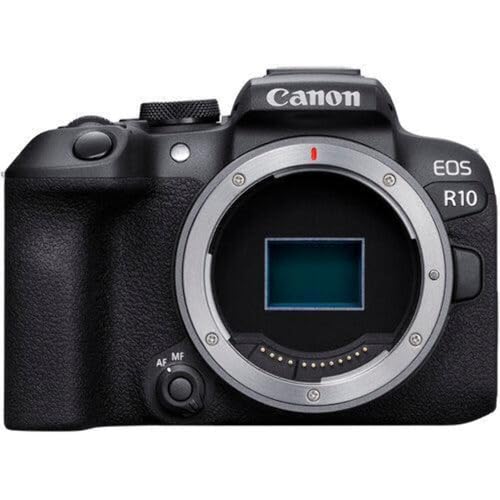
Canon Canon EOS R10

Our #1 pick

Canon EOS R10

The fast one. If you shoot kids, pets or sport, the R10's burst speed and tracking punch well above its price.

Don't buy it if you mainly shoot static subjects and video. You'd be paying for burst speed you won't use — the R50 covers everything else for less.

#ad · Live Amazon price as of November 22, 2026. No verified price → we show none.

If you want a mirrorless camera with a built-in viewfinder, the Canon EOS R10 is the one to buy. DPReview lists its electronic viewfinder at 2.36 million dots with 100% coverage - the same figure as every other finder on this page - and it is attached to a body that shoots 15 frames a second mechanically, which is what makes an eyepiece worth using rather than just worth having. Our budget pick is the Canon EOS R100, the cheapest body on this site with a viewfinder at all, as long as you accept a fixed rear screen and cropped 4K as the price. Prices come from the live price layer with an "as of" date; where there is no verified purchasable offer, we show no price.

This page exists because of an asymmetry. Almost everything else about a camera can be fixed later: a better lens, a microphone, a light, a tripod. A viewfinder cannot. It is built into the body or it is not, and several of the beginner cameras we recommend most often - the Sony ZV-E10, the Nikon Z30 and the Fujifilm X-M5 - deliberately leave it out to be smaller and cheaper. That is the right trade for someone who films themselves. It is the wrong trade for someone who photographs in daylight, and people discover which camp they are in after they have bought.

An eyepiece does three things a rear screen cannot. It is readable in direct sun, where an LCD becomes a mirror. It braces the camera against your face, which steadies a long lens by more than most beginners expect. And it shuts out everything except the frame, which changes how you compose. What it costs you is size, money and - on some bodies - battery. Our broader first-camera advice is best mirrorless cameras for beginners.

The short answer

Quick picks

#ProductBest forScorePrice
01
Canon Canon EOS R10
Canon EOS R10

The fast one. If you shoot kids, pets or sport, the R10's burst speed and tracking punch well above its price.

Action, sport and pets
8.2
$1,099.00Amazon
02
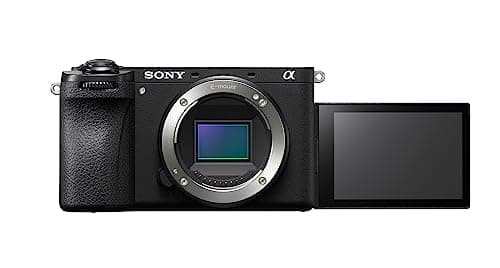
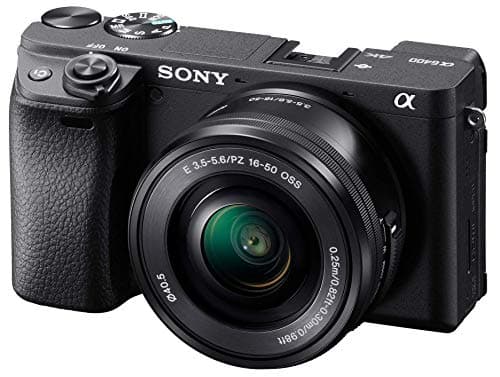
Sony Sony a6400
Sony a6400

Still one of the best autofocus systems you can buy at this price, in a compact body with a proper viewfinder.

Stills shooters who want a viewfinder
7.8
$802.74Amazon
03
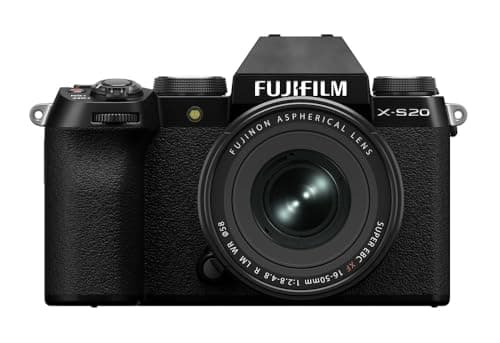
Fujifilm Fujifilm X-S20
Fujifilm X-S20

The one to buy if you'll grow fast: in-body stabilization, a huge battery, and Fujifilm's film simulations that get colors right in-camera.

Beginners who'll outgrow the basics quickly
8.2
$1,799.00Amazon
04
Sony Sony a6700
Sony a6700

Sony's flagship APS-C body finally adds in-body stabilization and AI-driven autofocus to the crop line — the a6400 grown up, at a step-up price.

The step-up APS-C Sony
8.6
$1,498.00Amazon
05
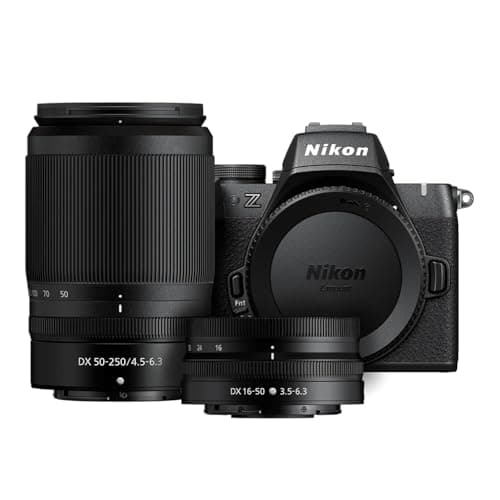
Nikon Nikon Z50 II
Nikon Z50 II

Flagship-grade autofocus in a beginner body — the Z50 II borrows the EXPEED 7 brain from Nikon's flagship cameras.

The best autofocus for the money
8.6
$1,346.95Amazon
06
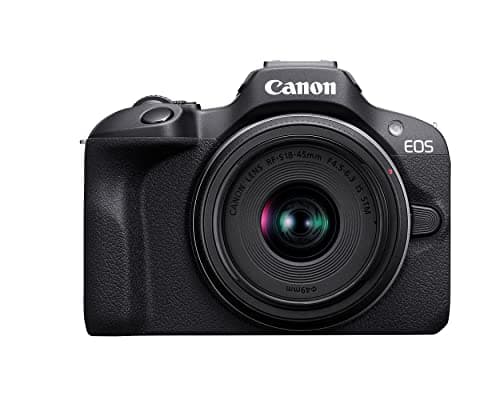
Canon Canon EOS R100
Canon EOS R100

The cheapest way into a real interchangeable-lens camera — and honest about what it gives up to get there.

The lowest price of entry
6.4
Check price →

#ad · Live prices from the Amazon Product API, as of November 22, 2026. Where we have no verified live price, we show none — we would rather leave a gap than print a number that has rotted.

In detail

The picks, in full

01
Canon Canon EOS R10

Action, sport and pets

Canon EOS R10

24MP APS-C15fps mechanical / 23fps electronicUncropped 4K30EVF + articulating screen
8.2/10

The fast one. If you shoot kids, pets or sport, the R10's burst speed and tracking punch well above its price.

Image quality
8
Autofocus
9
Video
8
Handling
8
Value
8

Pros

  • Burst speeds (up to 23fps electronic) that used to cost three times as much — it nails moving subjects
  • Same excellent Dual Pixel AF II and subject tracking as its pricier RF siblings
  • Uncropped 4K30 oversampled from 6K, plus a cropped 4K60 for slow motion

Cons

  • No in-body stabilization, so handheld video leans on the lens or a gimbal
  • Shares the R50's thin native RF-S lens problem

Don't buy this if…

…you mainly shoot static subjects and video. You'd be paying for burst speed you won't use — the R50 covers everything else for less.

$1,099.00View on Amazon

Price as of November 22, 2026. Prices change — Amazon's is the one that counts.

#ad · we may earn a commission from this link to Canon EOS R10

02
Sony Sony a6400

Stills shooters who want a viewfinder

Sony a6400

24MP APS-C4K30Real-time tracking AFEVF, tilting screen
7.8/10

Still one of the best autofocus systems you can buy at this price, in a compact body with a proper viewfinder.

Image quality
8
Autofocus
9
Video
7
Handling
7
Value
8

Pros

  • Class-leading real-time tracking and eye AF that still holds up years after release
  • Compact, pocketable-with-a-prime body with a built-in electronic viewfinder
  • Access to the entire, enormous Sony E-mount lens catalog, first- and third-party

Cons

  • No in-body stabilization, and the screen tilts rather than fully articulating (it flips up, not out to the side)
  • The menu system is dated and dense compared with Canon's and Nikon's

Don't buy this if…

…you're vlogging yourself. The screen tilts up and is blocked by a tripod or top-mounted mic — the ZV-E10's fully articulating screen is the better tool for that job.

$802.74View on Amazon

$999.9920% off

Price as of November 22, 2026. Prices change — Amazon's is the one that counts.

#ad · we may earn a commission from this link to Sony a6400

03
Fujifilm Fujifilm X-S20

Beginners who'll outgrow the basics quickly

Fujifilm X-S20

26MP APS-CIn-body stabilization6.2K/4K videoFilm simulations
8.2/10

The one to buy if you'll grow fast: in-body stabilization, a huge battery, and Fujifilm's film simulations that get colors right in-camera.

Image quality
9
Autofocus
8
Video
9
Handling
8
Value
7

Pros

  • In-body image stabilization (IBIS) — the only camera in this group with it — steadies both handheld stills and walking video
  • The largest battery here by a wide margin; it lasts a genuine full day of mixed shooting
  • Film simulations bake pleasing color into the file, so many people skip editing entirely

Cons

  • Costs meaningfully more than the other beginner bodies — it's the step-up option, not the entry point
  • The deep feature set has a steeper learning curve than the point-and-shoot-friendly R50 or Z30

Don't buy this if…

…this is your first-ever camera and the budget is tight. It's a lot of camera; a beginner shooting auto won't touch half of what they paid for. Start with the R50 or ZV-E10 and step up to this later.

$1,799.00View on Amazon

$1,899.955% off

Price as of November 22, 2026. Prices change — Amazon's is the one that counts.

#ad · we may earn a commission from this link to Fujifilm X-S20

04
Sony Sony a6700

The step-up APS-C Sony

Sony a6700

26MP APS-C sensorIn-body 5-axis stabilization4K60 oversampled videoAI-based subject autofocusSony E mount (APS-C)
8.6/10

Sony's flagship APS-C body finally adds in-body stabilization and AI-driven autofocus to the crop line — the a6400 grown up, at a step-up price.

Image quality
9
Autofocus
10
Video
9
Handling
8
Value
7

Pros

  • AI-based subject recognition tracks people, animals and birds with a tenacity that outclasses every cheaper body in this class
  • In-body 5-axis stabilization steadies handheld stills and smooths walking video — the piece the a6400 never had
  • A fully articulating screen and a modernized menu fix the two things owners complained about most on older Sony APS-C bodies

Cons

  • Costs meaningfully more than the a6400 and the entry-level bodies — this is the premium APS-C option, not a budget pick
  • The deep, enthusiast-grade feature set is more camera than an absolute first-timer needs on day one

Don't buy this if…

…you are a first-time buyer on a tight budget, or you shoot mostly stills in good light. Much of what you pay for — IBIS, 4K60, AI tracking — goes untouched at that level, and the a6400 covers the basics for far less.

$1,498.00View on Amazon

Price as of November 22, 2026. Prices change — Amazon's is the one that counts.

#ad · we may earn a commission from this link to Sony a6700

05
Nikon Nikon Z50 II

The best autofocus for the money

Nikon Z50 II

21MP APS-CEXPEED 7 processorUncropped 4K30Deep grip + EVF
8.6/10

Flagship-grade autofocus in a beginner body — the Z50 II borrows the EXPEED 7 brain from Nikon's flagship cameras.

Image quality
8
Autofocus
10
Video
8
Handling
9
Value
8

Pros

  • The EXPEED 7 processor brings subject-detection autofocus straight from the Z8/Z9 — genuinely a class above at this price
  • The chunkiest, most confident grip of any camera here; it feels like a bigger camera than it is
  • Bright, large viewfinder and a dedicated Picture Control button for quick color looks

Cons

  • 21MP is the lowest resolution in this group — fine for almost everyone, but less cropping room than the 24–26MP rivals
  • Nikon's Z DX native lens lineup is small, though FTZ-adapted F-mount glass fills the gap cheaply

Don't buy this if…

…you want the deepest choice of tiny, cheap native lenses. Nikon's Z DX range is the thinnest of the big four; you'll lean on adapters sooner.

$1,346.95View on Amazon

Price as of November 22, 2026. Prices change — Amazon's is the one that counts.

#ad · we may earn a commission from this link to Nikon Z50 II

06
Canon Canon EOS R100

The lowest price of entry

Canon EOS R100

24MP APS-C4K24 (cropped)Fixed screenCanon RF-mount
6.4/10

The cheapest way into a real interchangeable-lens camera — and honest about what it gives up to get there.

Image quality
7
Autofocus
6
Video
5
Handling
6
Value
8

Pros

  • Usually the least expensive new mirrorless body with a kit lens — a genuine on-ramp
  • The 24MP sensor and viewfinder take lovely stills in good light, same as pricier Canons
  • Small, light and dead simple to point and shoot

Cons

  • The screen is fixed — it doesn't tilt or flip, which rules it out for filming yourself
  • 4K is cropped and uses slower contrast-detect AF; smooth eye tracking is limited to 1080p

Don't buy this if…

…you want to vlog or shoot serious 4K. The fixed screen and cropped, slow-focusing 4K are exactly the corners cut to hit the price. Stretch to the R50 if video matters at all.

Check price on Amazon →

No buyable offer at the last price check (November 22, 2026). We show nothing rather than a stale number.

#ad · we may earn a commission from this link to Canon EOS R100

How we ranked these six

Every pick here has an electronic viewfinder. That is the entry requirement, not the ranking. The order comes from four things, in this priority:

  1. Is the camera behind the finder fast enough to use it? An eyepiece earns its keep on moving subjects. A body that shoots four frames a second gives you a viewfinder you look through; a body that shoots fifteen gives you one you shoot with.
  2. What the finder is specified at. Five of the six are listed at 2.36 million dots with 100% coverage. That is the standard at this price, and it means none of these is meaningfully sharper than another - which is exactly why we rank on the camera around it.
  3. Does the rear screen still work for video? A viewfinder is useless when the camera is pointed at you. Bodies that pair a finder with a fully articulating screen cover both jobs; a tilt-only or fixed screen does not.
  4. How long it lasts. CIPA ratings vary enormously across these six - from 250 shots to 750 - and a day of eye-level shooting is where that shows up. We quote the figure our source lists, without re-labeling it.

One honesty note on the table below. We quote a viewfinder dot count only where a source we cite publishes one. For five of these bodies DPReview's specification pages do; for the Canon EOS R100 we could not verify a published figure, so its row says only that the finder is electronic. We would rather leave a cell thin than fill it from memory.

The six, side by side

CameraViewfinderRear screenCIPA rating
Canon EOS R102.36M dots, 100% coverageFully articulating450 shots
Sony a64002.36M dots, 100% coverageTilting only410 shots
Fujifilm X-S202.36M dots, 100%, 0.93x magnificationFully articulated750 shots
Sony a67002.36M dots, 100% coverageFully articulating570 shots
Nikon Z50 II2.36M dots, 100% coverageFully articulating250 shots
Canon EOS R100Electronic (no published dot count in our sources)FixedNot in our sources

Magnification figures are quoted only for the X-S20 because it is the one body here whose specification page lists one. They are also not directly comparable between manufacturers, which is why we do not build a column out of them.

1. Canon EOS R10 - the finder you will actually use

The R10 pairs the class-standard 2.36M-dot, 100%-coverage finder with 15fps mechanical and 23fps electronic shooting and Canon's Dual Pixel autofocus. That combination is the whole point: a viewfinder is how you follow a child running, a dog turning or a bird leaving a branch, and a slow camera makes the eyepiece decorative. It also has a fully articulating screen, so you are not choosing between eye-level stills and filming yourself.

The honest cons, from the same specification page: it is not environmentally sealed, which matters if you shoot in weather, and it has no in-body stabilization, so handheld video depends on a stabilized lens. DPReview lists it at 426g with a 450-shot CIPA rating and a 22.2 x 14.8mm sensor - slightly smaller than the Sony and Nikon APS-C sensors here, which is where Canon's 1.6x crop factor comes from. Our full write-up is the Canon EOS R10 review, and because the R10, R50 and R100 all share the RF-S mount, the glass that suits them is ranked together in best lenses for the Canon EOS R50.

2. Sony a6400 - the cheapest sealed body with a finder

Same 2.36M-dot, 100%-coverage finder, the best autofocus of any camera at its price, and - the part people miss - DPReview lists it as environmentally sealed, which the Canon R10 is not. At 403g it is the lightest body on this page. For a stills-first photographer who wants an eyepiece and does not want to spend more, this is the value answer.

Its limits are real and they are both about the screen rather than the finder. The rear LCD tilts but does not articulate, so it will not face you for video, and the camera's menus are a generation behind. The finder itself sits in the top-left corner of the body rather than centrally, which some people find awkward with glasses. There is no in-body stabilization, and the 410-shot CIPA rating is mid-pack here. Details in the Sony a6400 review.

3. Fujifilm X-S20 - the most comfortable day of eye-level shooting

If you intend to shoot through the finder all day, this is the body that makes it pleasant. DPReview lists the X-S20's electronic viewfinder at 2,360,000 dots, 100% coverage and 0.93x magnification - the only magnification figure we can cite on this page - with a fully articulated screen, sensor-shift stabilization rated at 7 stops by CIPA, and a 750-shot CIPA battery rating. That battery number is three times the Nikon's, and it is the difference between carrying a spare and not thinking about it.

It is also the most expensive camera here by a wide margin, and DPReview lists it as not environmentally sealed, which is an odd omission at this price. At 491g it is heavier than the Canon and the Sony a6400. Buy it if the in-body stabilization and the battery life are worth the step up; the cheaper bodies on this page have the same finder resolution. Our write-up is the Fujifilm X-S20 review.

4. Sony a6700 - the best camera with a finder, not the best finder

The a6700 is the strongest body on this page: 26MP, AI-based subject recognition that tracks people, animals and birds, in-body 5-axis stabilization, 4K60, a fully articulating screen, environmental sealing and a 570-shot CIPA rating. Its finder, though, is specified exactly like the a6400's - 2.36M dots, 100% coverage. You are paying for the camera, not the eyepiece.

That is the honest case against it on this particular page. If the viewfinder is your reason for buying, the a6400 gives you the same view for considerably less and the R10 gives you a faster burst. The a6700 is the right answer when you want the whole camera to be better - see the Sony a6700 review and the head-to-head in Sony a6400 vs a6700. It is also more camera than a first-time buyer needs on day one.

5. Nikon Z50 II - the most DSLR-like way to hold a camera

The Z50 II is the biggest body here at a listed 550g, and that is the reason to want it: a deep grip and a camera that sits against your face like an SLR rather than perching there. The finder is the class-standard 2.36M dots at 100% coverage, the screen fully articulates, and DPReview lists the body as environmentally sealed. For big hands and long lenses it is the most comfortable eye-level camera on the page.

The cost is stamina. DPReview lists its CIPA rating at 250 shots, the lowest of the six by a long way and a third of the X-S20's - plan on spare batteries for a full day. Its 20.9MP sensor also has the lowest resolution here, which matters only if you crop hard. Full write-up: Nikon Z50 II review.

6. Canon EOS R100 - the budget pick

This is the cheapest route to an eye-level viewfinder on this site, and for a photographer who mainly wants to look through a camera in daylight it does the job: a 24MP APS-C sensor, a viewfinder, and Canon's RF mount in front of it. If an eyepiece is the feature you refuse to give up and the budget is fixed, this is the pick.

We will not soften what it gives up to get there. The rear screen is fixed - it does not tilt or flip - which rules it out for filming yourself entirely, and makes low and high angles awkward even for stills. Its 4K is cropped and focuses with slower contrast-detect autofocus, with smooth eye tracking limited to 1080p. And we could not verify a published dot count for its finder from the sources this site cites, so we do not claim one. If video matters at all, the R10 above or the R50 is the body to stretch for - the comparison is in Canon R50 vs R100 and the detail in the Canon EOS R100 review.

The cameras we recommend that have no viewfinder

This is the part most roundups skip, and it is the reason to read this page before you buy something we praised elsewhere. Three of our most-recommended beginner bodies have no eyepiece at all:

  • Sony ZV-E10 - our safest video-first first camera, and bright-daylight stills are a squint on it. The missing finder is the one thing you cannot add later.
  • Nikon Z30- Nikon's vlogging-first body: no viewfinder and no in-body stabilization, with a flip screen and a grip designed for holding the camera at arm's length.
  • Fujifilm X-M5 - trims both the viewfinder and stabilization to hit its size and price. The X-S20 above is the same system with both put back.

All three are good cameras and we still rank them. They are simply built for pointing the camera at yourself, which is the opposite job. If you do both, best vlogging cameras with a flip screen covers the screen side of the same decision, and the bodies that appear on both pages - the R10, the a6700, the Z50 II and the X-S20 - are the ones that do not force a choice.

One body worth naming and not ranking: the Sony a6100 has a viewfinder and a tilting screen and is the cheapest door into Sony E-mount, but its listing currently shows no verified purchasable offer, so it gets no card and no price here. If you find one in stock, the a6400 comparison is Sony a6100 vs a6400.

Do you actually need one?

Be honest about what you shoot. If most of your photographs happen outdoors in bright light, or you use a telephoto lens, or you have ever given up on a shot because you could not see the screen, buy a body with a finder - the five picks above with published finder specifications all use the same 2.36M-dot panel, so the decision is really about the camera around it. If you mostly film yourself, or shoot indoors, or want the smallest possible camera, the money is better spent on a lens. Our framework for that trade is how much to spend on a camera, and how to choose a mirrorless camera walks the rest of the spec sheet.
How we picked

We do not run a testing lab

We compiled the manufacturers' published specifications and manuals, did the cost math, and scored each product against a published rubric. The scores are judgments from that documented research — they are notmeasurements we took, because we do not have a lab and we are not going to pretend we do. Where a number came from someone else's testing, we name and link them in Sources.

Questions

Frequently asked

What is the best mirrorless camera with a viewfinder?
The Canon EOS R10. Its electronic viewfinder is listed at 2.36 million dots with 100% coverage, the same as every other finder on this page, but it sits on a body that shoots 15fps mechanically with a fully articulating screen - so the eyepiece is useful for action rather than just present. The cheapest body here with a finder is the Canon EOS R100. See the Canon EOS R10 review.
Do all mirrorless cameras have a viewfinder?
No, and that is the single most common surprise for first-time buyers. Several popular beginner bodies - the Sony ZV-E10, the Nikon Z30 and the Fujifilm X-M5 - have no eyepiece at all, because dropping it makes them smaller and cheaper and they are designed for filming yourself on the rear screen. It is the one feature you cannot add afterwards.
Is an electronic viewfinder better than the rear screen?
For different jobs. An eyepiece is readable in direct sunlight where an LCD becomes a mirror, and bracing the camera against your face steadies a long lens noticeably. The rear screen wins whenever the camera is pointed at you, held overhead or down at ground level. The bodies on this page that have both a finder and a fully articulating screen are the ones that do not force the choice.
What viewfinder resolution do I need?
At this price the question mostly answers itself: five of the six bodies here are listed at 2.36 million dots with 100% coverage, so you are not choosing between finders, you are choosing between cameras. Spend the comparison effort on autofocus, burst rate, screen type and battery instead - that is the order we ranked them in.
Does a viewfinder use more battery?
CIPA ratings differ a great deal across these bodies - DPReview lists 250 shots for the Nikon Z50 II and 750 for the Fujifilm X-S20 - and a long day of eye-level shooting is where that gap becomes obvious. We quote the figure our source publishes without re-labeling it, so treat those numbers as a relative guide between these cameras rather than a promise about your day.
Which cheap mirrorless camera has a viewfinder?
The Canon EOS R100 is the least expensive body on this site with one, and the Sony a6400 is the cheapest that is also environmentally sealed and pairs the finder with modern autofocus. The R100's fixed rear screen is the catch - it does not tilt or flip at all. Cheaper bodies in general are ranked in best mirrorless cameras under $500.

Keep reading

Receipts

Sources

We do not run a testing lab, and we do not pretend to. Specs come from manufacturer sheets and manuals; where a figure came from someone else's measurement, we name and link them. Where we could not verify something, we say so on the page rather than quietly leaving it out. Read our full method.