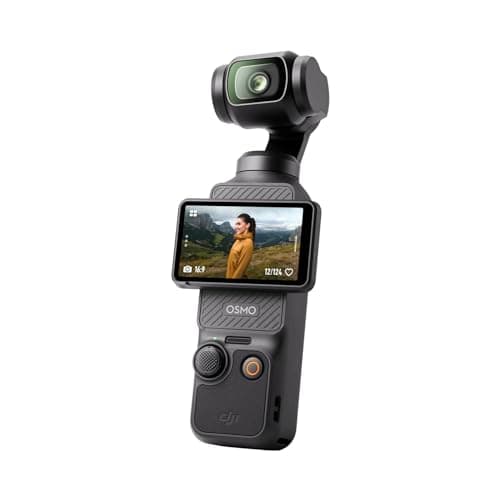
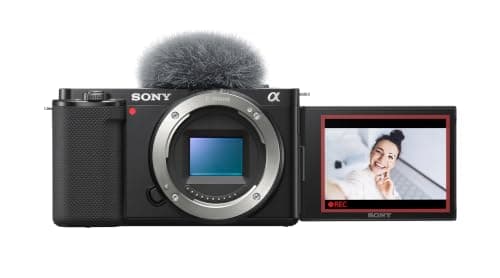
The best vlogging camera with a flip screen is the Sony ZV-E10. Its screen is fully articulating - hinged at the side so it swings out and rotates to face forward - which means it still works with a microphone mounted in the hot shoe, and it pairs that with a microphone input and a headphone output. It is for the creator who films themselves talking and intends to add lenses and audio gear. Our budget pick is the DJI Osmo Pocket 3, the cheapest camera here with a live price, whose screen rotates to switch between vertical and horizontal while its built-in gimbal keeps the shot level. Prices come from the live price layer with an "as of" date; where there is no verified purchasable offer, we show no price.
"Flip screen" covers three mechanisms that behave very differently, and choosing the wrong one is the most common mistake in this category. A fully articulating screen is hinged on the left side and swings out, then rotates to face the front. A tilting screen hinges at the top or bottom and flips up over the camera. A rotating screen, as on the Osmo Pocket 3, spins the display itself between orientations. Only the first keeps working once you put something in the hot shoe - a tilting screen flips up into the microphone and is blocked by it, which people discover after they have bought both.
That is why this page is ranked on screen mechanism first and camera second. Every body below lets you see yourself while recording; the order reflects how well that holds up in the kit you will actually be holding. If you want the broader creator ranking rather than the screen-led one, start at best vlogging cameras for YouTube or best vlogging cameras for beginners.
What we required of a camera to rank here
- The screen has to face the front while recording. A screen that tilts only downward, or a fixed screen, is disqualifying however good the camera is - which is why the Canon EOS R100 is not here.
- It has to clear accessories, or we say that it does not. A tilting screen blocked by a shoe-mounted microphone is a real limitation and it is stated on every pick where it applies.
- 4K recording. Every pick shoots 4K, though two of them crop it, which is noted.
- A live price from the price layer. Every pick has a verified purchasable offer, so this ranking reflects what you can buy today.
The six, and how each screen behaves
| Camera | Screen type | Clears a shoe-mounted mic? | Main compromise |
|---|
| Sony ZV-E10 | Fully articulating, side-hinged | Yes | 4K30 is cropped; no viewfinder |
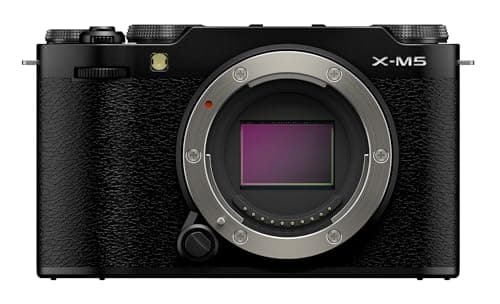
| Fujifilm X-M5 | Fully articulating | Yes | No in-body stabilization and no viewfinder |
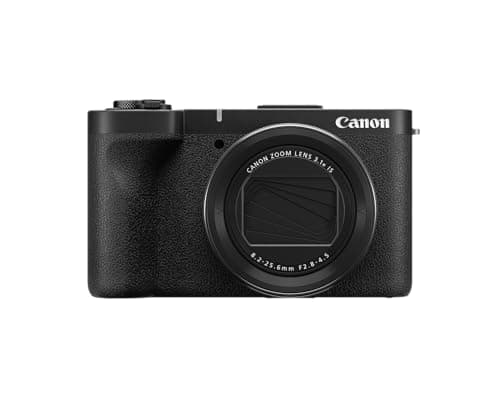
| Canon PowerShot V1 | Fully articulating | Yes | Fixed 16-50mm equivalent zoom - no lens changes |
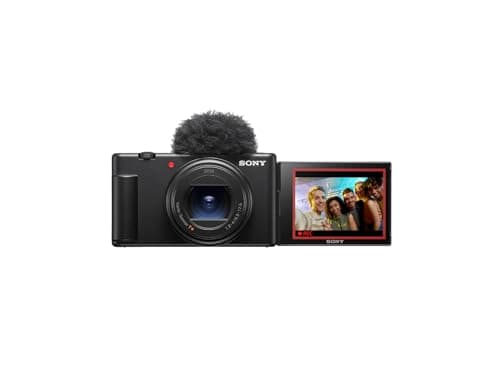
| Sony ZV-1 II | Fully articulating | Yes | 1-inch sensor; no headphone output |
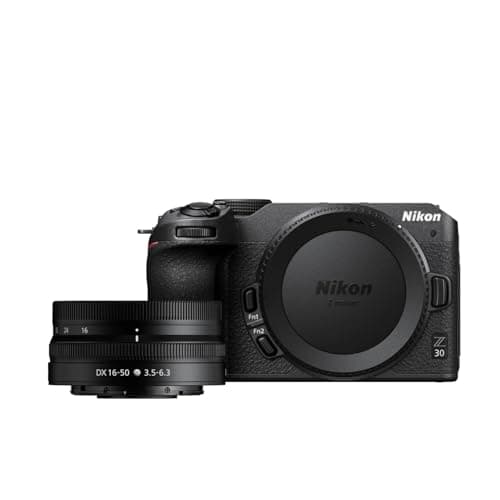
| Nikon Z30 | Fully articulating | Yes | No viewfinder; thin DX lens range |
| DJI Osmo Pocket 3 | Rotating touchscreen | No hot shoe at all | No interchangeable lens; small body, small battery |
Why the Sony ZV-E10 wins
It is the camera built for this specific job. The screen is side-hinged and fully articulating, so it swings clear of the top of the camera entirely - you can run a shotgun mic or a wireless receiver in the hot shoe and still see your own framing, which is the whole point and which a tilting screen cannot do. Sony then adds the two ports that matter: a microphone input so you are not using the on-board mic, and a headphone output so you can hear that the microphone is actually working before you record a twenty-minute take.
Two honest limitations. Its 4K30 is cropped, which makes the frame tighter than the lens suggests and effectively demands a wide lens if you hold the camera at arm's length - the options are in best lenses for vlogging. And there is no viewfinder, so bright sunlight is awkward. The review is Sony ZV-E10 review and the obvious comparison is Sony ZV-E10 vs ZV-1 II.
If you want the footage to look finished: the Fujifilm X-M5
The X-M5 has the same fully articulating screen and adds a 26-megapixel sensor, 6K open-gate capture and a physical film-simulation dial, which applies a graded look in camera. For a creator who does not want to color-grade, that is a genuine time saving rather than a styling gimmick - your clips come off the card already looking like a choice.
It has no in-body stabilization and no viewfinder, so walking shots want a gimbal or a stabilized lens. The full write-up is the Fujifilm X-M5 review, and the 4K-capable field is ranked in best 4K vlogging cameras.
If you want one camera with no lens decisions: the Canon PowerShot V1 or the Sony ZV-1 II
Both of these put a zoom lens permanently on the front and a flip screen on the back, which removes an entire category of decision from your life. The Canon PowerShot V1 is the more capable of the two: a 22-megapixel 1.4-inch sensor - larger than the 1-inch sensors this class usually uses - a 16-50mm equivalent zoom, 4K60 with uncropped 4K30, and a built-in 3-stop ND filter, which is a feature normally reserved for cinema cameras and genuinely useful for filming outdoors at a wide aperture.
The Sony ZV-1 IIis the lighter, simpler one: a 20-megapixel 1-inch sensor behind an 18-50mm equivalent zoom that goes wider than the Canon, which suits holding the camera at arm's length. Its omission is a headphone output. Neither accepts a different lens, which is the trade for the size. The head-to-head is Canon PowerShot V1 vs Sony ZV-1 II and both sit in best compact vlogging cameras.
If handling is what you care about: the Nikon Z30
The Z30 has the deepest grip of any camera on this page, and holding a camera out at arm's length for a four-minute take is exactly when a grip stops being a detail. Its screen is fully articulating, it records uncropped 4K30 - better than the ZV-E10 on that one point - and the 21-megapixel sensor is plenty for video.
There is no viewfinder, and Nikon's DX lens range is thin, so the camera you buy is close to the camera you keep. The full write-up is the Nikon Z30 review, and it is also a pick in best vlogging cameras for travel.
The budget pick: DJI Osmo Pocket 3
The Pocket 3 is the cheapest camera here with a live price and its screen works differently from everything above: the display rotates between vertical and horizontal, and the camera itself sits on a built-in 3-axis gimbal that keeps the horizon level while you walk. For walking-and-talking footage that mechanical stabilization beats every electronically stabilized camera on this page, and it fits in a coat pocket.
The compromises are size-shaped: a 1-inch sensor, no interchangeable lens, no hot shoe for a microphone, and a small battery. It is the right camera for someone who films moving and the wrong one for a seated talking-head channel. The review is DJI Osmo Pocket 3 review and the alternatives are in alternatives to the DJI Osmo Pocket 3.
What we would actually buy
For a channel you intend to keep: a ZV-E10, a wide lens and a shoe-mounted microphone, because the articulating screen is what lets those three things coexist. For travel and movement: the Osmo Pocket 3, and nothing else to carry. For someone who wants to press record and not think: the PowerShot V1. The one thing we would not do is buy a camera with a tilting screen and then a microphone, because the mic blocks the screen and you will be filming blind - the microphone options that sit off-camera are in best wireless microphones.