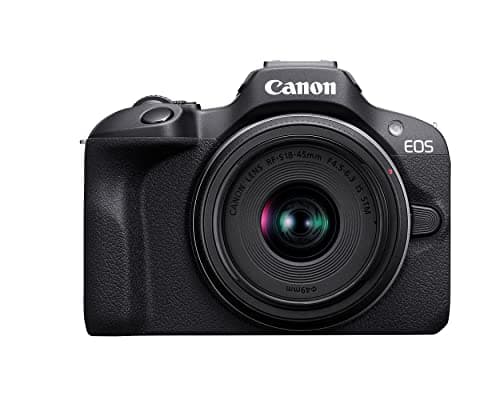
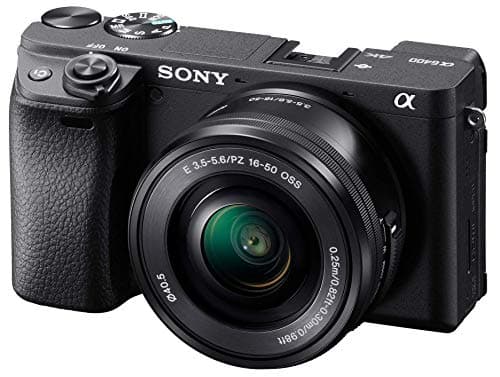
The best camera for family photos is the Sony a6400. Real-time eye tracking locks onto a face and stays on it while the face runs away from you, which is the single hardest thing a family camera has to do, and the electronic viewfinder means you can still see what you are doing in bright sun at the beach. It is for the parent who wants photographs of their children that look better than their phone's and does not want to learn photography first. Our budget pick is the Canon EOS R100, the cheapest body here with a live price and a genuine 24-megapixel camera as long as you never need to see yourself in the screen. Prices come from the live price layer with an "as of" date; where there is no verified purchasable offer, we show no price.
Family photography looks easy and is technically difficult, which is why phones struggle with it. Your subjects are small, close, moving unpredictably, and usually indoors where there is not much light. That combination defeats autofocus systems and forces slow shutter speeds, and the result is the blurred photograph of a toddler mid-turn that every parent's camera roll is full of. Two things fix it: autofocus that recognizes a face and holds it, and a lens that gathers two or three times the light of a kit zoom.
The second one matters more than anything on this page, so we will say it before the rankings: buy the cheapest body here that has good eye autofocus, and spend the rest on a fast prime. A 35mm or 50mm-equivalent f/1.4 or f/1.8 lens is what turns a dim living room into a usable studio, and no camera body does that. The cheap options are in best lens under $200 and best 50mm lenses.
What we required of a body to rank here
- Face and eye detection autofocus that tracks. Detecting a face in a static frame is not enough; it has to follow one across the frame and toward the lens.
- Good enough high-ISO output for an indoor room. Every pick is a 21- to 26-megapixel APS-C sensor, which is several times the light-gathering area of a phone sensor.
- Something you will actually carry. A family camera that lives in a cupboard takes no photographs. Every body here is small and light.
- A live price from the price layer. Every pick has a verified purchasable offer, so the ranking reflects what you can buy today.
The six, and what each one is for
| Body | Sensor | Why it suits family photos | Main compromise |
|---|
| Sony a6400 | 24MP APS-C | Real-time eye tracking plus a viewfinder for bright sun | Tilting screen; no in-body stabilization |
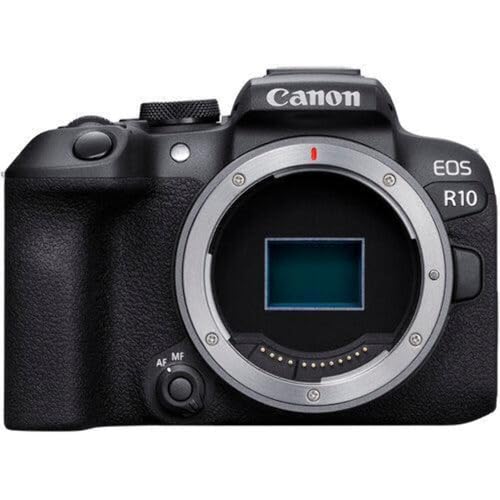
| Canon EOS R10 | 24MP APS-C | 15fps/23fps burst catches the frame between two blinks | No in-body stabilization; thin RF-S lens range |
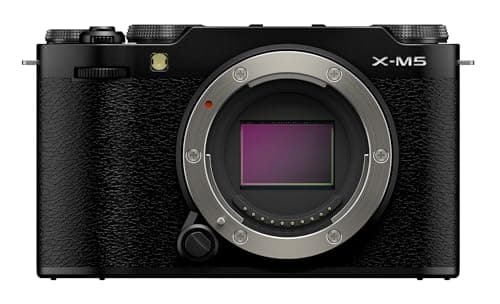
| Fujifilm X-M5 | 26MP APS-C | Film simulations give a finished look with no editing | No viewfinder, no in-body stabilization |
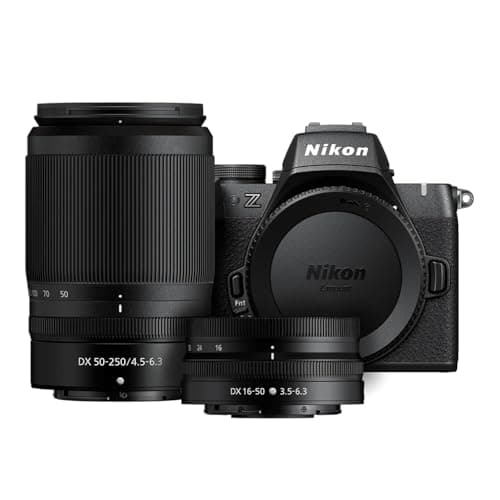
| Nikon Z50 II | 21MP APS-C | EXPEED 7 subject detection from Nikon's pro bodies | Most expensive here; lowest resolution |
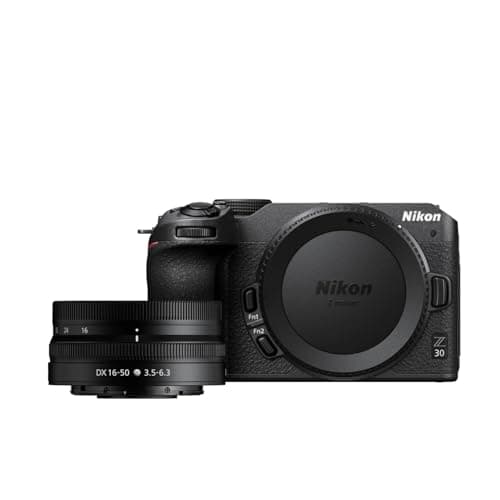
| Nikon Z30 | 21MP APS-C | Deepest grip and an articulating screen for group selfies | No viewfinder; thin DX lens range |
| Canon EOS R100 | 24MP APS-C | The cheapest real camera here | Fixed screen; cropped 4K24 video |
Why the Sony a6400 wins
Sony's real-time tracking was the first autofocus system that held a human eye through movement rather than re-finding it every few frames, and for photographing children that is the whole game. You half-press, the box latches onto an eye, and it stays there while the child turns, runs or hides behind a sofa. Nothing else on this page at this price does it as consistently. The viewfinder matters more than people expect too - outdoors in summer a rear screen washes out, and a viewfinder is the difference between composing and guessing.
The compromises: the screen tilts rather than flipping out, so it is awkward for a group selfie and poor for filming yourself, and there is no in-body stabilization. For stills of moving children neither matters much, because you are using a fast shutter speed anyway. The review is Sony a6400 review, and the lens to put on it is in best lenses for the Sony a6400.
If your children are older and faster: the Canon R10 or the Nikon Z50 II
Once children are running rather than toddling, the problem shifts from focus to timing. The Canon EOS R10answers it with speed: 15 frames a second mechanically and 23 electronically, which means the frame where both children are looking at you actually exists somewhere in the burst. Canon's Dual Pixel autofocus is also the most forgiving system for someone who has never used a camera - it rarely focuses on the wrong thing.
The Nikon Z50 IIbrings the EXPEED 7 processor down from Nikon's professional bodies, so its subject detection is a class above its price, and it has the kind of deep grip that makes a camera comfortable one-handed while the other hand holds a child. Both are ranked for fast subjects in best mirrorless camera for sports, which is the same technical problem at longer range.
If you do not want to edit: the Fujifilm X-M5
The honest truth about family photographs is that most of them are never edited, so the pictures your camera produces unaided are the pictures you will keep. The X-M5 is built around that: a physical film-simulation dial that applies a finished look in camera, and a 26-megapixel sensor, the highest resolution on this page. Photographs come off the card looking intentional rather than flat.
It has no viewfinder and no in-body stabilization, which are real omissions - in bright sun you are composing on a screen you cannot see well. The review is Fujifilm X-M5 review.
If you want everyone in the shot: the Nikon Z30
The Z30's fully articulating screen flips out to the side so you can see the whole family including yourself, which is the one thing a tilting screen cannot do, and it has the deepest grip in this group. It shoots uncropped 4K30 for the video half of family life. There is no viewfinder, and Nikon's DX lens choice is thin - the realistic options are in best lenses for Nikon Z. The review is Nikon Z30 review.
The budget pick: Canon EOS R100
The R100 is the cheapest camera here with a live price and it is a real 24-megapixel APS-C camera, not a toy - with a fast prime on the front it will take photographs of your children that your phone cannot. We rank it last rather than first because of two specific cuts: the screen is fixed, so no group selfies and no filming yourself, and its 4K is cropped and capped at 24 frames a second.
For a parent who wants better stills and does not care about video or selfies, it is the sensible amount of money to spend, and the difference goes into glass. The review is Canon R100 review and the cheap end of the market is ranked in best budget mirrorless cameras.
What we would actually buy
A Sony a6400 and a fast 30mm or 35mm prime, and nothing else. That kit costs less than a mid-range body alone and it solves both halves of the problem - the autofocus holds the child, the lens handles the living room. If the budget is tighter, an R100 with the same kind of prime beats a better body with a kit zoom every time. And if what you actually want is video of family life rather than photographs, the cameras built for that are in best vlogging cameras with a flip screen.