Skip to content
Focal & Frame

Cameras · Mirrorless Cameras

The Best Mirrorless Camera for Sports

Sports photography is decided by three numbers and one lens. Five bodies with live prices, ranked on frame rate and autofocus rather than on sensor bragging rights.

By Stephen V.Updated How we research
#ad

We earn a commission when you buy through our Amazon links, at no extra cost to you. It never decides our rankings — we say so when the cheaper pick is the better buy. How this works.

Canon Canon EOS R10

Our #1 pick

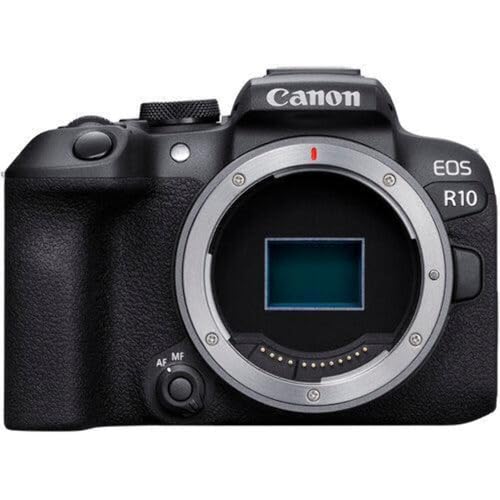
Canon EOS R10

The fast one. If you shoot kids, pets or sport, the R10's burst speed and tracking punch well above its price.

Don't buy it if you mainly shoot static subjects and video. You'd be paying for burst speed you won't use — the R50 covers everything else for less.

#ad · Live Amazon price as of November 21, 2026. No verified price → we show none.

The best mirrorless camera for sports is the Canon EOS R10. It shoots 15 frames a second with the mechanical shutter and 23 with the electronic one, which is a higher burst rate than any other body on this page, and Canon's Dual Pixel autofocus tracks a moving subject reliably enough that you can concentrate on framing. It is for the parent, student or club photographer shooting a fast field sport on a budget. Our budget pick is the Sony a6400, the cheapest body here with a live price and a real-time tracking system that still holds a running subject better than its age suggests. Prices come from the live price layer with an "as of" date; where there is no verified purchasable offer, we show no price.

Sports is the one genre where the body matters more than the lens, which inverts the advice we give everywhere else on this site. Three specifications decide whether you come home with the shot: how many frames a second the camera takes, how well its autofocus holds a subject moving toward you, and how long it can keep shooting before the buffer fills and the camera stops responding. Resolution is almost irrelevant - a 21-megapixel file of the right moment beats a 26-megapixel file of the moment after it.

The fourth thing that decides it is reach, and that is a lens question. A 250mm or 300mm zoom on an APS-C body frames like roughly 375-450mm, which is what you need from the side of a pitch; without it, the fastest camera here will produce small, distant subjects. Budget for the lens at the same time as the body - the options are in best telephoto lenses for beginners and best zoom lens under $500.

The short answer

Quick picks

#ProductBest forScorePrice
01
Canon Canon EOS R10
Canon EOS R10

The fast one. If you shoot kids, pets or sport, the R10's burst speed and tracking punch well above its price.

Action, sport and pets
8.2
$1,099.00Amazon
02
Sony Sony a6700
Sony a6700

Sony's flagship APS-C body finally adds in-body stabilization and AI-driven autofocus to the crop line — the a6400 grown up, at a step-up price.

The step-up APS-C Sony
8.6
$1,498.00Amazon
03
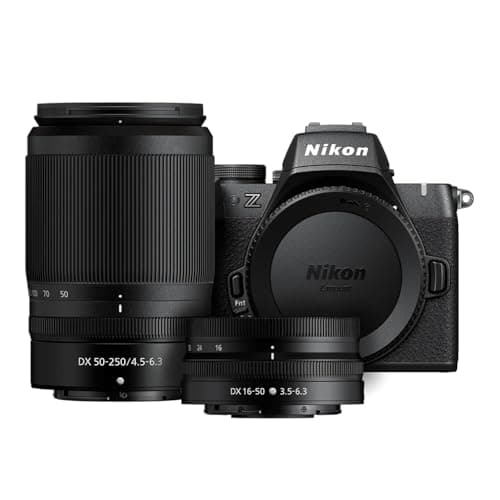
Nikon Nikon Z50 II
Nikon Z50 II

Flagship-grade autofocus in a beginner body — the Z50 II borrows the EXPEED 7 brain from Nikon's flagship cameras.

The best autofocus for the money
8.6
$1,346.95Amazon
04
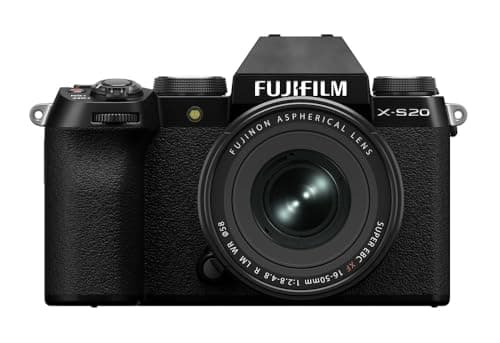
Fujifilm Fujifilm X-S20
Fujifilm X-S20

The one to buy if you'll grow fast: in-body stabilization, a huge battery, and Fujifilm's film simulations that get colors right in-camera.

Beginners who'll outgrow the basics quickly
8.2
$1,799.00Amazon
05
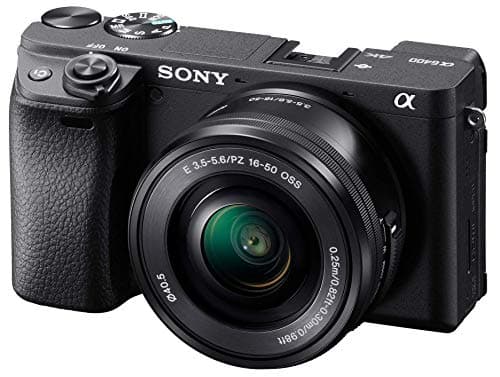
Sony Sony a6400
Sony a6400

Still one of the best autofocus systems you can buy at this price, in a compact body with a proper viewfinder.

Stills shooters who want a viewfinder
7.8
$802.74Amazon

#ad · Live prices from the Amazon Product API, as of November 21, 2026. Where we have no verified live price, we show none — we would rather leave a gap than print a number that has rotted.

In detail

The picks, in full

01
Canon Canon EOS R10

Action, sport and pets

Canon EOS R10

24MP APS-C15fps mechanical / 23fps electronicUncropped 4K30EVF + articulating screen
8.2/10

The fast one. If you shoot kids, pets or sport, the R10's burst speed and tracking punch well above its price.

Image quality
8
Autofocus
9
Video
8
Handling
8
Value
8

Pros

  • Burst speeds (up to 23fps electronic) that used to cost three times as much — it nails moving subjects
  • Same excellent Dual Pixel AF II and subject tracking as its pricier RF siblings
  • Uncropped 4K30 oversampled from 6K, plus a cropped 4K60 for slow motion

Cons

  • No in-body stabilization, so handheld video leans on the lens or a gimbal
  • Shares the R50's thin native RF-S lens problem

Don't buy this if…

…you mainly shoot static subjects and video. You'd be paying for burst speed you won't use — the R50 covers everything else for less.

$1,099.00View on Amazon

Price as of November 21, 2026. Prices change — Amazon's is the one that counts.

#ad · we may earn a commission from this link to Canon EOS R10

02
Sony Sony a6700

The step-up APS-C Sony

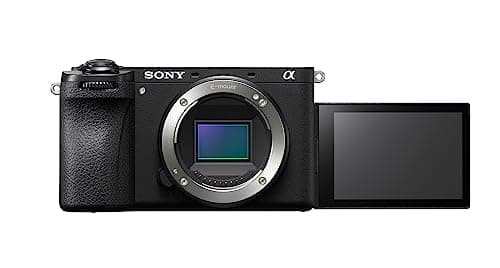
Sony a6700

26MP APS-C sensorIn-body 5-axis stabilization4K60 oversampled videoAI-based subject autofocusSony E mount (APS-C)
8.6/10

Sony's flagship APS-C body finally adds in-body stabilization and AI-driven autofocus to the crop line — the a6400 grown up, at a step-up price.

Image quality
9
Autofocus
10
Video
9
Handling
8
Value
7

Pros

  • AI-based subject recognition tracks people, animals and birds with a tenacity that outclasses every cheaper body in this class
  • In-body 5-axis stabilization steadies handheld stills and smooths walking video — the piece the a6400 never had
  • A fully articulating screen and a modernized menu fix the two things owners complained about most on older Sony APS-C bodies

Cons

  • Costs meaningfully more than the a6400 and the entry-level bodies — this is the premium APS-C option, not a budget pick
  • The deep, enthusiast-grade feature set is more camera than an absolute first-timer needs on day one

Don't buy this if…

…you are a first-time buyer on a tight budget, or you shoot mostly stills in good light. Much of what you pay for — IBIS, 4K60, AI tracking — goes untouched at that level, and the a6400 covers the basics for far less.

$1,498.00View on Amazon

Price as of November 21, 2026. Prices change — Amazon's is the one that counts.

#ad · we may earn a commission from this link to Sony a6700

03
Nikon Nikon Z50 II

The best autofocus for the money

Nikon Z50 II

21MP APS-CEXPEED 7 processorUncropped 4K30Deep grip + EVF
8.6/10

Flagship-grade autofocus in a beginner body — the Z50 II borrows the EXPEED 7 brain from Nikon's flagship cameras.

Image quality
8
Autofocus
10
Video
8
Handling
9
Value
8

Pros

  • The EXPEED 7 processor brings subject-detection autofocus straight from the Z8/Z9 — genuinely a class above at this price
  • The chunkiest, most confident grip of any camera here; it feels like a bigger camera than it is
  • Bright, large viewfinder and a dedicated Picture Control button for quick color looks

Cons

  • 21MP is the lowest resolution in this group — fine for almost everyone, but less cropping room than the 24–26MP rivals
  • Nikon's Z DX native lens lineup is small, though FTZ-adapted F-mount glass fills the gap cheaply

Don't buy this if…

…you want the deepest choice of tiny, cheap native lenses. Nikon's Z DX range is the thinnest of the big four; you'll lean on adapters sooner.

$1,346.95View on Amazon

Price as of November 21, 2026. Prices change — Amazon's is the one that counts.

#ad · we may earn a commission from this link to Nikon Z50 II

04
Fujifilm Fujifilm X-S20

Beginners who'll outgrow the basics quickly

Fujifilm X-S20

26MP APS-CIn-body stabilization6.2K/4K videoFilm simulations
8.2/10

The one to buy if you'll grow fast: in-body stabilization, a huge battery, and Fujifilm's film simulations that get colors right in-camera.

Image quality
9
Autofocus
8
Video
9
Handling
8
Value
7

Pros

  • In-body image stabilization (IBIS) — the only camera in this group with it — steadies both handheld stills and walking video
  • The largest battery here by a wide margin; it lasts a genuine full day of mixed shooting
  • Film simulations bake pleasing color into the file, so many people skip editing entirely

Cons

  • Costs meaningfully more than the other beginner bodies — it's the step-up option, not the entry point
  • The deep feature set has a steeper learning curve than the point-and-shoot-friendly R50 or Z30

Don't buy this if…

…this is your first-ever camera and the budget is tight. It's a lot of camera; a beginner shooting auto won't touch half of what they paid for. Start with the R50 or ZV-E10 and step up to this later.

$1,799.00View on Amazon

$1,899.955% off

Price as of November 21, 2026. Prices change — Amazon's is the one that counts.

#ad · we may earn a commission from this link to Fujifilm X-S20

05
Sony Sony a6400

Stills shooters who want a viewfinder

Sony a6400

24MP APS-C4K30Real-time tracking AFEVF, tilting screen
7.8/10

Still one of the best autofocus systems you can buy at this price, in a compact body with a proper viewfinder.

Image quality
8
Autofocus
9
Video
7
Handling
7
Value
8

Pros

  • Class-leading real-time tracking and eye AF that still holds up years after release
  • Compact, pocketable-with-a-prime body with a built-in electronic viewfinder
  • Access to the entire, enormous Sony E-mount lens catalog, first- and third-party

Cons

  • No in-body stabilization, and the screen tilts rather than fully articulating (it flips up, not out to the side)
  • The menu system is dated and dense compared with Canon's and Nikon's

Don't buy this if…

…you're vlogging yourself. The screen tilts up and is blocked by a tripod or top-mounted mic — the ZV-E10's fully articulating screen is the better tool for that job.

$802.74View on Amazon

$999.9920% off

Price as of November 21, 2026. Prices change — Amazon's is the one that counts.

#ad · we may earn a commission from this link to Sony a6400

What we required of a body to rank here

  1. A burst rate of at least 8 frames a second. Below that you are photographing the moments on either side of the one you wanted.
  2. Subject-tracking autofocus, not just face detection. A sports camera has to keep focus on a body moving toward the lens, which is the hardest case for any autofocus system.
  3. A viewfinder. Following a fast subject on a rear screen in daylight is not realistic. Every body here has an electronic viewfinder.
  4. A live price from the price layer. Every pick has a verified purchasable offer. No body is ranked here on a remembered price.

The five, and what each one is for

BodySensorBurst / autofocusMain compromise for sports
Canon EOS R1024MP APS-C15fps mechanical, 23fps electronic; Dual Pixel AFNo in-body stabilization; RF-S telephoto choice is thin
Sony a670026MP APS-CAI-based subject recognition autofocusThe most expensive body here
Nikon Z50 II21MP APS-CEXPEED 7 processor, the flagship autofocus engineNo in-body stabilization; 21MP leaves less crop room
Fujifilm X-S2026MP APS-CIn-body stabilization, 6.2K/4K videoAutofocus tracking is the weakest here; priciest in the set
Sony a640024MP APS-CReal-time tracking AFTilting screen only; no in-body stabilization

Why the Canon R10 wins

The numbers are the argument. 15 frames a second with a mechanical shutter is unusual at this price, and 23 frames a second electronically means that in the half-second a striker takes to shoot you have roughly a dozen frames to choose from rather than two. Canon pairs that with Dual Pixel autofocus, which covers nearly the whole frame and holds a subject across it, and with a deep grip and a proper viewfinder so the camera behaves like a tool rather than a gadget when you are tracking something.

The compromises are real. There is no in-body stabilization, which matters less for sports - you are shooting at a fast shutter speed anyway - than it does for video. And Canon's RF-S telephoto range is the thinnest of the four systems, so your reach options are more limited than they would be on Sony or Nikon. The full write-up is the Canon R10 review, and the R10 is also our pick in best mirrorless camera for wildlife, which is the same problem at longer range.

If you can spend more: the Sony a6700

The a6700 is the most capable body on this page and the reason is its autofocus. Sony's AI-based subject recognition identifies what it is looking at - a person, an animal, a vehicle - and keeps focus on the right part of it rather than on the nearest high-contrast edge, which is the failure mode that ruins sports frames. It also has in-body 5-axis stabilization and oversampled 4K60, so it doubles as the best video camera here.

It costs considerably more than the R10 and its burst rate is not the headline the Canon's is. If your sport is fast and your budget is fixed, the R10 gets you more usable frames per dollar; if you shoot a mix of sport, video and everything else, the a6700 is the better camera overall. Full detail is in the Sony a6700 review and the head-to-head is Canon R10 vs Sony a6700.

The Nikon option: the Z50 II

Nikon put the EXPEED 7 processor from its professional bodies into the Z50 II, and that is the whole case for it: the autofocus engine is a generation ahead of what this price class normally gets, with subject detection inherited from cameras that cost several times as much. It has a deep grip, a viewfinder and Nikon's DX telephoto zoom is cheap and stabilized, which makes the total cost of a sports kit competitive even though the body is not the cheapest.

Two caveats: 21 megapixels is the lowest resolution here, which matters when you crop into a distant subject, and there is no in-body stabilization. The review is Nikon Z50 II review.

The one we rank last, and why it is still here: the Fujifilm X-S20

The X-S20 is an excellent camera that is not primarily a sports camera, and we would rather say so than leave it off. It has in-body stabilization, 26 megapixels, a large battery and the best video specification in this group. Its autofocus tracking is the weakest of the five on a fast, erratic subject, and it is the most expensive body on the page. Buy it if sport is one of several things you shoot and video matters; do not buy it if sport is the reason you are buying a camera. The review is Fujifilm X-S20 review.

The budget pick: Sony a6400

The a6400 is the cheapest body here with a live price and it remains a credible sports camera for one reason: Sony's real-time tracking was ahead of its time and still holds a running subject better than the price suggests. It has a 24-megapixel sensor, a viewfinder, and the deepest native telephoto choice of any system on this page because Sony E has been around the longest.

What you give up is the burst rate - it is well short of the R10 - a tilting rather than articulating screen, and in-body stabilization. For a parent photographing a weekend match, it is the sensible amount of money to spend. The review is Sony a6400 review and the step-up comparison is Sony a6400 vs a6700.

What we would actually buy

A Canon R10 and a 250mm-class telephoto, and we would spend any money left over on a faster memory card rather than on a better body - a slow card is what makes a camera stop mid-burst, and the sustained-write arithmetic is in best SD cards for 4K video. If the budget stretches, the a6700 instead of the R10. If it does not, the a6400 and the longest stabilized zoom you can afford, because reach you do not have cannot be recovered in editing and a body you cannot afford cannot take any picture at all. The bodies at the next price ceiling up are in best mirrorless camera under $2,000.
How we picked

We do not run a testing lab

We compiled the manufacturers' published specifications and manuals, did the cost math, and scored each product against a published rubric. The scores are judgments from that documented research — they are notmeasurements we took, because we do not have a lab and we are not going to pretend we do. Where a number came from someone else's testing, we name and link them in Sources.

Questions

Frequently asked

What is the best mirrorless camera for sports?
The Canon EOS R10. It shoots 15fps with the mechanical shutter and 23fps electronically - the highest burst rate on this page - and pairs it with Dual Pixel autofocus that covers nearly the whole frame. Its drawbacks are no in-body stabilization and a thin RF-S telephoto range. Full detail is in the Canon R10 review.
How many frames per second do I need for sports?
Eight is the floor, and more is genuinely better here in a way it is not for most photography. At 8fps a sprinter covers a lot of ground between frames; at 15 to 23fps you are choosing the best frame from a sequence rather than hoping you pressed the shutter at the right instant. Everything on this page meets the floor.
Do I need a full-frame camera for sports photography?
No, and APS-C is arguably the better choice at this budget. A crop sensor makes a telephoto lens frame tighter - a 250mm zoom behaves like roughly 375mm - so you get reach for less money and less weight. Full-frame buys you cleaner images in bad light, which matters for evening fixtures under floodlights. The trade-off is explained in APS-C vs full-frame.
What lens do I need for sports?
A telephoto zoom reaching at least 200-250mm, which on APS-C frames like roughly 300-375mm. From the side of a pitch that is the minimum that fills the frame with a player. The cheap stabilized options are ranked in best telephoto lenses for beginners, and the ones under $500 in best zoom lens under $500.
Does in-body stabilization matter for sports?
Much less than for video. Sports is shot at fast shutter speeds - typically 1/1000s or quicker - which freezes camera shake as well as subject motion, so stabilization has little left to do. Only the a6700 and the X-S20 here have it, and it is not a reason to choose either for sport alone.
How current are the prices on this page?
Every price is read from the live price layer and stamped with the date it was read, shown above the rankings. Nothing here is a remembered or launch price, and where a body has no verified purchasable offer we show no price for it at all.

Keep reading

Receipts

Sources

We do not run a testing lab, and we do not pretend to. Specs come from manufacturer sheets and manuals; where a figure came from someone else's measurement, we name and link them. Where we could not verify something, we say so on the page rather than quietly leaving it out. Read our full method.