Skip to content
Focal & Frame

Glass · Lenses

The Best Zoom Lens Under $500

Under $500 you can buy a constant-f/2.8 standard zoom or 300mm of reach, but not both. Eight zooms with a live price under the line, sorted by which problem you have.

By Stephen V.Updated How we research
#ad

We earn a commission when you buy through our Amazon links, at no extra cost to you. It never decides our rankings — we say so when the cheaper pick is the better buy. How this works.

Sigma Sigma 18-50mm F2.8 DC DN

Our #1 pick

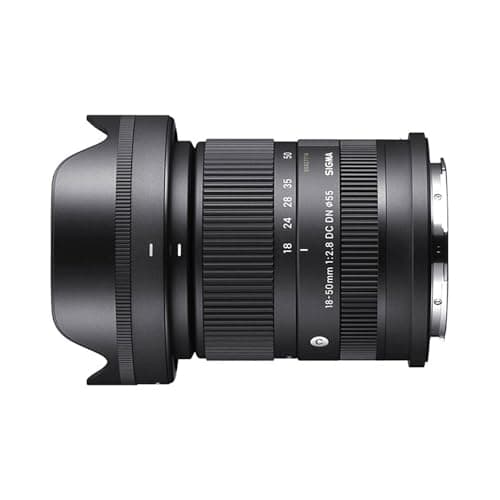
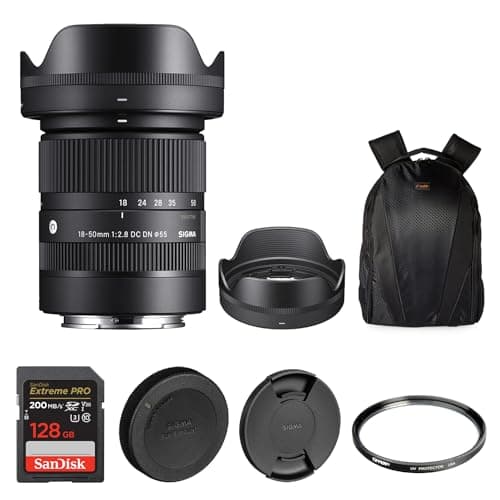
Sigma 18-50mm F2.8 DC DN

The best all-round APS-C lens for the money, full stop. A tiny constant-f/2.8 zoom that replaces the kit lens and comes off far sharper and brighter.

Don't buy it if you need reach or a longer portrait length. This is a standard zoom — for compression and telephoto framing you'd add a portrait prime like the Sigma 56mm f/1.4 alongside it.

#ad · Live Amazon price as of November 21, 2026. No verified price → we show none.

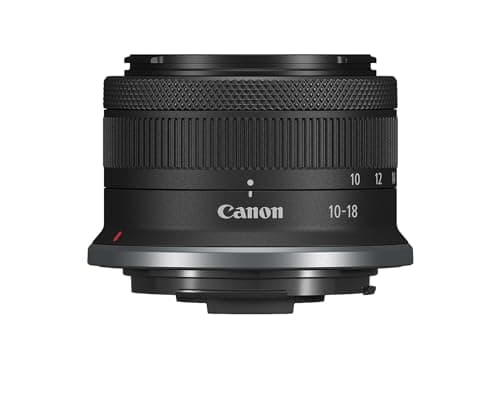
The best zoom lens under $500 is the Sigma 18-50mm F2.8 DC DN. It is the only zoom in the band that holds a constant f/2.8 from end to end, and it does it in a barrel smaller than the kit lens it replaces. It is for the APS-C owner whose single complaint about the kit zoom is that it runs out of light indoors. Our budget pick is the Canon RF-S 10-18mm F4.5-6.3 IS STM, the cheapest zoom here with a live price and a stabilized ultra-wide for Canon bodies. Prices come from the live price layer with an "as of" date; where there is no verified purchasable offer, we show no price at all.

A zoom under $500 forces one decision, and everything on this page follows from it: do you want a constant aperture or do you want range? A constant f/2.8 means the lens gathers the same light at 18mm and at 50mm, so your exposure does not collapse when you zoom in and backgrounds stay equally soft across the range. Range means a variable f/4.5-6.3 that reaches 250mm or 300mm and loses roughly two stops of light getting there. Both are legitimate purchases. Buying the wrong one is the most common lens mistake we see, because the box with the bigger number on it looks like the better lens.

This is a price band rather than a category, so the picks below are organized by mount and by job rather than ranked head to head. Our wider ranking without a ceiling is best standard zoom lenses, the primes in the same money are in best lens under $500, and if your budget is genuinely tighter the honest answer is a prime rather than a zoom - best lens under $200 explains why.

The short answer

Quick picks

#ProductBest forScorePrice
01
Sigma Sigma 18-50mm F2.8 DC DN
Sigma 18-50mm F2.8 DC DN

The best all-round APS-C lens for the money, full stop. A tiny constant-f/2.8 zoom that replaces the kit lens and comes off far sharper and brighter.

The best all-round APS-C zoom
8.2
$499.00Amazon
02
Sigma Sigma 18-50mm F2.8 DC DN (X-mount)
Sigma 18-50mm F2.8 DC DN (X-mount)

The best all-round lens for Fujifilm on a budget: a tiny constant-f/2.8 zoom that replaces the kit lens and comes off far sharper, brighter and more versatile.

The best all-round Fujifilm zoom
7.6
$509.00Amazon
03
Tamron Tamron 70-300mm F4.5-6.3 Di III RXD
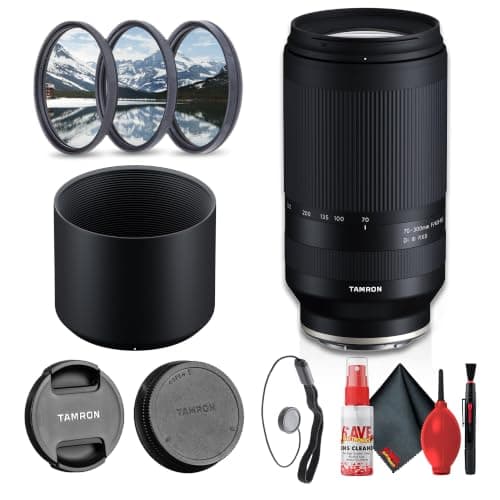
Tamron 70-300mm F4.5-6.3 Di III RXD

The step-up telephoto: full-frame coverage, faster and quieter autofocus, and 300mm of real reach for not much more money.

The step-up reach pick
7.4
$384.95Amazon
04
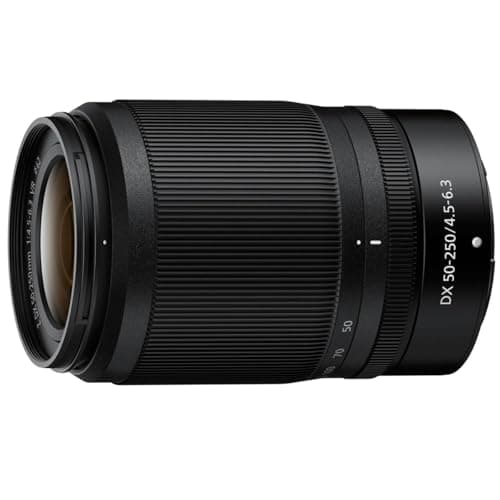
Nikon Nikon NIKKOR Z DX 50-250mm VR
Nikon NIKKOR Z DX 50-250mm VR

The best cheap telephoto here — 375mm of equivalent reach, stabilized, and light enough that you will actually bring it.

The best beginner telephoto
7.4
$406.95Amazon
05
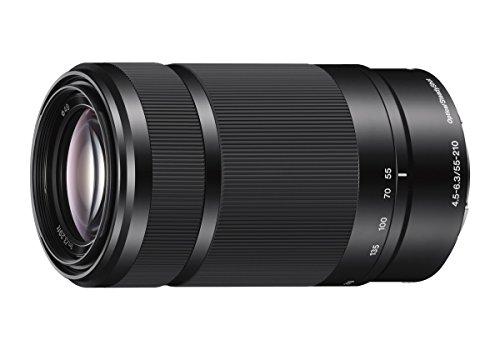
Sony Sony E 55-210mm F4.5-6.3 OSS
Sony E 55-210mm F4.5-6.3 OSS

The default telephoto for Sony APS-C: not exciting, widely available second-hand, and it does the job in daylight.

The Sony APS-C telephoto
6.4
$328.00Amazon
06
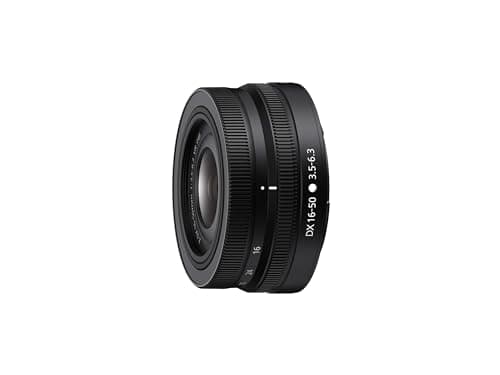
Nikon Nikon NIKKOR Z DX 16-50mm VR
Nikon NIKKOR Z DX 16-50mm VR

One of the best kit zooms anybody makes: tiny, stabilized, and sharper than a bundled lens has any business being.

The everyday walkaround zoom
7.2
$326.95Amazon
07
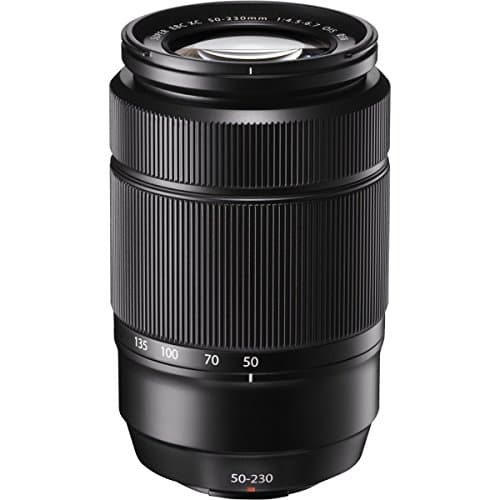
Fujifilm Fujifilm XC 50-230mm f/4.5-6.7 OIS
Fujifilm XC 50-230mm f/4.5-6.7 OIS

Fujifilm's budget telephoto: plastic-bodied and slow, but sharper than its price and mount suggests.

The Fujifilm X telephoto
6.4
$288.00Amazon
08
Canon Canon RF-S 10-18mm F4.5-6.3 IS STM
Canon RF-S 10-18mm F4.5-6.3 IS STM

The ultra-wide every Canon APS-C owner should consider: tiny, stabilized, and wide enough for big landscapes and tight rooms — you just trade away aperture speed to get there.

The best ultra-wide for Canon APS-C
6.0
Check price →

#ad · Live prices from the Amazon Product API, as of November 21, 2026. Where we have no verified live price, we show none — we would rather leave a gap than print a number that has rotted.

In detail

The picks, in full

01
Sigma Sigma 18-50mm F2.8 DC DN

The best all-round APS-C zoom

Sigma 18-50mm F2.8 DC DN

18-50mm f/2.8 (constant)Sony E mount (APS-C)Stepping-motor AF55mm filter thread
8.2/10

The best all-round APS-C lens for the money, full stop. A tiny constant-f/2.8 zoom that replaces the kit lens and comes off far sharper and brighter.

Sharpness
8
Autofocus
8
Aperture & bokeh
6
Build & size
9
Value
10

Pros

  • A constant f/2.8 across the whole zoom range holds exposure steady and blurs backgrounds far more than a kit lens
  • Astonishingly small and light for a fast zoom — barely bigger than a prime, and ideal on a gimbal
  • Sharp throughout the range with quiet, quick autofocus that flatters both photos and video

Cons

  • The 18-50mm range (≈27-75mm equivalent) doesn't reach into telephoto for tight portraits or distant subjects
  • APS-C only, with no built-in stabilization — you lean on in-body IS or a gimbal

Don't buy this if…

…you need reach or a longer portrait length. This is a standard zoom — for compression and telephoto framing you'd add a portrait prime like the Sigma 56mm f/1.4 alongside it.

$499.00View on Amazon

$549.009% off

Price as of November 21, 2026. Prices change — Amazon's is the one that counts.

#ad · we may earn a commission from this link to Sigma 18-50mm F2.8 DC DN

02
Sigma Sigma 18-50mm F2.8 DC DN (X-mount)

The best all-round Fujifilm zoom

Sigma 18-50mm F2.8 DC DN (X-mount)

18-50mm f/2.8 (constant)Fujifilm X mount (APS-C)Stepping-motor AFVery compact
7.6/10

The best all-round lens for Fujifilm on a budget: a tiny constant-f/2.8 zoom that replaces the kit lens and comes off far sharper, brighter and more versatile.

Sharpness
8
Autofocus
7
Aperture & bokeh
6
Build & size
8
Value
9

Pros

  • A constant f/2.8 across the ≈27-75mm-equivalent range holds exposure steady and blurs backgrounds far more than a kit lens
  • Astonishingly small and light for a fast zoom — barely bigger than a prime and ideal for travel
  • Sharp throughout the range at a price well below Fujifilm's own fast zooms

Cons

  • Autofocus on X-mount is quick but a step behind the same lens on other systems, and it lacks the clicky aperture ring Fujifilm shooters love
  • APS-C only, with no stabilization and no weather sealing

Don't buy this if…

…you need reach beyond a standard zoom or want a tactile aperture ring. For telephoto you would add a longer lens; for handling, a first-party zoom keeps the ring.

$509.00View on Amazon

$659.0023% off

Price as of November 21, 2026. Prices change — Amazon's is the one that counts.

#ad · we may earn a commission from this link to Sigma 18-50mm F2.8 DC DN (X-mount)

03
Tamron Tamron 70-300mm F4.5-6.3 Di III RXD

The step-up reach pick

Tamron 70-300mm F4.5-6.3 Di III RXD

70-300mm f/4.5-6.3Sony E mount (full-frame)RXD stepping-motor AF67mm filter thread
7.4/10

The step-up telephoto: full-frame coverage, faster and quieter autofocus, and 300mm of real reach for not much more money.

Sharpness
8
Autofocus
9
Aperture & bokeh
5
Build & size
7
Value
8

Pros

  • 300mm on full frame, or roughly 450mm equivalent on an APS-C Sony body — the longest reach on this list
  • RXD autofocus is quick and near-silent, which makes it far better for video and for moving subjects than the budget zooms
  • Covers full frame, so it carries over if you ever move up from an APS-C Sony body

Cons

  • No optical stabilization — it relies on your camera's in-body stabilization, which most beginner APS-C bodies do not have
  • Bigger and heavier than the cheap crop-sensor zooms, and it needs a bag rather than a coat pocket

Don't buy this if…

…your camera has no in-body stabilization. Without it, a 300mm lens with no optical stabilization is genuinely hard to hold steady — one of the stabilized crop-sensor zooms above is the better buy.

$384.95View on Amazon

$412.957% off

Price as of November 21, 2026. Prices change — Amazon's is the one that counts.

#ad · we may earn a commission from this link to Tamron 70-300mm F4.5-6.3 Di III RXD

04
Nikon Nikon NIKKOR Z DX 50-250mm VR

The best beginner telephoto

Nikon NIKKOR Z DX 50-250mm VR

50-250mm f/4.5-6.3Nikon Z mount (APS-C)VR optical stabilization~405g, retracting
7.4/10

The best cheap telephoto here — 375mm of equivalent reach, stabilized, and light enough that you will actually bring it.

Sharpness
8
Autofocus
8
Aperture & bokeh
4
Build & size
8
Value
9

Pros

  • A 375mm equivalent field of view on a DX body brings distant sport and wildlife into genuinely usable framing
  • VR stabilization is essential at this focal length and Nikon's implementation here is among the better cheap ones
  • Retracts down and weighs about 405g, so it is a lens you carry rather than one you plan a day around

Cons

  • f/6.3 at full zoom means daylight only in practice — indoor sport pushes ISO into visible grain
  • APS-C only, so it crops heavily on a full-frame Z body

Don't buy this if…

…you mainly shoot indoor sport or evening events. A slow telephoto cannot gather enough light for that, and no amount of stabilization freezes a moving subject — you need a fast telephoto or a different lens entirely.

$406.95View on Amazon

Price as of November 21, 2026. Prices change — Amazon's is the one that counts.

#ad · we may earn a commission from this link to Nikon NIKKOR Z DX 50-250mm VR

05
Sony Sony E 55-210mm F4.5-6.3 OSS

The Sony APS-C telephoto

Sony E 55-210mm F4.5-6.3 OSS

55-210mm f/4.5-6.3Sony E mount (APS-C)OSS optical stabilization49mm filter thread
6.4/10

The default telephoto for Sony APS-C: not exciting, widely available second-hand, and it does the job in daylight.

Sharpness
6
Autofocus
7
Aperture & bokeh
4
Build & size
7
Value
8

Pros

  • About 315mm of equivalent reach on an APS-C Sony, which covers touchline sport and casual wildlife
  • OSS stabilization plus a light body makes handheld daylight shooting straightforward
  • It has been sold for years, so the second-hand supply is large and prices are soft

Cons

  • An older optical design — it is softer at the long end than the newer Nikon and Fujifilm equivalents
  • Autofocus is adequate rather than quick, which shows on erratic subjects

Don't buy this if…

…you want the sharpest cheap telephoto or shoot fast, unpredictable action. This is the affordable option rather than the best one — Sony's pricier 70-350mm G is the sharper, faster lens if the budget allows.

$328.00View on Amazon

Price as of November 21, 2026. Prices change — Amazon's is the one that counts.

#ad · we may earn a commission from this link to Sony E 55-210mm F4.5-6.3 OSS

06
Nikon Nikon NIKKOR Z DX 16-50mm VR

The everyday walkaround zoom

Nikon NIKKOR Z DX 16-50mm VR

16-50mm f/3.5-6.3Nikon Z mount (APS-C)VR optical stabilizationRetracting, ~135g
7.2/10

One of the best kit zooms anybody makes: tiny, stabilized, and sharper than a bundled lens has any business being.

Sharpness
7
Autofocus
8
Aperture & bokeh
4
Build & size
8
Value
9

Pros

  • Collapses to almost nothing when retracted, so a Z30 or Z50 II with this on genuinely fits in a coat pocket
  • VR stabilization matters more on Nikon DX than elsewhere, because no current DX body has in-body stabilization
  • Sharp across the range and wide enough at 16mm (24mm equivalent) to film yourself at arm's length

Cons

  • Slow: f/6.3 at the long end lets in far less light than a prime, so indoor and evening shooting is a struggle
  • Backgrounds stay largely in focus — you will not get much subject separation from a lens this slow

Don't buy this if…

…you already have it in a kit and are shopping for an upgrade. Buying it separately only makes sense if your camera came body-only — otherwise put the money into a fast prime, which changes your photographs far more.

$326.95View on Amazon

Price as of November 21, 2026. Prices change — Amazon's is the one that counts.

#ad · we may earn a commission from this link to Nikon NIKKOR Z DX 16-50mm VR

07
Fujifilm Fujifilm XC 50-230mm f/4.5-6.7 OIS

The Fujifilm X telephoto

Fujifilm XC 50-230mm f/4.5-6.7 OIS

50-230mm f/4.5-6.7Fujifilm X mount (APS-C)OIS optical stabilization58mm filter thread
6.4/10

Fujifilm's budget telephoto: plastic-bodied and slow, but sharper than its price and mount suggests.

Sharpness
7
Autofocus
7
Aperture & bokeh
4
Build & size
6
Value
8

Pros

  • About 345mm of equivalent reach, which is a lot of telephoto for a lens this cheap and this light
  • Sharper through the middle of its range than the price and plastic build imply
  • OIS stabilization plus a modest weight keeps it handheld-friendly all day

Cons

  • f/6.7 at the long end is the slowest aperture on this list, so it needs good light more than the others do
  • The plastic mount and lightweight barrel feel cheap next to Fujifilm's XF-series lenses

Don't buy this if…

…you want weather sealing or metal construction, or you shoot in poor light regularly. This is a fair-weather lens — Fujifilm's XF 70-300mm is the sealed, faster-focusing alternative at several times the price.

$288.00View on Amazon

Price as of November 21, 2026. Prices change — Amazon's is the one that counts.

#ad · we may earn a commission from this link to Fujifilm XC 50-230mm f/4.5-6.7 OIS

08
Canon Canon RF-S 10-18mm F4.5-6.3 IS STM

The best ultra-wide for Canon APS-C

Canon RF-S 10-18mm F4.5-6.3 IS STM

10-18mm f/4.5-6.3 (≈16-29mm equiv)Canon RF-S mount (APS-C)Optical Image StabilizerCompact & light
6.0/10

The ultra-wide every Canon APS-C owner should consider: tiny, stabilized, and wide enough for big landscapes and tight rooms — you just trade away aperture speed to get there.

Sharpness
7
Autofocus
7
Aperture & bokeh
3
Build & size
6
Value
7

Pros

  • The 10-18mm range (≈16-29mm equivalent) opens up sweeping landscapes, interiors and wide vlogging shots a kit lens cannot reach
  • Optical stabilization and very light weight make it easy to shoot handheld and steady for video
  • Remarkably compact for an ultra-wide zoom — it stays out of the way in a small bag

Cons

  • The f/4.5-6.3 aperture is slow, so it struggles in low light and blurs backgrounds very little
  • Some distortion and softening at the extreme wide end that relies on in-camera correction

Don't buy this if…

…you shoot in dim light or want strong background separation. The variable f/4.5-6.3 aperture is this lens's real limit — a fast wide prime like the RF 16mm f/2.8 gathers far more light, though it is not as wide on crop bodies.

Check price on Amazon →

No buyable offer at the last price check (November 21, 2026). We show nothing rather than a stale number.

#ad · we may earn a commission from this link to Canon RF-S 10-18mm F4.5-6.3 IS STM

What we required of a zoom to rank here

The ceiling is a live price under $500 read from the price layer. Within it, four rules.

  1. A live price, not a launch price. Every pick has a verified purchasable offer. A zoom whose listing shows no offer is not in the band, whatever it used to cost.
  2. Autofocus and a modern mount. Sony E, Nikon Z, Fujifilm X or Canon RF-S. Adapted DSLR glass is cheaper still and is a different buying decision entirely.
  3. One clear job per pick. A constant-aperture standard zoom, a telephoto for reach, a stabilized kit replacement or an ultra-wide. Where two lenses do the same job in the same mount, only the better one is here.
  4. Stabilization counts for more at this price than at any other. Bodies under $1,000 mostly have no in-body stabilization, so a stabilized lens is doing work nothing else on the camera can - which is why five of the eight picks have it.

The eight, and what each one is for

ZoomMountWhat it is forStabilized?
Sigma 18-50mm F2.8 DC DNSony E APS-CConstant f/2.8 kit-lens replacementNo
Sigma 18-50mm F2.8 DC DN (X-mount)Fujifilm X APS-CThe same lens for Fujifilm bodiesNo
Tamron 70-300mm F4.5-6.3 Di III RXDSony E full-frameThe longest reach in the bandNo
Nikon NIKKOR Z DX 50-250mm VRNikon Z APS-CNikon's cheap telephoto, about 405gYes (VR)
Sony E 55-210mm F4.5-6.3 OSSSony E APS-CThe cheapest route to reach on Sony APS-CYes (OSS)
Nikon NIKKOR Z DX 16-50mm VRNikon Z APS-CA retracting 135g everyday zoomYes (VR)
Fujifilm XC 50-230mm f/4.5-6.7 OISFujifilm X APS-CFujifilm's cheap telephotoYes (OIS)
Canon RF-S 10-18mm F4.5-6.3 IS STMCanon RF-S APS-CStabilized ultra-wide, about 16-29mm equivalentYes (IS)

Why the Sigma 18-50mm F2.8 wins

It is the only zoom under $500 that does not get darker as you use it. A kit lens at f/3.5-5.6 loses more than a stop between its wide and long ends, which is why photographs taken indoors at the long end come out either dark or blurred; this lens is f/2.8 at 18mm and f/2.8 at 50mm. It also focuses close, has a 55mm filter thread and is physically smaller than the kit zoom, which matters more than the spec sheet suggests - a small lens is a lens that stays on the camera.

Two caveats. It has no stabilization, so on an unstabilized body you need shutter speed for stills and a gimbal for walking video. And it does not reach: 50mm on APS-C frames like about 75mm, so a distant subject stays distant. Both mount versions in the band - Sony E and Fujifilm X - carry a live price; the Canon RF version currently has no verified purchasable offer, which is why Canon owners see the ultra-wide as their pick here instead. Our full write-up is the Sigma 18-50mm review.

If you want reach: three cheap telephotos, and one that is better

The Tamron 70-300mm F4.5-6.3 Di III RXD is the longest lens in the band and the one we would buy for reach on Sony. 300mm is genuinely long - enough for a bird on a feeder or a player on the far side of a pitch - and the RXD stepping motor is quiet. It has no stabilization and it is a full-frame lens, so on an APS-C body it frames tighter still, which is a bonus for reach and a problem for framing anything close.

The three first-party telephotos - Nikon's 50-250mm VR, Sony's 55-210mm OSS and Fujifilm's 50-230mm OIS - are all cheaper, all stabilized and all slower. They are the right buy if you have never owned a telephoto and want to find out whether you like shooting at 300mm equivalent before spending more. All three are soft wide open at the long end and struggle after sunset. The whole class is ranked properly in best telephoto lenses for beginners.

If you want one lens on the camera: the Nikon Z DX 16-50mm VR

This is a kit lens, and we are ranking it deliberately. At about 135g with a retracting barrel it is the smallest zoom here by a wide margin, it has VR stabilization that Nikon's unstabilized DX bodies badly need, and on a Z30 or Z50 II it is the lens that makes the camera pocketable. It is also slow at f/3.5-6.3, which is the compromise, and if you already own it with your camera then buying it again is not an upgrade. We include it because the honest answer for some readers is that the cheap stabilized zoom they already have is fine and the money belongs in a prime instead.

The budget pick: Canon RF-S 10-18mm F4.5-6.3 IS STM

The cheapest zoom on this page is also the only ultra-wide, which makes it the most interesting buy in the band for a Canon owner. About 16-29mm equivalent is wide enough for a room, a landscape or a vlog held at arm's length, it is light, and it has optical stabilization that an R50 or R100 does not have in the body. Canon's RF-S range is the thinnest of the four systems under $500, and this is the lens in it we can recommend without qualification.

The compromise is the aperture: f/4.5-6.3 is slow, so it is a daylight and tripod lens rather than a low-light one, and it blurs backgrounds barely at all. If you want a Canon lens for dim interiors instead, a prime is the answer and they are ranked in best Canon RF lenses. The ultra-wide class across all mounts is in best wide-angle lenses.

What we would actually buy

On Sony E or Fujifilm X: the Sigma 18-50mm F2.8, and keep the kit zoom for daylight reach. On Nikon Z: the 50-250mm VR to add reach to the 16-50mm you probably already own. On Canon RF-S: the 10-18mm, because it does something your kit lens cannot. And if none of those describes your problem, a fast prime at the same money will improve your photographs more than any zoom in this band - the comparison is in prime vs zoom lenses, and the next band up is best lens under $1,000.
How we picked

We do not run a testing lab

We compiled the manufacturers' published specifications and manuals, did the cost math, and scored each product against a published rubric. The scores are judgments from that documented research — they are notmeasurements we took, because we do not have a lab and we are not going to pretend we do. Where a number came from someone else's testing, we name and link them in Sources.

Questions

Frequently asked

What is the best zoom lens under $500?
The Sigma 18-50mm F2.8 DC DN. It is the only zoom in the band with a constant f/2.8, so it does not lose light as you zoom in, and it is smaller than the kit lens it replaces. Its drawbacks are no stabilization and no reach past about 75mm equivalent. Full detail is in our Sigma 18-50mm review.
Is a constant f/2.8 zoom worth it over a cheaper variable-aperture zoom?
If you shoot indoors or after dark, yes - at the long end a constant f/2.8 gathers roughly four times the light of a kit zoom at f/5.6, which is the difference between a sharp photo and a blurred one. If you shoot in daylight and want reach, no: spend the same money on a telephoto and accept the slower aperture.
Which zoom under $500 is best for video?
A stabilized one, unless your camera has in-body stabilization. The Nikon Z DX 16-50mm VR, the Sony E 55-210mm OSS, the Fujifilm XC 50-230mm OIS and the Canon RF-S 10-18mm IS all stabilize in the lens; the Sigma 18-50mm F2.8 does not, so it wants a gimbal for walking shots. The video-specific ranking is best lenses for video.
Can I get a 300mm zoom for under $500?
On Sony E, yes - the Tamron 70-300mm F4.5-6.3 Di III RXD carries a live price under the line. On Nikon Z, Fujifilm X and Canon RF-S the cheap telephotos stop at 230-250mm, which frames like roughly 345-375mm on a crop sensor anyway. The trade in every case is a slow aperture that limits you to good light.
Should I buy a zoom or a prime for under $500?
A prime if your problem is light or background blur, a zoom if your problem is that you keep having to move. At this price a prime is two or three stops faster than a kit zoom for the same money, which is a bigger visible change than any zoom range. The alternatives are ranked in best lens under $500.
How current are the prices on this page?
Every price is read from the live price layer and stamped with the date it was read, shown above the rankings. The $500 ceiling is applied to that live number, not to a launch price, and where a mount version has no verified purchasable offer it is not ranked here at all.

Keep reading

Receipts

Sources

We do not run a testing lab, and we do not pretend to. Specs come from manufacturer sheets and manuals; where a figure came from someone else's measurement, we name and link them. Where we could not verify something, we say so on the page rather than quietly leaving it out. Read our full method.