Skip to content
Focal & Frame

Glass · Lenses

The Best Lens Under $500

At this budget you finally choose between a constant-aperture zoom and a fast prime instead of being told which one you can afford. Seven lenses with a live price under the line.

By Stephen V.Updated How we research
#ad

We earn a commission when you buy through our Amazon links, at no extra cost to you. It never decides our rankings — we say so when the cheaper pick is the better buy. How this works.

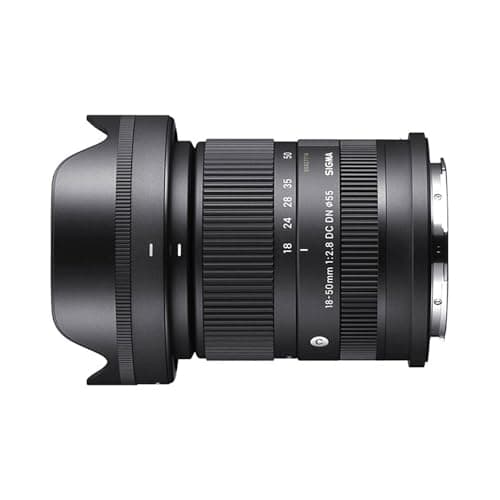
Sigma Sigma 18-50mm F2.8 DC DN

Our #1 pick

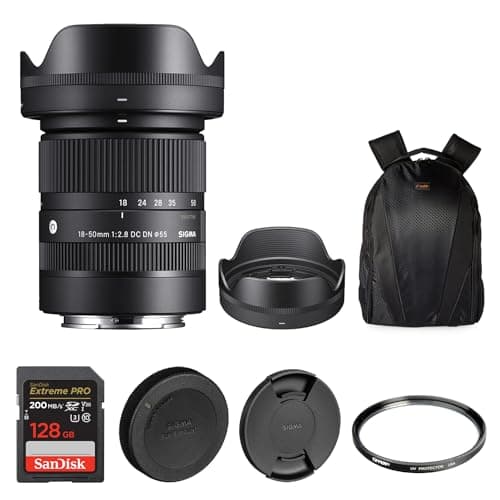
Sigma 18-50mm F2.8 DC DN

The best all-round APS-C lens for the money, full stop. A tiny constant-f/2.8 zoom that replaces the kit lens and comes off far sharper and brighter.

Don't buy it if you need reach or a longer portrait length. This is a standard zoom — for compression and telephoto framing you'd add a portrait prime like the Sigma 56mm f/1.4 alongside it.

#ad · Live Amazon price as of November 21, 2026. No verified price → we show none.

The best lens under $500 is the Sigma 18-50mm F2.8 DC DN. It is a standard zoom that holds f/2.8 across its whole range, it weighs 290g, and it does the job of the kit lens that came with your camera while being brighter at every focal length — which is the biggest single jump in image quality available at this budget. It is sold for Sony E and Fujifilm X and both versions sit under the line, so the first two picks below are the same lens in two mounts. If you would rather have one fast prime than a zoom, the Sigma 30mm F1.4 DC DN is the one to buy. Our budget pick is the Viltrox AF 35mm F1.7 Air, which costs roughly a third of the Sigma zoom and is still a real autofocus prime. Prices come from the live price layer with an "as of" date; where there is no verified price, we show none.

Under $500 is the first budget where the interesting decision is yours rather than the market's. Below about $200 the field is so thin that the answer is effectively one prime per mount — we rank that bracket separately in best lens under $200. Cross $300 and the real choice appears: a constant-aperture zoom that covers a range, or a prime that is brighter and sharper at one focal length. Both are genuine upgrades over a kit lens. They are upgrades in different directions, and picking the wrong direction for the way you shoot is how people end up with a drawer of glass they never use.

Here is the plain version of that trade. A kit zoom typically runs f/3.5 at its widest and f/5.6 or f/6.3 at the long end, which is dim enough that indoor shots either go grainy or go blurry. A constant f/2.8 zoom holds one bright aperture from end to end, so the camera behaves the same at 50mm as it does at 18mm — about two stops more light than a kit lens at full zoom, or four times as much. A fast prime goes further still: f/1.4 is another two stops past f/2.8, roughly sixteen times the light of a kit lens at f/5.6, with the shallow depth of field that separates a face from a busy background. The zoom buys you flexibility. The prime buys you light and separation. Everything below is a version of that one decision.

One practical warning before the rankings, because it is the mistake that costs people money. A lens mount is not a preference, it is a physical fitting: a Sony E lens does not go on a Nikon Z body, and an adapter is not a sensible fix at this price. Every pick below is listed with the mount it fits, and our lens mounts guide explains the four systems this site covers. Check the mount on the listing against the name on your camera before you order anything.

The short answer

Quick picks

#ProductBest forScorePrice
01
Sigma Sigma 18-50mm F2.8 DC DN
Sigma 18-50mm F2.8 DC DN

The best all-round APS-C lens for the money, full stop. A tiny constant-f/2.8 zoom that replaces the kit lens and comes off far sharper and brighter.

The best all-round APS-C zoom
8.2
$499.00Amazon
02
Sigma Sigma 18-50mm F2.8 DC DN (X-mount)
Sigma 18-50mm F2.8 DC DN (X-mount)

The best all-round lens for Fujifilm on a budget: a tiny constant-f/2.8 zoom that replaces the kit lens and comes off far sharper, brighter and more versatile.

The best all-round Fujifilm zoom
7.6
$509.00Amazon
03
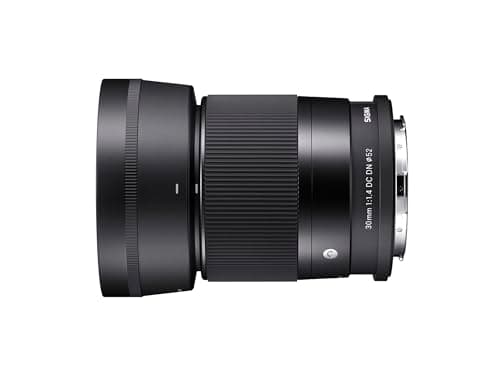
Sigma Sigma 30mm F1.4 DC DN
Sigma 30mm F1.4 DC DN

The APS-C nifty fifty: a fast, sharp, affordable 30mm that frames like a ~45mm 'normal' lens and blurs backgrounds beautifully at f/1.4.

The best 50mm-equivalent for APS-C
8.2
$344.00Amazon
04
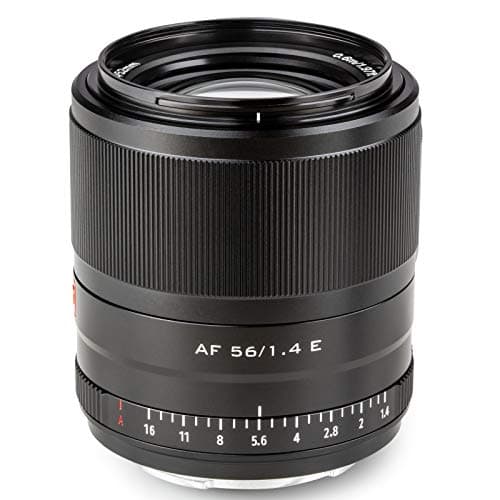
Viltrox Viltrox 56mm F1.4
Viltrox 56mm F1.4

The cheapest way into real portrait glass: an autofocus ≈84mm-equivalent f/1.4 that gets you most of the Sigma's look for noticeably less.

The cheapest autofocus portrait prime
8.0
$191.20Amazon
05
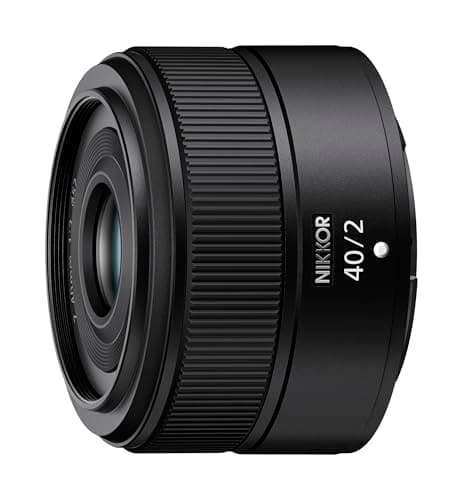
Nikon Nikon NIKKOR Z 40mm f/2
Nikon NIKKOR Z 40mm f/2

The first lens to buy for almost any Nikon Z camera — small, inexpensive, bright, and it fits both DX and full-frame bodies.

The best first prime for Nikon Z
8.2
$226.95Amazon
06
Canon Canon RF 50mm F1.8 STM
Canon RF 50mm F1.8 STM

The default first upgrade for any Canon mirrorless owner: tiny, sharp, genuinely cheap, and it gives your photos the soft-background 'real camera' look a kit lens can't.

The best nifty fifty for Canon
8.0
$199.00Amazon
07
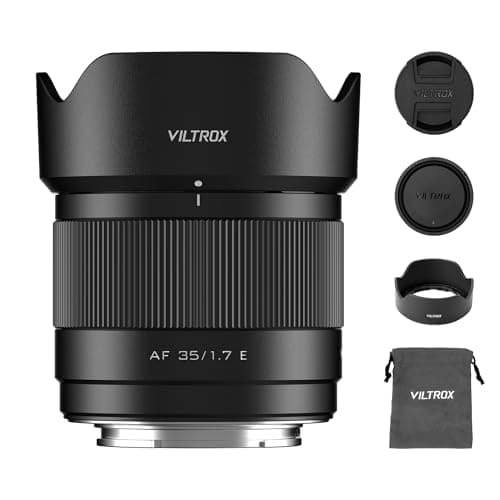
Viltrox Viltrox AF 35mm F1.7 Air
Viltrox AF 35mm F1.7 Air

The budget champion: an ultralight APS-C 35mm that costs a fraction of the alternatives yet delivers bright f/1.7 photos and autofocus that is perfectly good for everyday shooting.

The best budget 35mm prime
7.6
$143.20Amazon

#ad · Live prices from the Amazon Product API, as of November 21, 2026. Where we have no verified live price, we show none — we would rather leave a gap than print a number that has rotted.

In detail

The picks, in full

01
Sigma Sigma 18-50mm F2.8 DC DN

The best all-round APS-C zoom

Sigma 18-50mm F2.8 DC DN

18-50mm f/2.8 (constant)Sony E mount (APS-C)Stepping-motor AF55mm filter thread
8.2/10

The best all-round APS-C lens for the money, full stop. A tiny constant-f/2.8 zoom that replaces the kit lens and comes off far sharper and brighter.

Sharpness
8
Autofocus
8
Aperture & bokeh
6
Build & size
9
Value
10

Pros

  • A constant f/2.8 across the whole zoom range holds exposure steady and blurs backgrounds far more than a kit lens
  • Astonishingly small and light for a fast zoom — barely bigger than a prime, and ideal on a gimbal
  • Sharp throughout the range with quiet, quick autofocus that flatters both photos and video

Cons

  • The 18-50mm range (≈27-75mm equivalent) doesn't reach into telephoto for tight portraits or distant subjects
  • APS-C only, with no built-in stabilization — you lean on in-body IS or a gimbal

Don't buy this if…

…you need reach or a longer portrait length. This is a standard zoom — for compression and telephoto framing you'd add a portrait prime like the Sigma 56mm f/1.4 alongside it.

$499.00View on Amazon

$549.009% off

Price as of November 21, 2026. Prices change — Amazon's is the one that counts.

#ad · we may earn a commission from this link to Sigma 18-50mm F2.8 DC DN

02
Sigma Sigma 18-50mm F2.8 DC DN (X-mount)

The best all-round Fujifilm zoom

Sigma 18-50mm F2.8 DC DN (X-mount)

18-50mm f/2.8 (constant)Fujifilm X mount (APS-C)Stepping-motor AFVery compact
7.6/10

The best all-round lens for Fujifilm on a budget: a tiny constant-f/2.8 zoom that replaces the kit lens and comes off far sharper, brighter and more versatile.

Sharpness
8
Autofocus
7
Aperture & bokeh
6
Build & size
8
Value
9

Pros

  • A constant f/2.8 across the ≈27-75mm-equivalent range holds exposure steady and blurs backgrounds far more than a kit lens
  • Astonishingly small and light for a fast zoom — barely bigger than a prime and ideal for travel
  • Sharp throughout the range at a price well below Fujifilm's own fast zooms

Cons

  • Autofocus on X-mount is quick but a step behind the same lens on other systems, and it lacks the clicky aperture ring Fujifilm shooters love
  • APS-C only, with no stabilization and no weather sealing

Don't buy this if…

…you need reach beyond a standard zoom or want a tactile aperture ring. For telephoto you would add a longer lens; for handling, a first-party zoom keeps the ring.

$509.00View on Amazon

$659.0023% off

Price as of November 21, 2026. Prices change — Amazon's is the one that counts.

#ad · we may earn a commission from this link to Sigma 18-50mm F2.8 DC DN (X-mount)

03
Sigma Sigma 30mm F1.4 DC DN

The best 50mm-equivalent for APS-C

Sigma 30mm F1.4 DC DN

30mm f/1.4 (≈45mm equivalent)Sony E mount (APS-C)Stepping-motor AFBrass bayonet mount
8.2/10

The APS-C nifty fifty: a fast, sharp, affordable 30mm that frames like a ~45mm 'normal' lens and blurs backgrounds beautifully at f/1.4.

Sharpness
8
Autofocus
8
Aperture & bokeh
8
Build & size
8
Value
9

Pros

  • The ≈45mm-equivalent view is the true 'nifty fifty' framing on a crop-sensor camera — natural and flexible
  • f/1.4 gathers more light and blurs backgrounds more than the f/1.8 full-frame primes, for less money
  • Sharp wide open with fast, quiet autofocus that suits both stills and video

Cons

  • Covers APS-C only, so it won't work uncropped on a full-frame body
  • Lab reviewers measure real barrel distortion — straight vertical edges bow outward until a correction profile is applied
  • No stabilization of its own, plus heavy corner shading and some purple fringing wide open at f/1.4

Don't buy this if…

…you shoot full-frame. This lens is designed for crop-sensor cameras like the Sony ZV-E10 or a6400 — on a full-frame body it vignettes heavily or forces a crop.

$344.00View on Amazon

Price as of November 21, 2026. Prices change — Amazon's is the one that counts.

#ad · we may earn a commission from this link to Sigma 30mm F1.4 DC DN

04
Viltrox Viltrox 56mm F1.4

The cheapest autofocus portrait prime

Viltrox 56mm F1.4

56mm f/1.4 (≈84mm equivalent)Sony E mount (APS-C)STM autofocusUSB firmware-update port
8.0/10

The cheapest way into real portrait glass: an autofocus ≈84mm-equivalent f/1.4 that gets you most of the Sigma's look for noticeably less.

Sharpness
8
Autofocus
7
Aperture & bokeh
8
Build & size
7
Value
10

Pros

  • Delivers the flattering ≈84mm-equivalent framing and soft f/1.4 background for one of the lowest prices in autofocus glass
  • Light and compact, and updatable over its USB port as Viltrox refines the focus firmware
  • Genuinely sharp results that hold up against lenses costing much more

Cons

  • Autofocus is a step behind the Sigma and Sony — slower and less sure in low light or on fast subjects
  • No weather sealing, and it flares more against bright light sources

Don't buy this if…

…you shoot events or anything fast-moving where you can't miss focus. For static portraits it's superb value; for reliability under pressure the Sigma 56mm f/1.4 is the safer buy.

$191.20View on Amazon

$239.0020% off

Price as of November 21, 2026. Prices change — Amazon's is the one that counts.

#ad · we may earn a commission from this link to Viltrox 56mm F1.4

05
Nikon Nikon NIKKOR Z 40mm f/2

The best first prime for Nikon Z

Nikon NIKKOR Z 40mm f/2

40mm f/2Nikon Z mount (full-frame)Stepping-motor AF52mm filter thread
8.2/10

The first lens to buy for almost any Nikon Z camera — small, inexpensive, bright, and it fits both DX and full-frame bodies.

Sharpness
8
Autofocus
8
Aperture & bokeh
8
Build & size
7
Value
10

Pros

  • f/2 is around three stops brighter than the long end of a kit zoom, which is the difference between a usable indoor photo and a blurred one
  • Genuinely pocketable and light — it makes a Z30 or Z50 II feel like a compact camera rather than a rig
  • Works on DX and full-frame Z bodies, so it survives an upgrade instead of being sold on with the camera

Cons

  • On a DX body the 1.5x crop frames it like a 60mm equivalent, which is a little tight for group shots and interiors
  • Plastic mount and a simple build — this is a value lens, and it feels like one next to Nikon's S-line

Don't buy this if…

…you mostly shoot wide scenes or film yourself at arm's length on a DX body. The 60mm-equivalent framing is too tight for that — the DX 16-50mm or the DX 24mm f/1.7 suit those jobs better.

$226.95View on Amazon

$299.9524% off

Price as of November 21, 2026. Prices change — Amazon's is the one that counts.

#ad · we may earn a commission from this link to Nikon NIKKOR Z 40mm f/2

06
Canon Canon RF 50mm F1.8 STM

The best nifty fifty for Canon

Canon RF 50mm F1.8 STM

50mm f/1.8Canon RF mount (full-frame)STM stepping-motor AFCompact and light (~160g)
8.0/10

The default first upgrade for any Canon mirrorless owner: tiny, sharp, genuinely cheap, and it gives your photos the soft-background 'real camera' look a kit lens can't.

Sharpness
8
Autofocus
7
Aperture & bokeh
7
Build & size
8
Value
10

Pros

  • Renders a soft, blurred background at f/1.8 that instantly separates your subject from the clutter behind them
  • One of the smallest, lightest lenses you can buy for the system — it barely adds weight and disappears in a bag
  • A control ring lets you dial in aperture, ISO or exposure compensation without diving into menus

Cons

  • The STM focus motor can hunt and buzz in low light, and focus breathing is visible on video
  • Build is mostly plastic with a plastic mount — it feels as inexpensive as it is

Don't buy this if…

…you shoot an APS-C Canon body (an R50, R10 or R100) and want the classic 50mm 'normal' look. On those the 50mm frames like an 80mm short telephoto, so a wider lens gets you closer to a true nifty-fifty view.

$199.00View on Amazon

$239.0017% off

Price as of November 21, 2026. Prices change — Amazon's is the one that counts.

#ad · we may earn a commission from this link to Canon RF 50mm F1.8 STM

07
Viltrox Viltrox AF 35mm F1.7 Air

The best budget 35mm prime

Viltrox AF 35mm F1.7 Air

35mm f/1.7Sony E mount (APS-C, 53mm equivalent)STM autofocus, 170gUltralight 'Air' series
7.6/10

The budget champion: an ultralight APS-C 35mm that costs a fraction of the alternatives yet delivers bright f/1.7 photos and autofocus that is perfectly good for everyday shooting.

Sharpness
7
Autofocus
7
Aperture & bokeh
8
Build & size
6
Value
10

Pros

  • One of the cheapest autofocus primes anyone makes, so it is an easy first prime
  • Remarkably light at 170g — the 'Air' series is built to shave grams, ideal for travel and gimbals
  • f/1.7 keeps indoor shots bright and blurs backgrounds nicely for the price

Cons

  • Plastic build with no aperture ring or weather sealing — it feels as inexpensive as it is
  • Covers APS-C only, so a full-frame E-mount body crops and you lose resolution
  • LensTip's lab test flags distinct vignetting in RAW files and autofocus accuracy that slips on older bodies

Don't buy this if…

…you shoot a full-frame Sony body, or you need weather sealing and the fastest autofocus for professional work. It is outstanding value for everyday APS-C shooting, but the image circle does not cover a full-frame sensor and a premium prime pulls ahead where it counts.

$143.20View on Amazon

$179.0020% off

Price as of November 21, 2026. Prices change — Amazon's is the one that counts.

#ad · we may earn a commission from this link to Viltrox AF 35mm F1.7 Air

The seven, by what they are and what they fit

LensMountTypeEquivalent view
Sigma 18-50mm F2.8 DC DNSony E (APS-C)Constant-f/2.8 standard zoom27-75mm
Sigma 18-50mm F2.8 DC DN (X)Fujifilm X (APS-C)Constant-f/2.8 standard zoom27-75mm
Sigma 30mm F1.4 DC DNSony E (APS-C)Fast normal primeAbout 45mm
Viltrox 56mm F1.4Sony E (APS-C)Fast portrait primeAbout 84mm
Nikon NIKKOR Z 40mm f/2Nikon Z (fits DX and full-frame)Compact normal prime40mm full-frame, about 60mm on DX
Canon RF 50mm F1.8 STMCanon RF (fits RF-S bodies)Fast short-telephoto prime50mm full-frame, about 80mm on APS-C
Viltrox AF 35mm F1.7 AirSony E (APS-C)Budget normal primeAbout 53mm

Why a constant-f/2.8 zoom wins the bracket outright

The Sigma 18-50mm is the pick because it is the only lens here that improves every photograph you were already taking. It covers the same everyday range as the kit zoom — Sigma publishes a 27-75mm full-frame equivalent angle of view — so nothing about how you shoot has to change, and it is brighter than the kit lens at every focal length rather than only at the wide end. Sigma lists 13 elements in 10 groups, a 55mm filter thread, a maximum diameter of 65.4mm, a length of 74.5mm and a weight of 290g, which is small enough not to unbalance a compact body like a ZV-E10 or an X-M5. The useful surprise is the close focus: 12.1cm at the wide end for a maximum magnification of 1:2.8, close enough for food, flat-lays and product shots that a normal zoom cannot manage.

What you give up is worth stating plainly. It is an APS-C lens, so it does not cover a full-frame sensor. It has no stabilization of its own, so handheld video leans on in-body stabilization or a gimbal. It stops at 50mm, so it will not reach a stage or a touchline — that is what a cheap telephoto zoom is for. And it is the most expensive lens in this ranking, sitting right at the top of the budget. If you want the Sigma in Nikon Z or Canon RF, the price layer tells the truth about availability: Sigma has released the design in more mounts than it originally shipped in, but the only two versions with a verified price under $500 today are the Sony E and Fujifilm X ones.

When a prime is the better answer

Buy a prime instead if your problem is light or background blur rather than range. Three cases come up repeatedly. You shoot indoors or after dark, where f/1.4 keeps the shutter fast enough to freeze a moving child without pushing ISO into mush. You shoot portraits, where the background needs to fall away. Or you want the camera to be small — a prime is usually shorter, lighter and quieter than any zoom.

The Sigma 30mm F1.4 DC DN is the default. On APS-C it frames at about a 45mm equivalent, which Sigma describes as close to human vision, and f/1.4 is two full stops brighter than the zoom above. It is the lens most people on crop-sensor Sony and Nikon bodies eventually buy. Know the two documented flaws before you commit: lab reviewers measure real barrel distortion that needs a correction profile, and the corners shade noticeably wide open. Both are fixable in software and neither shows up in a normal portrait. The full picture is in our Sigma 30mm F1.4 review.

For faces specifically, the Viltrox 56mm F1.4 is the cheapest autofocus portrait prime we rank. At about an 84mm equivalent it gives you the flattering compression a 30mm cannot, for roughly half what the Sigma 56mm costs. The trade is autofocus: it is slower and less certain than the Sigma, which matters for events and not at all for a posed portrait. We set the two against each other in Sigma 56mm vs Sony 50mm and rank the whole field in best portrait lenses.

If you shoot Nikon or Canon, read this first

The bracket looks different on each system, and pretending otherwise is how roundups mislead people. Sony E and Fujifilm X have the deepest cheap-lens catalogs, which is why five of the seven picks fit them.

On Nikon Z the standout under $500 is the NIKKOR Z 40mm f/2. It is small, inexpensive and bright, and — unusually for a budget prime — it is a full-frame design, so it fits a DX body like a Z30 or Z50 II today and still works if you move to full-frame later. The catch is framing: on DX the 1.5x crop makes it behave like a 60mm, which is tight for interiors and group shots. The wider options for that system are in best Nikon Z lenses.

On Canon RF the under-$500 prime is the RF 50mm F1.8 STM — about 160g, sharp and genuinely cheap. Same framing caveat, more pronounced: on an APS-C body like an R50, R10 or R100 it frames like an 80mm short telephoto. Lovely for portraits, too tight to be a walkaround lens. Canon's RF-S range is the youngest of the four systems and its cheap native primes the thinnest, so if you need a normal view on Canon APS-C the honest answer is that the budget has to rise or the lens has to be a zoom; both routes are laid out in best Canon RF lenses.

The budget pick, and why it is not the top pick

The Viltrox AF 35mm F1.7 Air is the cheapest lens here by a wide margin — roughly a third of the Sigma zoom — and it is a real autofocus prime, not a compromise: about 170g, f/1.7, and a 53mm-equivalent view on APS-C. It is the right buy if the budget is the binding constraint, or if you are not yet sure whether you want primes at all and would rather find out cheaply. What the extra money buys over it is build and certainty. The Viltrox is plastic, has no weather sealing or aperture ring, and LensTip's lab test flags distinct vignetting in raw files and autofocus accuracy that slips on older bodies. None of that stops it taking very good photographs. Our Viltrox 35mm Air review has the measured numbers.

What $500 does not buy

Three things, and knowing them saves you a disappointing order. It does not buy a fast telephoto: a constant-f/2.8 70-200mm is several times this budget, and the affordable telephoto zooms we rank are f/6.3 at the long end. It does not buy much full-frame glass — the Nikon 40mm and Canon 50mm here are the exceptions, and most full-frame primes and zooms start above this line. And it does not buy weather sealing or a professional build; everything in this bracket is a consumer lens, which is fine until you shoot in rain. If your plan needs one of those three, spend on the body-and-lens combination as a whole rather than stretching for a lens that cannot do the job — our beginner camera kit guide puts realistic numbers on the whole setup.

Buy one lens, not three

The most common mistake at this budget is spreading $500 across a cheap prime, a filter set and a second-hand zoom, and ending up with three lenses that are each slightly worse than the kit lens. One good lens changes your photographs. Pick the direction — zoom for flexibility, prime for light — buy the best single option your mount offers, and spend what is left on a fast card or a useful accessory rather than a second mediocre lens.

If you can stretch past $500

The band above is not more of the same lens — it is a different set of tools: stabilized constant-f/2.8 zooms with real telephoto reach, fast ultra-wides and true 1:1 macro lenses, none of which exist under $500. Whether any of them is worth the extra depends on whether you can name the thing your current lens stops you doing, which is the question we open with in best lens under $1,000.

If you have already decided on a zoom

This page ranks primes and zooms together, because for most people the honest answer under $500 is a prime. If you have already settled on a zoom - because you want one lens on the camera, or you need reach - the zoom-only ranking in this band is best zoom lens under $500.
How we picked

We do not run a testing lab

We compiled the manufacturers' published specifications and manuals, did the cost math, and scored each product against a published rubric. The scores are judgments from that documented research — they are notmeasurements we took, because we do not have a lab and we are not going to pretend we do. Where a number came from someone else's testing, we name and link them in Sources.

Questions

Frequently asked

What is the best camera lens under $500?
The Sigma 18-50mm F2.8 DC DN, in Sony E or Fujifilm X. It is a 290g standard zoom that holds f/2.8 across a 27-75mm equivalent range, so it replaces the kit lens outright and is brighter at every focal length. If you want a prime instead, the Sigma 30mm F1.4 DC DN is the pick, and the Viltrox AF 35mm F1.7 Air is the budget option at roughly a third of the price.
Is a constant-f/2.8 zoom worth it over a kit lens?
For most people, yes — it is the clearest upgrade in this bracket. A kit zoom falls to f/5.6 or f/6.3 at the long end; a constant f/2.8 holds one bright aperture throughout, which is about two stops more light at full zoom, or four times as much. That is the difference between a usable indoor shot and a blurred one, and it also gives noticeably more background blur. The wider argument is in kit lens vs prime.
Should I buy one zoom or two primes for $500?
One zoom, unless you already know which focal length you shoot at. Two cheap primes at this budget means two compromises instead of one good lens, and most beginners discover their preferred focal length by zooming first. If you do know — you shoot portraits, or you shoot interiors — then a single prime at that length beats any zoom for light and separation.
Will any of these lenses fit a full-frame camera?
Two of them. The Nikon NIKKOR Z 40mm f/2 and the Canon RF 50mm F1.8 STM are full-frame designs, so they work uncropped on full-frame bodies and also fit the APS-C bodies in their systems. The Sigma and Viltrox lenses here are APS-C designs: on a full-frame body they either vignette heavily or force the camera into crop mode, which throws away resolution. Our APS-C vs full-frame guide explains why that happens.
Is there a good telephoto lens under $500?
There are usable ones, but none we would rank above the picks here for general shooting. The affordable telephoto zooms sit around f/4.5-6.3, which is several times less light than any prime on this page, so they are daylight lenses. If reach is specifically what you need — sport from the touchline, wildlife across a field — buy one knowingly; we rank the field in best beginner telephoto lenses.
Is it better to buy a used lens at this budget?
It is a reasonable route, because lenses age far better than bodies — there is no processor to go out of date. Inspect for fungus and haze inside the elements, scratches on the rear element, and smooth focus action; autofocus motors are the part that fails. A used higher-tier lens can beat a new budget one outright. The same checks for bodies are in our buying a used camera guide.

Keep reading

Receipts

Sources

We do not run a testing lab, and we do not pretend to. Specs come from manufacturer sheets and manuals; where a figure came from someone else's measurement, we name and link them. Where we could not verify something, we say so on the page rather than quietly leaving it out. Read our full method.