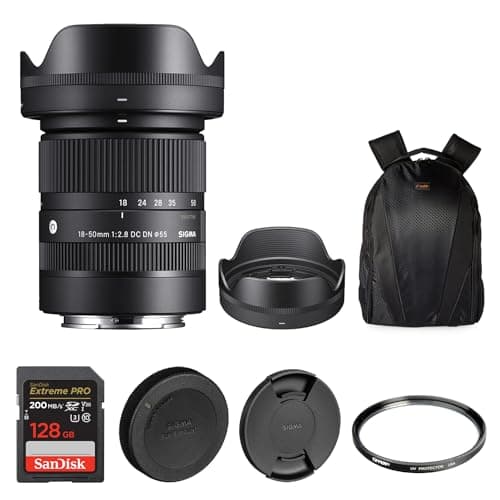
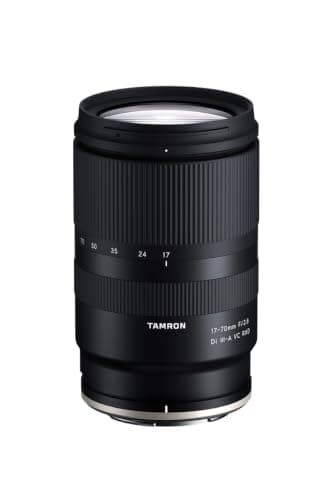
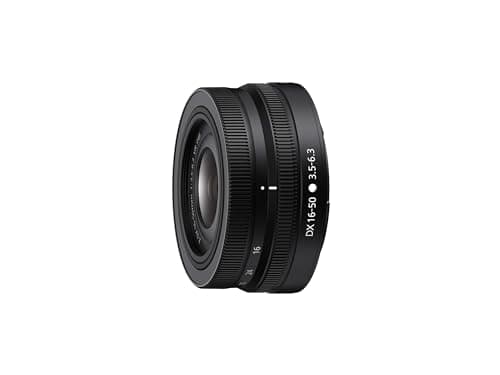
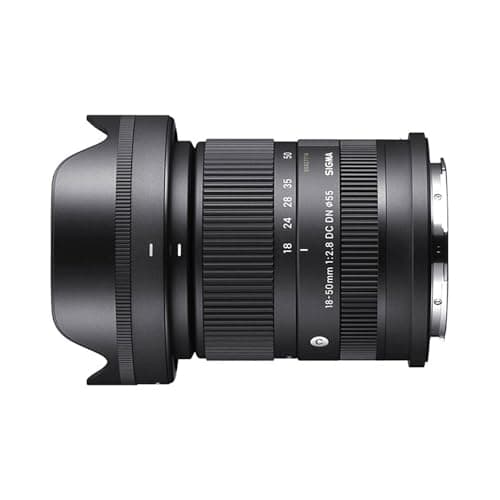
The best standard zoom is the Sigma 18-50mm F2.8 DC DN. It holds a constant f/2.8 across its whole range, it is barely larger than a prime, and it replaces a kit lens with something roughly two stops brighter at the long end — in Sony E and in Fujifilm X. That is the pick for anyone on APS-C who wants one lens on the camera. Nikon Z DX owners cannot buy it and should buy the Tamron 17-70mm F2.8 instead; Canon APS-C owners who want reach rather than aperture should take the RF-S 18-150mm. Our budget pick is the Nikon NIKKOR Z DX 16-50mm VR — the cheapest lens here, stabilized, about 135g, and sharper than a bundled lens has any business being. Live prices below, date-stamped.
A standard zoom is the lens that covers the range you actually shoot in: wide enough for a room or a street, long enough for a half-length portrait, with nothing to swap in between. Almost every camera ships with one, and almost every kit version is the weakest part of the camera — which is why "upgrade the standard zoom" is the most common first real lens purchase anyone makes.
What separates a good one from a kit one is a single number: the maximum aperture, and whether it stays put. A kit zoom typically starts around f/3.5 and drops to f/5.6 or f/6.3 as you zoom in, so the lens gets darker exactly as you frame tighter, and your exposure shifts every time you reframe mid-shot. A constant-f/2.8 zoom holds the same aperture end to end. That is about two stops more light at the long end — four times as much — plus real background separation and steady exposure for video. Everything else on this page is a trade against that one property.
Which one fits your camera
| Lens | Mount | Range | Aperture | Stabilized |
|---|
| Sigma 18-50mm F2.8 DC DN | Sony E (APS-C) | 18-50mm (about 27-75mm equivalent) | f/2.8 constant | No — relies on the body |
| Sigma 18-50mm F2.8 DC DN (X) | Fujifilm X (APS-C) | 18-50mm (about 27-75mm equivalent) | f/2.8 constant | No — relies on the body |
| Tamron 17-70mm F2.8 (Nikon Z) | Nikon Z (APS-C / DX) | 17-70mm (about 25.5-105mm equivalent) | f/2.8 constant | Yes — VC in the lens |
| Canon RF-S 18-150mm F3.5-6.3 IS STM | Canon RF-S (APS-C) | 18-150mm (about 29-240mm equivalent) | f/3.5-6.3 variable | Yes — optical IS |
| Nikon NIKKOR Z DX 16-50mm VR | Nikon Z (APS-C / DX) | 16-50mm (about 24-75mm equivalent) | f/3.5-6.3 variable | Yes — VR in the lens |
1. Constant aperture or more range — you cannot have both at this price
This is the fork the whole page turns on. A constant-f/2.8 zoom gives you light and background blur across a modest range; an all-in-one zoom gives you a huge range and gets dark doing it. The Canon RF-S 18-150mm reaches about a 240mm equivalent, which covers a wide room and a distant subject from one lens, and at the long end it is f/6.3 — roughly three stops darker than f/2.8, which indoors is the difference between a sharp frame and a blurred one. Neither choice is wrong. Decide whether your problem is "I keep changing lenses" or "my indoor photos are bad."
2. Size against reach, inside the f/2.8 options
The Sigma 18-50mm and the Tamron 17-70mm both hold f/2.8, and they answer different questions. The Sigma is remarkably small — it balances properly on a compact body and it is the better choice on a gimbal, where payload and balance both matter. The Tamron reaches to a 105mm equivalent, a genuine short-telephoto portrait length, and it carries its own stabilization. The Tamron is noticeably larger and heavier for both. We take that decision apart in detail in Sigma 18-50mm vs Tamron 17-70mm.
3. Stabilization: check your body first
Three of the five lenses here stabilize in the lens; the two Sigmas do not and lean on the camera. That matters only if your camera has no in-body stabilization, which includes most beginner APS-C bodies. On such a body, the Tamron's VC or the Nikon's VR is a real everyday advantage for handheld video and dim stills; on a body with IBIS it barely registers. Our stabilization explainer sets out which system does what, and which ones stack.
4. By mount, plainly
- Sony E (APS-C): the Sigma 18-50mm F2.8, and it is not close. The E-mount has the deepest third-party range of the four systems — see best budget Sony E lenses.
- Fujifilm X:the Sigma 18-50mm F2.8 in X-mount. Fujifilm's own zooms are good and considerably pricier; more options in best Fujifilm lenses.
- Nikon Z DX: the Tamron 17-70mm F2.8, on sale for Z mount since July 2026 and the only constant-f/2.8 standard zoom that fits a Z30 or Z50 II natively. The rest of the Z options are in best Nikon Z lenses.
- Canon RF-S:the RF-S 18-150mm if you want range, or the Tamron 17-70mm in its Canon RF version if you want f/2.8. Canon's native range is the youngest of the four — best Canon RF lenses has the full picture.
- Sony full frame: nothing on this page fits properly. The APS-C lenses here would crop your sensor, and a full-frame constant-f/2.8 standard zoom is a different budget entirely.
5. If none of these is affordable yet
Keep the kit zoom and buy a cheap fast prime beside it. A prime costs a fraction of a good zoom and gives you more light than any of them, at the price of fixed framing — which is why it is the standard advice for a first lens purchase. The sub-$200 options for every mount are in best lens under $200, and the general case is argued in kit lens vs prime. Buying a cheap zoom to replace a kit zoom is the one upgrade path that reliably disappoints.
If a price ceiling is how you are shopping
Standard zooms are where most of this budget goes, so it is worth seeing the whole bracket rather than one category of it. Our best lens under $500 ranking sets the zoom above against the fast primes at the same money, which is the comparison that actually decides the purchase.
If a standard zoom is not the only lens you are weighing
A standard zoom is the safest first upgrade rather than always the best one: if you shoot mostly wide, mostly close, or mostly portraits, a specialist beats it outright for the same money. The specialists that fit inside a thousand dollars are ranked against each other in best lens under $1,000.
If your budget caps at $500
Four of the zooms on this page carry a live price under $500, and the rest of that band - including the cheap stabilized telephotos and the one ultra-wide worth buying - is ranked in best zoom lens under $500.