Skip to content
Focal & Frame

Glass · Lenses

Alternatives to the Sigma 18-50mm F2.8

The Sigma 18-50mm is the standard zoom we recommend most. Here is what to buy when it is not right for you - and the three cases where we would still buy the Sigma.

By Stephen V.Updated How we research
#ad

We earn a commission when you buy through our Amazon links, at no extra cost to you. It never decides our rankings — we say so when the cheaper pick is the better buy. How this works.

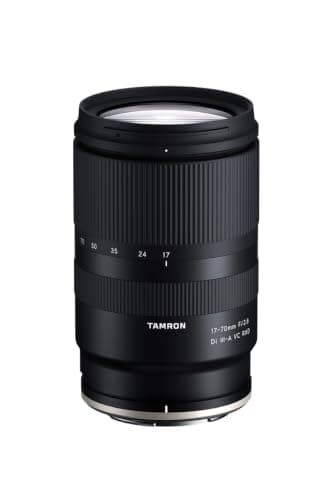
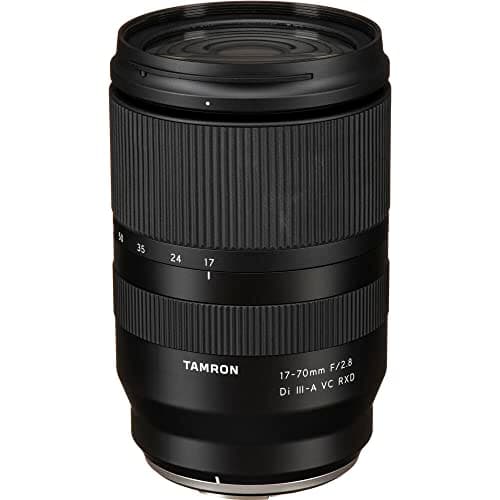
Tamron Tamron 17-70mm F2.8

Our #1 pick

Tamron 17-70mm F2.8

One lens that covers almost everything: a stabilized constant-f/2.8 zoom with a genuinely useful wide-to-short-telephoto range for APS-C.

Don't buy it if you want the smallest, lightest setup for a gimbal or travel. The Sigma 18-50mm f/2.8 is far more compact; the Tamron trades size for reach and stabilization.

#ad · Live Amazon price as of November 21, 2026. No verified price → we show none.

The best alternative to the Sigma 18-50mm F2.8 is the Tamron 17-70mm F2.8 Di III-A VC RXD. It keeps the constant f/2.8 the Sigma is bought for, adds range to about 105mm equivalent, and adds VC stabilization that the Sigma does not have in any mount. It is for the shooter who wants one lens on the camera all day and films handheld on a body with no stabilization of its own. Our budget pick is the Nikon NIKKOR Z DX 16-50mm VR, the cheapest lens here and a stabilized 135g everyday zoom for Nikon DX owners who do not need f/2.8. Prices come from the live price layer with an "as of" date; where there is no verified purchasable offer, we show no price.

First, the honest framing: Sigma publishes the 18-50mm F2.8 DC DN as a compact constant-f/2.8 standard zoom for crop-sensor mirrorless, and that is exactly what it is. It is the smallest lens of its class, it is the cheapest route to a constant aperture, and it is our top pick in best standard zoom lenses and best zoom lens under $500. Nothing on this page beats it at being small and cheap. People look for an alternative for four specific reasons, and each one has a different answer.

Those reasons are: the Sigma is not sold in your mount with a buyable offer right now; it has no stabilization and your camera has none either; 50mm is not long enough; or f/2.8 is more than you need and you would rather spend less. The picks below are ordered by how many of those four they solve. If none of them is your reason, buy the Sigma - our Sigma 18-50mm review explains why it keeps winning.

The short answer

Quick picks

#ProductBest forScorePrice
01
Tamron Tamron 17-70mm F2.8
Tamron 17-70mm F2.8

One lens that covers almost everything: a stabilized constant-f/2.8 zoom with a genuinely useful wide-to-short-telephoto range for APS-C.

The do-it-all stabilized zoom
7.2
Check price →
02
Canon Canon RF-S 18-150mm F3.5-6.3 IS STM
Canon RF-S 18-150mm F3.5-6.3 IS STM

The one-lens travel companion for Canon APS-C: an 8.3x zoom that goes from wide to real telephoto so you rarely swap glass — convenience is the whole point, and it delivers it.

The best all-in-one zoom for Canon APS-C
6.0
$569.00Amazon
03
Tamron Tamron 17-70mm F2.8 (Fujifilm X)
Tamron 17-70mm F2.8 (Fujifilm X)

The X-mount version of the same lens, and usually the cheapest of the four to buy. On a 1.5x Fujifilm body it frames like a 25.5-105mm.

Fujifilm X shooters
7.2
$699.00Amazon
04
Tamron Tamron 17-70mm F2.8 (Nikon Z)
Tamron 17-70mm F2.8 (Nikon Z)

The lens Nikon never built for DX. On sale for Z mount since July 2026, and the only constant-f/2.8 standard zoom that fits a Z30 or Z50 II natively.

Nikon Z DX owners
7.2
$699.00Amazon
05
Tamron Tamron 17-70mm F2.8 (Canon RF)
Tamron 17-70mm F2.8 (Canon RF)

The first fast standard zoom an R10, R50 or R100 can take without an adapter. On Canon's 1.6x crop it frames a little tighter: roughly 27-112mm.

Canon RF-S owners who want f/2.8
7.2
$699.00Amazon
06
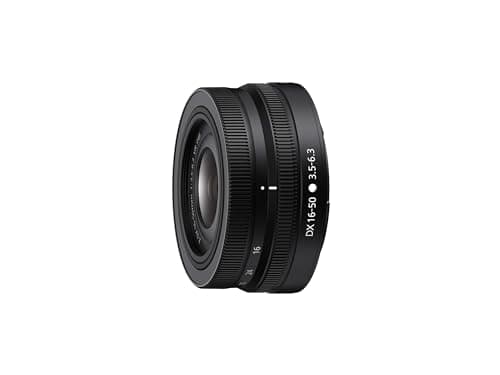
Nikon Nikon NIKKOR Z DX 16-50mm VR
Nikon NIKKOR Z DX 16-50mm VR

One of the best kit zooms anybody makes: tiny, stabilized, and sharper than a bundled lens has any business being.

The everyday walkaround zoom
7.2
$326.95Amazon

#ad · Live prices from the Amazon Product API, as of November 21, 2026. Where we have no verified live price, we show none — we would rather leave a gap than print a number that has rotted.

In detail

The picks, in full

01
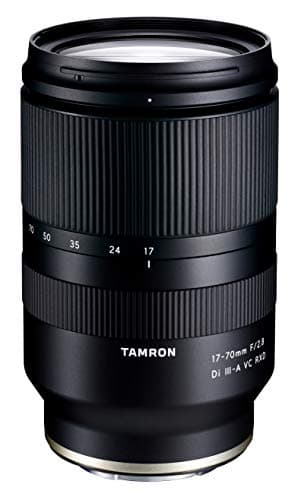
Tamron Tamron 17-70mm F2.8

The do-it-all stabilized zoom

Tamron 17-70mm F2.8

17-70mm f/2.8 (constant)Sony E, Fuji X, Canon RF, Nikon Z (APS-C)VC image stabilization67mm filter thread
7.2/10

One lens that covers almost everything: a stabilized constant-f/2.8 zoom with a genuinely useful wide-to-short-telephoto range for APS-C.

Sharpness
8
Autofocus
8
Aperture & bokeh
6
Build & size
6
Value
8

Pros

  • The 17-70mm range (≈25.5-105mm equivalent) covers wide scenes, everyday shots and short-telephoto portraits in one lens
  • Built-in VC stabilization steadies handheld video and low-light stills — a real advantage on cameras without in-body IS
  • Holds a constant f/2.8 throughout, so exposure and background blur stay consistent as you zoom

Cons

  • Large and heavy next to the Sigma 18-50mm — it's noticeably front-heavy on small bodies and gimbals
  • The extending zoom barrel and size make it less discreet for run-and-gun or travel

Don't buy this if…

…you want the smallest, lightest setup for a gimbal or travel. The Sigma 18-50mm f/2.8 is far more compact; the Tamron trades size for reach and stabilization.

Check price on Amazon →

No buyable offer at the last price check (November 21, 2026). We show nothing rather than a stale number.

#ad · we may earn a commission from this link to Tamron 17-70mm F2.8

02
Canon Canon RF-S 18-150mm F3.5-6.3 IS STM

The best all-in-one zoom for Canon APS-C

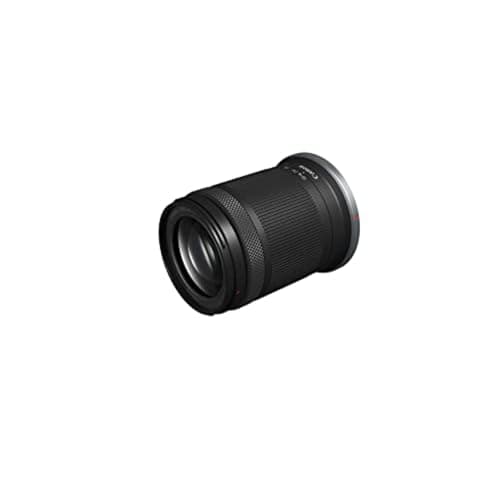
Canon RF-S 18-150mm F3.5-6.3 IS STM

18-150mm f/3.5-6.3 (≈29-240mm equiv)Canon RF-S mount (APS-C)8.3x all-in-one zoomOptical Image Stabilizer
6.0/10

The one-lens travel companion for Canon APS-C: an 8.3x zoom that goes from wide to real telephoto so you rarely swap glass — convenience is the whole point, and it delivers it.

Sharpness
6
Autofocus
7
Aperture & bokeh
3
Build & size
6
Value
8

Pros

  • The 18-150mm range (≈29-240mm equivalent) covers wide scenes, portraits and distant subjects in a single lens — ideal for travel
  • Optical stabilization steadies both handheld stills and video, especially at the long end
  • Compact and light for its enormous range, so it stays on the camera all day

Cons

  • The variable f/3.5-6.3 aperture is slow, limiting low-light use and background blur
  • Image quality is a step behind a prime or a fast zoom — the compromise every superzoom makes for its reach

Don't buy this if…

…you care most about image quality or low-light shooting. A superzoom trades sharpness and aperture for convenience — a fast prime like the RF 50mm f/1.8 takes visibly better photos in dim light.

$569.00View on Amazon

Price as of November 21, 2026. Prices change — Amazon's is the one that counts.

#ad · we may earn a commission from this link to Canon RF-S 18-150mm F3.5-6.3 IS STM

03
Tamron Tamron 17-70mm F2.8 (Fujifilm X)

Fujifilm X shooters

Tamron 17-70mm F2.8 (Fujifilm X)

17-70mm f/2.8 constant (≈25.5-105mm equivalent)Fujifilm X mount (APS-C)530g, 119.6mm long67mm filter, VC stabilization
7.2/10

The X-mount version of the same lens, and usually the cheapest of the four to buy. On a 1.5x Fujifilm body it frames like a 25.5-105mm.

Sharpness
8
Autofocus
8
Aperture & bokeh
6
Build & size
6
Value
8

Pros

  • Fujifilm's own constant-f/2.8 zooms do not reach past 55mm, so this is the widest-to-longest fast zoom on the mount
  • VC stabilization matters more here than on Sony, because the cheap X bodies (X-M5, X-T30 II) have no in-body IS
  • Same optics as the Sony E version LensTip tested: very good center resolution at every focal length, peaking at 81 lpmm at 70mm

Cons

  • At 530g it is heavy on Fujifilm's smallest bodies — an X-M5 with this mounted is a lens with a camera attached, not the other way round
  • No aperture ring, which is the control Fujifilm shooters buy the system for

Don't buy this if…

…you want the compact, dial-led Fujifilm experience. The XF 18-55mm f/2.8-4 and the small primes are the lenses that make an X body feel like an X body; this is the one you fit when you need range and f/2.8 more than you need size.

$699.00View on Amazon

Price as of November 21, 2026. Prices change — Amazon's is the one that counts.

#ad · we may earn a commission from this link to Tamron 17-70mm F2.8 (Fujifilm X)

04
Tamron Tamron 17-70mm F2.8 (Nikon Z)

Nikon Z DX owners

Tamron 17-70mm F2.8 (Nikon Z)

17-70mm f/2.8 constant (≈25.5-105mm equivalent)Nikon Z mount (APS-C / DX)540g, 121.3mm long67mm filter, VC stabilization
7.2/10

The lens Nikon never built for DX. On sale for Z mount since July 2026, and the only constant-f/2.8 standard zoom that fits a Z30 or Z50 II natively.

Sharpness
8
Autofocus
8
Aperture & bokeh
6
Build & size
6
Value
8

Pros

  • Nikon's Z DX range contains no fast zoom at all, so on a Z30, Z50 or Z50 II this is a genuine capability the system otherwise lacks
  • VC stabilization covers for the missing in-body IS on every current Z DX body
  • The newest of the four versions — Tamron put it on sale on July 2, 2026 — so stock is current rather than old shelf inventory

Cons

  • The heaviest and longest version at 540g and 121.3mm, on bodies built around being small
  • It is a third-party lens on a mount Nikon licenses tightly: firmware updates come from Tamron, not from Nikon's own menu

Don't buy this if…

…you mostly shoot stills in good light and already own the Z DX 16-50mm. That kit lens is tiny and sharper than its price suggests; the Tamron is for people who need f/2.8 and reach, and will carry 540g to get them.

$699.00View on Amazon

$749.007% off

Price as of November 21, 2026. Prices change — Amazon's is the one that counts.

#ad · we may earn a commission from this link to Tamron 17-70mm F2.8 (Nikon Z)

05
Tamron Tamron 17-70mm F2.8 (Canon RF)

Canon RF-S owners who want f/2.8

Tamron 17-70mm F2.8 (Canon RF)

17-70mm f/2.8 constant (≈27-112mm on Canon's 1.6x crop)Canon RF mount (APS-C / RF-S)530g, 117.3mm long67mm filter, VC stabilization
7.2/10

The first fast standard zoom an R10, R50 or R100 can take without an adapter. On Canon's 1.6x crop it frames a little tighter: roughly 27-112mm.

Sharpness
8
Autofocus
8
Aperture & bokeh
6
Build & size
6
Value
8

Pros

  • Canon's native RF-S zooms are all variable-aperture kit lenses, so this is the only constant-f/2.8 standard zoom that mounts natively on an RF-S body
  • Tamron publishes a slightly narrower angle of view for the RF version (77°0' to 21°52' against 80°37' to 23°17') because Canon's APS-C crop is 1.6x, not 1.5x — more reach, slightly less wide
  • The shortest of the four versions at 117.3mm, and VC covers the missing in-body IS on the R10, R50 and R100

Cons

  • The 1.6x crop costs you the widest end: 27mm equivalent is noticeably less wide than the 25.5mm the other three mounts give
  • Newly released on RF (on sale July 2, 2026), so there is less owner feedback on this version than on the five-year-old Sony E one

Don't buy this if…

…you want the widest possible view on a Canon crop body — the 27mm-equivalent wide end is the weakest of the four mounts, and a dedicated wide prime or the RF-S 10-18mm covers that job far better.

$699.00View on Amazon

$749.007% off

Price as of November 21, 2026. Prices change — Amazon's is the one that counts.

#ad · we may earn a commission from this link to Tamron 17-70mm F2.8 (Canon RF)

06
Nikon Nikon NIKKOR Z DX 16-50mm VR

The everyday walkaround zoom

Nikon NIKKOR Z DX 16-50mm VR

16-50mm f/3.5-6.3Nikon Z mount (APS-C)VR optical stabilizationRetracting, ~135g
7.2/10

One of the best kit zooms anybody makes: tiny, stabilized, and sharper than a bundled lens has any business being.

Sharpness
7
Autofocus
8
Aperture & bokeh
4
Build & size
8
Value
9

Pros

  • Collapses to almost nothing when retracted, so a Z30 or Z50 II with this on genuinely fits in a coat pocket
  • VR stabilization matters more on Nikon DX than elsewhere, because no current DX body has in-body stabilization
  • Sharp across the range and wide enough at 16mm (24mm equivalent) to film yourself at arm's length

Cons

  • Slow: f/6.3 at the long end lets in far less light than a prime, so indoor and evening shooting is a struggle
  • Backgrounds stay largely in focus — you will not get much subject separation from a lens this slow

Don't buy this if…

…you already have it in a kit and are shopping for an upgrade. Buying it separately only makes sense if your camera came body-only — otherwise put the money into a fast prime, which changes your photographs far more.

$326.95View on Amazon

Price as of November 21, 2026. Prices change — Amazon's is the one that counts.

#ad · we may earn a commission from this link to Nikon NIKKOR Z DX 16-50mm VR

The four reasons to look past the Sigma, and what each one points at

  1. Mount availability. The Sony E and Fujifilm X versions carry a live price. The Canon RF version currently shows no verified purchasable offer, so a Canon RF-S owner who wants a constant-aperture standard zoom today is buying the Tamron 17-70mm in RF or the Canon 18-150mm instead.
  2. Stabilization. No Sigma 18-50mm has it. Four of the six picks below do. This is the single most common reason to switch, because most bodies under $1,000 have no in-body stabilization - see image stabilization explained.
  3. Range. The Sigma stops at 50mm, about 75mm equivalent. The Tamron reaches about 105mm and the Canon 18-150mm reaches about 240mm.
  4. Price. f/2.8 across a zoom range is the expensive part. If you shoot in daylight, a slower stabilized zoom costs much less and loses you nothing you were using.

The six alternatives

LensMountWhat it fixes vs the SigmaWhat it costs you
Tamron 17-70mm F2.8 VC RXDSony E APS-CStabilization plus range to about 105mm equivalentLarger, heavier, front-heavy on small bodies
Canon RF-S 18-150mm IS STMCanon RF-S APS-C8.3x range and stabilization, in a mount Sigma is not supplyingSlow f/3.5-6.3; weaker image quality than a fast zoom
Tamron 17-70mm F2.8 (Fujifilm X)Fujifilm X APS-CSame fix, 530g and 119.6mm longBulky on a small X-series body
Tamron 17-70mm F2.8 (Nikon Z)Nikon Z APS-CThe only constant-f/2.8 DX standard zoom on Z, 540gHeaviest of the four mount versions
Tamron 17-70mm F2.8 (Canon RF)Canon RF-S APS-CConstant f/2.8 on RF-S, about 27-112mm equivalent530g on bodies designed to be light
Nikon NIKKOR Z DX 16-50mm VRNikon Z APS-CStabilization and a 135g retracting barrel, for much lessf/3.5-6.3 - no help indoors, little background blur

Why the Tamron 17-70mm is the first answer

It solves three of the four reasons at once. The constant f/2.8 is the same headline the Sigma is bought for, the 17-70mm range is about 25.5-105mm equivalent so it covers a room, a street and a head-and-shoulders portrait without a lens change, and Tamron's VC stabilization does work no unstabilized body can do - it steadies handheld stills in dim light and handheld video. It is sold in all four mounts this site covers, and all four currently carry a live price, which is the other thing the Sigma cannot claim.

The cost is size. It is noticeably larger and heavier than the Sigma - a 67mm filter thread against 55mm, and roughly 530-540g depending on the mount - and its extending barrel makes it front-heavy on a small body and awkward to balance on a gimbal. That is a real trade, not a technicality: people who return the Tamron return it because of the weight. The straight head-to-head is Sigma 18-50mm vs Tamron 17-70mm, and the full write-up is the Tamron 17-70mm review.

If you shoot Canon RF-S: the 18-150mm IS STM

Canon owners have the thinnest choice here, and this is the pragmatic answer. The RF-S 18-150mm covers about 29-240mm equivalent in one 8.3x zoom with optical stabilization, which means a street scene and a distant subject without a lens change on a camera that has no stabilization of its own. For travel that convenience is the entire point.

It is not a Sigma 18-50mm substitute on image quality or light-gathering, and we will not pretend otherwise: f/3.5-6.3 is slow, so it is weak indoors and after dark and separates subject from background only slightly. If image quality matters more than reach, a Canon RF prime at a third of the price takes visibly better photographs in dim light - those are in best Canon RF lenses. Canon owners should also know the Tamron 17-70mm is sold in an RF version, and it is the better lens.

The budget pick: Nikon NIKKOR Z DX 16-50mm VR

This is the cheapest lens on the page and it is here for the reader whose real reason for looking is that f/2.8 costs too much. At about 135g with a retracting barrel it is the smallest option here, VR stabilization covers the gap on Nikon's unstabilized DX bodies, and 16-50mm is the same working range as the Sigma. In good light the pictures are fine.

What you give up is the whole point of a constant-aperture zoom: at f/3.5-6.3 this lens gathers a fraction of the light and will not blur a background. If it came with your camera, the better use of your money is a fast prime rather than another zoom - the Nikon options are in best lenses for Nikon Z and the cheap primes in best lens under $200.

Three cases where we would still buy the Sigma

It is the smallest constant-f/2.8 standard zoom you can buy, so if you chose a compact body specifically to carry it everywhere, the Tamron undoes that choice. It is the cheapest route to a constant f/2.8, so if the aperture is the feature and the budget is fixed, nothing here beats it. And on a body that already has in-body stabilization, the Tamron's main advantage mostly disappears while its weight does not. Our ranking of the whole Sigma range is best Sigma lenses.
How we picked

We do not run a testing lab

We compiled the manufacturers' published specifications and manuals, did the cost math, and scored each product against a published rubric. The scores are judgments from that documented research — they are notmeasurements we took, because we do not have a lab and we are not going to pretend we do. Where a number came from someone else's testing, we name and link them in Sources.

Questions

Frequently asked

What is the best alternative to the Sigma 18-50mm F2.8?
The Tamron 17-70mm F2.8 Di III-A VC RXD. It keeps the constant f/2.8, extends the range to about 105mm equivalent and adds VC stabilization, and it is sold in all four mounts with a live price. The trade is size and weight: roughly 530-540g with a 67mm filter thread, which is front-heavy on a small body. See Sigma 18-50mm vs Tamron 17-70mm.
Is there a cheaper alternative to the Sigma 18-50mm?
Yes, if you can live without the constant aperture. The Nikon NIKKOR Z DX 16-50mm VR covers the same working range with stabilization and a 135g retracting barrel for much less, and in daylight it is fine. At f/3.5-6.3 it will not help you indoors. If light is your problem, spend the difference on a prime instead - best lens under $200.
Is there a Sigma 18-50mm alternative for Canon RF?
The Sigma 18-50mm is made in Canon RF but that listing currently shows no verified purchasable offer, so the answer today is the Tamron 17-70mm F2.8 in RF - a constant f/2.8 with stabilization, about 27-112mm equivalent on Canon's 1.6x crop - or the Canon RF-S 18-150mm IS STM if you want range rather than aperture. The RF range in full is in best Canon RF lenses.
Does the Sigma 18-50mm have image stabilization?
No. No version of it does, in any mount. That is the single most common reason people look for an alternative, because most APS-C bodies under $1,000 have no in-body stabilization either, so neither the lens nor the camera is steadying anything. Four of the six picks on this page stabilize in the lens.
Is the Sigma 18-50mm or the Tamron 17-70mm better for video?
The Tamron, on a body without in-body stabilization, because VC smooths handheld footage the camera cannot. The Sigma, on a gimbal or on a stabilized body, because it is lighter and shorter and does not shift the balance as it zooms. Both hold f/2.8 throughout, so exposure stays put either way.
How current are the prices on this page?
Every price is read from the live price layer and stamped with the date it was read, shown above the rankings. Each mount version of the Tamron is priced separately rather than quoted once, and where a lens has no verified purchasable offer we show no price for it at all.

Keep reading

Receipts

Sources

We do not run a testing lab, and we do not pretend to. Specs come from manufacturer sheets and manuals; where a figure came from someone else's measurement, we name and link them. Where we could not verify something, we say so on the page rather than quietly leaving it out. Read our full method.