Skip to content
Focal & Frame

Glass · Lenses

The Best Sigma Lenses

Sigma makes the lenses that beat first-party glass on price without feeling cheap. Six picks with live prices, plus an honest note on which mount you can actually buy each one in.

By Stephen V.Updated How we research
#ad

We earn a commission when you buy through our Amazon links, at no extra cost to you. It never decides our rankings — we say so when the cheaper pick is the better buy. How this works.

Sigma Sigma 18-50mm F2.8 DC DN

Our #1 pick

Sigma 18-50mm F2.8 DC DN

The best all-round APS-C lens for the money, full stop. A tiny constant-f/2.8 zoom that replaces the kit lens and comes off far sharper and brighter.

Don't buy it if you need reach or a longer portrait length. This is a standard zoom — for compression and telephoto framing you'd add a portrait prime like the Sigma 56mm f/1.4 alongside it.

#ad · Live Amazon price as of November 21, 2026. No verified price → we show none.

The best Sigma lens is the 18-50mm F2.8 DC DN. It holds a constant f/2.8 across the range a kit lens covers, in a barrel smaller and lighter than most kit lenses, and it is the one lens that changes what an entry-level APS-C camera can do indoors. It is for the owner of an a6400, X-T30, Z50 or R10 whose kit zoom goes dark the moment the sun does. Our budget pick is the Sigma 30mm F1.4 DC DN, the cheapest Sigma here with a live price and the normal prime almost every APS-C shooter should own. Prices come from the live price layer with an "as of" date; where there is no verified purchasable offer, we show no price at all.

Sigma occupies a specific position in this market and it is worth naming before you pick a lens. Its Contemporary DC DN primes and zooms are designed for crop-sensor mirrorless bodies rather than adapted from DSLR designs, which is why they are small; they use stepping-motor autofocus quiet enough for video; and they are priced below the first-party equivalent while usually being optically better than it. The trade-offs are consistent too: no weather sealing on the Contemporary line, no optical stabilization in any lens on this page, and a mount availability that varies lens by lens. That last one catches people out, so it is the first column in the table below.

A warning about the order here. These six lenses do completely different jobs, so this is not a ladder you climb, it is a menu. If you already own the kit zoom and your complaint is dim light, buy a prime. If your complaint is that you keep swapping lenses, buy the 18-50mm. If you photograph places rather than people, the ultra-wide is the only pick here that will satisfy you. We say which is which on every one, and the whole third-party question is argued out in third-party vs brand lenses.

The short answer

Quick picks

#ProductBest forScorePrice
01
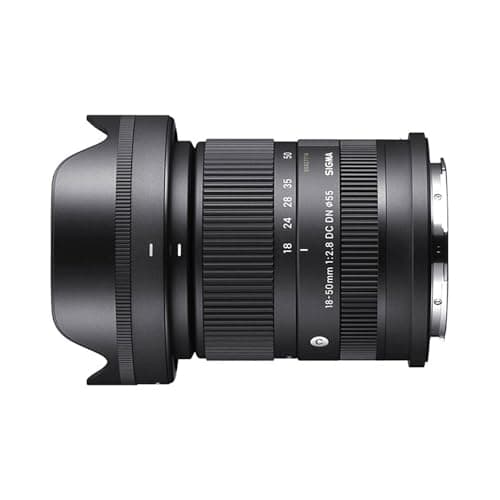
Sigma Sigma 18-50mm F2.8 DC DN
Sigma 18-50mm F2.8 DC DN

The best all-round APS-C lens for the money, full stop. A tiny constant-f/2.8 zoom that replaces the kit lens and comes off far sharper and brighter.

The best all-round APS-C zoom
8.2
$499.00Amazon
02
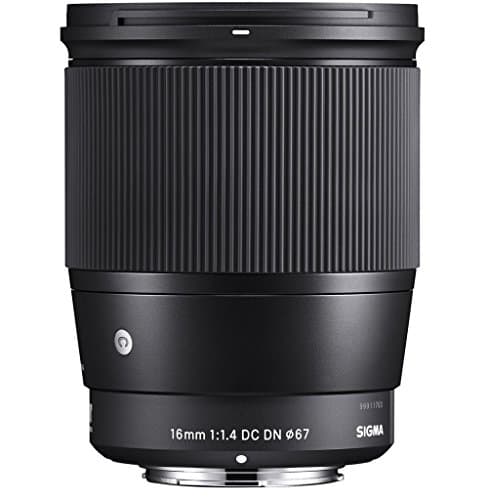
Sigma Sigma 16mm F1.4 DC DN
Sigma 16mm F1.4 DC DN

The value creator wide: a fast ≈24mm-equivalent f/1.4 that's brilliant for vlogging, low light and astro, at a price that undercuts the first-party options.

The best-value wide prime
7.8
$414.00Amazon
03
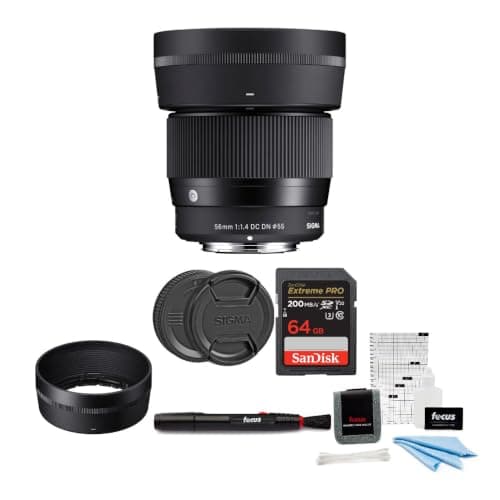
Sigma Sigma 56mm F1.4 DC DN
Sigma 56mm F1.4 DC DN

The budget portrait king. An ≈84mm-equivalent short telephoto with creamy f/1.4 blur and biting sharpness, for a fraction of a full-frame 85mm's price.

The best-value portrait lens
8.8
$464.54Amazon
04
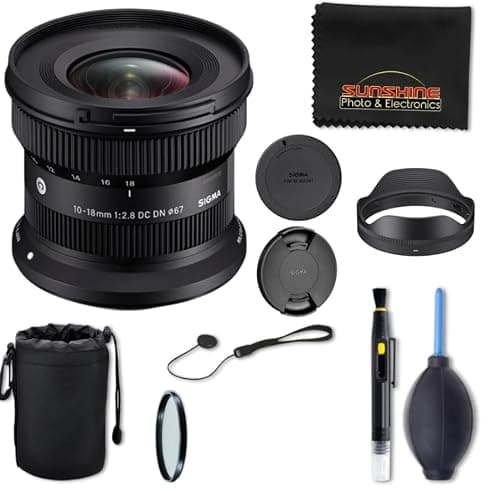
Sigma Sigma 10-18mm F2.8 DC DN
Sigma 10-18mm F2.8 DC DN

The fast ultra-wide zoom APS-C shooters have wanted: a constant f/2.8 across the whole range in a tiny body, wide enough for landscapes and interiors and bright enough for astro.

The best fast ultra-wide zoom for APS-C
8.0
$729.00Amazon
05
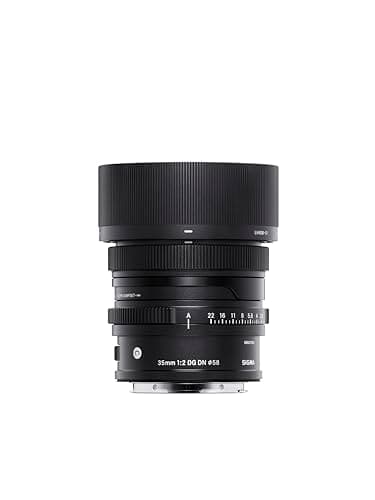
Sigma Sigma 35mm F2 DG DN
Sigma 35mm F2 DG DN

The enthusiast's compact 35mm: an all-metal I-series prime with a clicked aperture ring that feels far pricier than it is, and takes lovely, characterful photos.

The best-built compact 35mm
7.8
$700.57Amazon
06
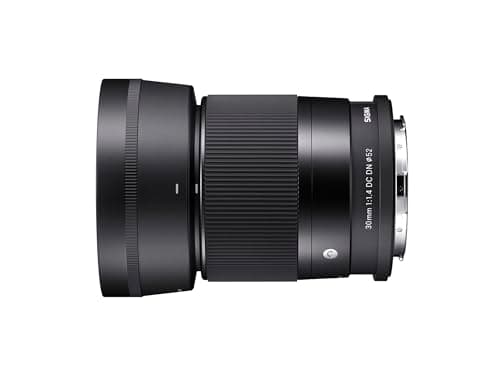
Sigma Sigma 30mm F1.4 DC DN
Sigma 30mm F1.4 DC DN

The APS-C nifty fifty: a fast, sharp, affordable 30mm that frames like a ~45mm 'normal' lens and blurs backgrounds beautifully at f/1.4.

The best 50mm-equivalent for APS-C
8.2
$344.00Amazon

#ad · Live prices from the Amazon Product API, as of November 21, 2026. Where we have no verified live price, we show none — we would rather leave a gap than print a number that has rotted.

In detail

The picks, in full

01
Sigma Sigma 18-50mm F2.8 DC DN

The best all-round APS-C zoom

Sigma 18-50mm F2.8 DC DN

18-50mm f/2.8 (constant)Sony E mount (APS-C)Stepping-motor AF55mm filter thread
8.2/10

The best all-round APS-C lens for the money, full stop. A tiny constant-f/2.8 zoom that replaces the kit lens and comes off far sharper and brighter.

Sharpness
8
Autofocus
8
Aperture & bokeh
6
Build & size
9
Value
10

Pros

  • A constant f/2.8 across the whole zoom range holds exposure steady and blurs backgrounds far more than a kit lens
  • Astonishingly small and light for a fast zoom — barely bigger than a prime, and ideal on a gimbal
  • Sharp throughout the range with quiet, quick autofocus that flatters both photos and video

Cons

  • The 18-50mm range (≈27-75mm equivalent) doesn't reach into telephoto for tight portraits or distant subjects
  • APS-C only, with no built-in stabilization — you lean on in-body IS or a gimbal

Don't buy this if…

…you need reach or a longer portrait length. This is a standard zoom — for compression and telephoto framing you'd add a portrait prime like the Sigma 56mm f/1.4 alongside it.

$499.00View on Amazon

$549.009% off

Price as of November 21, 2026. Prices change — Amazon's is the one that counts.

#ad · we may earn a commission from this link to Sigma 18-50mm F2.8 DC DN

02
Sigma Sigma 16mm F1.4 DC DN

The best-value wide prime

Sigma 16mm F1.4 DC DN

16mm f/1.4 (≈24mm equivalent)Sony E mount (APS-C)Stepping-motor AF67mm filter thread
7.8/10

The value creator wide: a fast ≈24mm-equivalent f/1.4 that's brilliant for vlogging, low light and astro, at a price that undercuts the first-party options.

Sharpness
8
Autofocus
8
Aperture & bokeh
7
Build & size
7
Value
9

Pros

  • f/1.4 and the ≈24mm-equivalent view make it a versatile everyday wide — vlogging, interiors, street and night skies
  • Excellent sharpness and a bright aperture for a fraction of the cost of a first-party G lens
  • Fast, quiet autofocus that tracks faces reliably for talking to camera

Cons

  • Heavier and larger than Sony's own compact wide primes — it's dense in the hand
  • No aperture ring and no weather sealing, unlike the pricier Sony 15mm f/1.4 G

Don't buy this if…

…you want the lightest possible lens for arm's-length vlogging. It's a bit front-heavy for long handheld sessions — the Sony E 11mm f/1.8 is lighter and wider for selfie framing.

$414.00View on Amazon

Price as of November 21, 2026. Prices change — Amazon's is the one that counts.

#ad · we may earn a commission from this link to Sigma 16mm F1.4 DC DN

03
Sigma Sigma 56mm F1.4 DC DN

The best-value portrait lens

Sigma 56mm F1.4 DC DN

56mm f/1.4 (≈84mm equivalent)Sony E mount (APS-C)Stepping-motor AF55mm filter thread
8.8/10

The budget portrait king. An ≈84mm-equivalent short telephoto with creamy f/1.4 blur and biting sharpness, for a fraction of a full-frame 85mm's price.

Sharpness
9
Autofocus
8
Aperture & bokeh
9
Build & size
8
Value
10

Pros

  • The ≈84mm-equivalent focal length is the sweet spot for flattering head-and-shoulders portraits with natural compression
  • f/1.4 renders a soft, creamy background that isolates your subject — the look people buy a prime for
  • Remarkably sharp on the eyes wide open, with quiet autofocus, at a genuinely low price

Cons

  • APS-C only, so it won't cover a full-frame sensor
  • No weather sealing, and the barrel is well-made but plastic

Don't buy this if…

…you shoot full-frame or need weather sealing for outdoor work. On full-frame you'd want a native 85mm like the Sony FE 85mm f/1.8 instead.

$464.54View on Amazon

Price as of November 21, 2026. Prices change — Amazon's is the one that counts.

#ad · we may earn a commission from this link to Sigma 56mm F1.4 DC DN

04
Sigma Sigma 10-18mm F2.8 DC DN

The best fast ultra-wide zoom for APS-C

Sigma 10-18mm F2.8 DC DN

10-18mm f/2.8 (constant, ≈15-27mm equiv)Sony E mount (APS-C)Stepping-motor AFUltra-wide constant aperture
8.0/10

The fast ultra-wide zoom APS-C shooters have wanted: a constant f/2.8 across the whole range in a tiny body, wide enough for landscapes and interiors and bright enough for astro.

Sharpness
8
Autofocus
8
Aperture & bokeh
7
Build & size
8
Value
9

Pros

  • A constant f/2.8 across the 10-18mm (≈15-27mm equivalent) range is genuinely fast for an ultra-wide, so it works for astro and dim interiors
  • Ultra-wide framing for sweeping landscapes, architecture and vlogging, with the flexibility of a zoom
  • Remarkably small and light for a fast ultra-wide, with quick, quiet autofocus

Cons

  • APS-C only, with no stabilization — you lean on in-body IS or a gimbal for handheld video
  • Some distortion at the widest end that relies on in-camera correction, and it is pricier than a slow kit-style wide

Don't buy this if…

…you want the very brightest wide for astro or the strongest background blur. A fast wide prime like the Sigma 16mm f/1.4 opens wider still — the zoom trades some speed for framing flexibility.

$729.00View on Amazon

Price as of November 21, 2026. Prices change — Amazon's is the one that counts.

#ad · we may earn a commission from this link to Sigma 10-18mm F2.8 DC DN

05
Sigma Sigma 35mm F2 DG DN

The best-built compact 35mm

Sigma 35mm F2 DG DN

35mm f/2Sony E mount (full-frame)Aperture ringCompact metal build
7.8/10

The enthusiast's compact 35mm: an all-metal I-series prime with a clicked aperture ring that feels far pricier than it is, and takes lovely, characterful photos.

Sharpness
8
Autofocus
7
Aperture & bokeh
7
Build & size
9
Value
8

Pros

  • Beautifully made all-metal body with a physical aperture ring — a premium feel at a mid-range price
  • Compact and light for a full-frame prime, with sharp, characterful rendering
  • f/2 is fast enough for low light and pleasing background blur

Cons

  • f/2 rather than f/1.8 or f/1.4, so it gathers a little less light than the fastest 35mm primes
  • Stepping-motor autofocus is quick but not quite as snappy as the best linear-motor lenses

Don't buy this if…

…you want the absolute widest aperture for low light and blur. At f/2 it trails the f/1.4 primes — choose it for build, size and handling rather than raw speed.

$700.57View on Amazon

Price as of November 21, 2026. Prices change — Amazon's is the one that counts.

#ad · we may earn a commission from this link to Sigma 35mm F2 DG DN

06
Sigma Sigma 30mm F1.4 DC DN

The best 50mm-equivalent for APS-C

Sigma 30mm F1.4 DC DN

30mm f/1.4 (≈45mm equivalent)Sony E mount (APS-C)Stepping-motor AFBrass bayonet mount
8.2/10

The APS-C nifty fifty: a fast, sharp, affordable 30mm that frames like a ~45mm 'normal' lens and blurs backgrounds beautifully at f/1.4.

Sharpness
8
Autofocus
8
Aperture & bokeh
8
Build & size
8
Value
9

Pros

  • The ≈45mm-equivalent view is the true 'nifty fifty' framing on a crop-sensor camera — natural and flexible
  • f/1.4 gathers more light and blurs backgrounds more than the f/1.8 full-frame primes, for less money
  • Sharp wide open with fast, quiet autofocus that suits both stills and video

Cons

  • Covers APS-C only, so it won't work uncropped on a full-frame body
  • Lab reviewers measure real barrel distortion — straight vertical edges bow outward until a correction profile is applied
  • No stabilization of its own, plus heavy corner shading and some purple fringing wide open at f/1.4

Don't buy this if…

…you shoot full-frame. This lens is designed for crop-sensor cameras like the Sony ZV-E10 or a6400 — on a full-frame body it vignettes heavily or forces a crop.

$344.00View on Amazon

Price as of November 21, 2026. Prices change — Amazon's is the one that counts.

#ad · we may earn a commission from this link to Sigma 30mm F1.4 DC DN

What we required of a Sigma lens to rank here

Sigma's mirrorless catalog is large and much of it is full-frame glass that makes little sense on the bodies this site covers. Four rules cut it down.

  1. It has to be buyable in a mount our readers own. Sony E, Fujifilm X, Nikon Z or Canon RF-S. A lens that exists only in L-mount is not a recommendation to anyone here.
  2. It has to beat the first-party option at something specific- maximum aperture, size, close focus or price. "Cheaper and nearly as good" is not a reason to switch brands.
  3. It has to carry a live price. Every pick below has a verified purchasable offer read from the price layer. Sigma sells the same optic in several mounts and the mount versions do not always stay in stock together, which is exactly why we gate on price.
  4. No duplicates of the same job. We rank the focal lengths that frame differently enough to both be worth owning, not every variant of the same Contemporary prime as a separate recommendation.

The six, and what each one is for

LensMounts with a live priceWhat it is forMain compromise
Sigma 18-50mm F2.8 DC DNSony E, Fujifilm XOne small constant-aperture zoom that replaces the kit lensNo stabilization; the Canon RF version has no verified offer
Sigma 16mm F1.4 DC DNSony E, Fujifilm X, Nikon Z, Canon RFFast wide prime for vlogging, interiors and astroLarge for a prime; 24mm-equivalent is wide for portraits
Sigma 56mm F1.4 DC DNSony EThe APS-C portrait prime, about 84mm equivalentToo tight for groups or for a small room
Sigma 10-18mm F2.8 DC DNSony EFast ultra-wide zoom for landscape, interiors and astroLeans on in-camera distortion correction; no stabilization
Sigma 35mm F2 DG DNSony E (full-frame)A compact metal 35mm with an aperture ringf/2 rather than f/1.4; frames like about 53mm on APS-C
Sigma 30mm F1.4 DC DNSony E, Canon RFThe cheapest Sigma that transforms a kit-lens cameraFixed focal length; the Nikon Z version has no verified offer

Why the 18-50mm F2.8 wins

Two things make this lens unusual rather than merely good. The first is that the constant f/2.8 does not fade as you zoom: a kit lens that starts at f/3.5 and ends at f/5.6 loses more than a stop of light exactly when you zoom in on something, which is why indoor photos taken at the long end come out dark or blurred. Set f/2.8 on this lens and it stays there from 18mm to 50mm. The second is the size. Sigma designed it for crop sensors from scratch, and the result is a 55mm-filter-thread barrel smaller than the kit zoom it replaces, so the camera stays a camera you carry.

The compromises are honest ones. There is no optical stabilization, so on a body without in-body stabilization you rely on shutter speed for stills and on a gimbal or a careful hand for video. The 18-50mm range is narrower than a superzoom, so you will still want something longer for reach. And the mount situation matters: the Sony E and Fujifilm X versions both carry a live price, while the Canon RF version currently shows no verified purchasable offer. Our full write-up is the Sigma 18-50mm review, and the head-to-head against the obvious rival is Sigma 18-50mm vs Tamron 17-70mm.

The two primes that matter most: the 16mm and the 56mm

Sigma's F1.4 Contemporary primes are the reason most people buy Sigma at all, and these two sit at opposite ends of what an APS-C camera needs. The 16mm F1.4 DC DNframes like about 24mm, wide enough to hold the camera at arm's length and still have your head and your background in shot, which is why it is the default vlogging prime, and f/1.4 at that width is fast enough for interiors and genuinely usable for astrophotography. It is the largest prime here and its 67mm filter thread tells you so. It also focuses as close as 25cm.

The 56mm F1.4 DC DN is the other end: about 84mm equivalent, the classic portrait length on a crop sensor. It compresses features flatteringly, it separates a face from a background more convincingly than any zoom on this page, and it is small for what it does. The catch is that 84mm is useless in a small room and wrong for groups. Both lenses appear in best portrait lenses, and the 16mm's astro case is made in best lenses for astrophotography.

If you shoot places: the 10-18mm F2.8

A constant f/2.8 across an ultra-wide zoom range - roughly 15-27mm equivalent - is rare, and it is the reason to buy this lens. Ultra-wides are usually slow, which restricts them to daylight; this one works in a dim interior and under a night sky. It is also small for the class. The costs are that distortion correction is handled in-camera rather than purely optically, and that there is no stabilization, so handheld video wants a body that has its own. It is ranked against the alternatives in best wide-angle lenses.

The one full-frame pick: the 35mm F2 DG DN

This is the odd one out and it is here for a specific reader: the Sony shooter who has moved to full-frame, or expects to. The 35mm F2 DG DN is a compact metal-barrel prime with a physical aperture ring, and it is the Sigma that feels the most expensive to use. On a full-frame body 35mm is the classic documentary field of view. On an APS-C body it frames like about 53mm, which is a perfectly good normal lens but not what you paid for. If you are on APS-C and want that field of view for less money, the options are in best 35mm prime lenses.

The budget pick: Sigma 30mm F1.4 DC DN

The 30mm F1.4 is the cheapest Sigma on this page with a live price and the one we recommend most often to people who have never owned a prime. It frames like about 45mm on Sony E and about 48mm on Canon's 1.6x crop, close enough to normal that nothing looks distorted, and f/1.4 gathers roughly four times the light of a kit lens at f/2.8. That single change is what makes indoor photographs stop looking like phone photographs. It has a brass bayonet mount and stepping-motor autofocus quiet enough to film with.

The cost is that it does not zoom, and the Nikon Z version currently has no verified purchasable offer, so Z owners should look at the 16mm instead or read best lenses for Nikon Z. The full write-up is the Sigma 30mm review.

What we would actually buy

If you own one lens and it is the kit zoom: the 30mm F1.4, which costs the least here and changes the most. If you own that already: the 18-50mm F2.8, so you stop choosing between light and flexibility. If you have both and photograph people, the 56mm; if you photograph places, the 10-18mm. That is the whole Sigma range for a crop-sensor camera in four sentences, and spending beyond it means buying a specialist rather than an upgrade - the wider field is ranked in best lens under $500 and best lens under $1,000.
How we picked

We do not run a testing lab

We compiled the manufacturers' published specifications and manuals, did the cost math, and scored each product against a published rubric. The scores are judgments from that documented research — they are notmeasurements we took, because we do not have a lab and we are not going to pretend we do. Where a number came from someone else's testing, we name and link them in Sources.

Questions

Frequently asked

What is the best Sigma lens?
The Sigma 18-50mm F2.8 DC DN. It is the only lens in Sigma's crop-sensor range that replaces the kit zoom outright: a constant f/2.8 across 18-50mm in a barrel smaller than the lens it replaces. Its drawbacks are no stabilization and no weather sealing. Full detail is in our Sigma 18-50mm review.
Are Sigma lenses as good as Sony, Canon, Nikon or Fujifilm lenses?
In the crop-sensor classes on this page, usually better for the money. Sigma's F1.4 Contemporary primes have no first-party equivalent at the price on any of the four mounts, and the 10-18mm F2.8 has no first-party equivalent at all. What you give up is weather sealing, resale value and occasional firmware lag behind a brand-new body - the full argument is in third-party vs brand lenses.
Which Sigma lens should I buy first?
The 30mm F1.4 DC DN if you have never owned a prime, because it is the cheapest route to the single biggest visible improvement over a kit lens: roughly four times the light at the same shutter speed, and backgrounds that actually fall away. The 18-50mm F2.8 if you already own a prime and keep swapping lenses.
Do Sigma lenses work on every camera mount?
No, and this is the thing to check before you buy. Each Sigma optic is built for specific mounts and is not adaptable between them. On this page the 16mm F1.4 is the most widely available - Sony E, Fujifilm X, Nikon Z and Canon RF all carry a live price - while the 18-50mm F2.8 is buyable in Sony E and Fujifilm X, and the 56mm F1.4 and 10-18mm F2.8 in Sony E. We show no price where there is no verified offer. Mounts in general are explained in camera lens mounts explained.
Do any Sigma lenses have image stabilization?
None of the six on this page do. That matters if your camera body has no in-body stabilization, which most entry-level APS-C bodies do not: for stills you compensate with a faster shutter speed, and for handheld video you want a gimbal or a stabilized lens instead. The mechanics are in image stabilization explained.
How current are the prices on this page?
Every price is read from the live price layer and stamped with the date it was read, shown above the rankings. Nothing here is a remembered or launch price, and where a mount version has no verified purchasable offer we show no price for it at all rather than an old one.

Keep reading

Receipts

Sources

We do not run a testing lab, and we do not pretend to. Specs come from manufacturer sheets and manuals; where a figure came from someone else's measurement, we name and link them. Where we could not verify something, we say so on the page rather than quietly leaving it out. Read our full method.